11/18/2025 Building a World: The UProd Theatrical Shops at Work > Theatrical Lighting Shop
Theatrical Lighting Shop: The UProd Theatrical Shops at Work
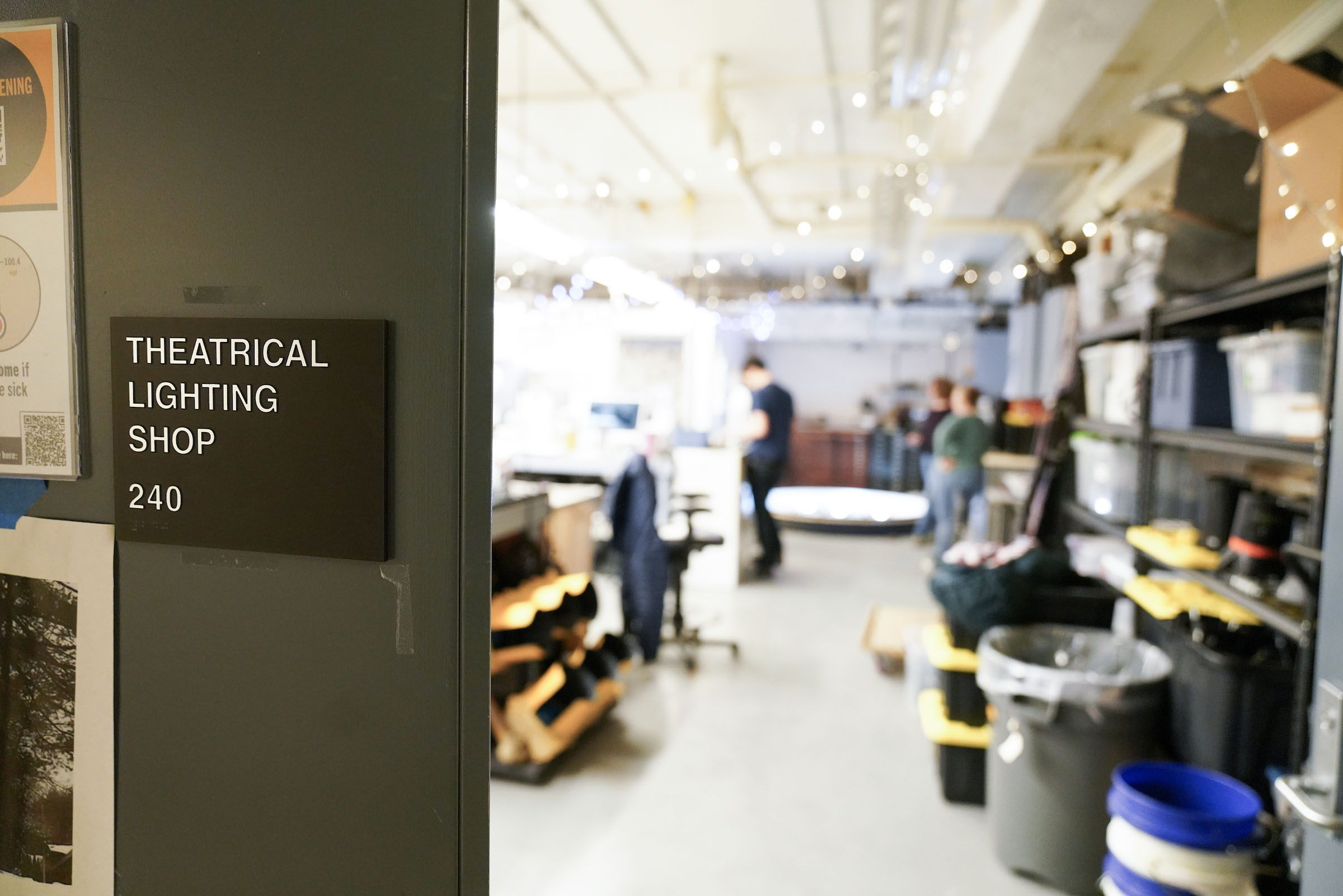
Located in the basement of the Power Center for the Performing Arts and decorated, as might be expected, with abundant string lights, the Theatrical Lighting Shop is run by Heather Hunter, theatrical lighting manager and mentor instructor, and Jorrey Calvo, associate theatrical lighting manager. Several students work in the shop as part of their coursework or as part-time employees.
The lighting design process begins months before opening night and requires countless hours of work. The lighting designer – who is either a faculty member, a guest artist, or an experienced student – begins conceptualizing and eventually produces complete designs in the form of light plots. These schematic drawings show where each light will be placed and how it will be angled, focused, colored, and so on, in every scene. The staff and students in the light shop then determine how best to implement the designer’s plan.
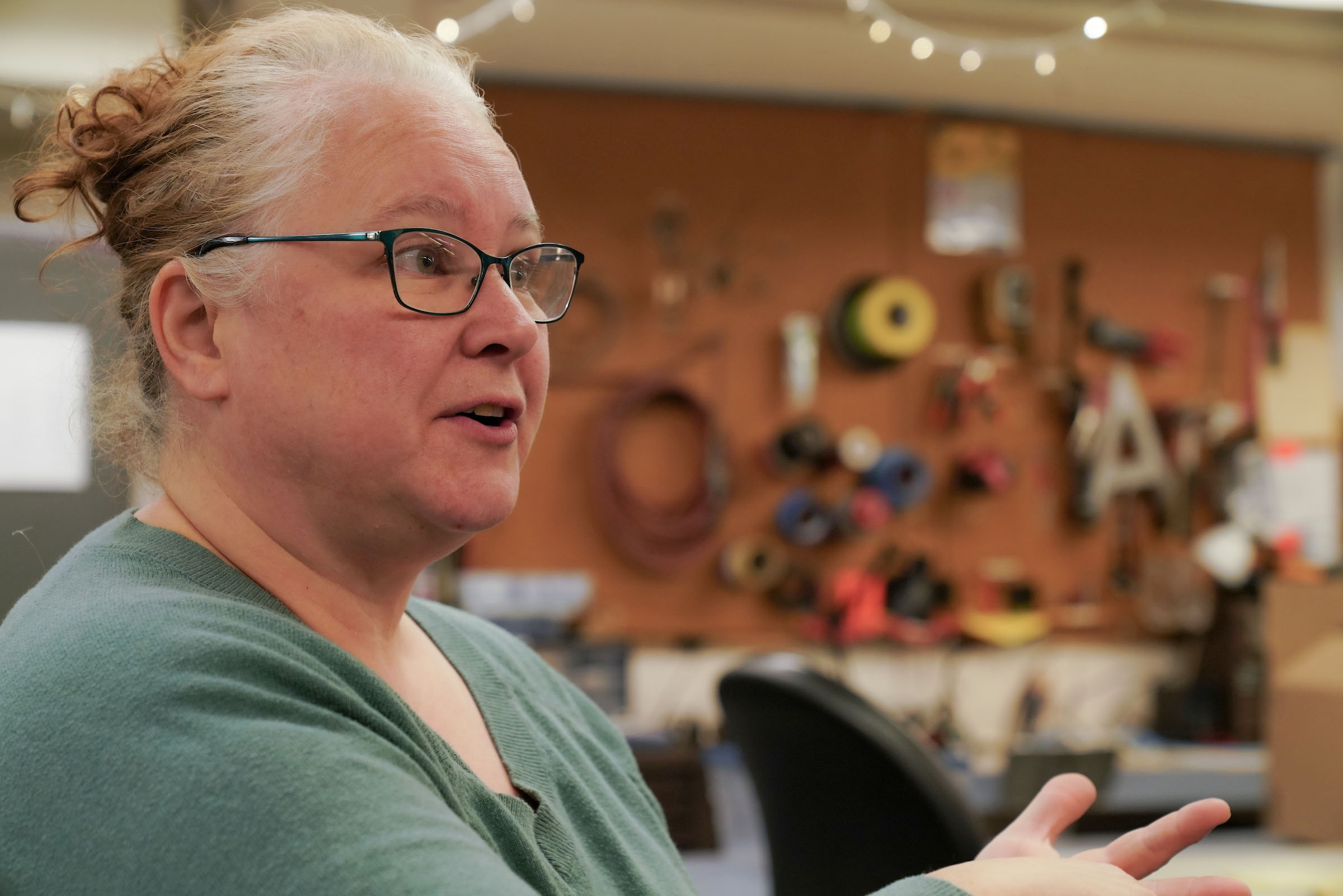
Heather Hunter, manager of the Theatrical Lighting Shop. Photo: Chris Boyes
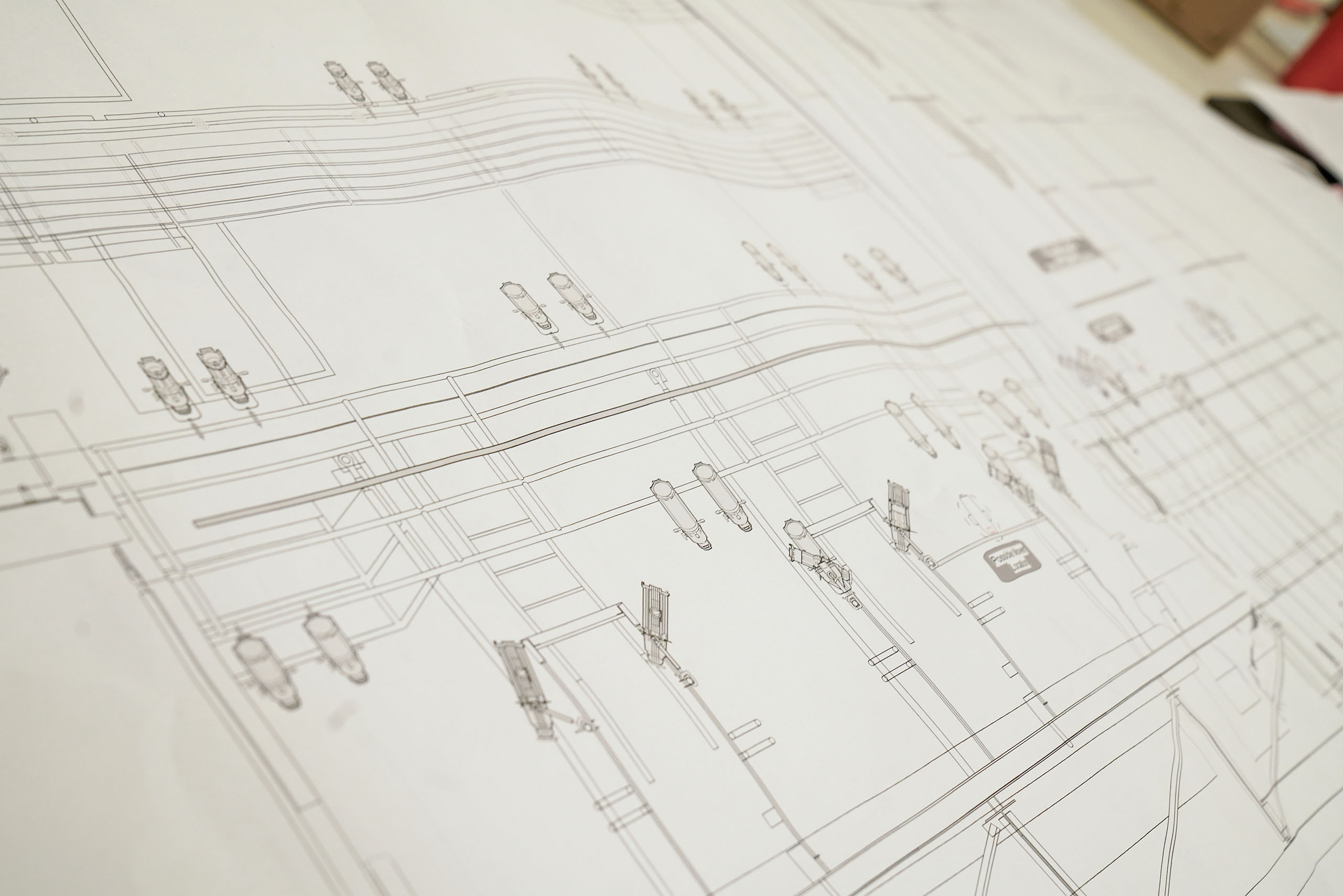
A light plot for Our Oz – a schematic drawing that shows where each light will be placed and how it will be angled. Photo: Chris Boyes
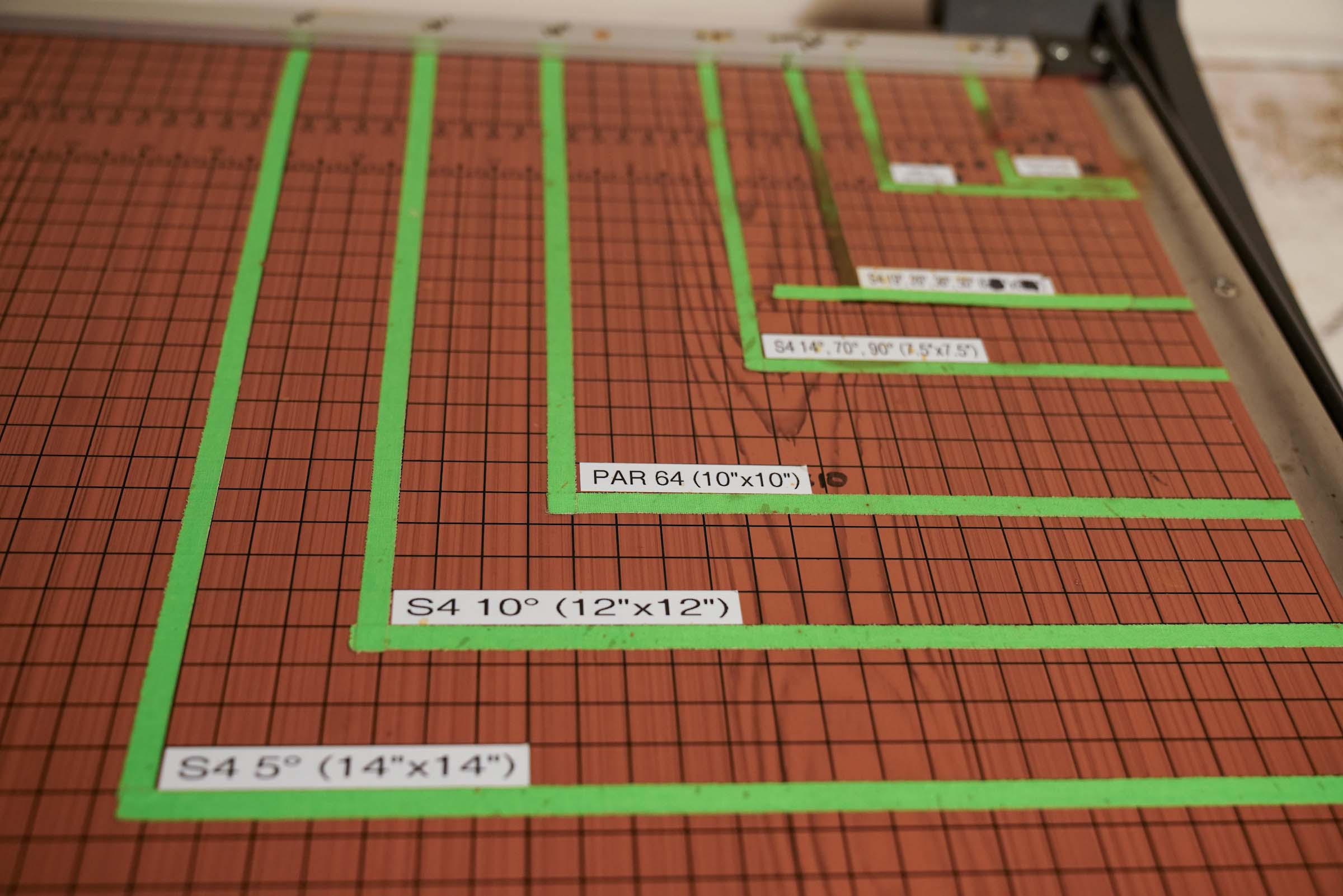
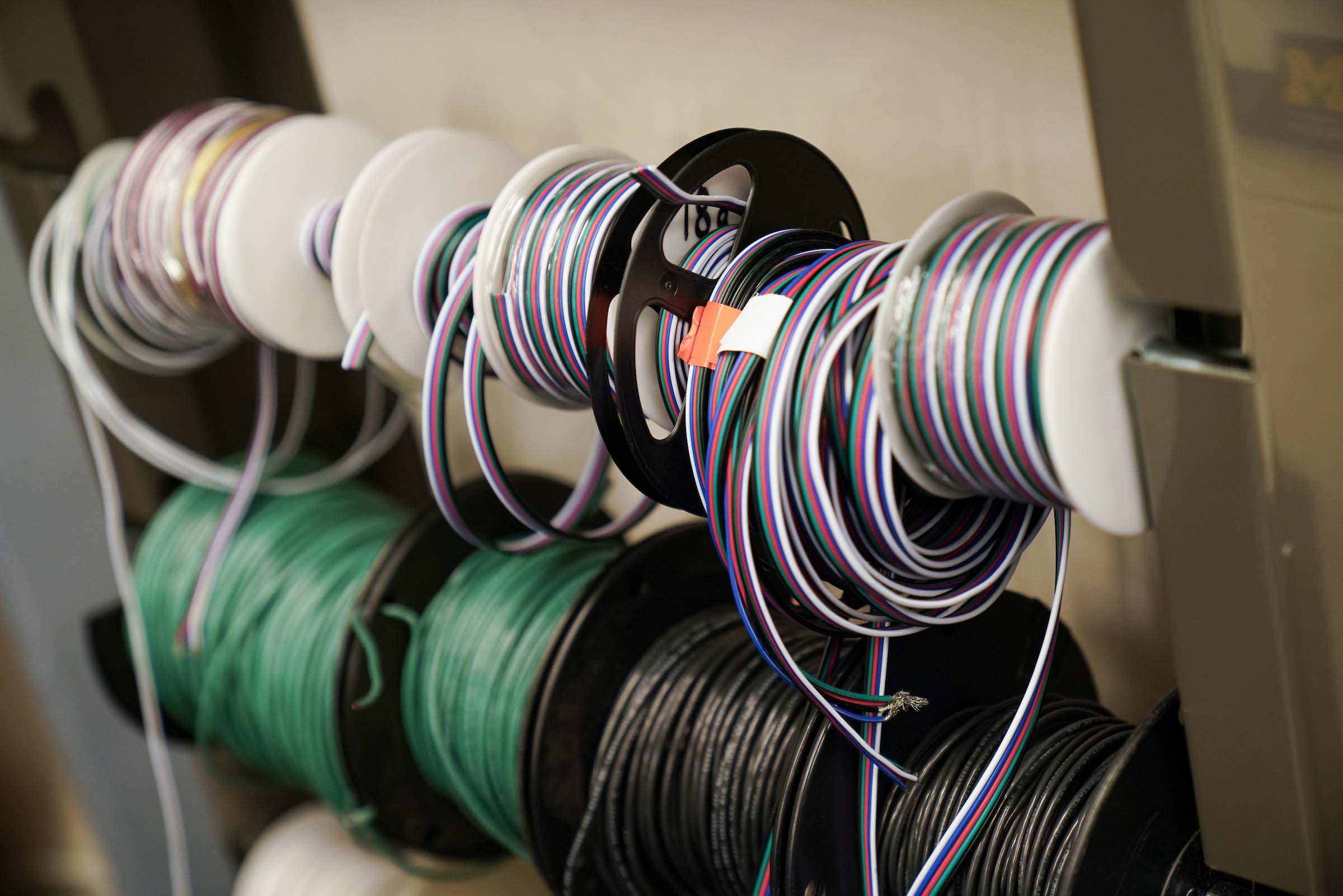
“There’s all the planning and prep work and math,” Hunter pointed out, “especially when we’re including LEDs and wiring things and making sure that the gauge of a wire is correct. And there’s a lot of different elements – it’s not just like, run a wire and plug it in.” The use of automated smart lighting has increased in recent years, enabling the Lighting Shop team to remotely control each bulb’s color and intensity, but there are still many fixtures in SMTD venues that have plain white bulbs. For those, the team “pulls colors,” selecting from hundreds of colored filters – small plastic sheets to place over the bulbs – to achieve the desired effect. They also work on any props that involve lighting, as well as creating effects such as haze, fog, and even bubbles. Prior to a show’s opening, they hang light fixtures and run cables. When the show closes, they help strike by reversing the process, taking lights and cables down.
On one afternoon during the winter 2025 semester, the staff and students in the Lighting Shop were juggling work on several different productions: they were getting ready for the opening night of A Few Good Men, planning and preparing for Our Oz and Titanic, and fine-tuning the lighting for the moon box that would appear in the opera The Turn of the Screw. The moon box, which is a wooden-framed circular box about eight feet in diameter, has been used to represent the moon in several productions. By changing the type and color of the lighting beneath its cover, and by painting a canvas overlay in a certain style, the effect of the moon can go from realistic to ghostly to surreal, depending on the style of the production. As students in the Scenic Painting Shop upstairs worked on painting the overlay, Ethan Hoffman (BFA ’26, theatre design & production), Calvo, and others experimented with lighting the moon box’s interior. They used a combination of smart bulbs and LED light strips, tinkering to achieve the eerie effect needed for The Turn of the Screw.
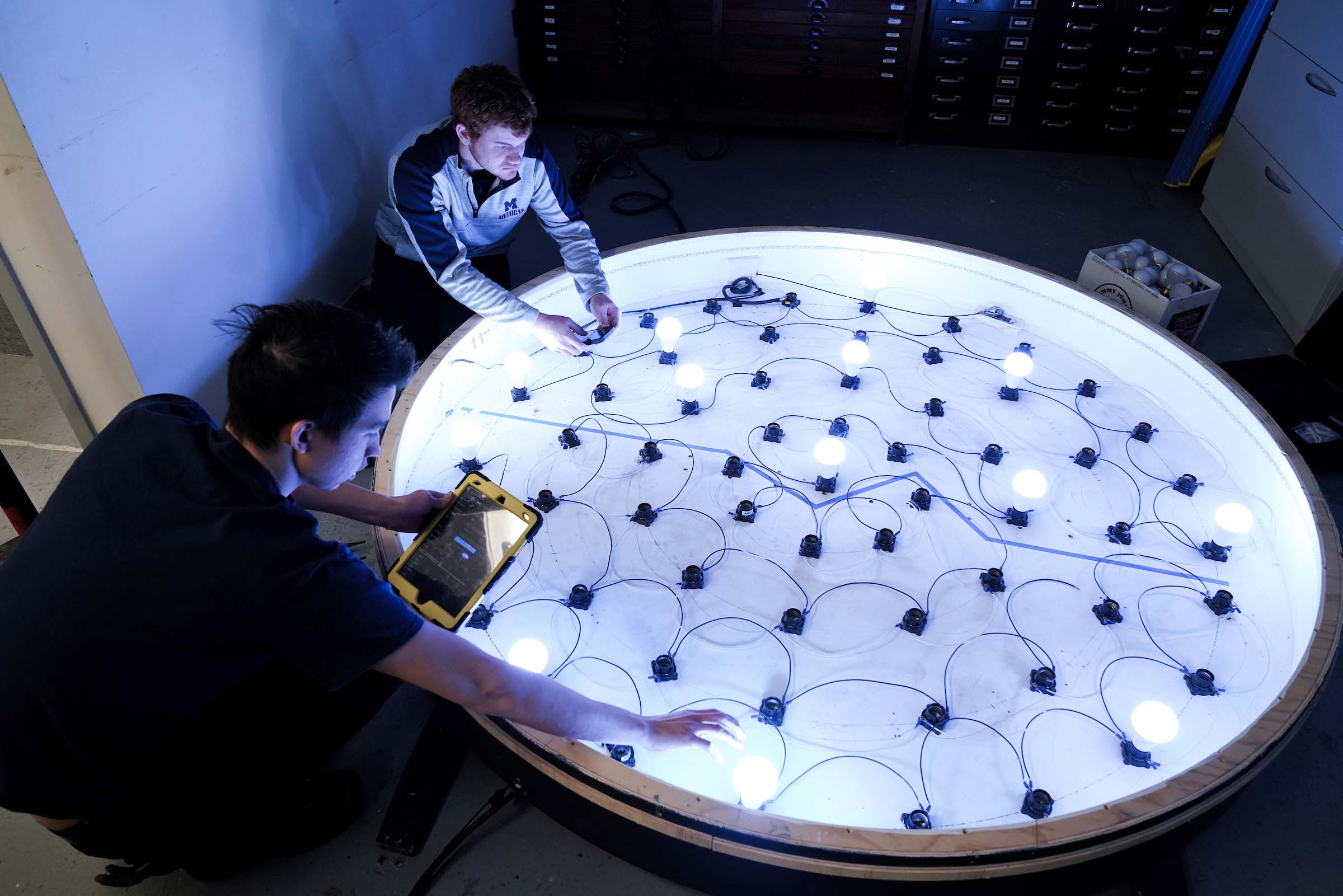
Calvo and Hoffman experiment with the lighting of the moon box that will eventually be on-stage in The Turn of the Screw. Photo: Chris Boyes
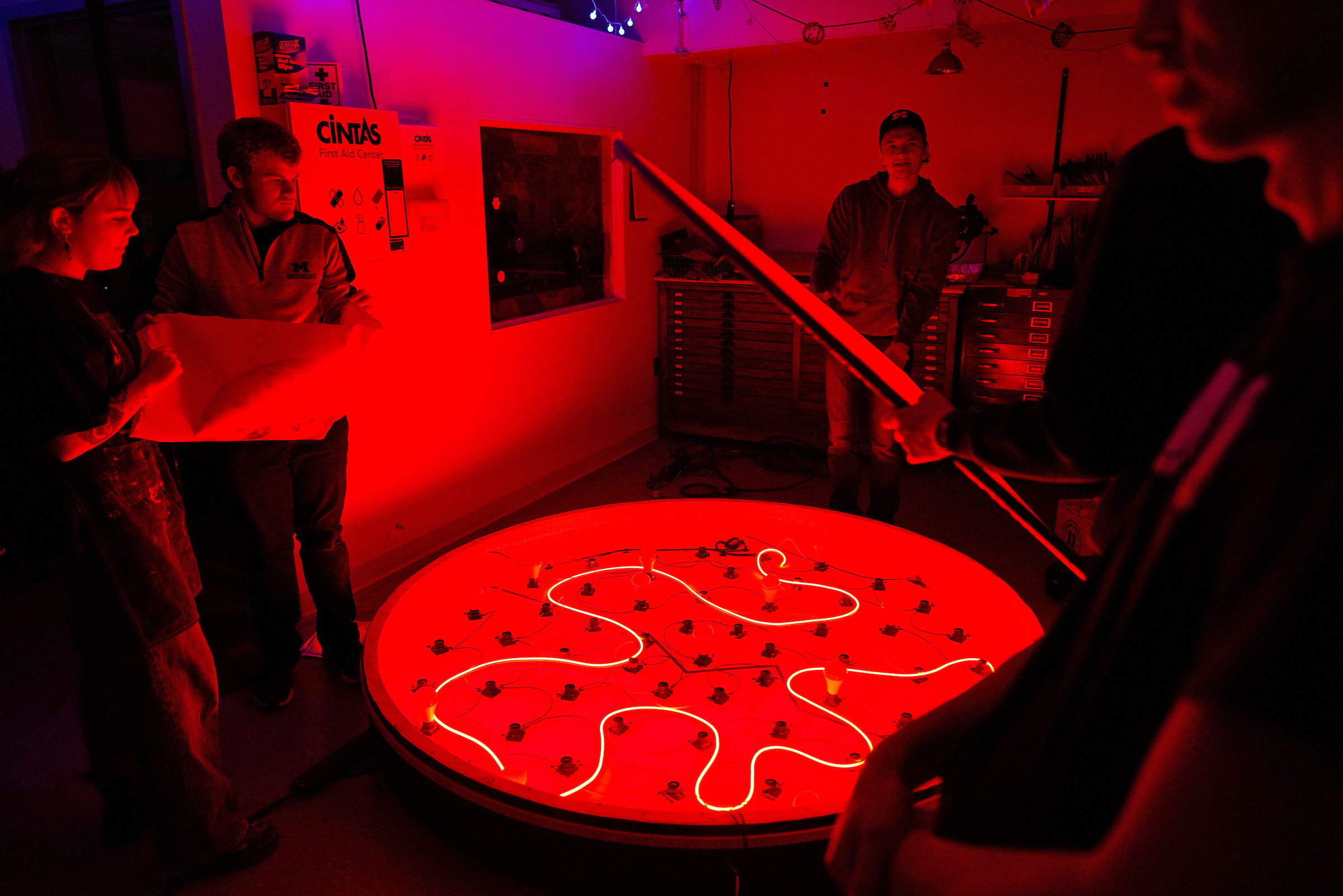
Changing the bulb colors and adding LED light strips helps achieve the desired effect for the moon box. Photo: Chris Boyes
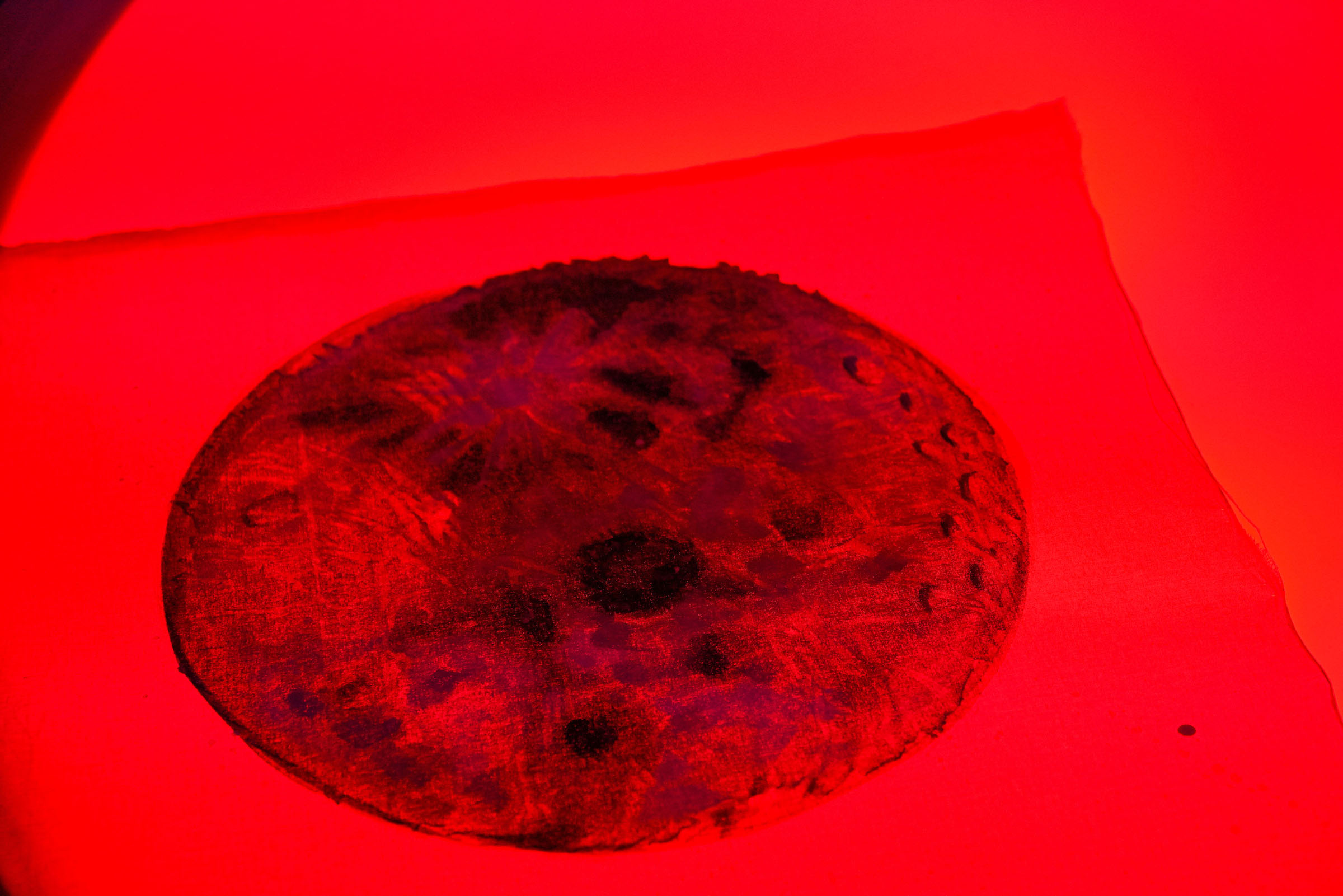
The addition of a small-scale painted canvas overlay helps the lighting team envision how the moon box might ultimately look on-stage. Photo: Chris Boyes
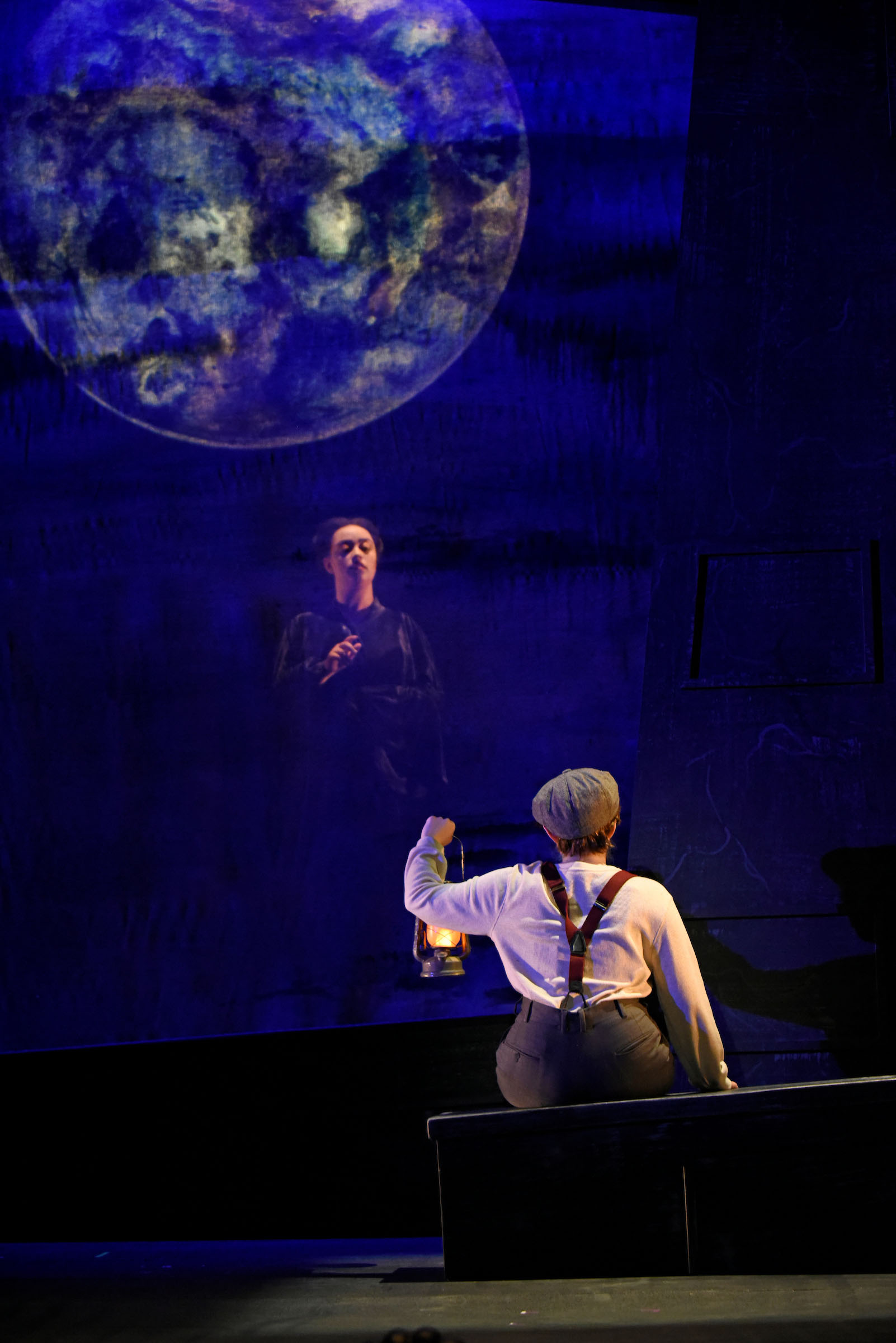
In the March 2025 production of The Turn of the Screw, the moon contributes to the sinister atmosphere. Photo: Peter Smith
Hoffman served as assistant lighting designer for the 2025 University of Michigan Dance Company show, The Turn of the Screw, and, in the spring of 2024, The Cherry Orchard. He plans to be the lighting designer for a production during his senior year. He noted the value of being able to gradually move up and assume more leadership in SMTD productions, such as going from lighting crew member, to lighting control-board operator, to production electrician: “It’s a great learning opportunity to feel like you have some responsibility in that production, working with a full-time staff of adults.”
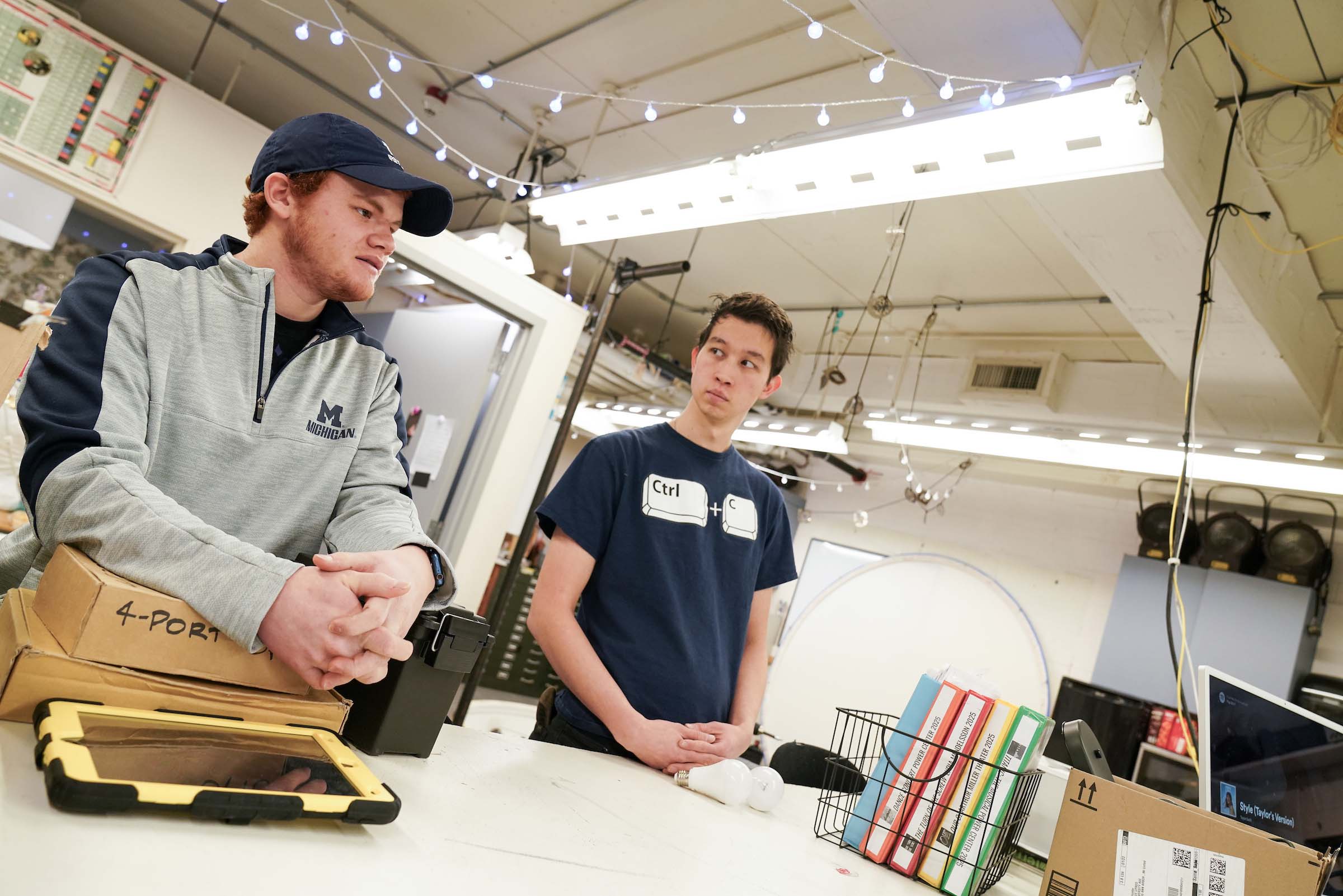
Ethan Hoffman (left) studies lighting design and works in the Lighting Shop alongside professionals like Jorrey Calvo (right), associate manager. Photo: Chris Boyes
Hunter noted that while UProd seeks to keep up with emerging technology, it’s also important for students to learn the fundamentals and be ready for anything when they graduate. “Out in the professional setting, students will run into places that have a lot more technology and equipment as well as places that have a lot less,” she said. “I think we give them a nice starting setup and a pretty high-quality production value.” Hoffman agreed: “I think this university in particular does an amazing job at prepping you to move outside of the university setting.” With the support of faculty and staff and countless hours of hands-on experience, Hoffman and fellow lighting design students will graduate ready for whatever comes next.
Photo Gallery