11/18/2025 Building a World: The UProd Theatrical Shops at Work > The Wig, Hair & Makeup Studio
The Wig, Hair & Makeup Studio: The UProd Theatrical Shops at Work
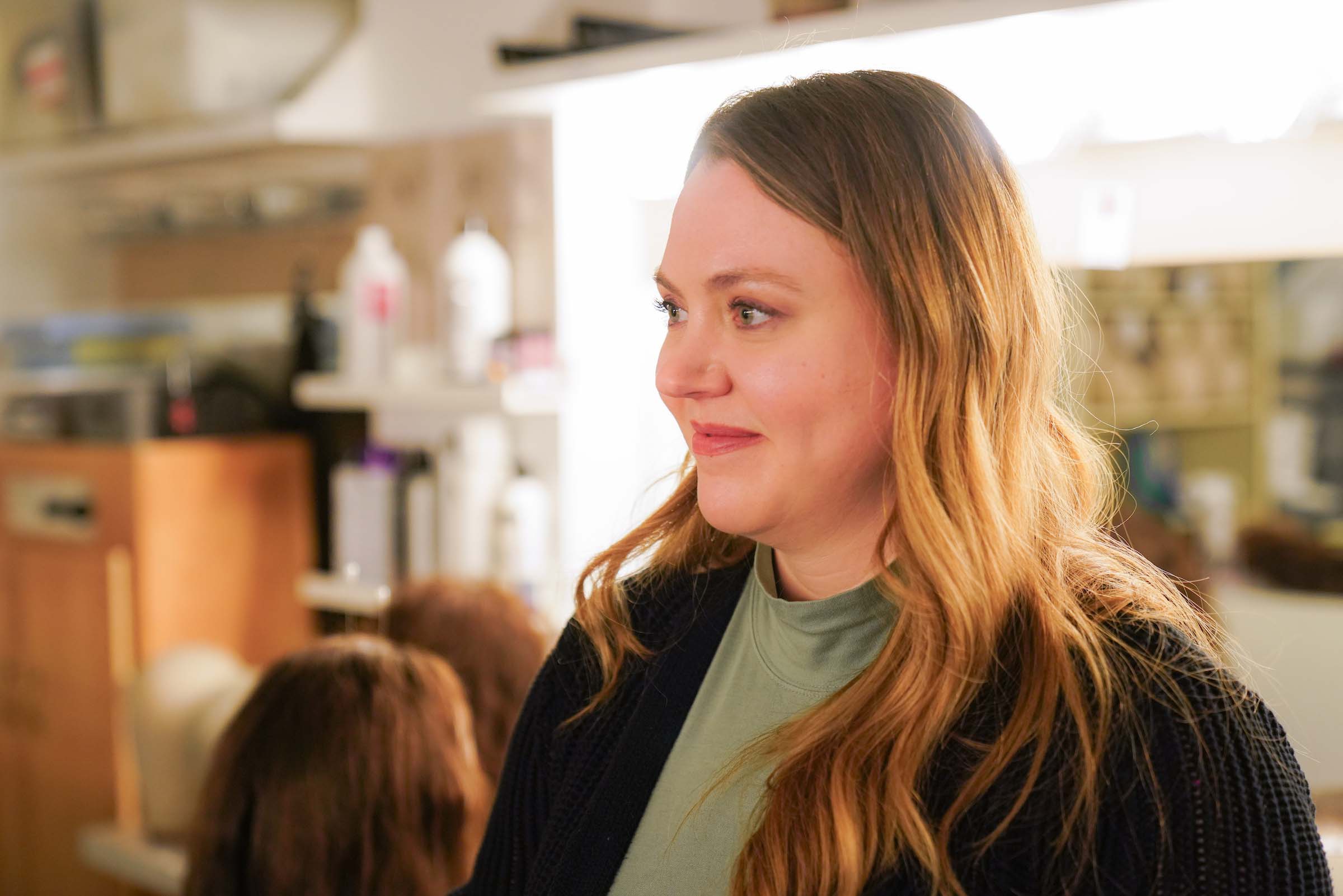
Brittany Crinson is the manager of the Wig, Hair & Makeup Studio. Photo: Chris Boyes
The Wig, Hair & Makeup Studio used to reside in a small corner of the Costume Shop in the Walgreen Drama Center, but the studio recently moved up in the world (while actually moving down to the lower level), acquiring its own space. Brittany Crinson, theatrical hair and makeup manager and mentor instructor, advocated for the larger space to accommodate the studio’s needs: “We needed space to teach and grow the wig stock,” she noted. “And we run shows out of here – any of the shows that are done in the Arthur Miller, this is where they get all their hair and makeup done.”
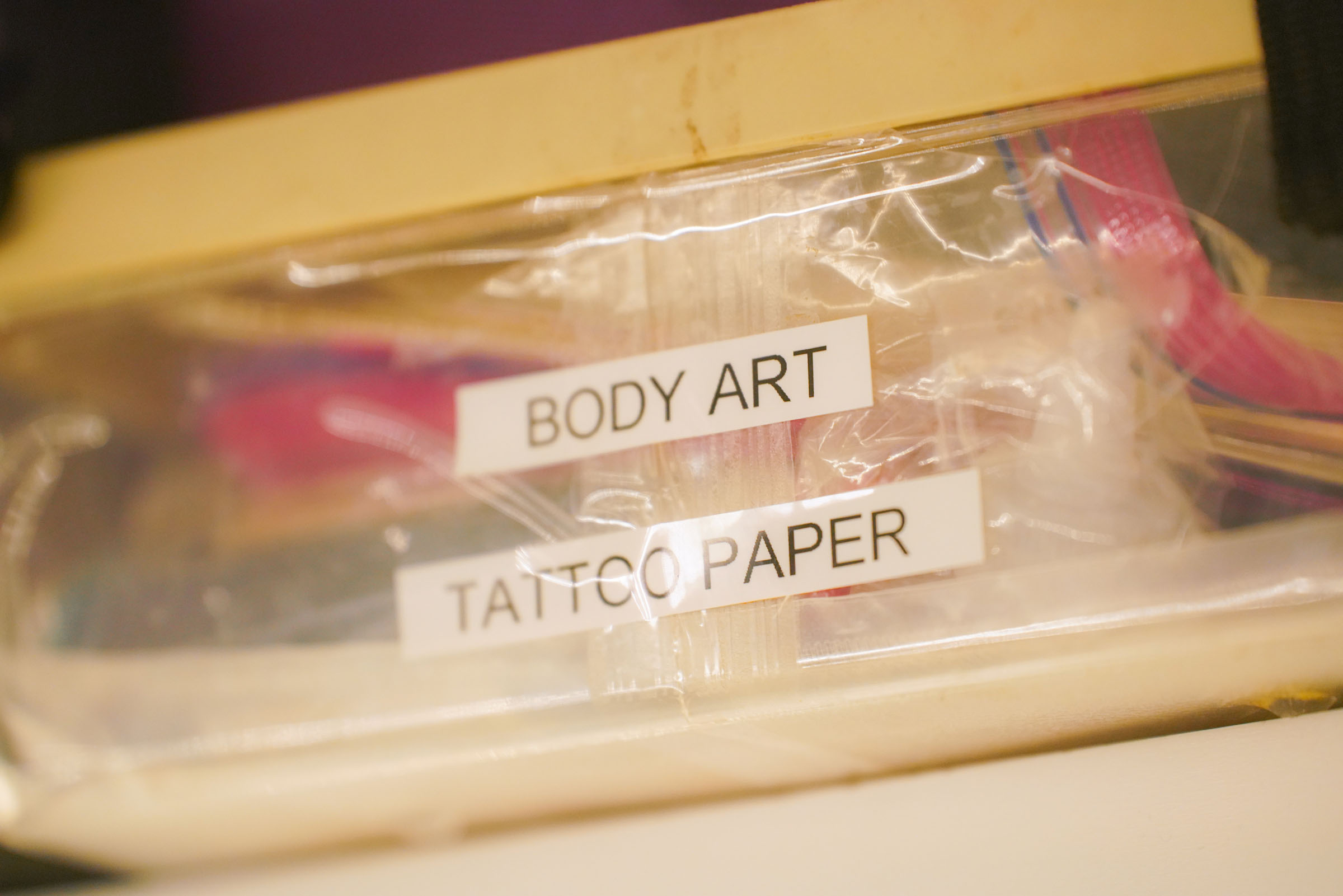
Three of the studio’s walls are lined with shelves filled with wigs, wig-making supplies and tools, makeup, and miscellaneous items such as bins marked “body art” and “tattoo paper.” One brightly lit and mirrored side of the room is reserved for applying makeup, hairstyling, and wig fittings. Crinson, a wig, hair, and makeup artist, recently returned to her home state of Michigan after more than a decade living in Chicago, where she worked for the Lyric Opera of Chicago and other professional theatres as well as working in television and film. At SMTD, she oversees hair and makeup for all of the fully staged UProd shows and also mentors students who work in the studio, teaching them makeup and styling techniques as well as how to construct wigs and do wig fittings.
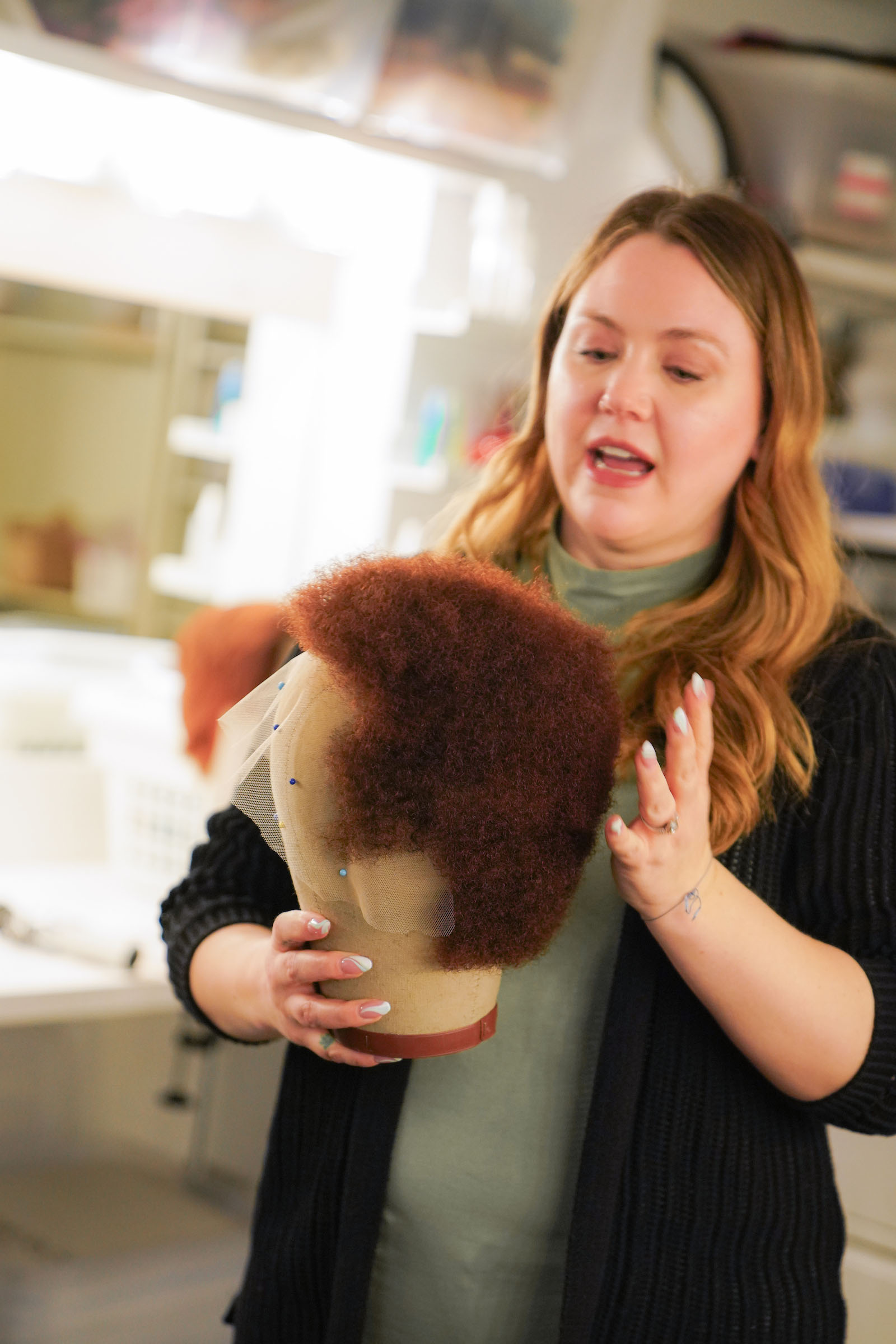
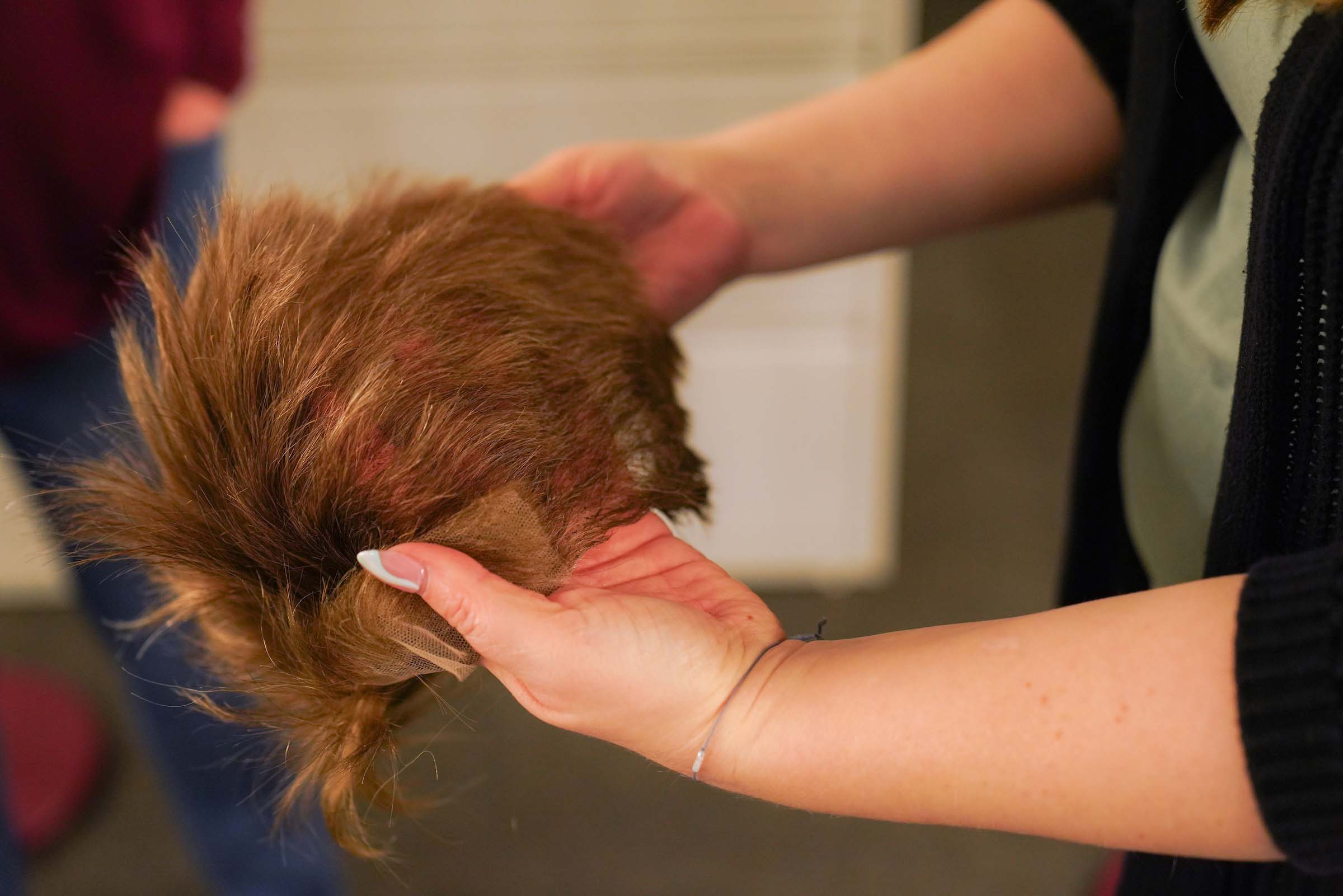
Crinson holds a wig to be worn by Tyrese Byrd as Peter Quint in The Turn of the Screw. Photo: Chris Boyes
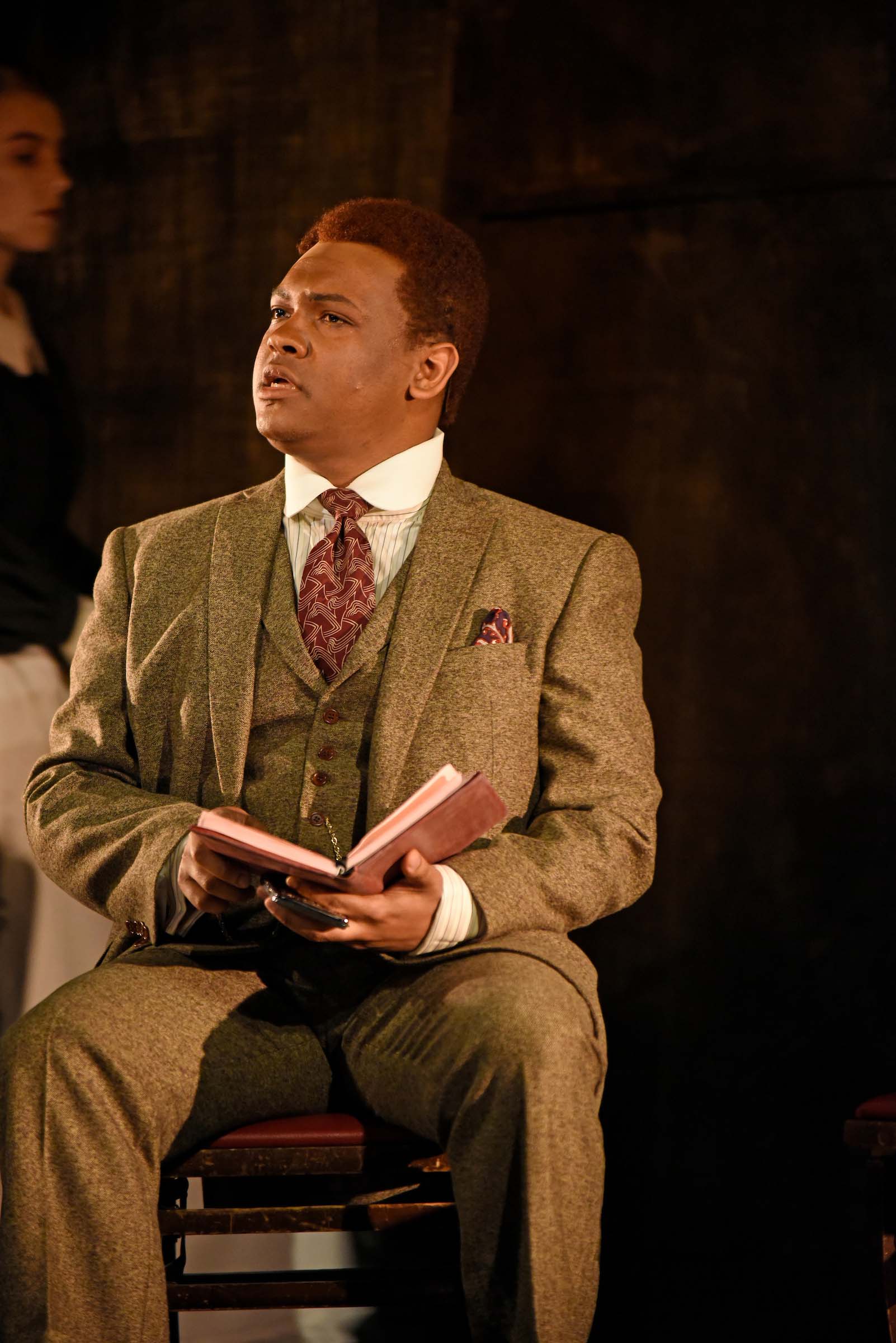
Tyrese Byrd onstage as Peter Quint. Photo: Peter Smith
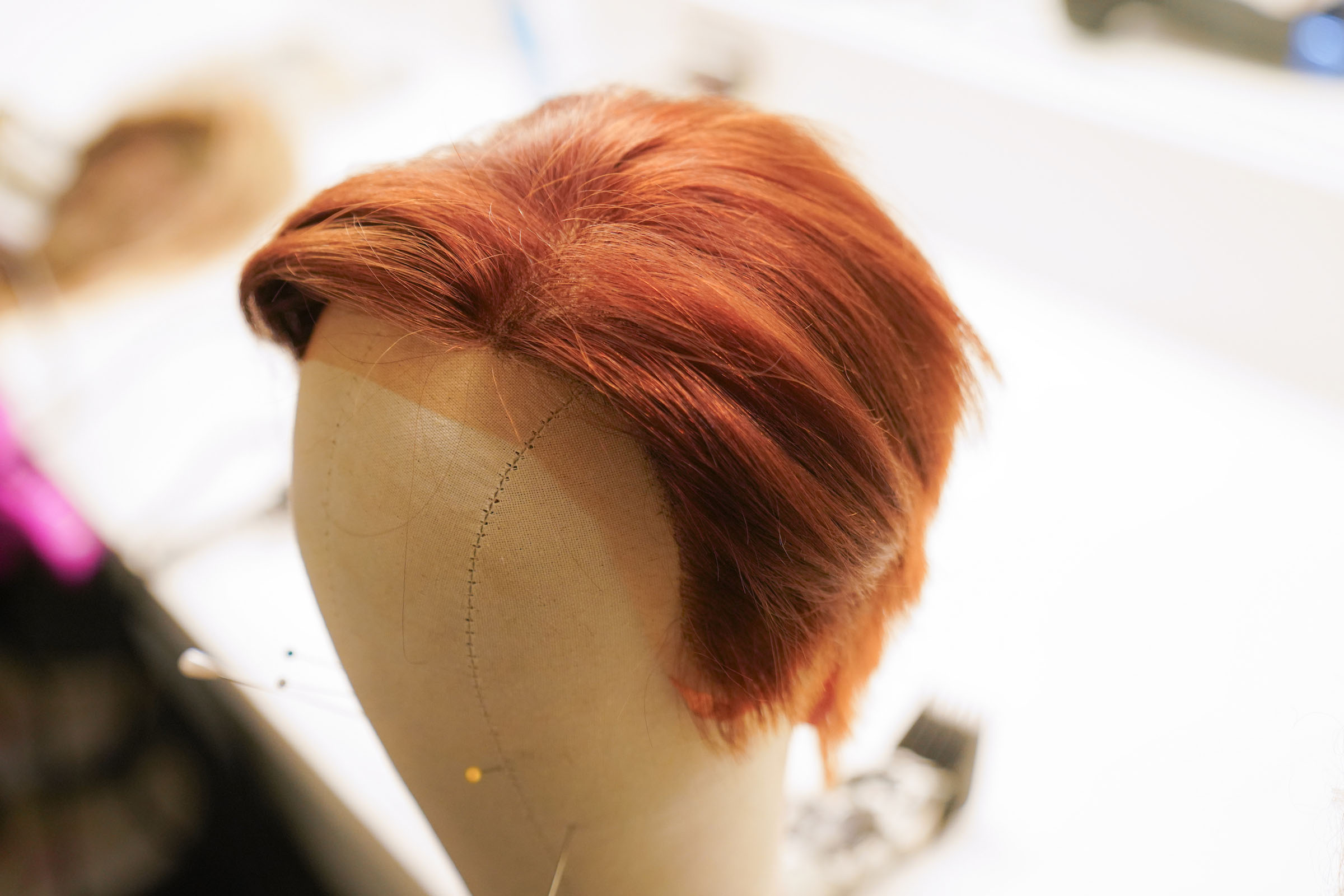
For each SMTD production, Crinson consults with the costume designer to determine the hairstyles for each performer and whether to use wigs or their natural hair. When wigs are necessary, she either buys them or constructs them herself. Constructing a high-quality, hand-tied wig is a painstaking process that can take from 40 to 80 hours. Starting with a lace cap, Crinson uses a tool called a ventilating hook to tie individual hairs onto the lace, resulting in a wig that looks and moves like real hair and seems to show scalp between the hairs. Most of the time, Crinson prefers to use human hair rather than synthetic when making wigs. “If we were performing outside and in the elements,” she noted, “then I would probably want to use synthetic hair, because then we wouldn’t have to worry about humidity. But it’s easier to style a wig made of human hair – just use hot tools on it and wash it like you normally would your own.”
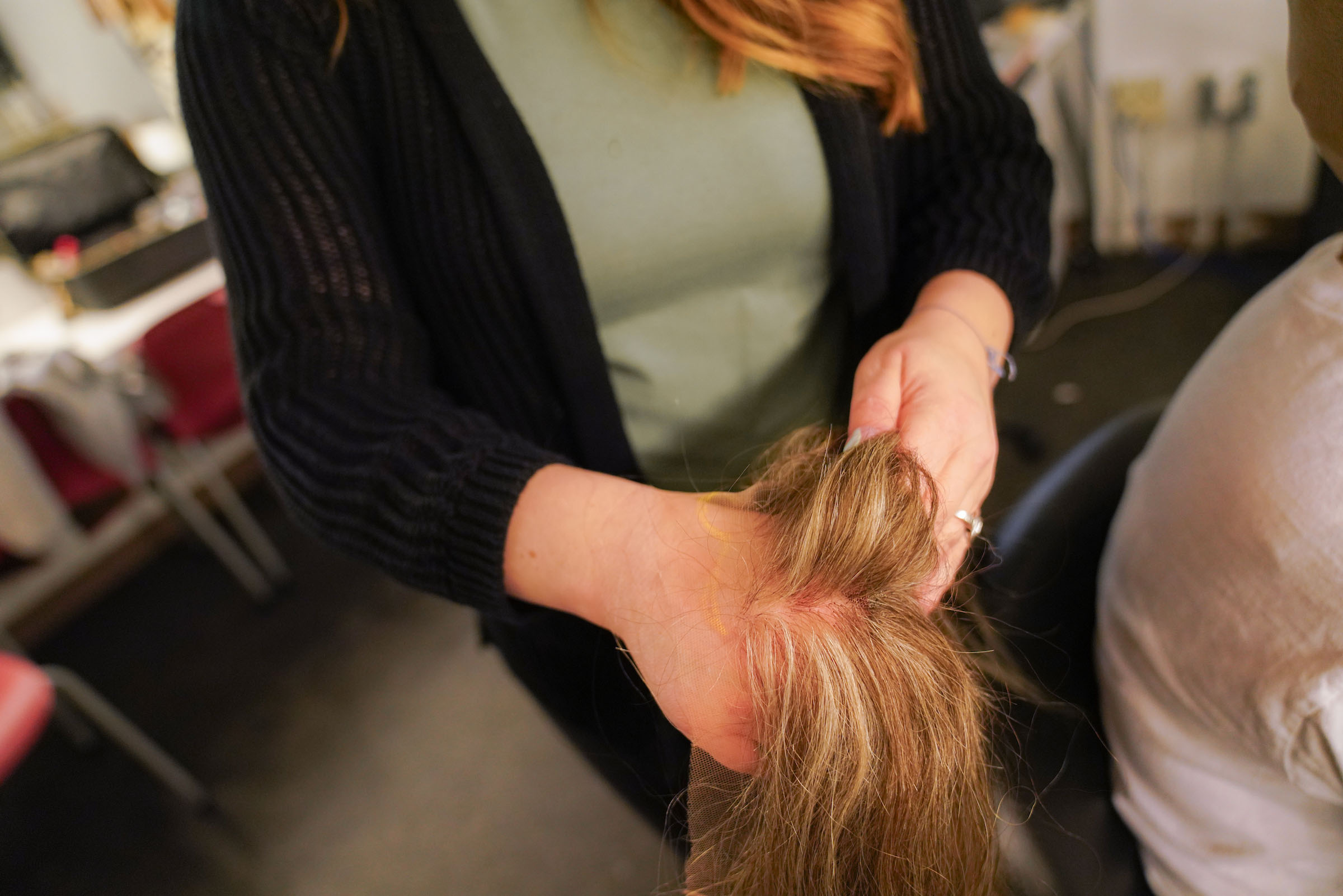
Crinson shows the realistic details of a hand-tied wig. Photo: Chris Boyes
Crinson also develops a plan for each performer’s makeup – not only how it will look, but how it will be applied for a performance. Whenever possible, members of the crew help actors apply their makeup. For productions with larger casts or smaller crews, some actors need to put on their own makeup. In those cases, Crinson meets with each actor ahead of time for a one-on-one lesson and then puts together a makeup kit for that person to use during the production’s run.
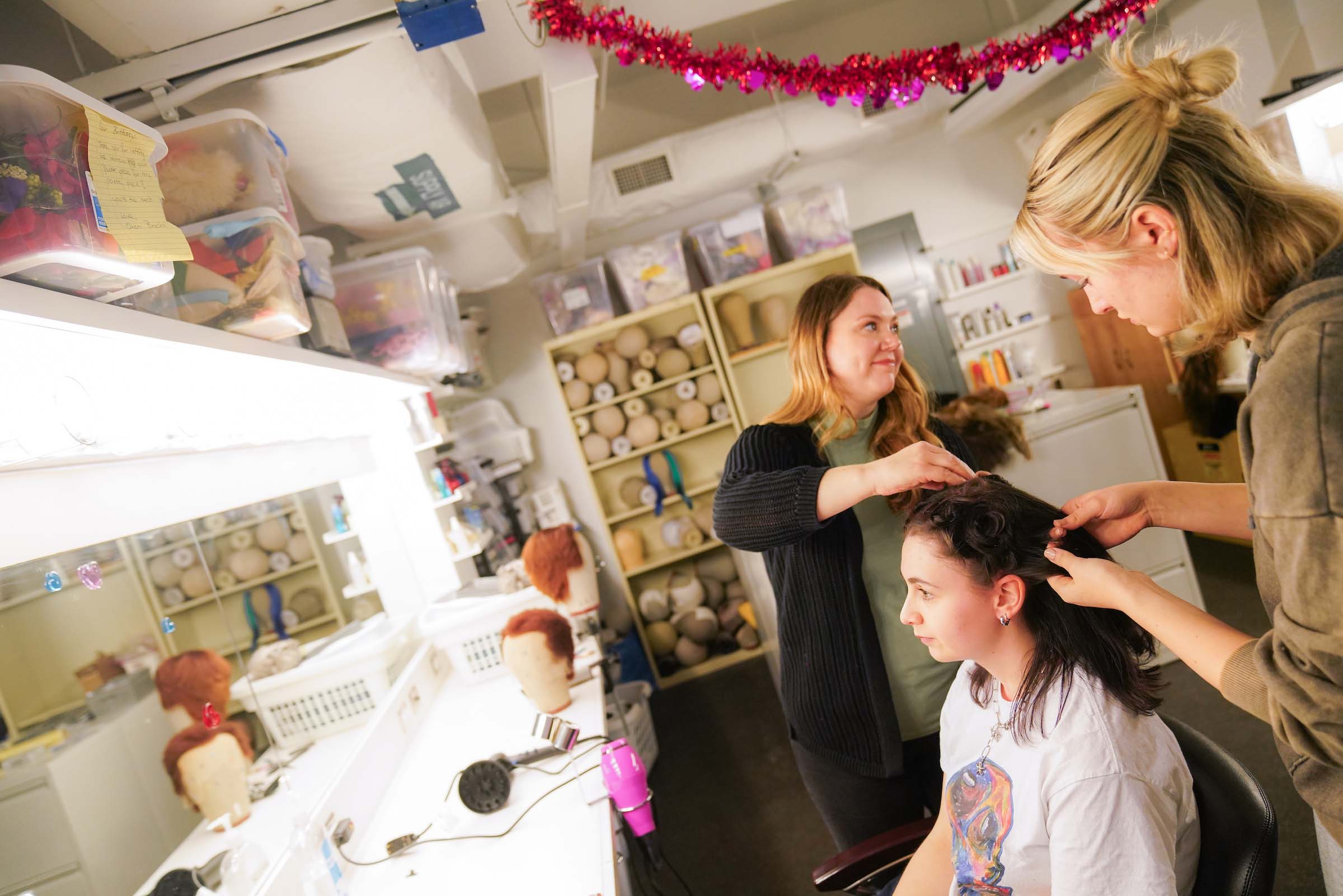
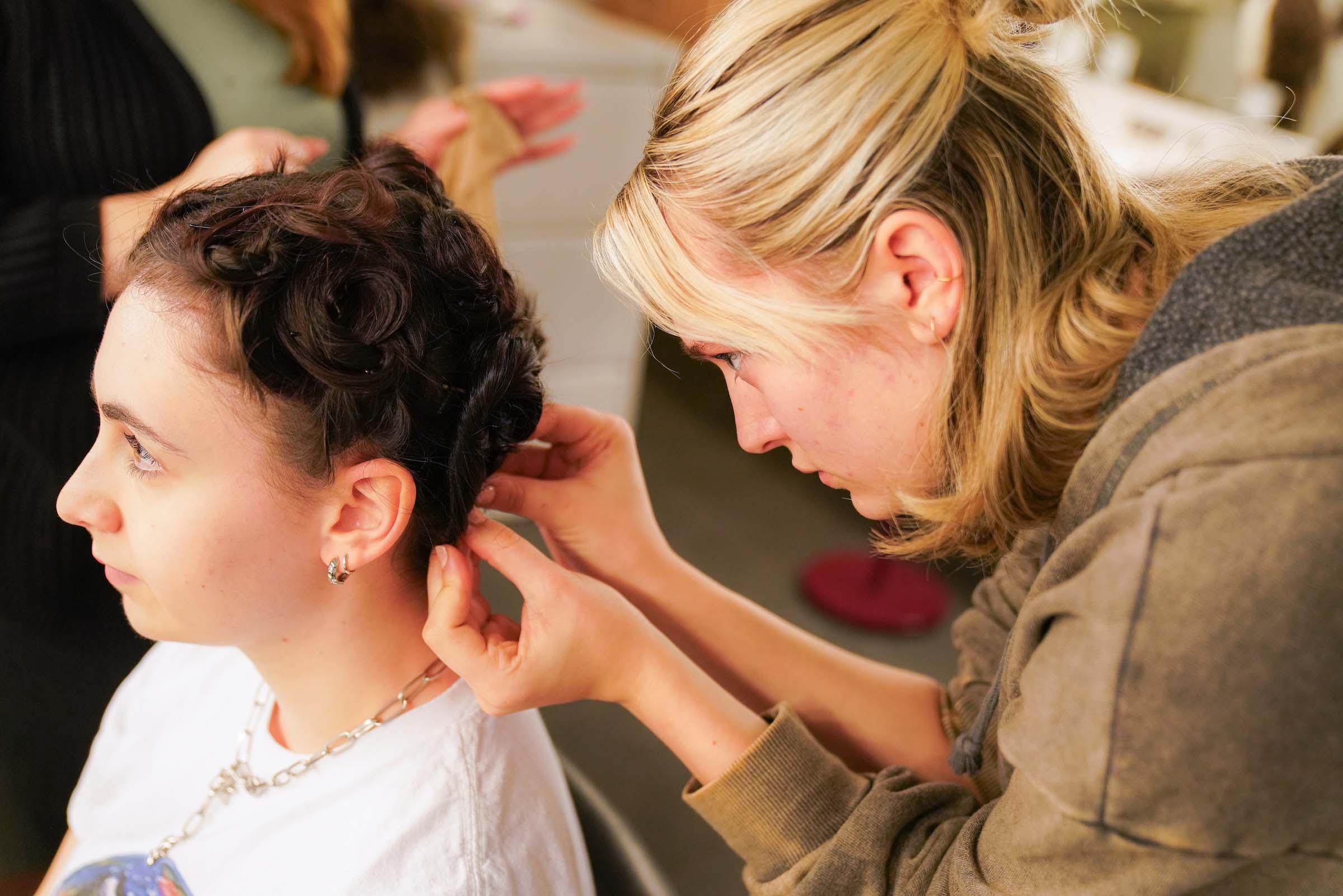
Crinson and Christine Chupailo demonstrate the process for a wig fitting, with Gretchen Brookes as their model. Step one involves making pin curls so Brookes’s hair lies flat to her head. Photo: Chris Boyes
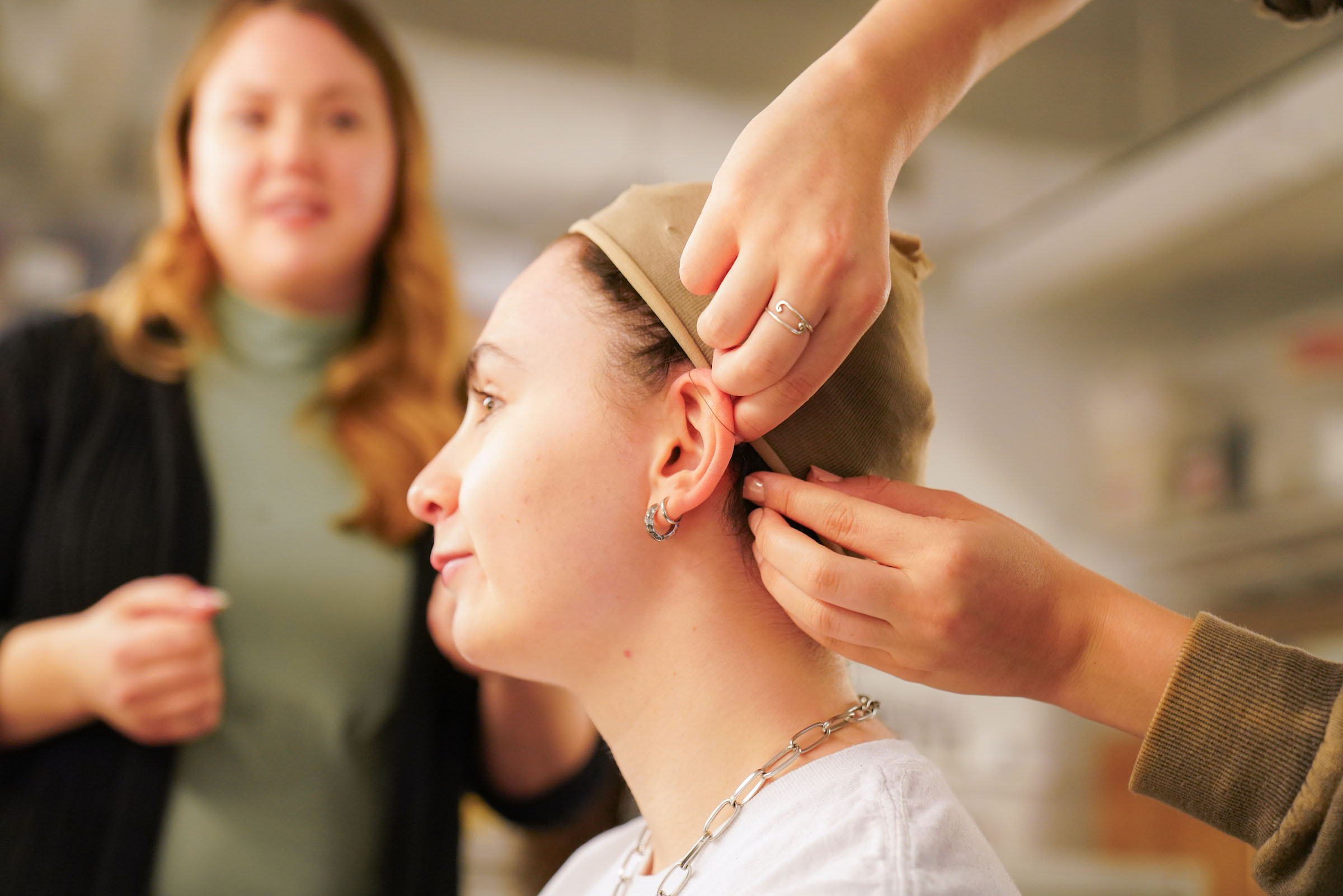
Step two in the wig fitting is putting on the wig cap over the pin curls
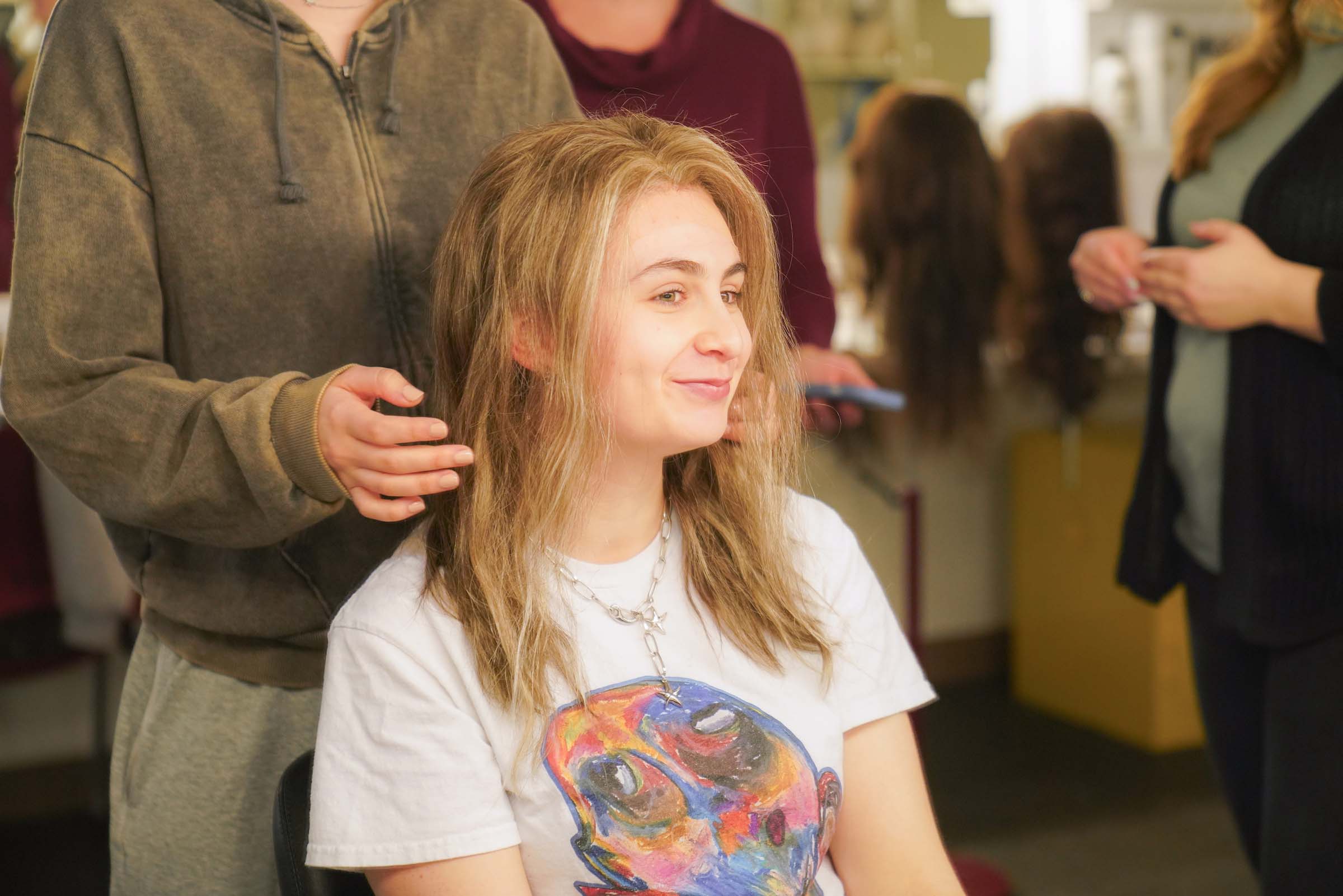
Step three is putting on the wig and assessing how well it fits the natural hairline and whether more hair needs to be added to the wig. Photo: Chris Boyes
Students are drawn to working in the Wig, Hair & Makeup Studio for a number of reasons. For design and production student Gretchen Brookes (BFA ’28), who is also pursuing a degree in chemical engineering, working in the studio is a natural extension of her involvement with theatre hair and makeup in high school. It also contributes to her goal for the future, of working for a cosmetics company – or launching her own. Christine Chupailo (BFA ’27, musical theatre) also got involved in theatre tech in high school, doing hair and makeup for her school’s fall production and then performing in the spring musical. Participating in theatre as a performer and on the technical side wasn’t an either-or proposition for her. She opted to pursue a degree in performance and added a design and production minor, determined to continue learning all she could about hair and makeup. After she graduates, Chupailo plans to move to New York for a career as a performer, while at the same time earning her cosmetology license. “She can build wigs when she’s not in rehearsal,” Crinson noted. “I have always loved both,” Chupailo said, “so I just always wanted to do both.”
Photo Gallery