11/18/2025 Building a World: The UProd Theatrical Shops at Work > The Prop Shop
The Prop Shop: The UProd Theatrical Shops at Work
The Prop Shop is, in a way, a microcosm of the UProd theatrical shops. In a video made by students working in the Prop Shop a few years ago, one student answers the “what is the Prop Shop” question, saying, “What isn’t the Prop Shop? We do everything – paper goods, fabric, painting, construction, woodworking, model-making, clay – if it’s not a wall or a floor or a costume, we do it.” The manager of the Prop Shop, Patrick Drone, echoed that statement, saying “Anything that has been done in another shop is done in props to some scale” – from sewing stage curtains and pillows to welding, carpentry, sculpture, and even some lighting.
The professionals who work in the Prop Shop possess a broad range of skills necessary to accomplish the shop’s varied tasks. Drone has worked at SMTD since 2005, overseeing the creation of thousands of props for approximately 200 productions. Dani Keys, the associate theatrical properties manager, studied graphic design as well as textile, industrial, and fashion design. Keys came to SMTD from the Parade Company, having worked as an artisan, sculptor, and painter, making floats for America’s Thanksgiving Parade in Detroit. Keys leads soft goods (anything involving fabric) and graphic design projects in the Prop Shop; they created dozens of Oz-related products for a bodega cart that appeared in the play Our Oz – such as “Emerald Valley” granola bars, a bottle of “Cloroz” fabric sanitizer, and “Wiz Krispies Treats.” After more than 20 years preparing exhibits at the U-M Museum of Natural History, Dan Erickson spent more than 10 years as a multitalented carpenter and artisan in the Prop Shop; he retired at the end of the 2024–25 academic year and has since been succeeded by Adam Ashlock. Ashlock came to SMTD after working at such places as Ravenswood Studios and the Steppenwolf Theater in the Chicago area. Kat Kreutz, properties stock and tech coordinator, worked in the intense world of summer stock theatre before coming to SMTD. Navigating the Prop Shop’s massive database of items, Kreutz supports the many events that are not part of the UProd ticketed and fully staged productions: senior directing projects, dance projects, and the many shows put on by student organizations like Basement Arts, MUSKET, and Rude Mechanicals. Kreutz also oversees the training of the prop run crew for the fully produced UProd shows.
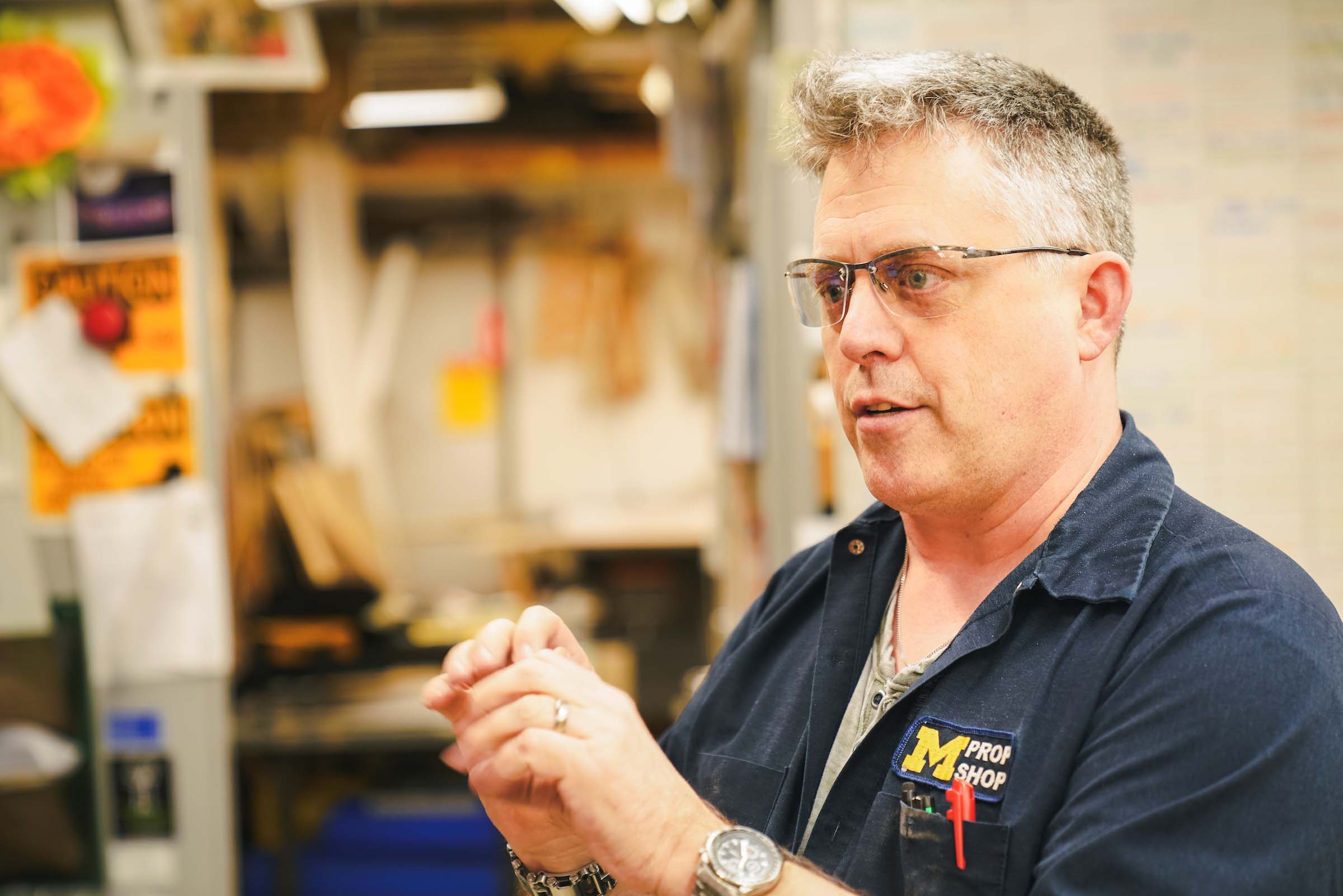
Patrick Drone manages the Prop Shop. Photo: Chris Boyes
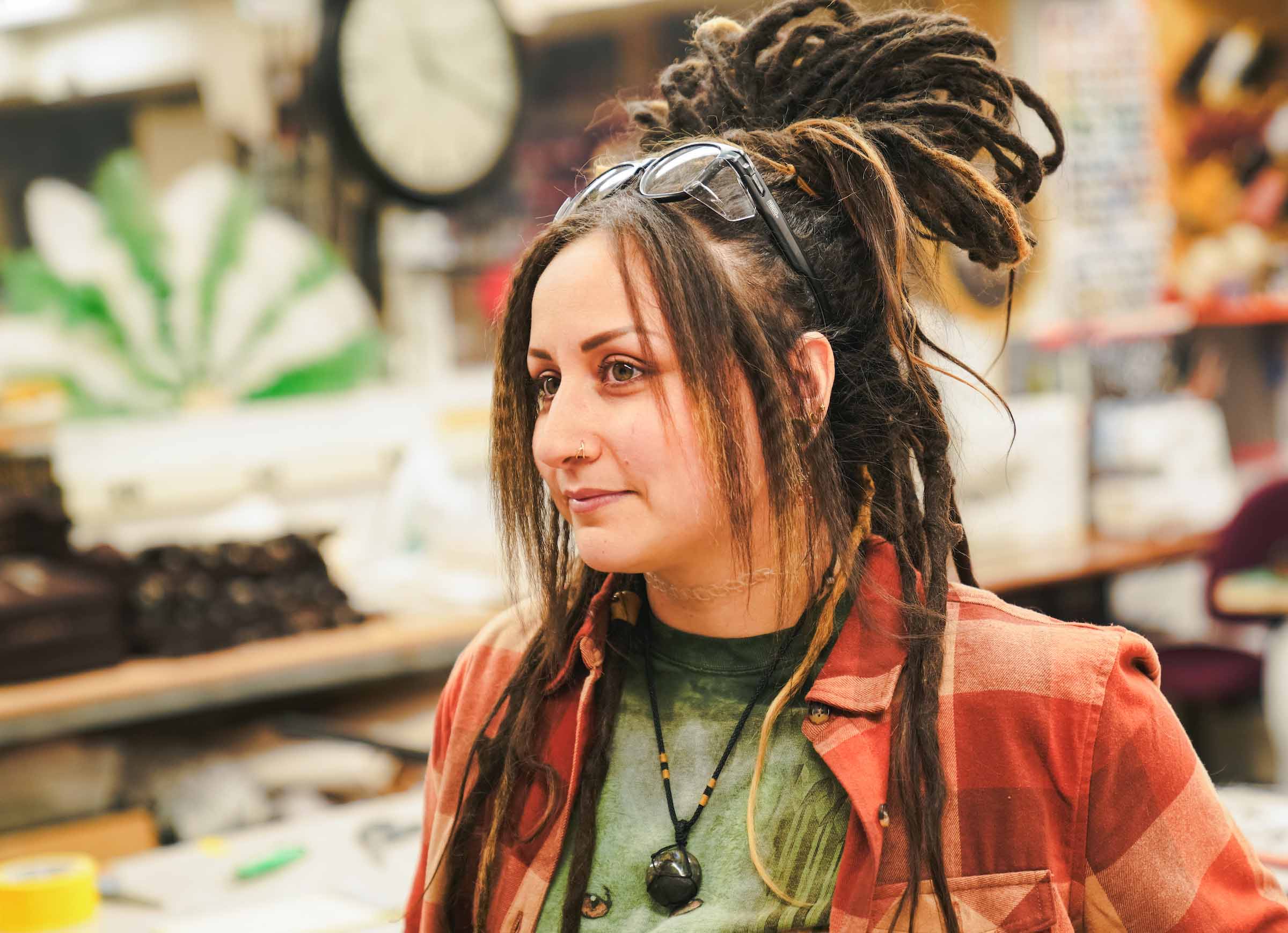
Dani Keys serves as associate theatrical properties manager. Photo: Chris Boyes
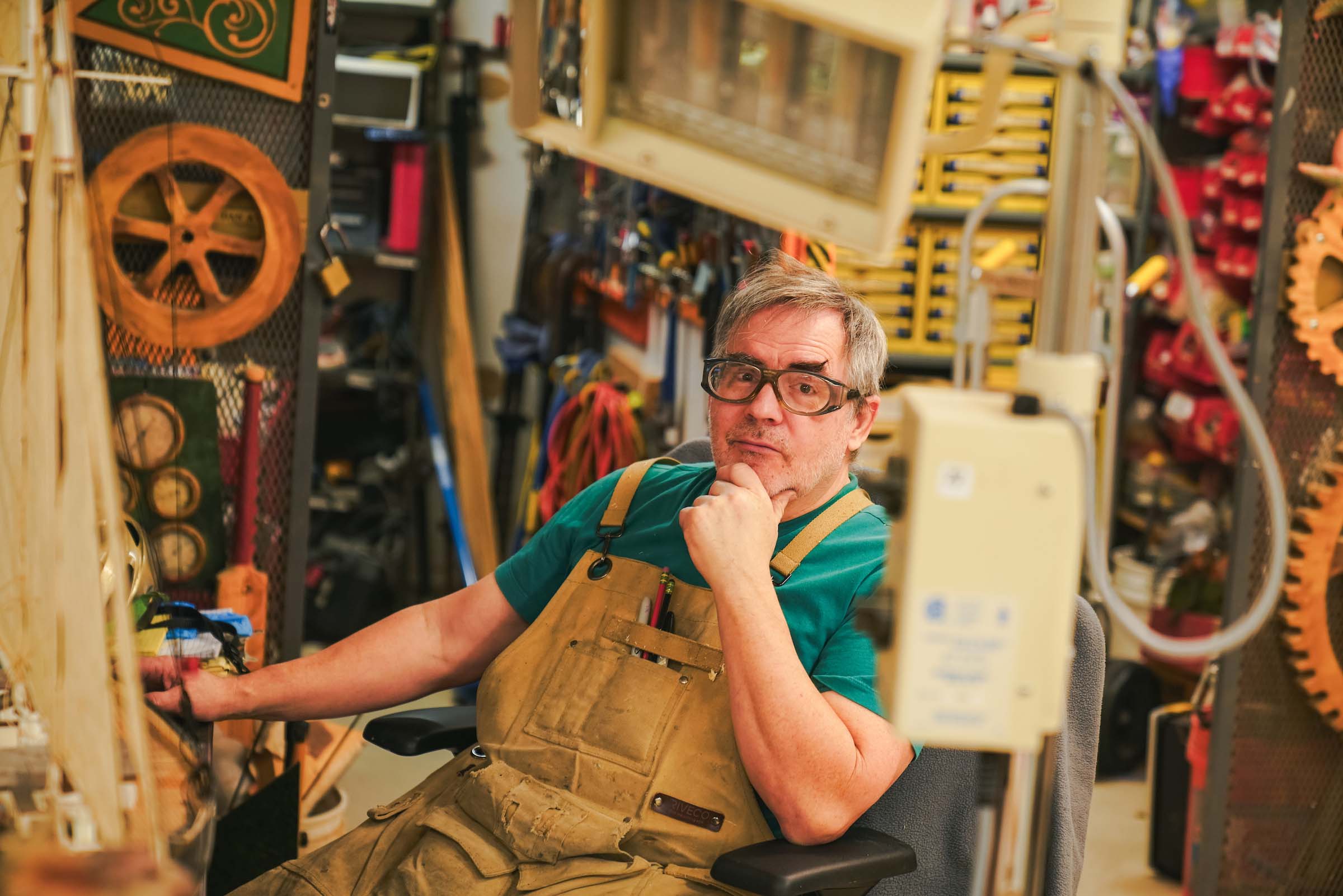
Dan Erickson, a carpenter and artisan in the Prop Shop, retired in spring 2025. Photo: Chris Boyes
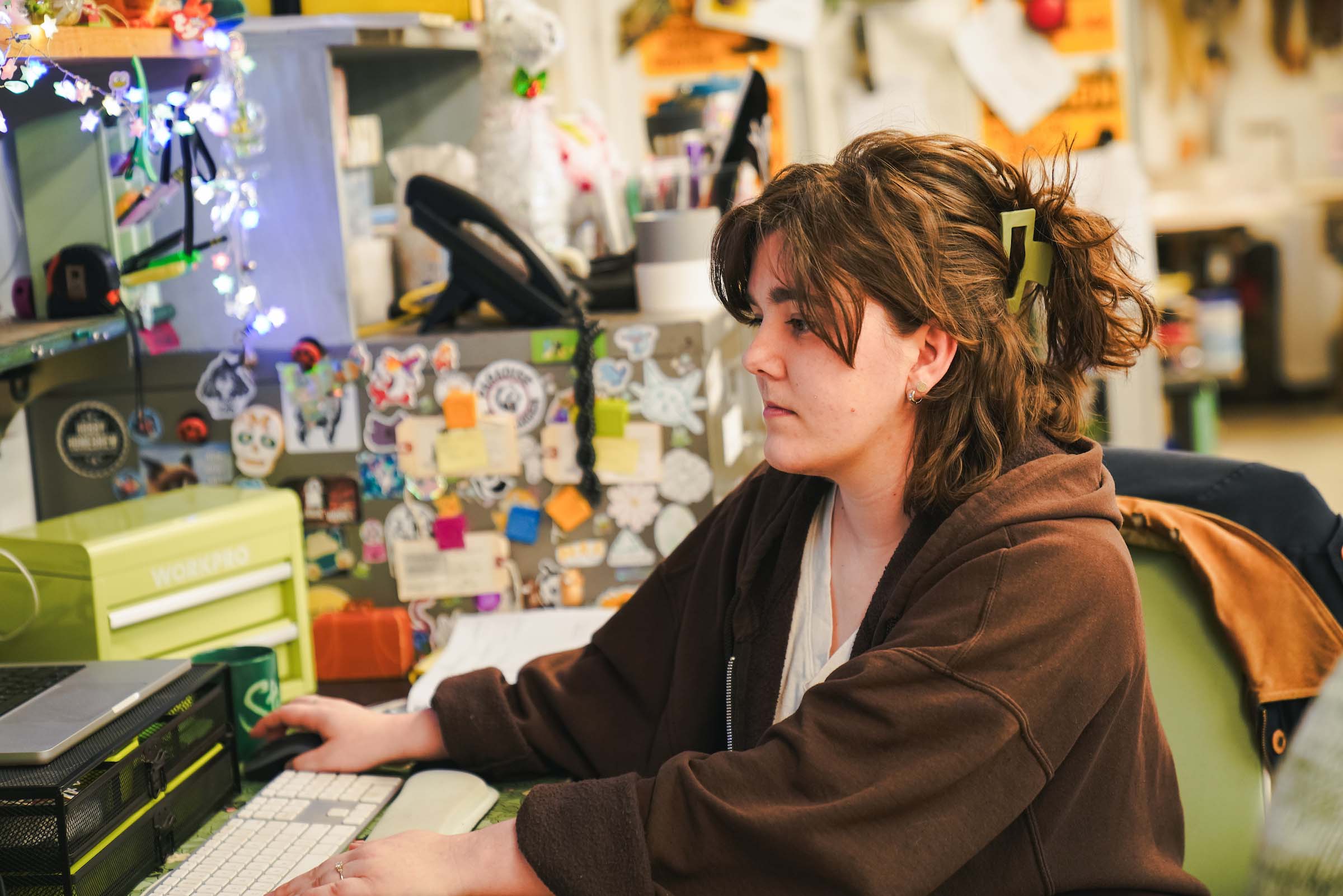
Kat Kreutz is the properties stock and tech coordinator in the Prop Shop. Photo: Chris Boyes
According to Drone, SMTD’s prop stock is one of the best in the Midwest, and the props database is an essential tool that uses bar codes to track every item in the stock that’s “bigger than a bread box.” The database is essential not just for the props team but for the productions’ designers, all of whom can use it to search among thousands of items for exactly what they need. The enormous collection of props is spread out over two large off-campus warehouses and three storage spaces in SMTD buildings – one in the Walgreen Drama Center and two in the Power Center. One of those spaces houses nothing but playable musical instruments that can be transformed to meet a particular production’s needs, Drone pointed out: “a director and designer might want to use a piano on stage, but instead of having it be a black Steinway or something that normally would come from piano tech, they might want it painted bright blue.”
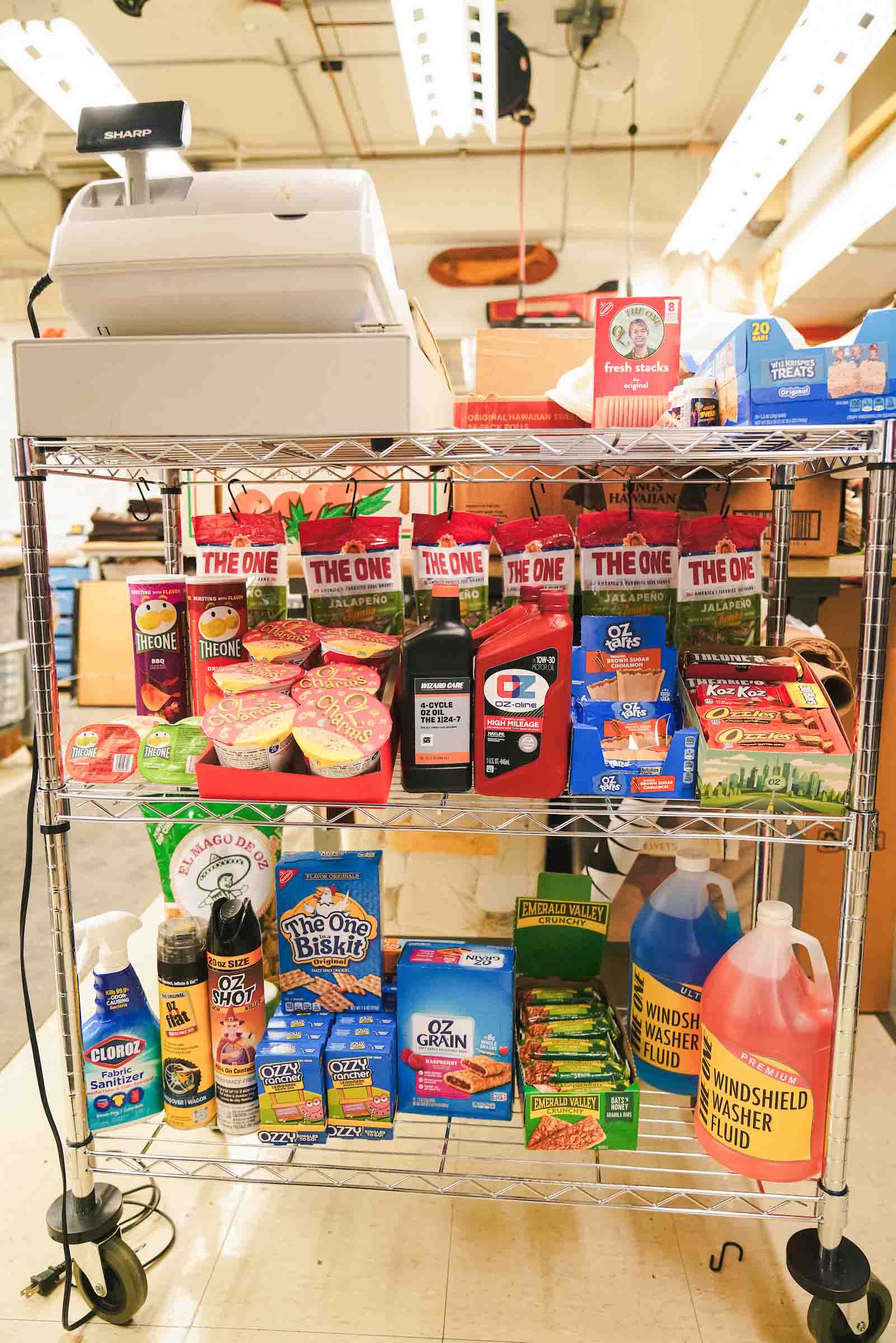
Each item on the bodega cart made for Our Oz featured customized packaging for the Oz-themed items. Photo: Chris Boyes
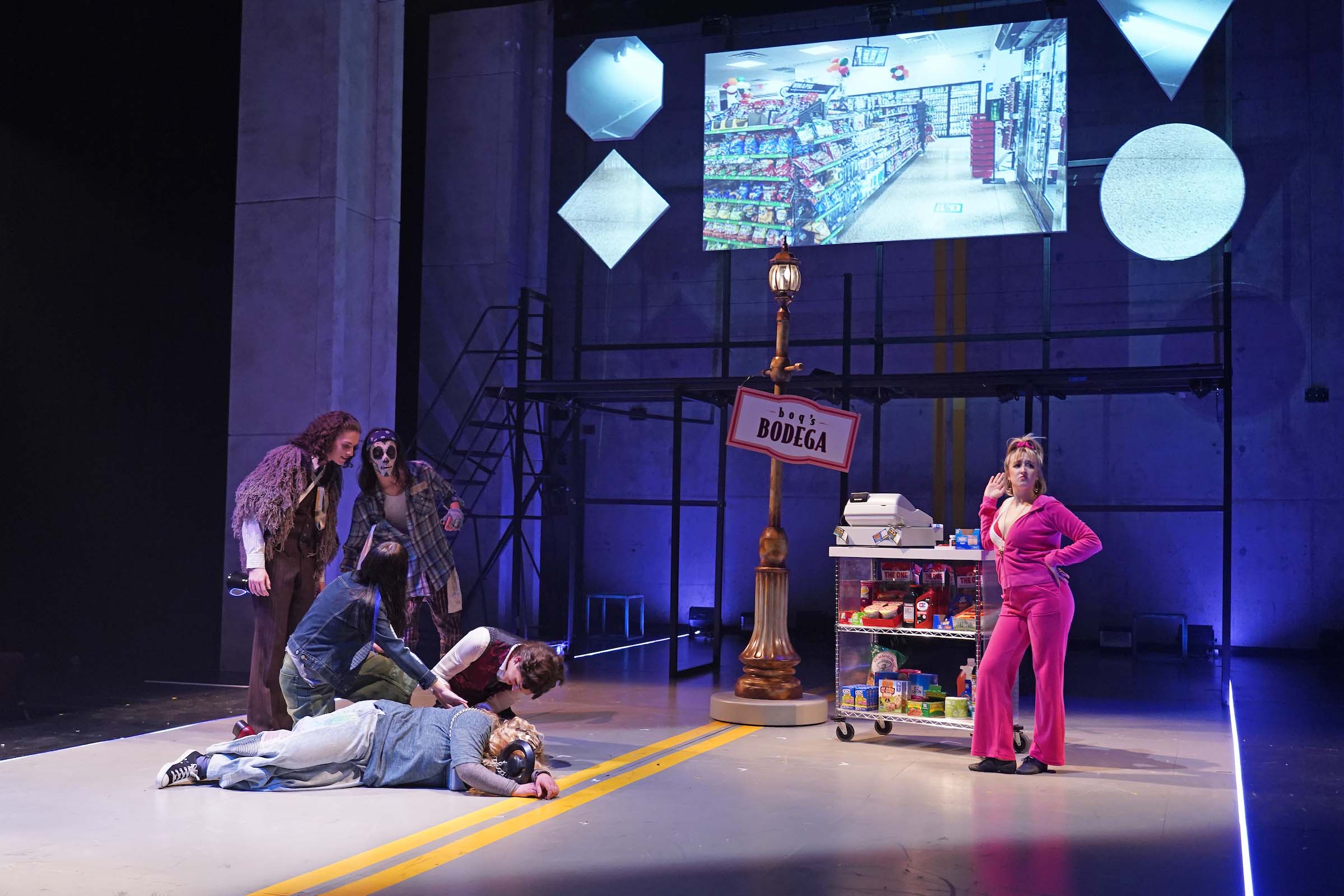
The Oz-themed bodega cart onstage during Our Oz. Photo: Peter Smith
For the staff and the students who work in the Prop Shop, the smallest details assume the greatest importance. Accurate, authentic props support the actors’ performances and help the audience to become completely absorbed in the world that’s been created onstage. The converse is also true. “A prop’s job is to add to the story, not take away from it. I don’t want anything that we put on stage to distract from the story that’s being told by the actors,” Drone noted. “If we put currency onstage, we make sure it’s correct for the time period and location. If we are doing newspapers, they have to be in the correct language.” When SMTD did a production of Russian playwright Anton Chekhov’s Three Sisters, the Prop Shop adapted a period-appropriate typewriter, making Cyrillic labels for the keys. During the winter 2025 semester, the shop was preparing blankets that would be used in Titanic, for a scene after the survivors had been rescued by the ship RMS Carpathia. Keys researched the font used on the actual ship, and that’s the design that appears on the blankets used onstage.
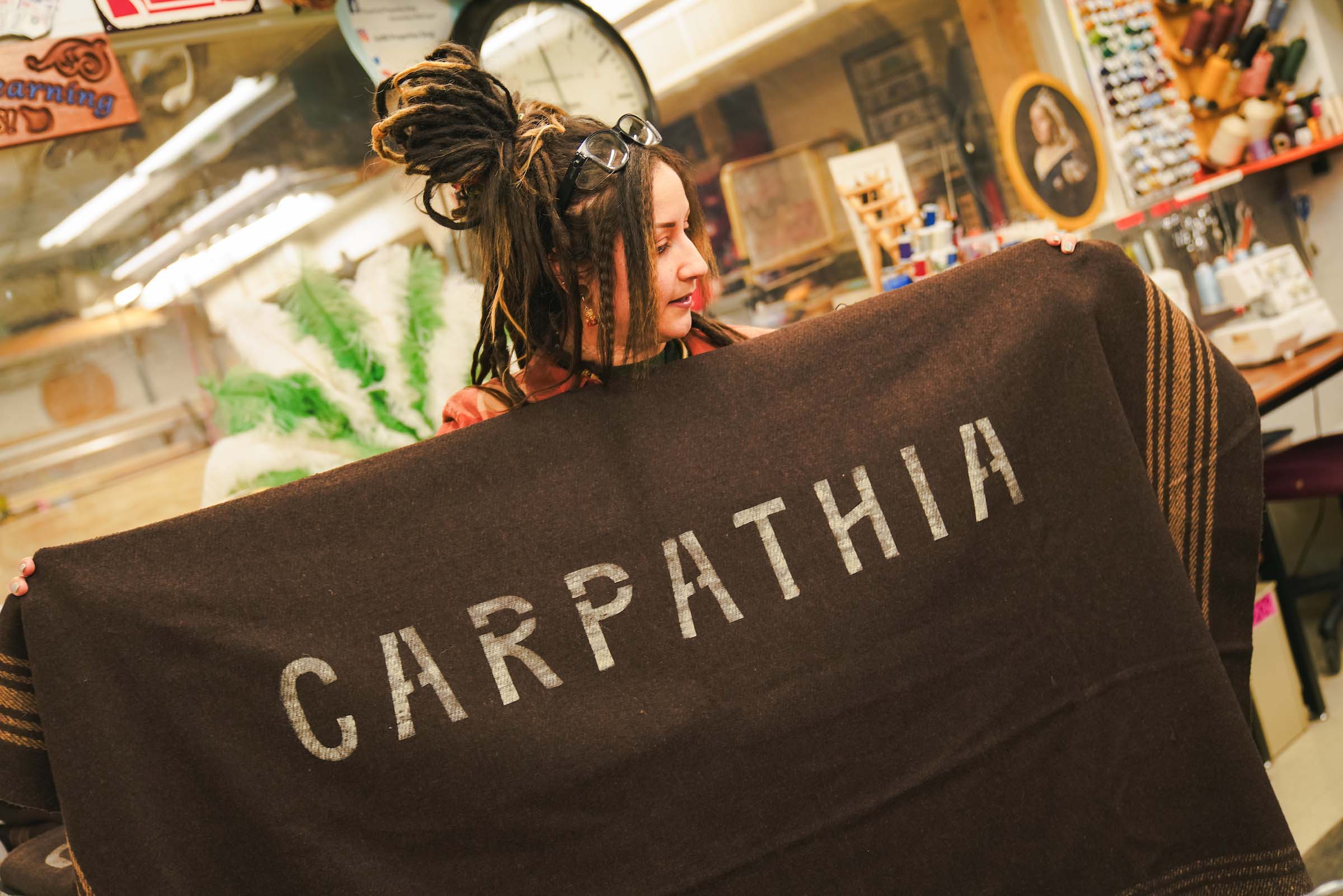
Dani Keys with one of the blankets used on-stage in Titanic, featuring the historically accurate font for the RMS Carpathia. Photo: Chris Boyes
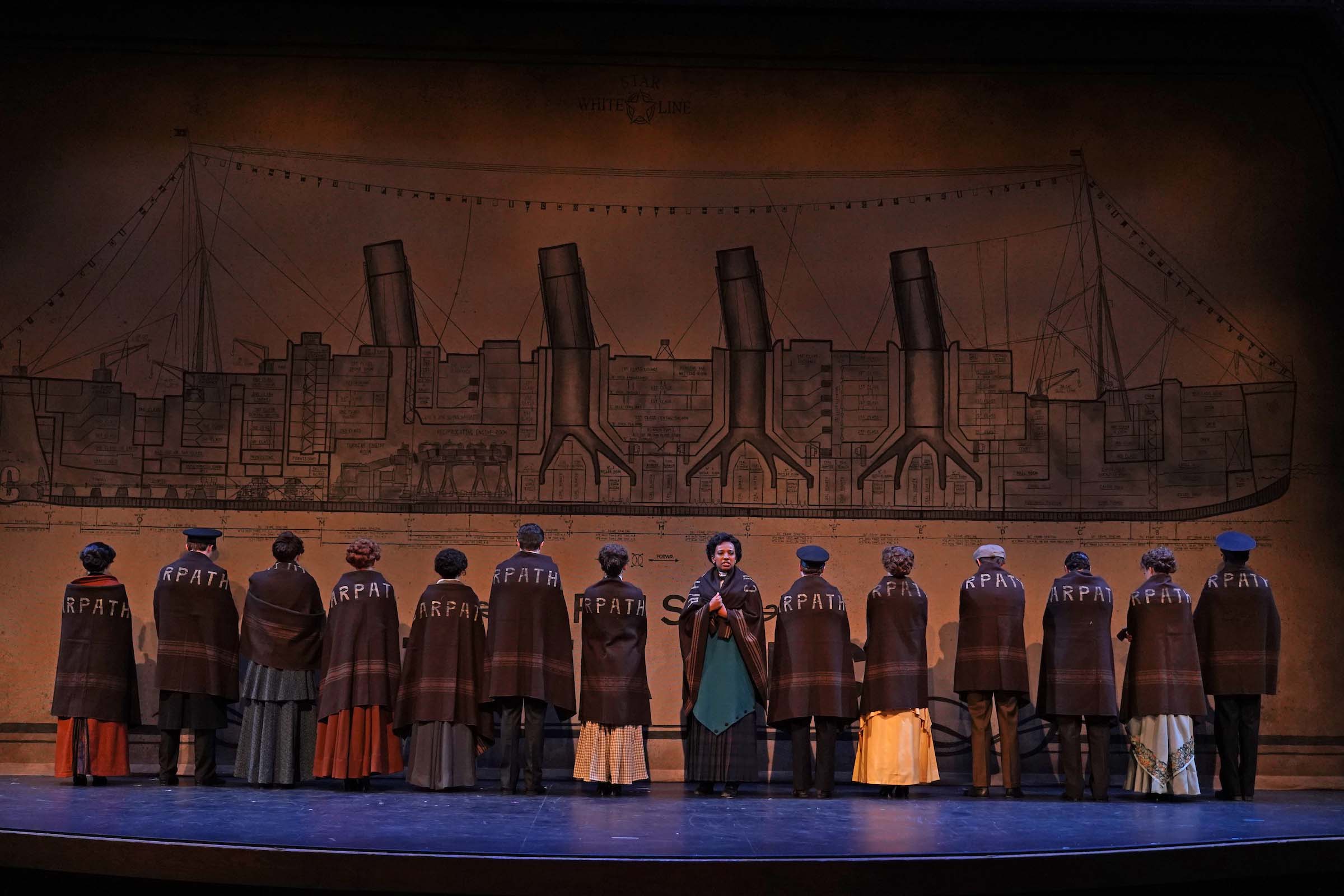
In Titanic, survivors are wrapped in blankets after being rescued by the RMS Carpathia. Photo: Peter Smith
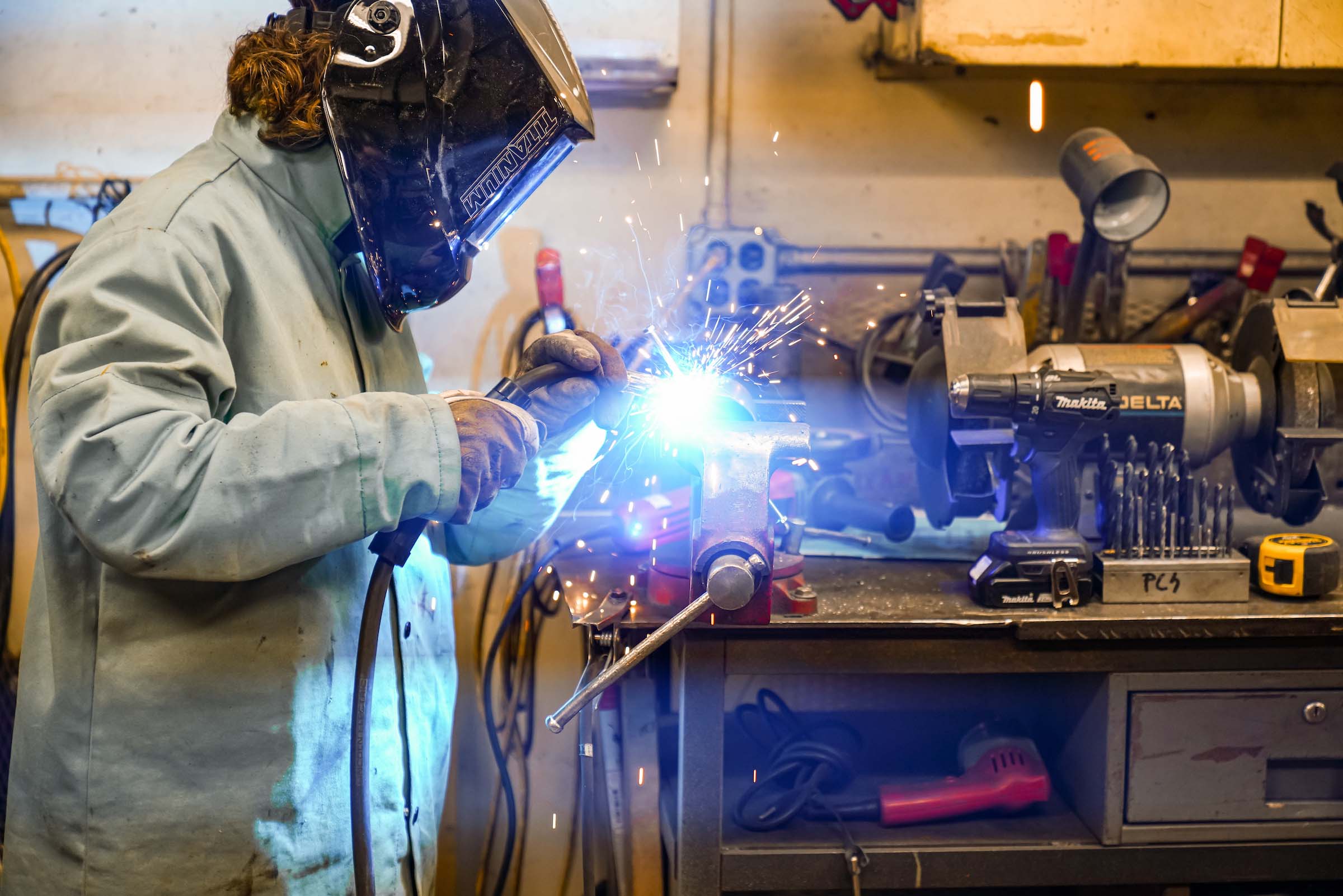
The students who work in the Prop Shop, whether for course credit or as a part-time job, have abundant opportunities to learn the tricks of the trade from the professionals on staff. On a given day during the winter 2025 semester, students were welding, making coils of realistic-looking barbed wire for Our Oz, and helping to create covers for a new set of footlights for the Lydia Mendelssohn Theatre, making their debut in The Turn of the Screw.
For Maddie Dick (BFA ’26, musical theatre), the variety of projects in the Prop Shop is exactly why she chose to work there: “I wanted to do props specifically because it covers all of the things that any of the other shops do in one place.” The skills students gain in the Prop Shop are applied to a variety of productions during their time at SMTD – including UProd and student-produced shows – and make them well-rounded theatre professionals after they graduate. Tessie Morales, a junior earning a BFA in acting and a degree in sociology and social work, conveyed her gratitude for the support and mentorship of the props team. In working on props for two student productions, she often came to the props team for help. “All of them always have some masterful way of approaching a prop,” she shared, “so I want to thank the props team right now.”
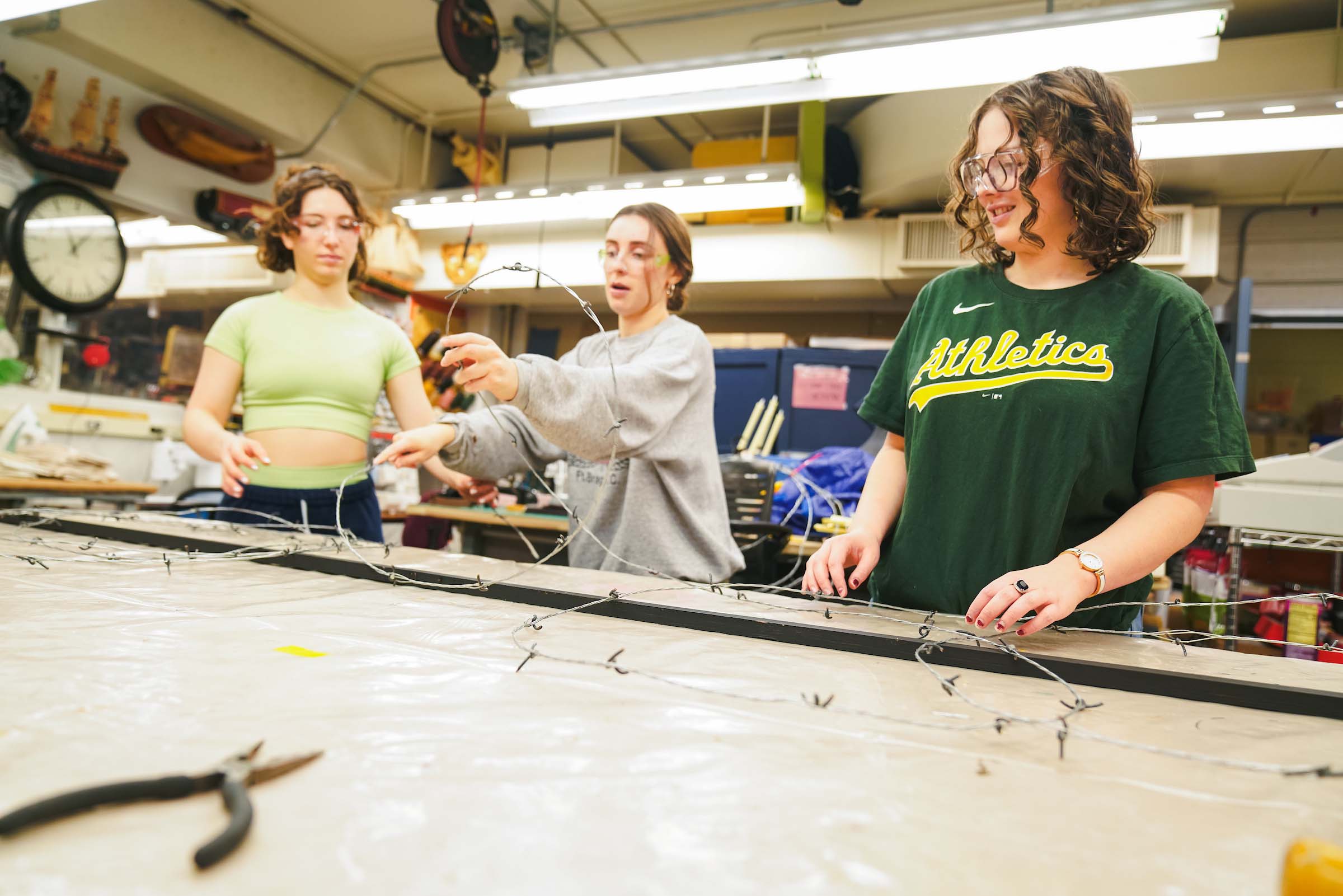
Maddie Dick, LSA student Leah Stchur, and Tessie Morales create realistic-looking barbed wire for Our Oz. Photo: Chris Boyes
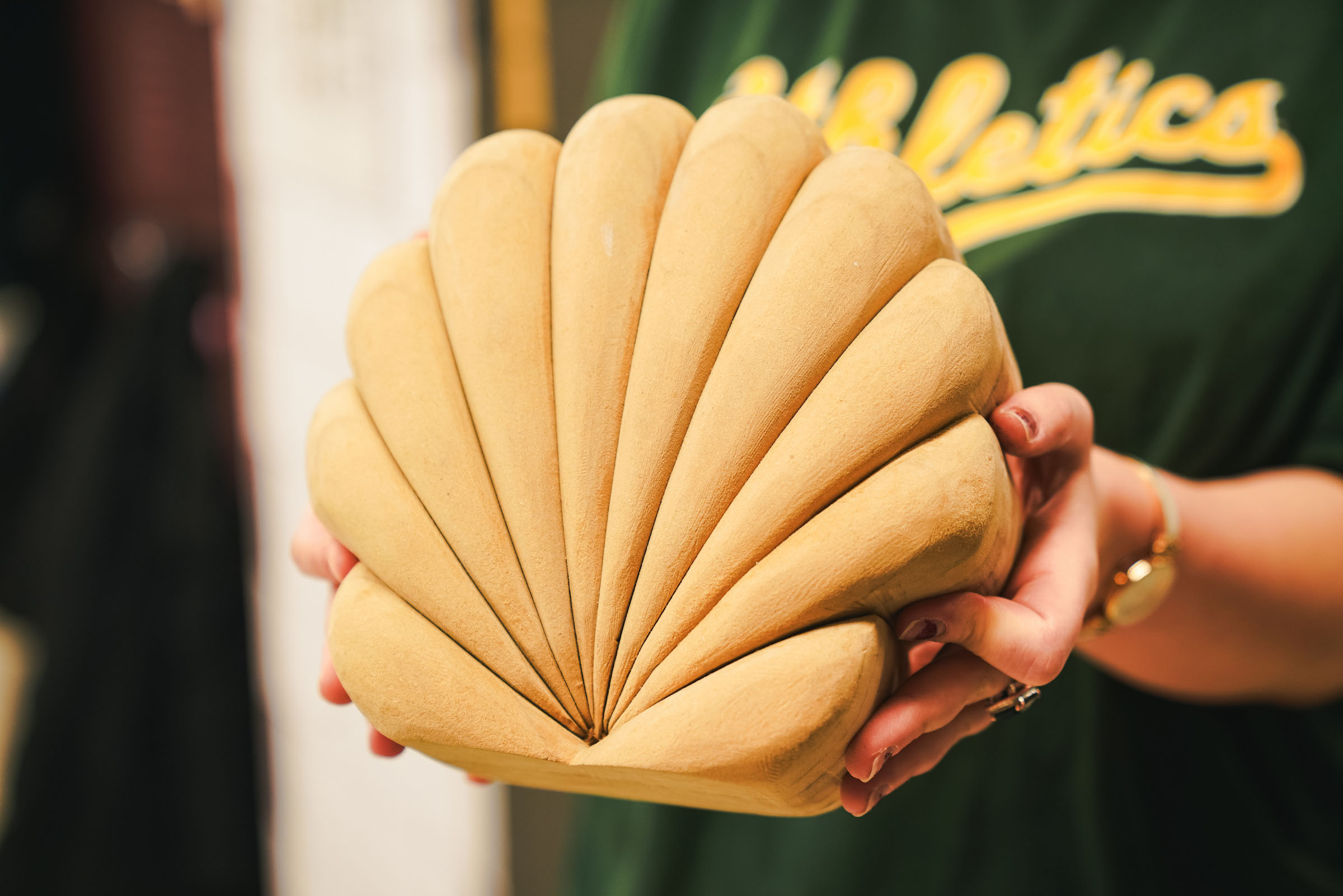
Making the footlight shells began with creating this wooden “buck,” which was used to make one lightweight plastic mold. That mold was then used to make multiple plaster of paris bucks.
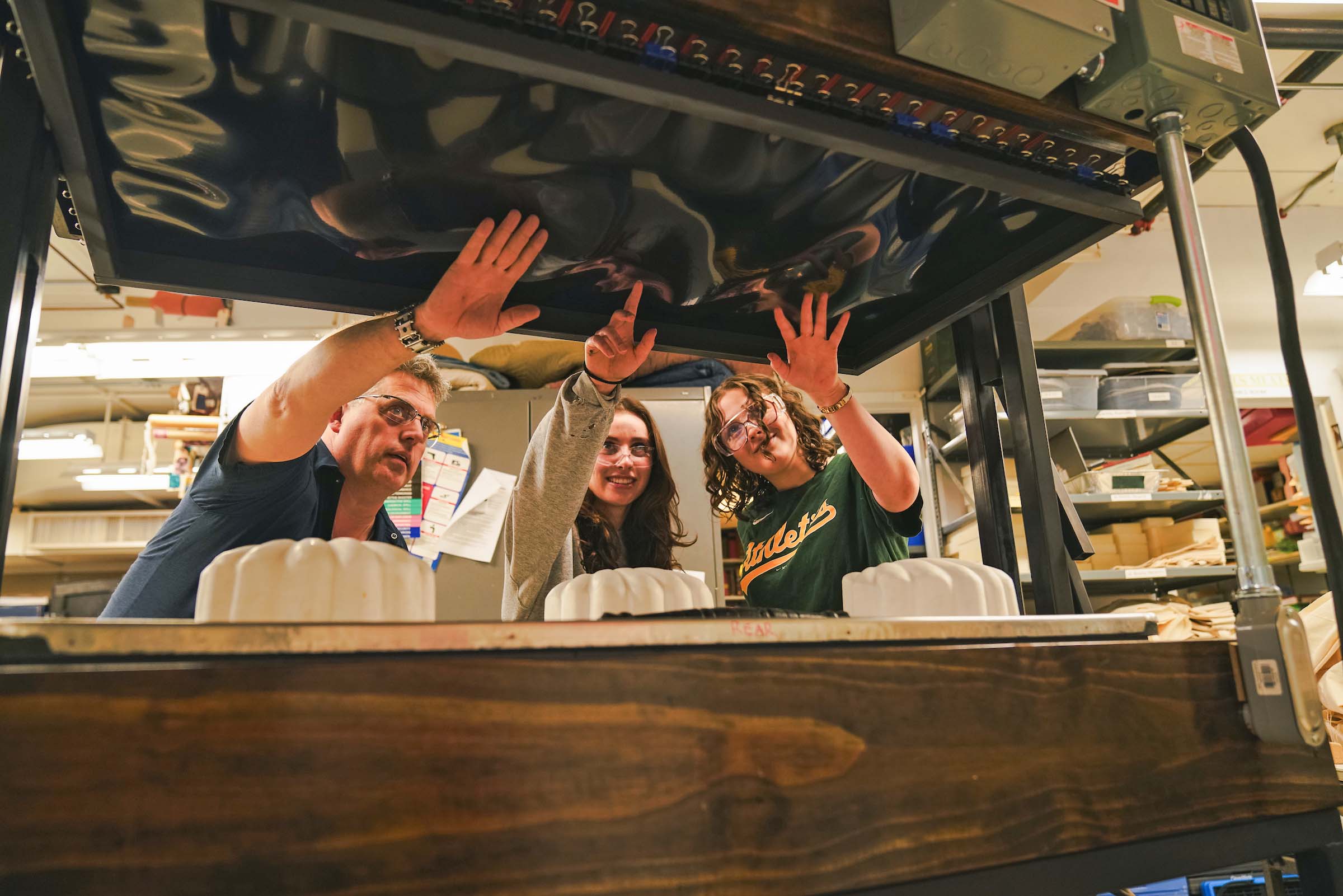
This vacuum forming machine then heated heavy-duty plastic, which was formed around the plaster-of-paris shells.
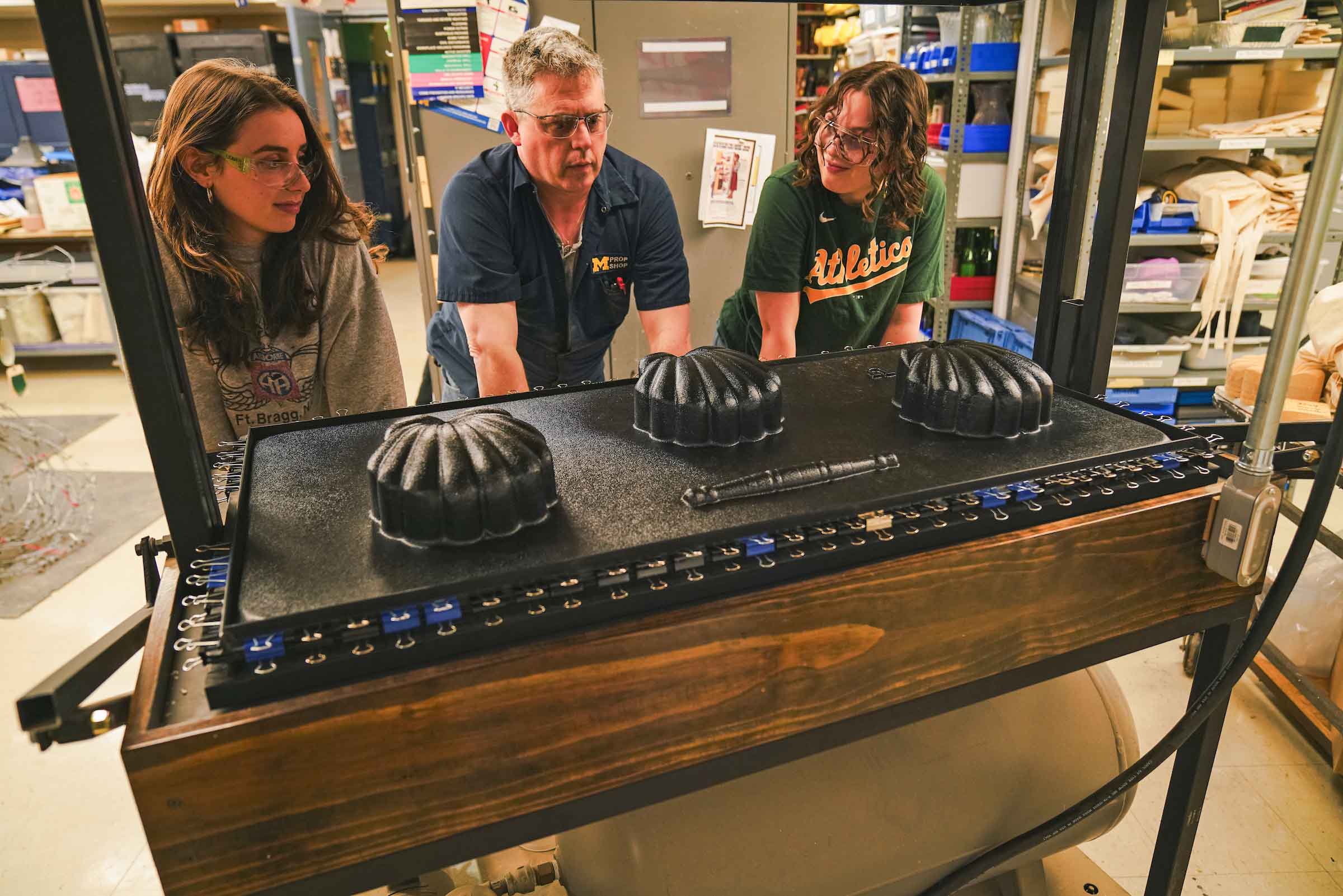
After the plastic shells were created, they were painted to resemble copper and can now be used for any production in the Mendelssohn Theatre. Photos: Chris Boyes
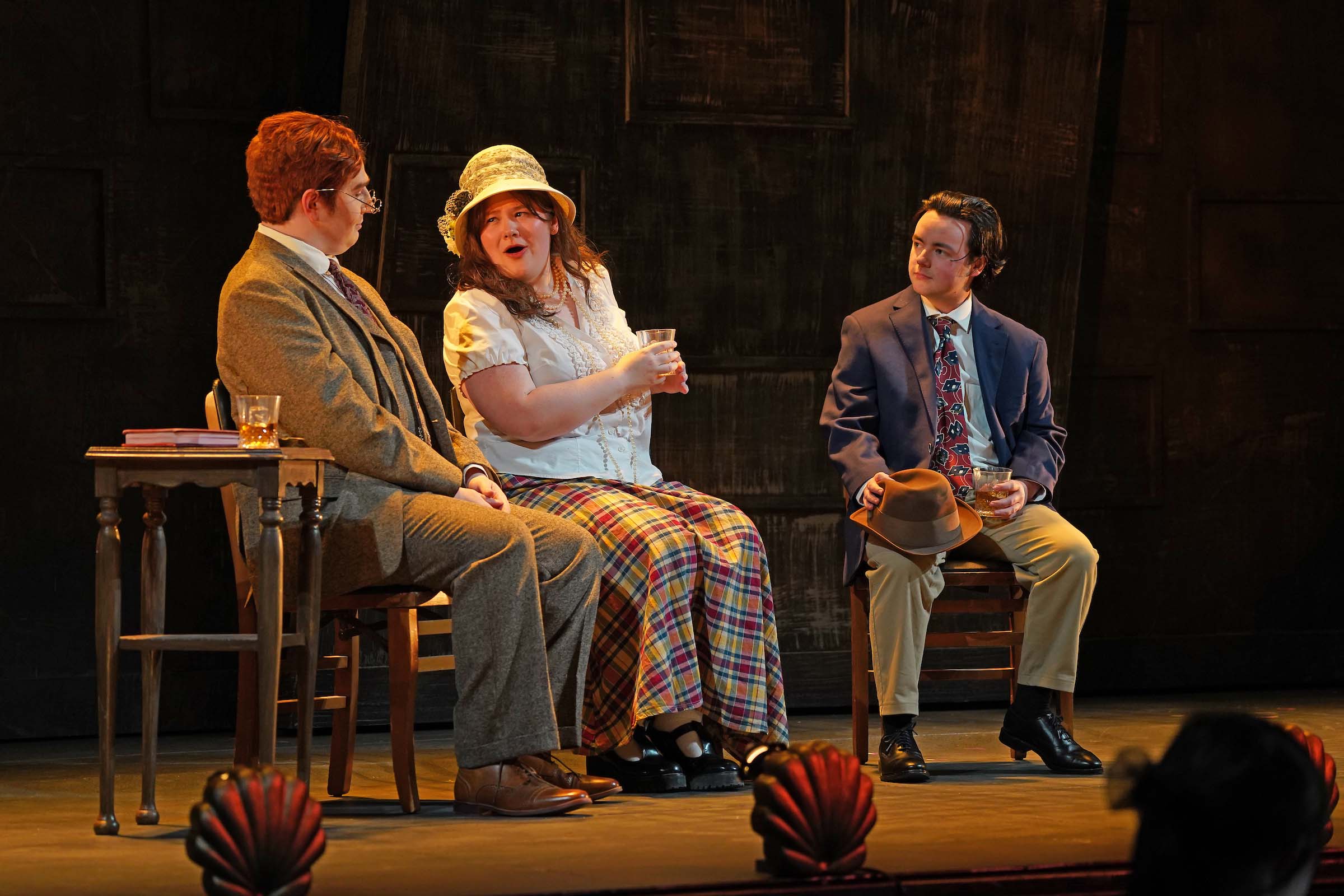
The completed footlight shells first appeared onstage during The Turn of the Screw. Photo: Peter Smith
Photo Gallery