
For the nine ticketed, fully produced events at the School of Music, Theatre & Dance each year, a cadre of students, staff, and faculty collaborate to build the technical aspects of each production. They create the lighting and sound design and build costumes, wigs, scenery, and props.
Technical elements play a foundational role in building the production’s world and transporting audiences, and at SMTD, the magic happens in theatrical shops managed by University Productions (aka UProd), SMTD’s producing arm. The shops consist of the Costume Shop; the Prop Shop; two Scene Shops (one in the Power Center and one in the Walgreen Drama Center), each of which also includes a Scenic Painting Shop; the Sound Studio; the Theatrical Lighting Shop; and the Wig, Hair & Makeup Studio.
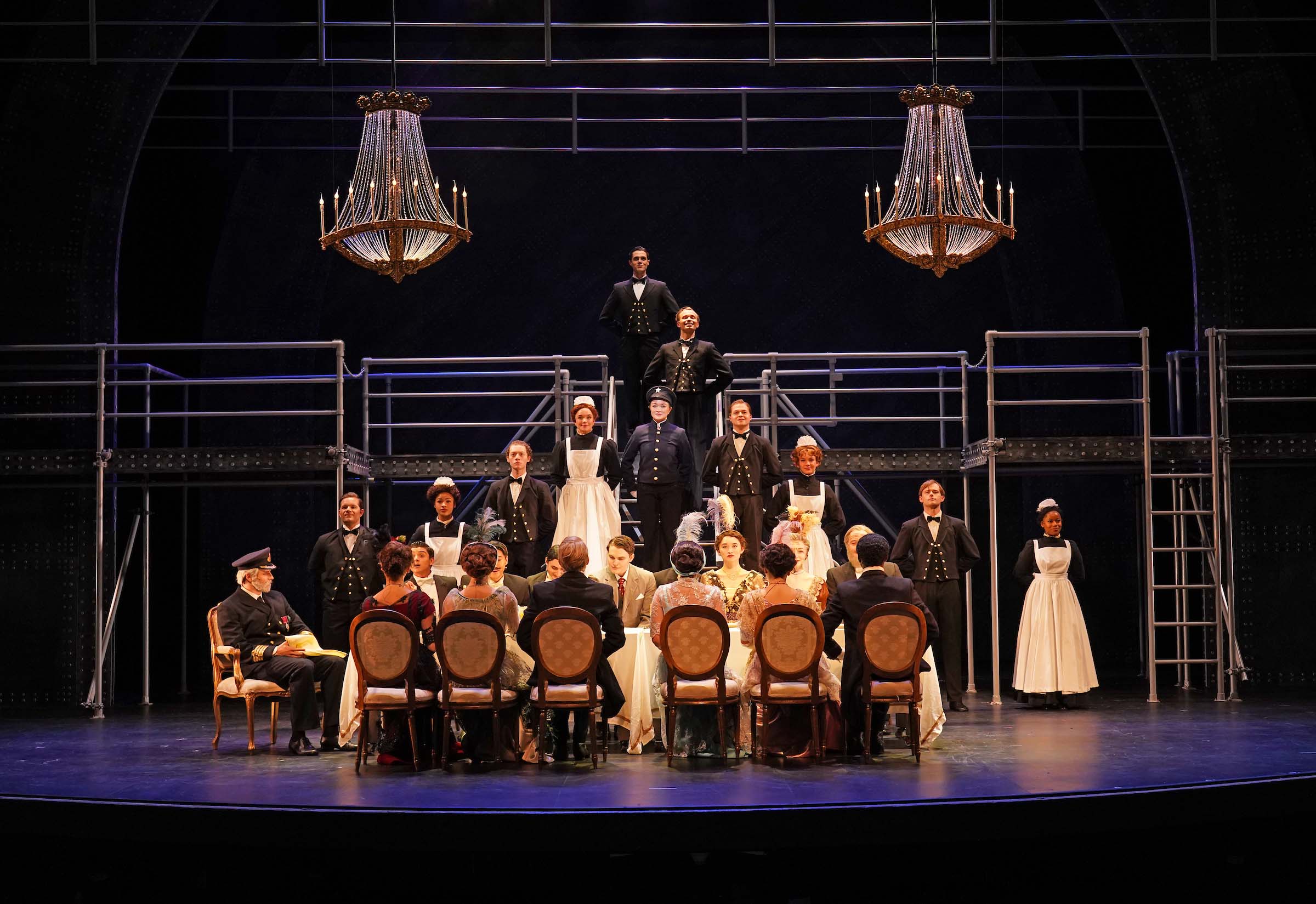
Titanic, performed at the Power Center for the Performing Arts, April 2025. Photo: Peter Smith
The technical aspects of every production begin with the design team. Working in tandem with the director, designers develop their vision for the production. They conduct research, explore concepts, create sketches and renderings, and ultimately produce designs that are then shared with the theatrical shops. What follows is a period of back and forth between the shop heads, the designers, and UProd’s production team to determine what is feasible within the constraints of time, budget, and labor. Then the engineers, carpenters, artists, and artisans get to work to implement the designers’ visions.
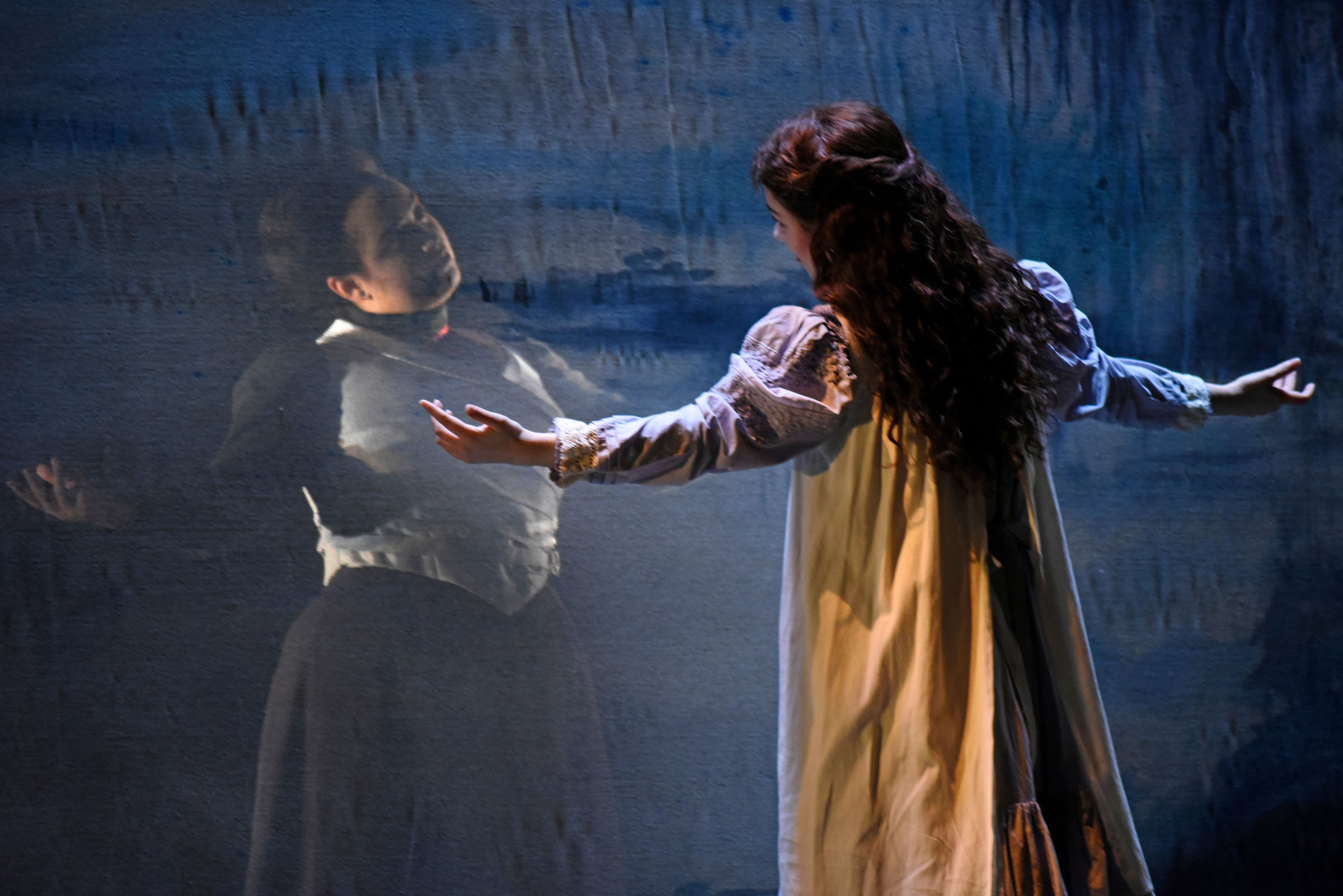
The Turn of the Screw, performed at the Lydia Mendelssohn Theatre, March 2025. Photo: Peter Smith
A significant part of managing a UProd shop is logistics – juggling multiple productions at once, managing staff and student schedules, and determining how to make space for the many items being built for each production. Dealing with space limitations is particularly challenging for the scene shops, which deal with extremely large pieces of scenery, usually for more than one production at a time.
The shops are staffed by professionals with extensive experience in their respective fields. Students work in the shops as part of their course requirements, or as part-time or work-study jobs. The students working in the shops are not just design and production majors – students earning performance degrees are required to take courses exploring all that goes on backstage, spending a few weeks in each shop. Through these courses, performers gain a fuller understanding of, and respect for, all that goes into putting together a fully staged production. The appeal of working in the theatrical shops spreads well beyond SMTD; several of the student workers come to the shops from other U-M schools and colleges, from Stamps School of Art & Design to LSA to Engineering.
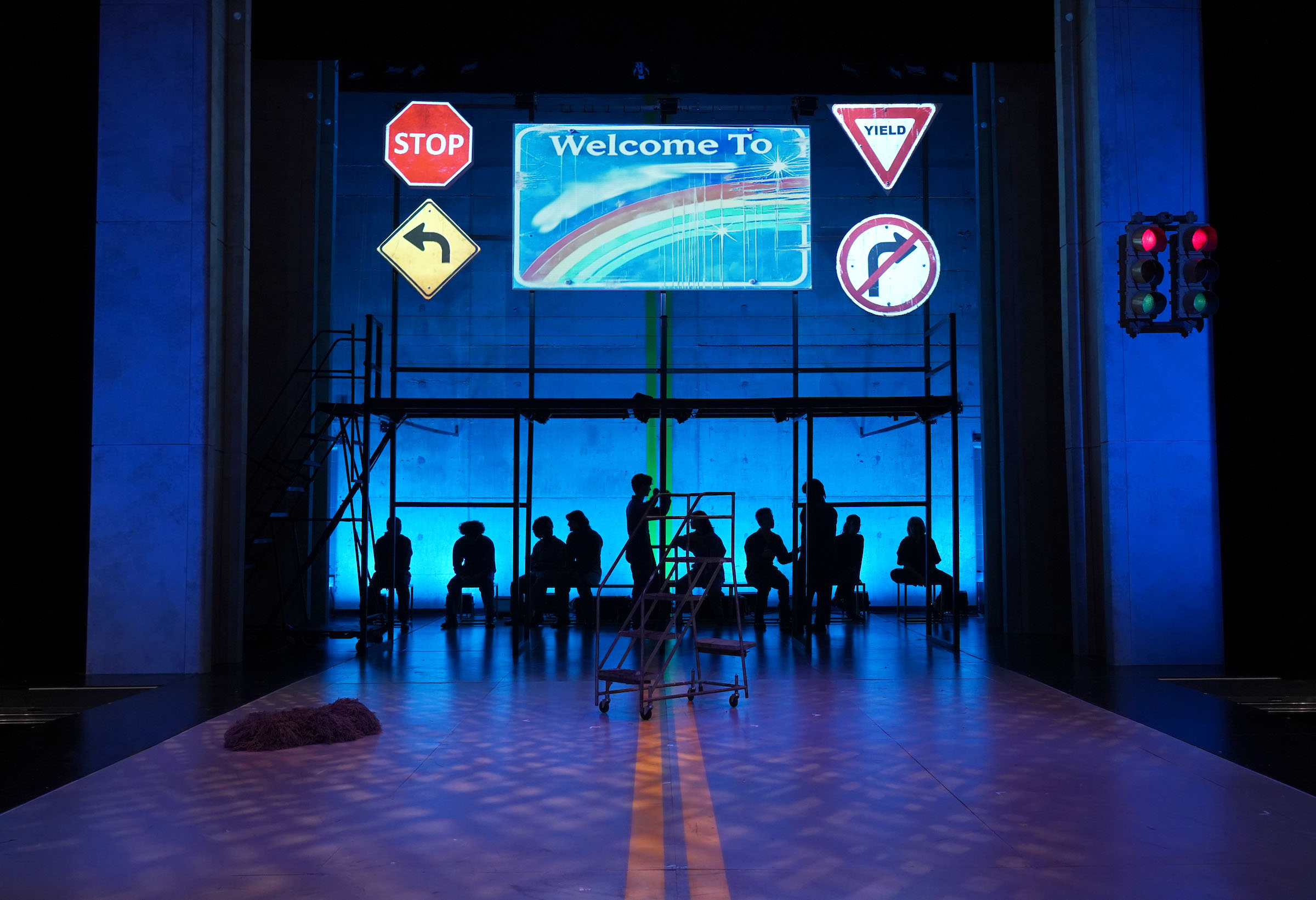
Our Oz, performed at the Arthur Miller Theatre, April 2025. Photo: Peter Smith
Design and production students also take a course that surveys all of the theatrical shops, after which they can dive deeply into whatever interests them. With experience, they can assume greater responsibility in the shops or hold leadership positions backstage and as designers of sets, costumes, and lighting. And because each year’s productions include plays, musicals, and operas – with works spanning numerous genres, styles, and time periods – the students amass vast experience over the course of four years.
During the winter 2025 semester, the SMTD marketing & communications team spent several days visiting the UProd shops to get a snapshot of the kind of work being done by the staff, faculty, and students in each. While the work varies from one shop to the next, it is all connected by a common thread: it is performed with commitment, dedication, creativity, and curiosity by both students and professionals.