11/18/2025 Building a World: The UProd Theatrical Shops at Work > The Sound Studio
The Sound Studio: The UProd Theatrical Shops at Work
If you’ve attended a play at SMTD during the last few decades, chances are you’ve experienced the sound designs of Henry Reynolds. An information systems administrator and assistant professor of theatre, Reynolds worked at SMTD for forty years (he retired in June 2025) and served as the sound designer for countless plays. This work could involve sound effects like a ringing phone or a gentle rain, ambient sounds intended to set a tone before a performance, or underscoring during the performance used to emphasize a mood or an emotion.
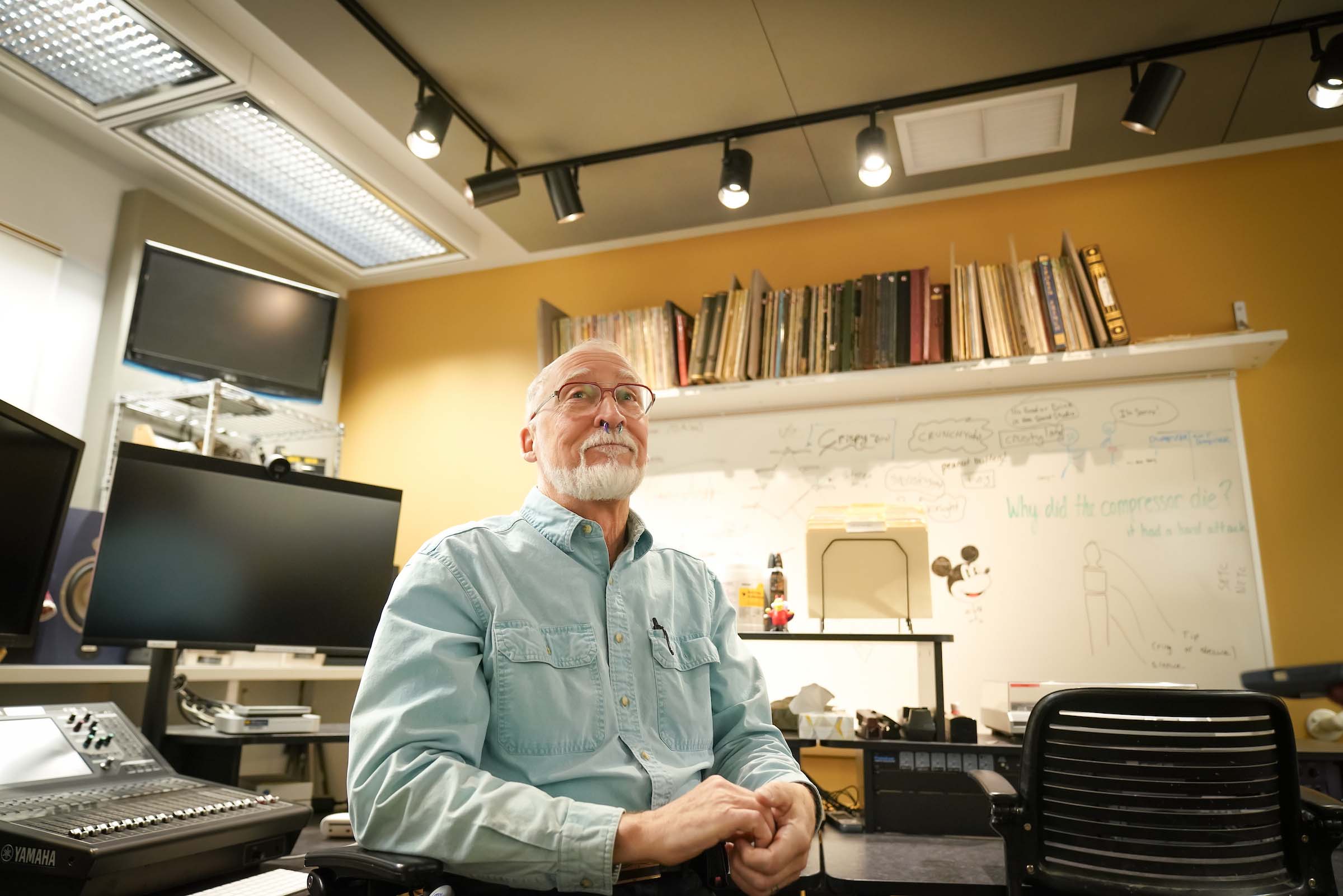
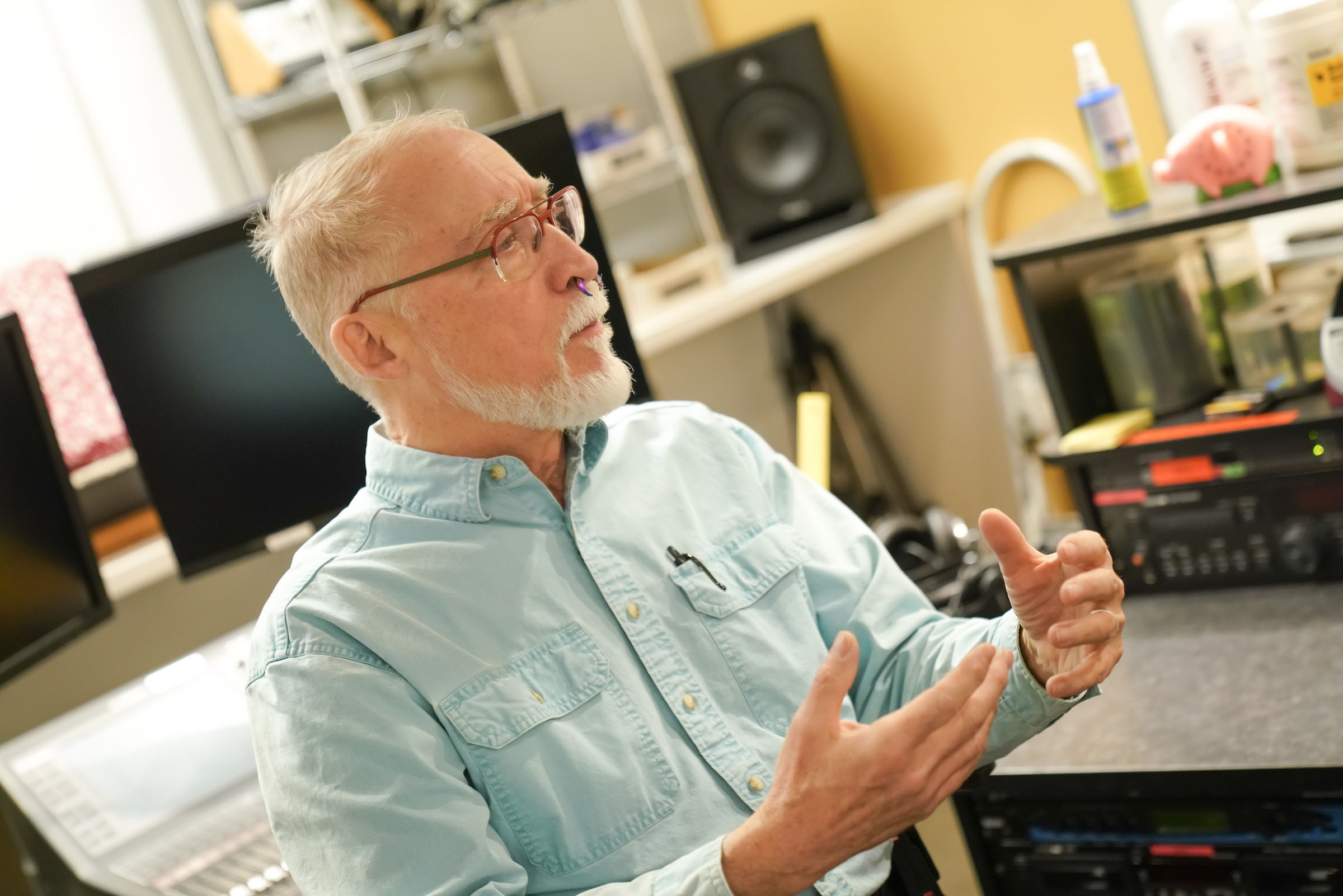
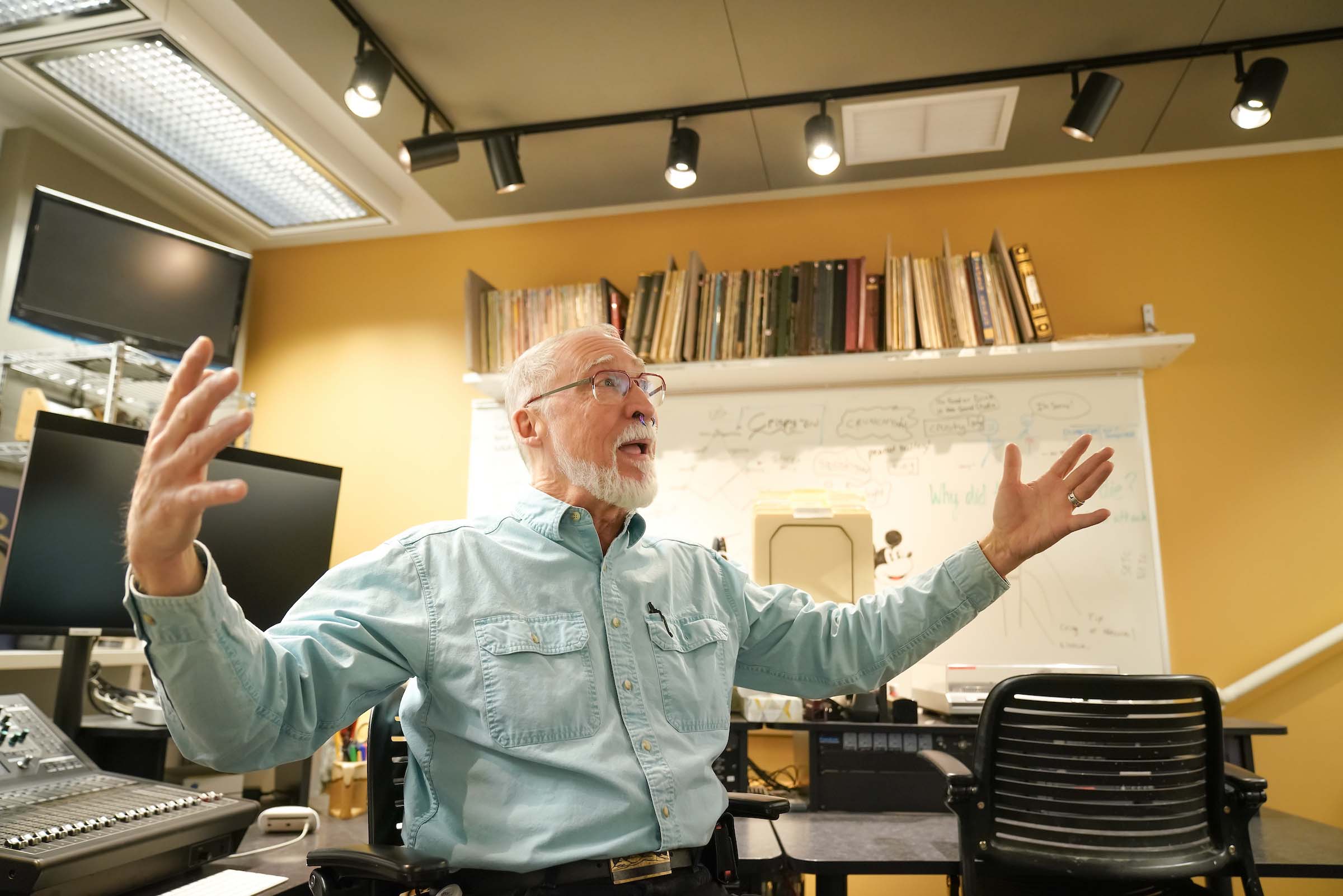
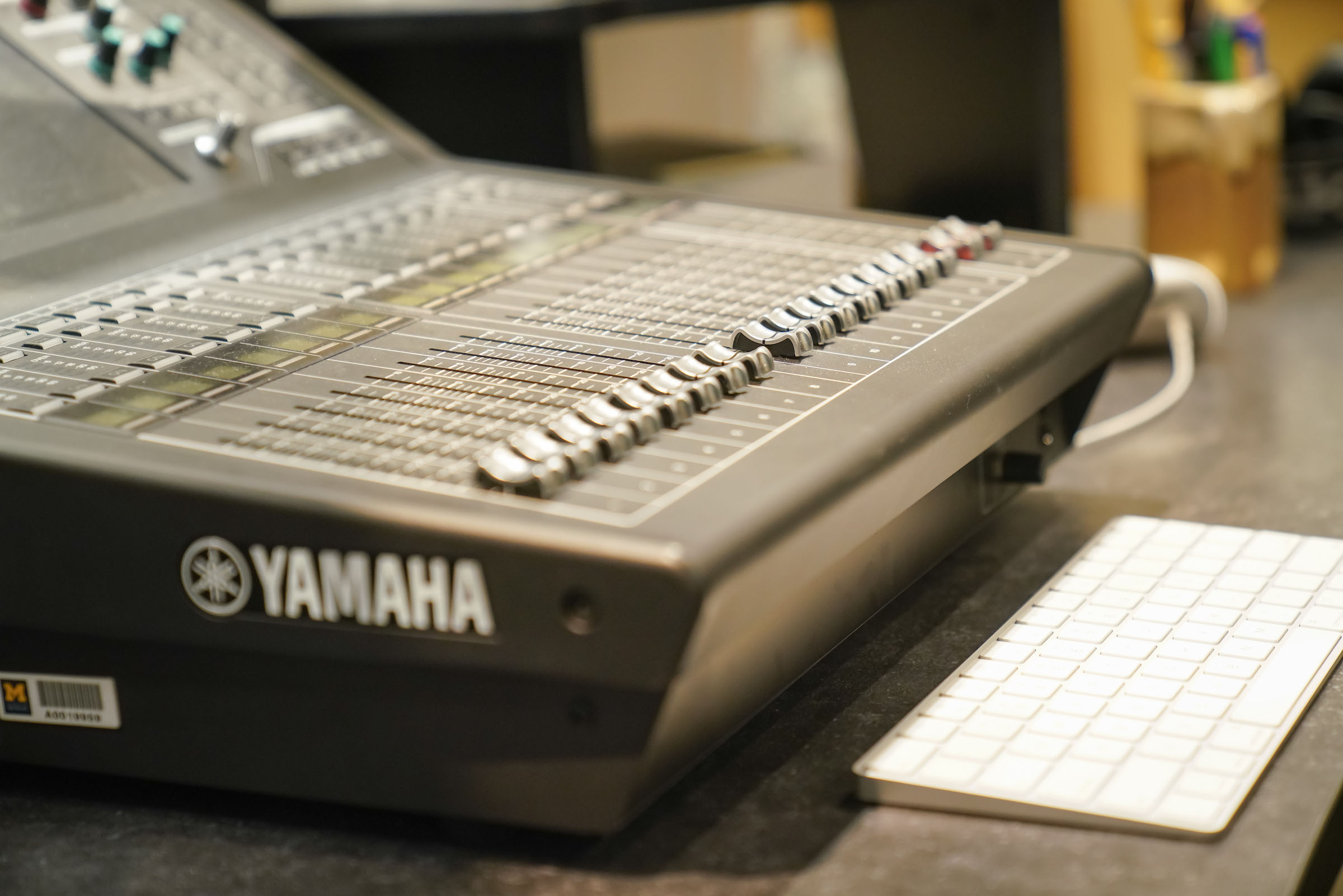
Henry Reynolds, retired sound designer, information systems administrator, and assistant professor, in the Sound Studio in the Walgreen Drama Center. Photos: Chris Boyes
Reynolds also taught classes with SMTD theatre students interested in sound design, as well as students from the Department of Performing Arts Technology (PAT). “The PAT students work with me, applying the skills they have, which are quite remarkable in both composition and editing, and they apply them to the theatre world,” Reynolds shared.
For each play Reynolds worked on, the process began with a careful reading of the play to get an overall sense of the work as well as noting any specific sound effects that would be needed. Next, Reynolds explained, he would confer with the director to ask about the vibe of the play: “What’s the treatment? Are we going to treat it in 1945 the way it’s written? Or are we going to twist it? Are we going to be real aggressive with sound and have lots of underscoring and music and move the emotive window, or are we going to let the play speak for itself?” Then Reynolds and the students he was working with would begin to map out the sound design plan, divvying up tasks among them.
Often the sound team can find what they need in UProd’s library of about 70,000 sound effects – what Reynolds described as “elemental sounds – a door closing, a creak, a squeak, a squawk.” Sometimes they need to combine sounds, “because a door closing is usually a creak and then the hardware going click,” he explained. “So we’ve got to get all those parts and put them together into one thing. We have to build it.” Reynolds would impress upon the students the importance of doing research to ensure the accuracy and authenticity of sound effects. “I’ll tell people, ‘that’s not a cricket, that’s a grasshopper, that’s a different sound,’” he noted, “or, ‘you know, that bird doesn’t exist in North America.’” Sometimes, when the team couldn’t find exactly what they need, they would have to create the sound effect themselves and record it, a creative and time-consuming process.
Once the sound design had been developed and the show was ready to open, Reynolds handed over the reins to a student whose job was to run the sound effects during the performances, with Reynolds on standby in case a problem arose.
Like all technical aspects of theatre, an effective sound design is one that contributes to the production without distracting from it. In describing the sound design for A Few Good Men during the winter 2025 semester, Reynolds noted: “There were lots of sounds happening that were subtle. But the sounds themselves weren’t what was important about the cues. The sound cues were about establishing ambient effects that enhanced what was taking place in the moment onstage.”
Photo Gallery