11/18/2025 Building a World: The UProd Theatrical Shops at Work > The Scene Shops
The Scene Shops: The UProd Theatrical Shops at Work
On any given day during the academic year, visitors to the scene shops in the Power Center or Walgreen Drama Center will hear the whirring and banging of various power tools filling the cavernous spaces as professionals and students build massive pieces of scenery for SMTD productions. The shops accommodate the construction of every architectural structure on the stage, including walls, doors, flooring, scaffolding, stairs, and much more.
The Power Center Scene Shop

Chad Hain, head of the Power Center scene shop. Photo: Chris Boyes
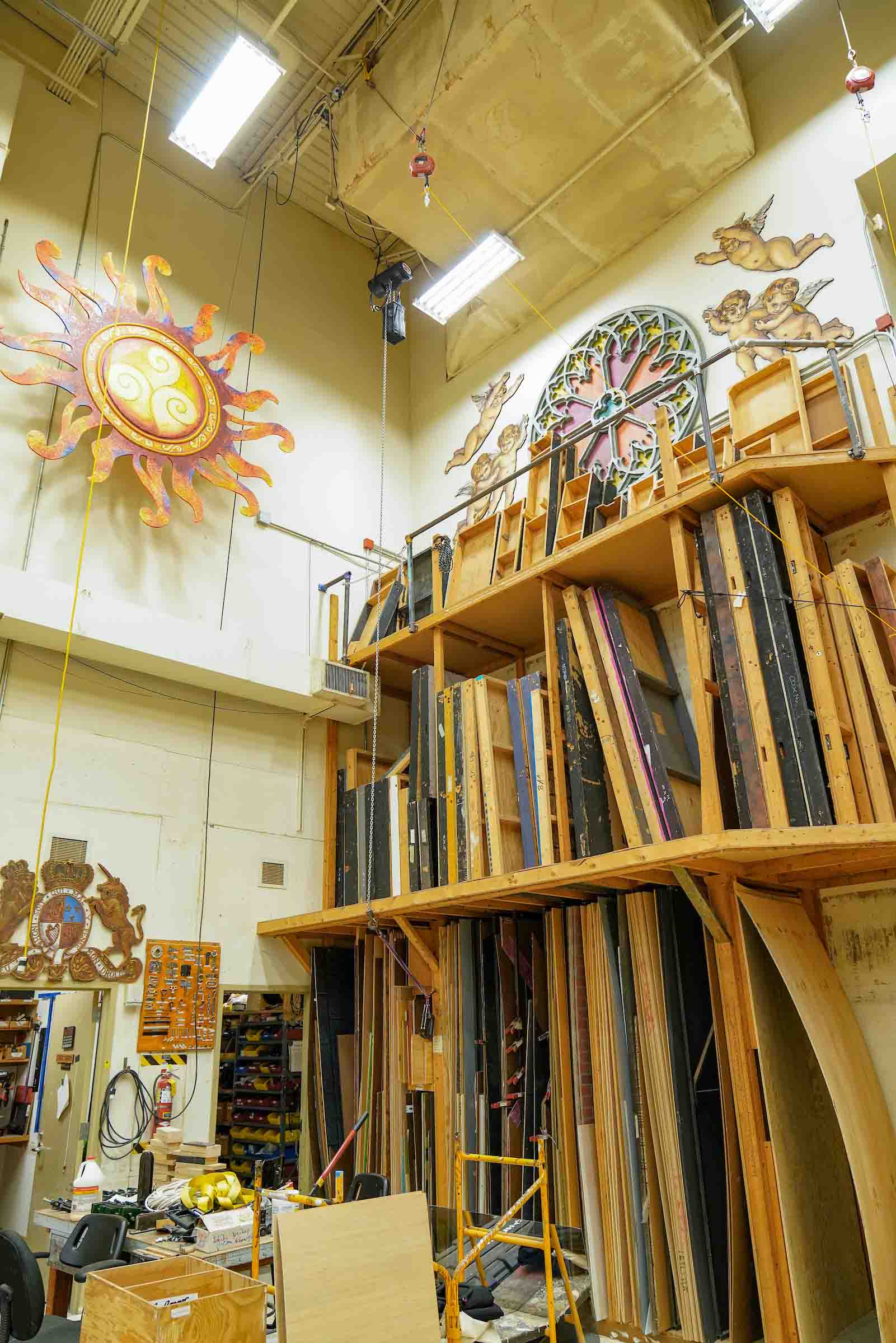
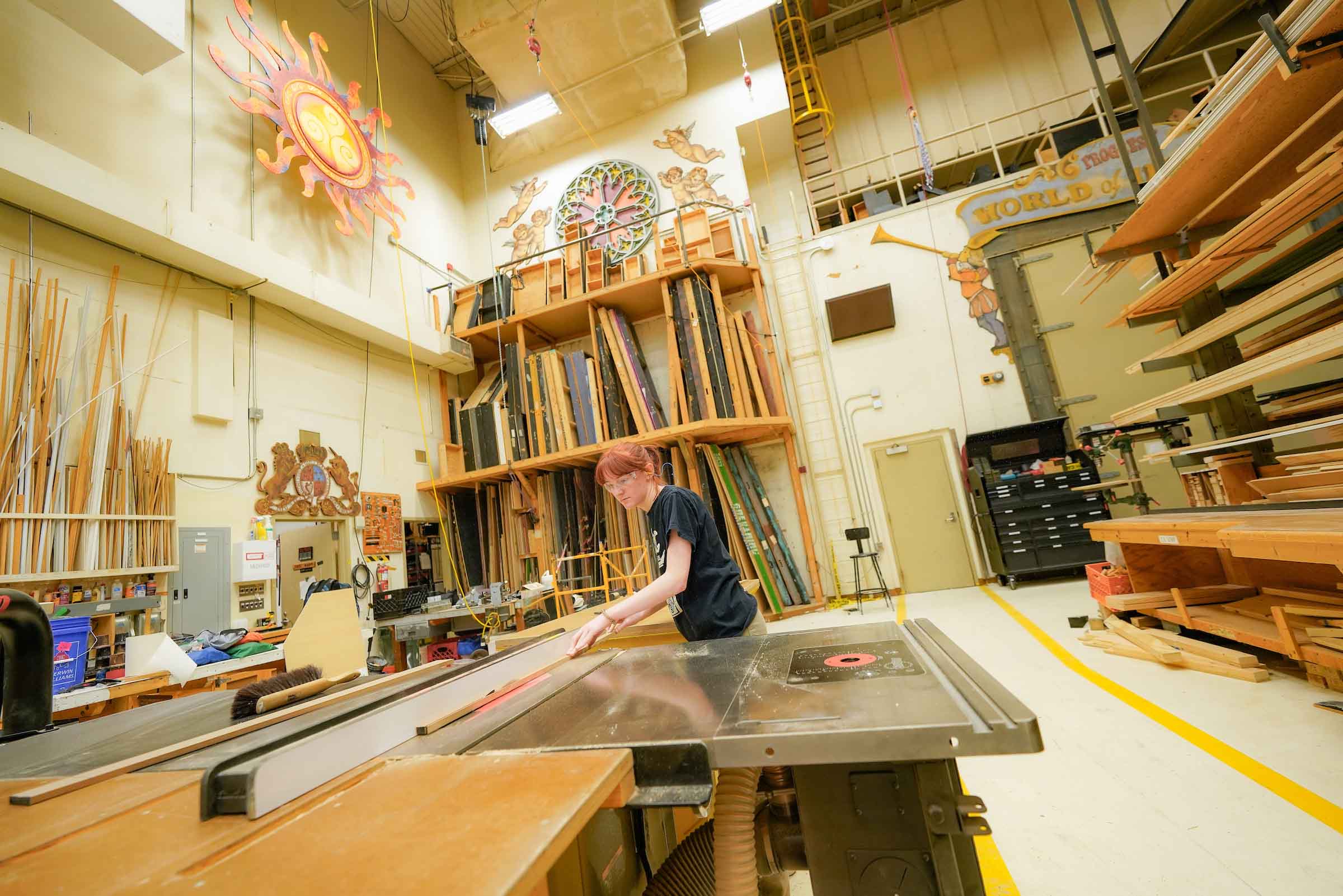
The Power Center Scene Shop, which is run by Chad Hain, builds scenery for all of SMTD’s Power Center productions and the musical theatre and opera productions in the Lydia Mendelssohn Theatre. With 40-foot ceilings and walls lined with tools, lumber, and colorful pieces of scenery from past productions, the shop is staffed by professional artisans experienced in all aspects of scenic construction as well as a small number of student workers.
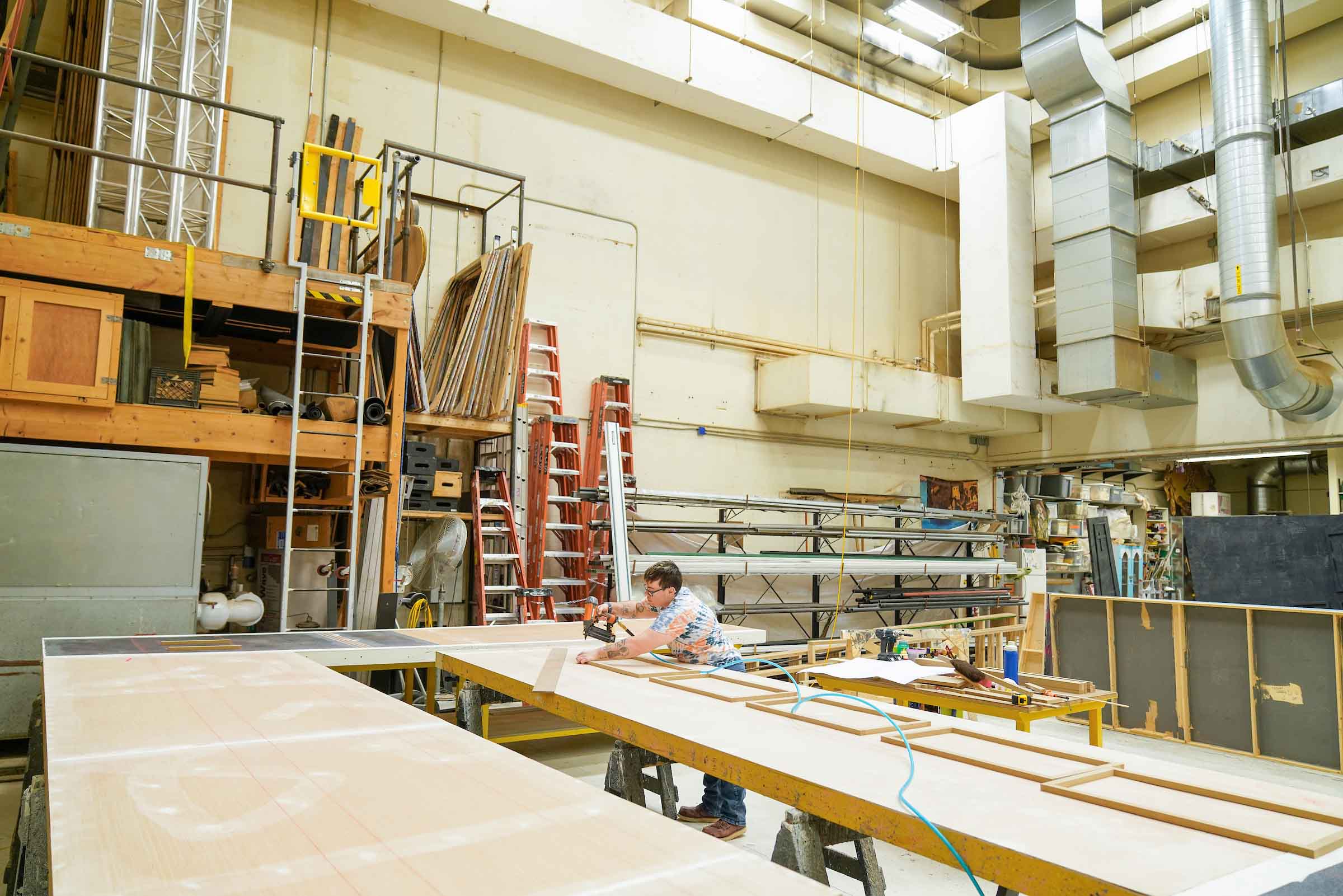
On a particular day during the winter 2025 semester, having loaded the scenery for A Few Good Men into the Power Center, the shop staff and students were finishing up scenery for The Turn of the Screw and building pieces for Titanic. Massive panels were laid out on the floor, and students were busy hammering rivets into holes to complete the transformation of the panels – made of fiberboard but painted to look like steel – into the sides of the mighty ship. Heather Udowitz, a scenic carpenter, worked on building gigantic portals that would stretch across the stage, the structure that the “steel” panels would be attached to.
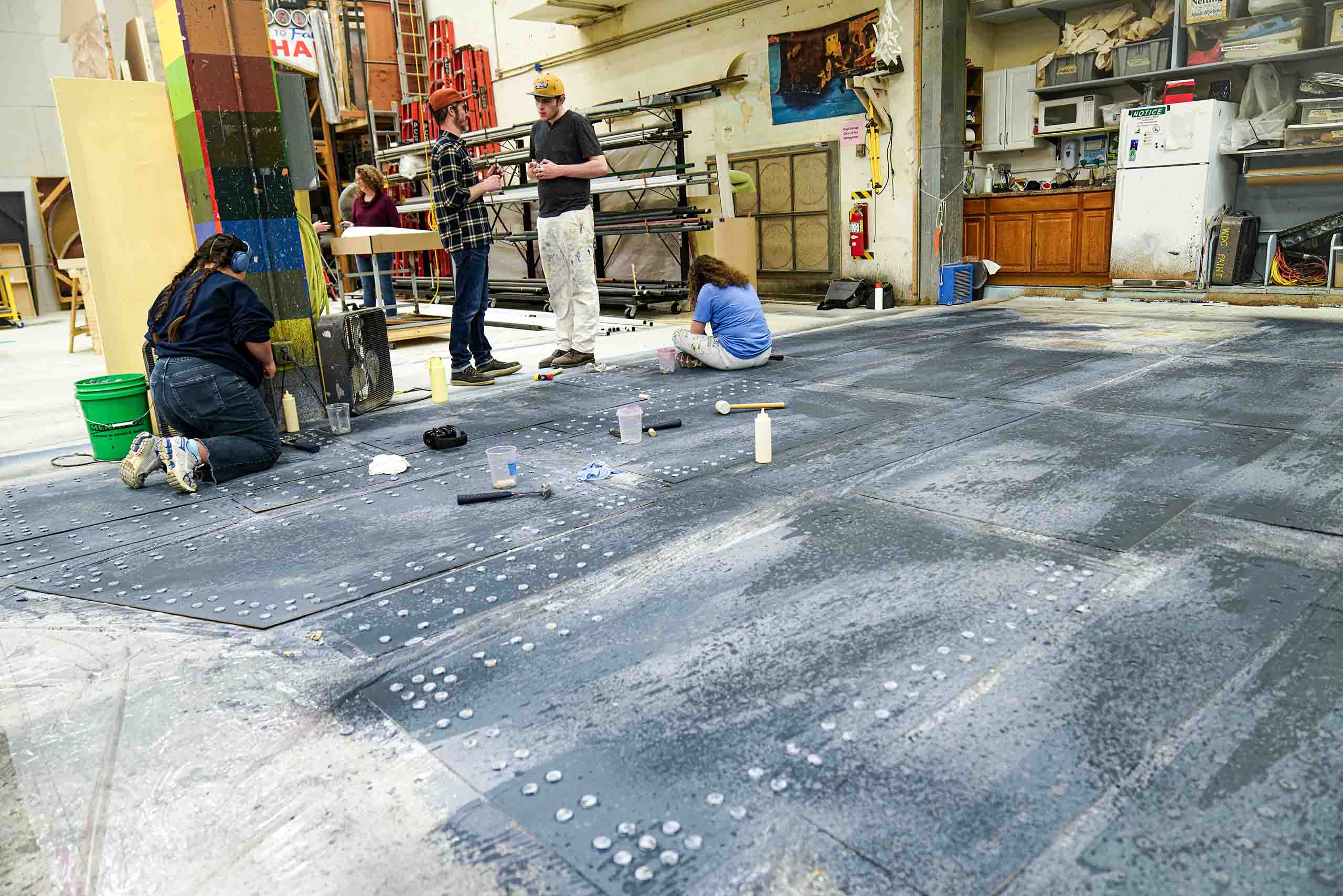
Students hammer rivets into the panels that would become the sides of the ship in the production of Titanic. Photo: Chris Boyes
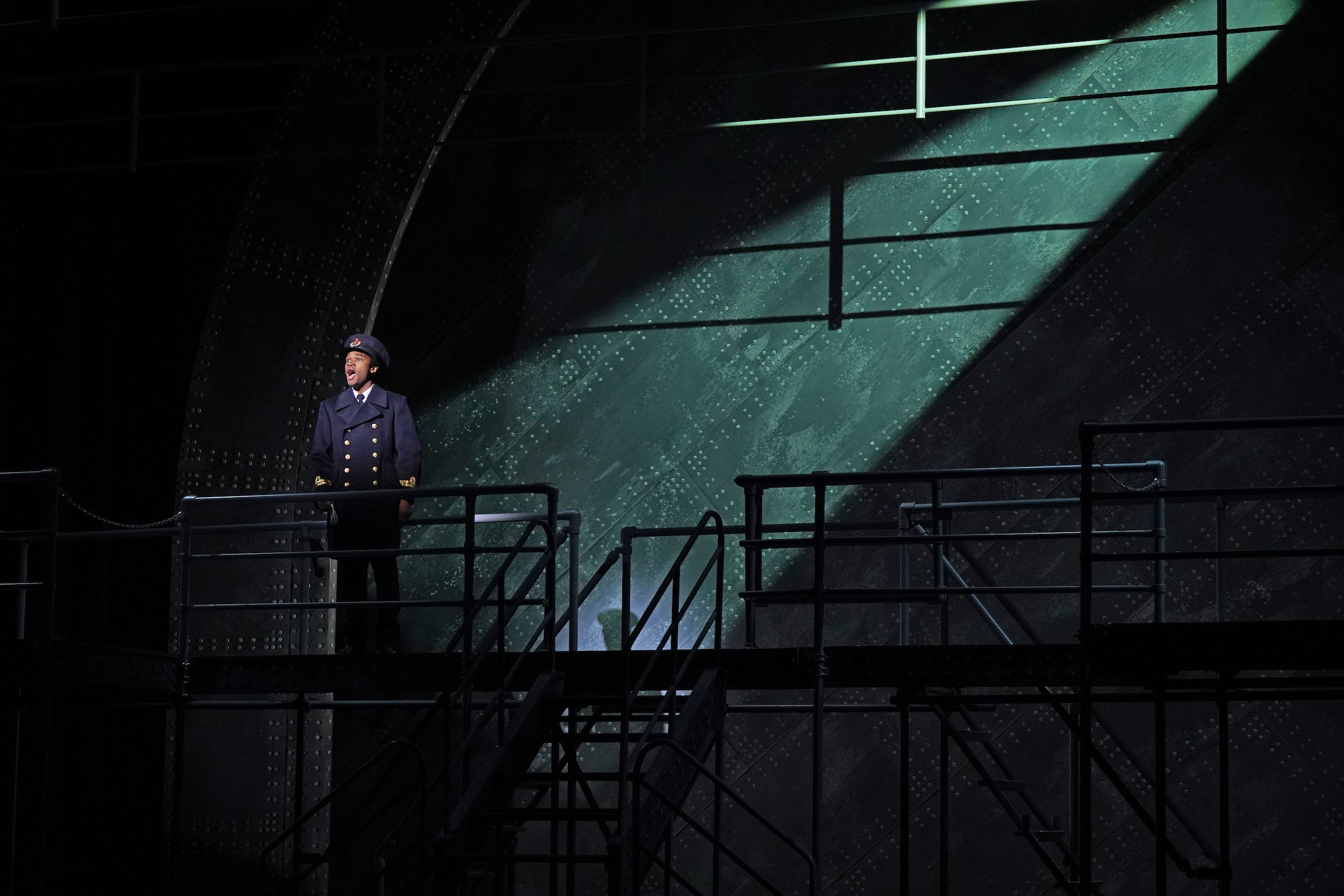
Keyon Pickett, as William Murdoch in Titanic, stands in front of the massive scenery that represents the outside of the ship. Photo: Peter Smith
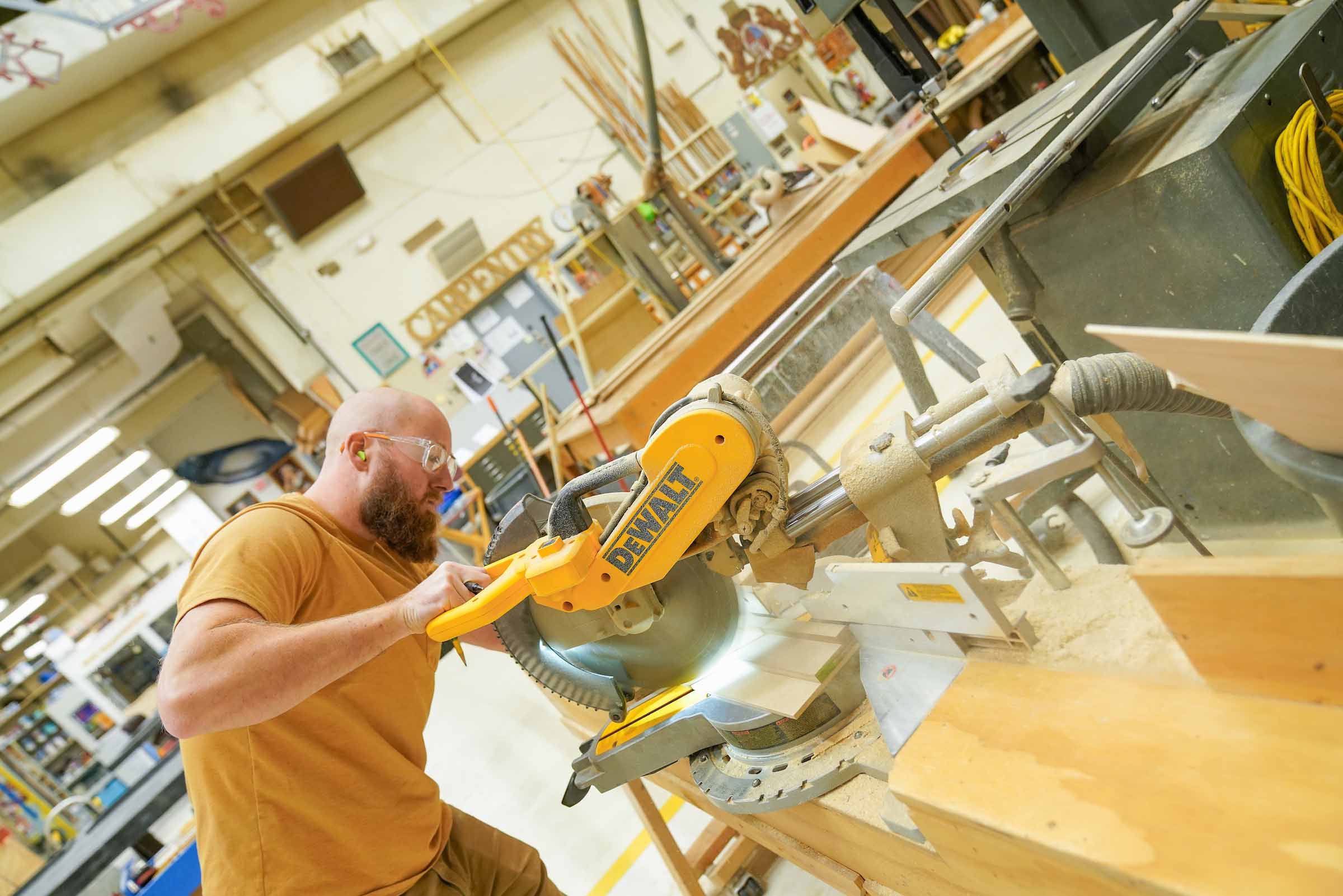
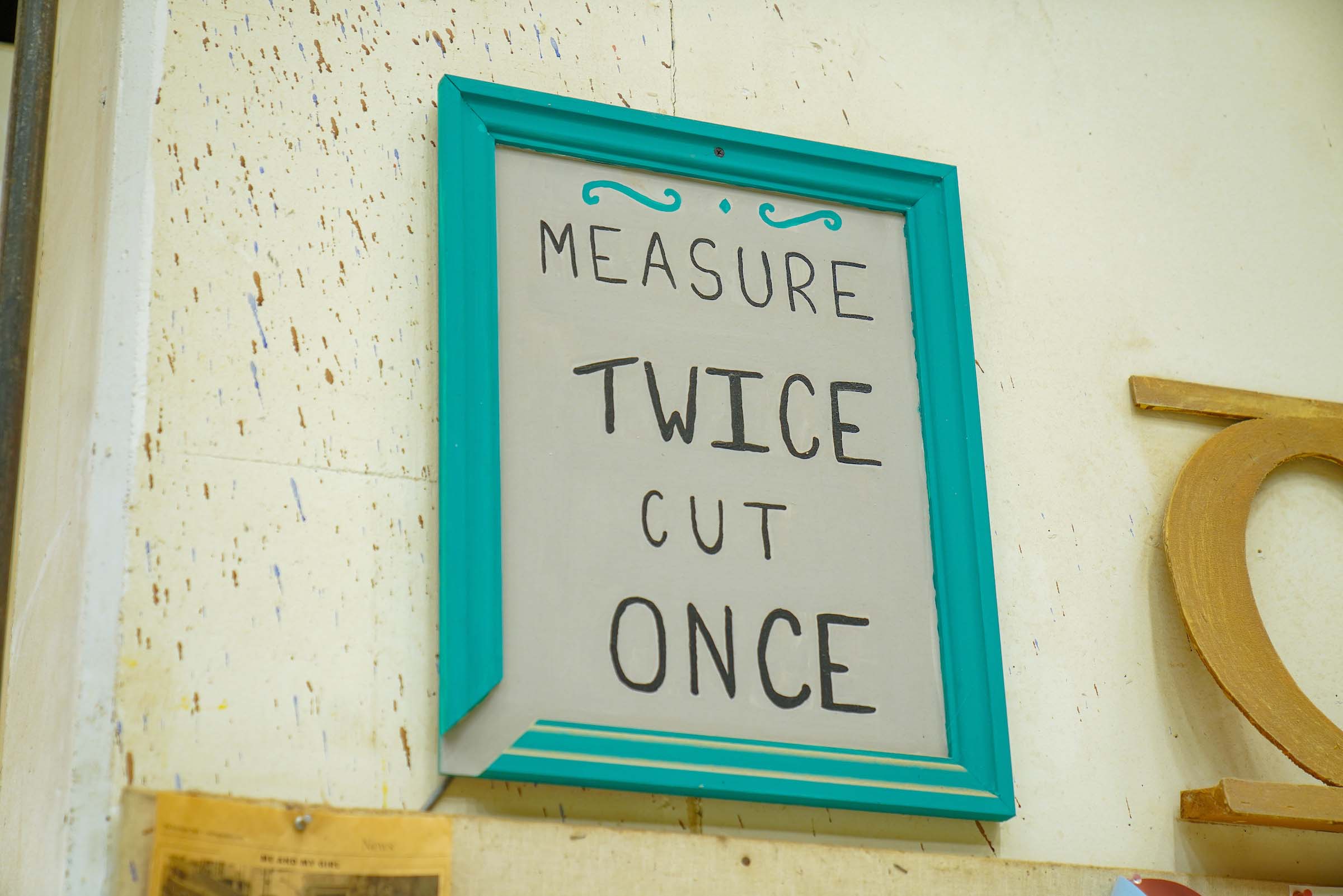
Elsewhere staff worked on staircases, scaffolding, and other pieces, measuring (twice), cutting (once), conferring with each other, and training students. One of those students, Josi Middaugh, had initially planned to study film at U-M; after exploring the work being done in the Power Center Scene Shop, she changed her career trajectory: “I started seeing what Chad was doing here,” she said, “and basically, when I grow up, I want to do his job.” She transferred into SMTD’s design and production program and hopes someday to work in a university setting rather than in a commercial theatre: “I like the academic structure – it’s more focused on teaching and learning.”
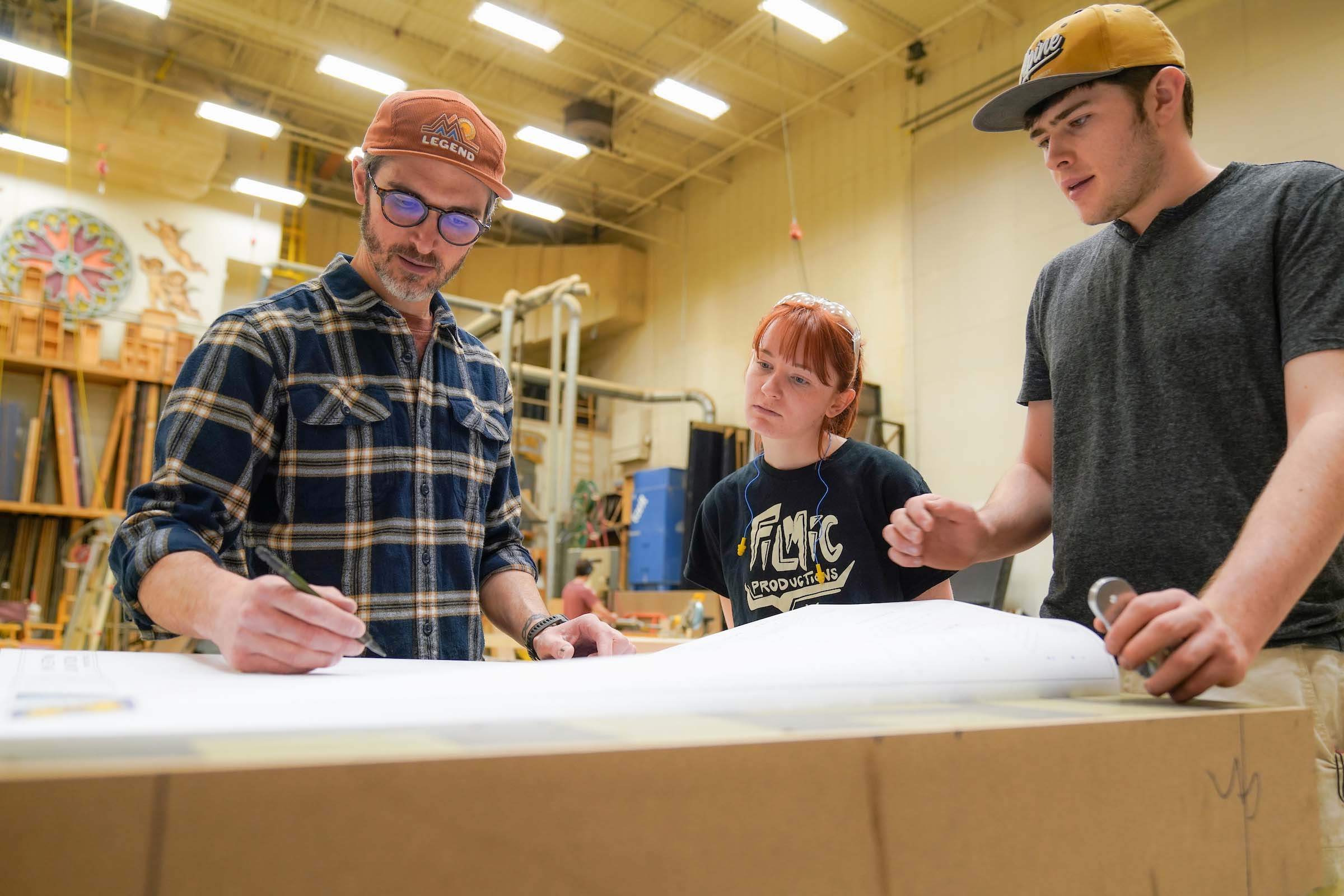
Chad Hain (left) with students Josi Middaugh and Aiden Heeres in the Power Center Scene Shop. Photo: Chris Boyes
Aiden Heeres (BFA ’28, design & production) decided while he was still in high school that he wanted to pursue a career in theatre design and production, having participated in a two-year D&P program at a local university. Interested in drafting and working with his hands, he considered studying engineering but prefers the soup-to-nuts nature of building scenery – creating an entire theatrical world in a matter of a few weeks. Ross Towbin, studying industrial design at Stamps, stumbled upon the Power Center Scene Shop while helping set up for a production in the theatre as part of a club. He had always enjoyed woodworking, and decided to pursue a part-time job working in the scene shop.
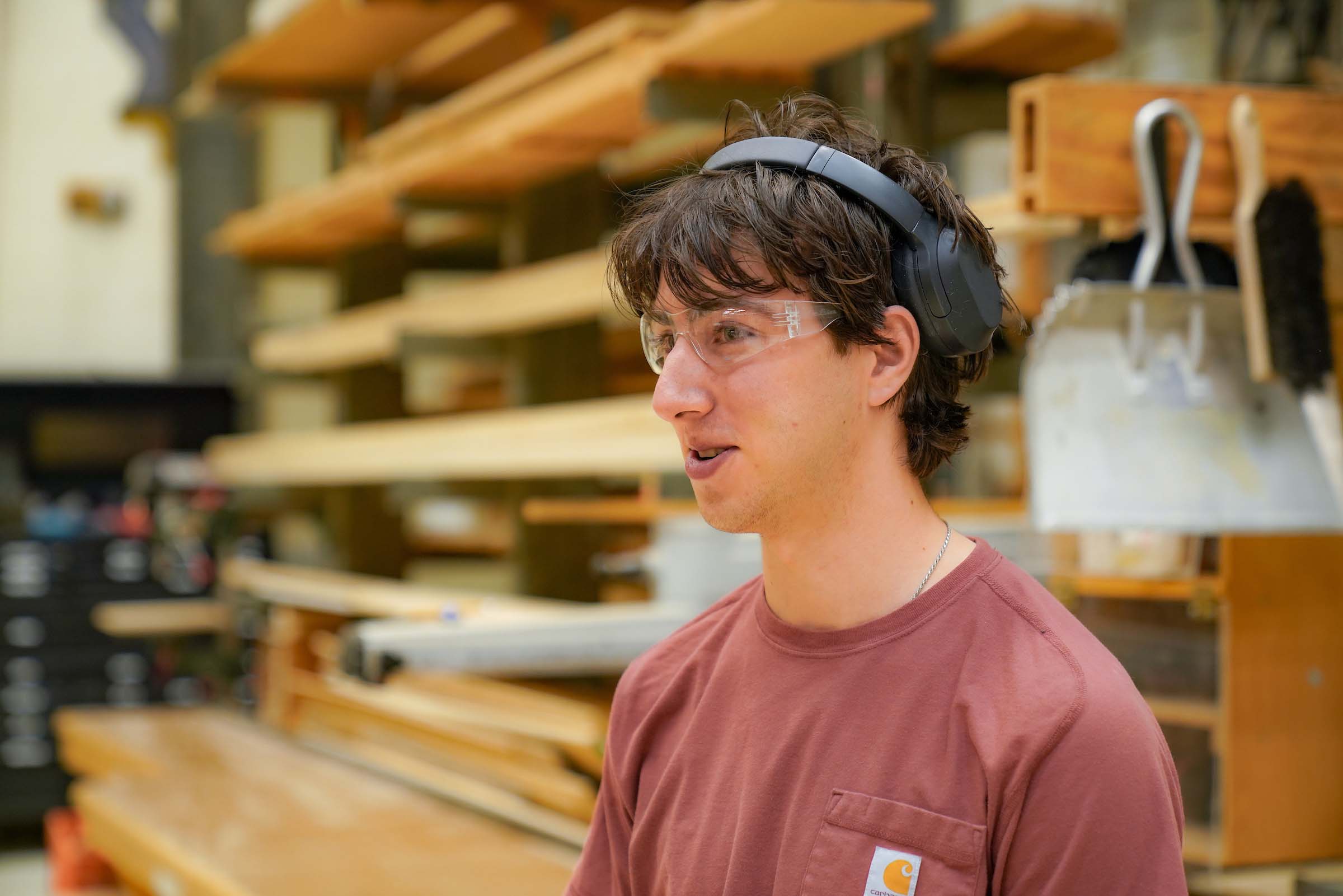
Ross Towbin, in the Power Center Scene Shop. Photo: Chris Boyes
Hain noted that the skill set necessary for working in a scene shop could be applied to many other professions, but there’s something special about working in theatre. “I like the challenge that the scene shop presents,” he noted. “Everything’s like a puzzle. How are we going to build this? What’s the most efficient way? How are we actually going to get it done in time?” Most of all, he said, he enjoys the people he works with in the theatre industry – their shared interests, values, and commitment.
The Walgreen Scene Shop
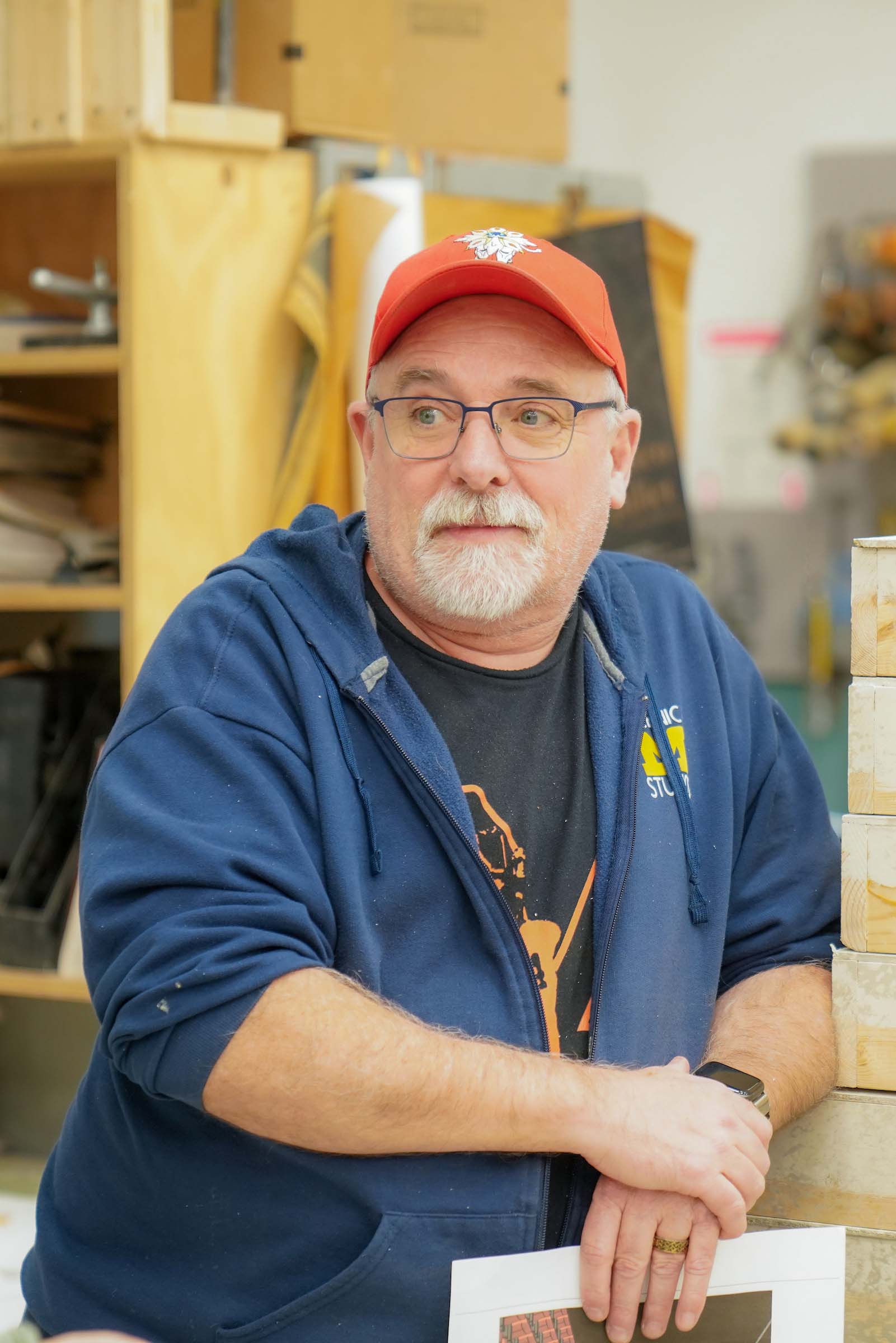
Rich Lindsay, head of the Walgreen Scene Shop. Photo: Chris Boyes
The Walgreen Scene Shop, officially known as the Robert and Gladys Nederlander Scene Shop, is run by Rich Lindsay, and it typically handles scenery for plays in the Arthur Miller Theatre and Mendelssohn Theatre. Lindsay has been at SMTD since 1991, having started when James Duderstadt was U-M’s president and Paul Boylan was dean of SMTD. He has served as a mentor and instructor for hundreds of students and a partner for dozens of scenic designers. “I’m the budgetary person, the teaching person, the safety person,” he said. “Then I have to do the basic engineering. I’m kind of like the general contractor.”
Both shops have a dual mission to operate as professional scene shops while also educating students, but the Walgreen shop – in part because it’s located within the building that serves as home base for theatre and musical theatre students – has traditionally functioned more as the teaching shop. When students – both performance majors and design and production majors – take the practicum that requires them to spend a few weeks working in each shop, the Walgreen Scene Shop is where they are introduced to the basics of scenic construction. A fundamental part of the work done by Lindsay and Madi Stinemetz, the charge scenic artist who oversees the Walgreen Scenic Painting Shop, involves getting the work done while also training students, helping them translate what they’ve learned in classrooms into the real-world setting of the shop. They also need to accommodate students with widely varying degrees of experience. “We break every task down into a bunch of steps,” Stinemetz noted. “So anyone of any skill, whether they’re a student who’s never picked up a paint brush in their life, or whether they’re graduating and going into this as a career, all skill levels can get it.” Michael Russell, a Stamps student who works part-time in the shop, noted that the skills acquired by working there benefit them as an artist, as a person, and as a future job-seeker. “I came in with pretty much no experience,” they noted. “Like, I had used a drill once, maybe, and now I know how to use all of the power tools in here.”
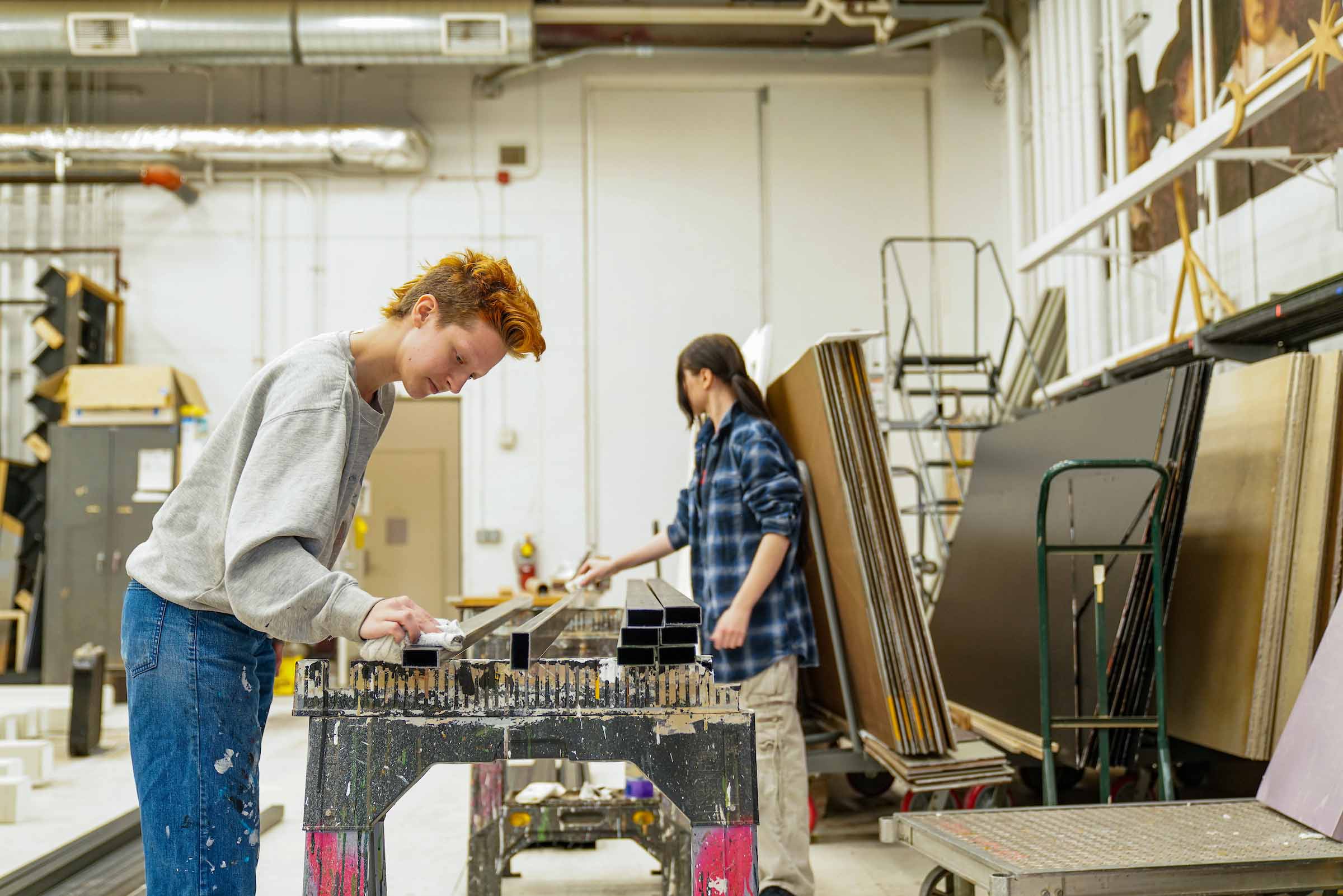
Students Michael Russell (left) and Hannah Kryzhan in the Walgreen Scene Shop. Photo: Chris Boyes
For many students working in the scene shops, the goal is not necessarily to prepare for a career constructing scenery, but to gain new skills that will serve them well in different pursuits or help them more fully understand every aspect of the theatre industry. For Hannah Kryzhan, who is pursuing a dual degree at Stamps and in SMTD’s design & production program as a scenic designer, everything she has learned in the shops will expand her design knowledge. “Being here has been very helpful,” she noted. “Understanding how things are built informs my designs.”
Photo Gallery