11/18/2025 Building a World: The UProd Theatrical Shops at Work > The Costume Shop
The Costume Shop: The UProd Theatrical Shops at Work
While every theatrical shop could be described as a hive of activity during the UProd season, the Costume Shop might be the most elaborate operation, with 10 full-time staff members and about 10 student workers. Laura Brinker, the Costume Shop manager and mentor instructor, leads a team of drapers, stitchers, a crafts artisan, a wardrobe supervisor, and a stock manager, working together to construct, alter, and manage hundreds of costumes each year.
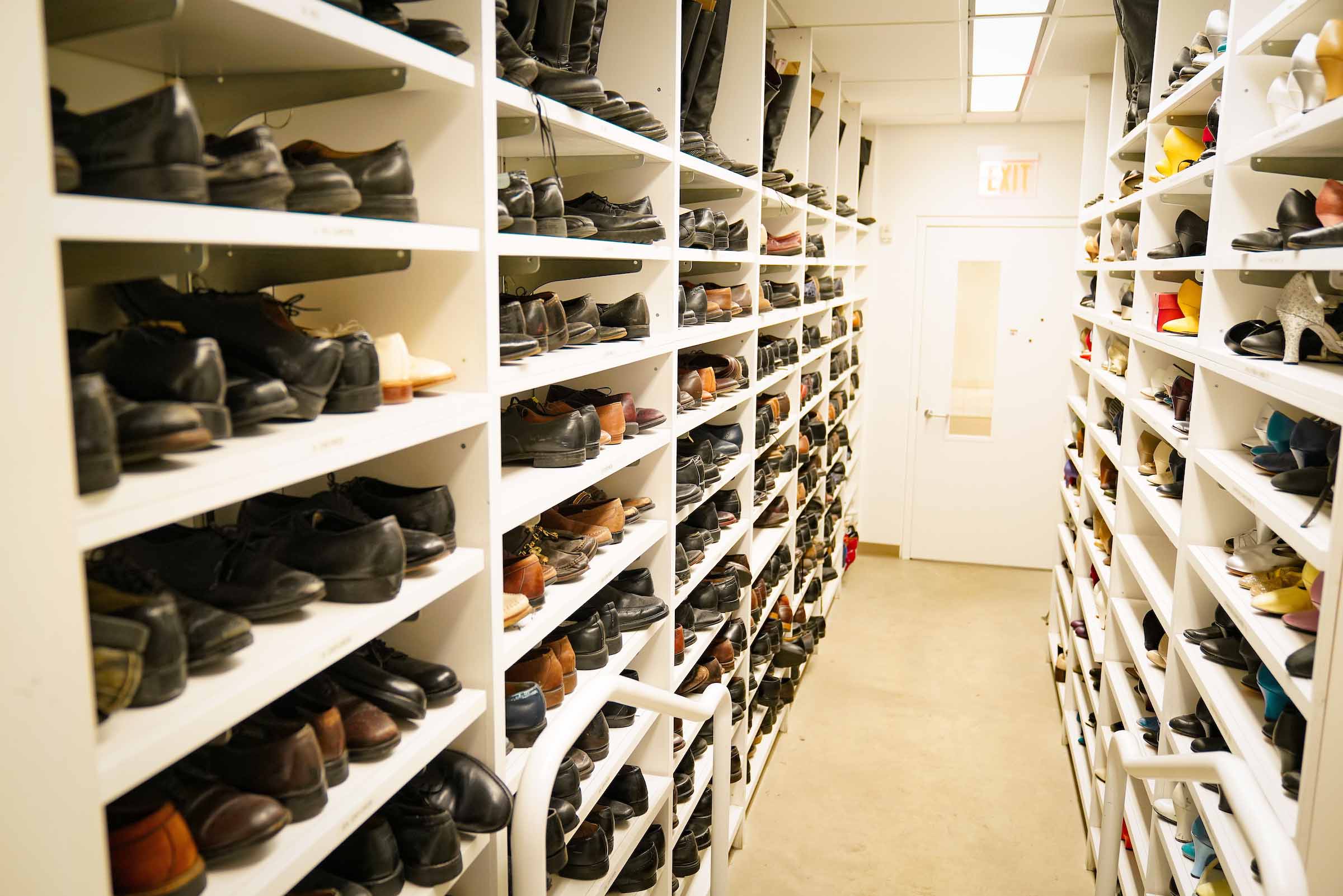
Costumes for SMTD productions are occasionally rented or purchased, but most of the time, they are constructed from scratch or altered from items in the costume stock, a collection of thousands of pieces kept in a warehouse on the south side of Ann Arbor. For each production, the process begins with the costume designer, who could be a faculty member, a guest artist, or an experienced student who has worked their way up to that position. The designer creates renderings of costumes for each character and then hands off those renderings to one of four drapers in the shop.
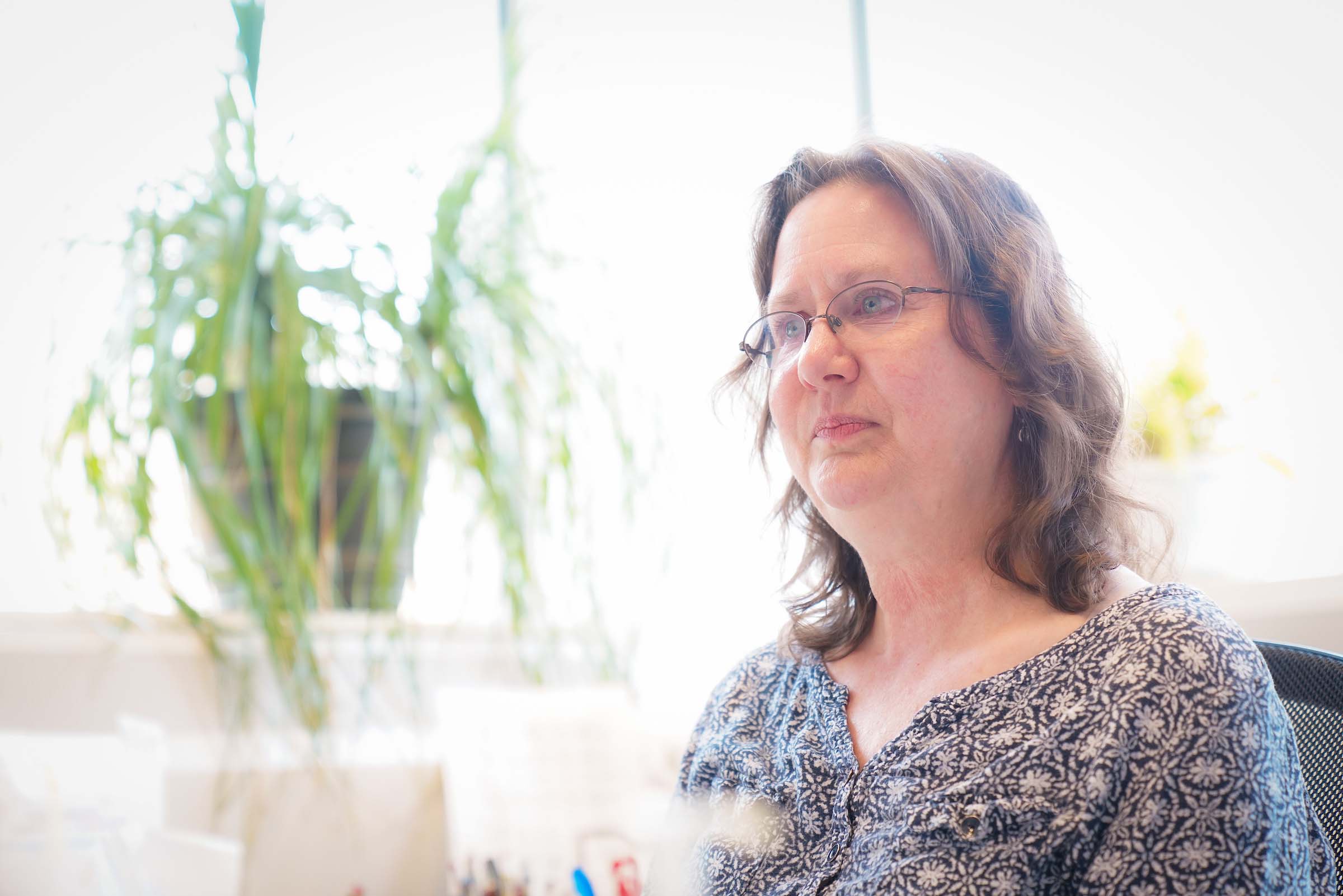
Laura Brinker, manager of the Costume Shop. Photo: Chris Boyes
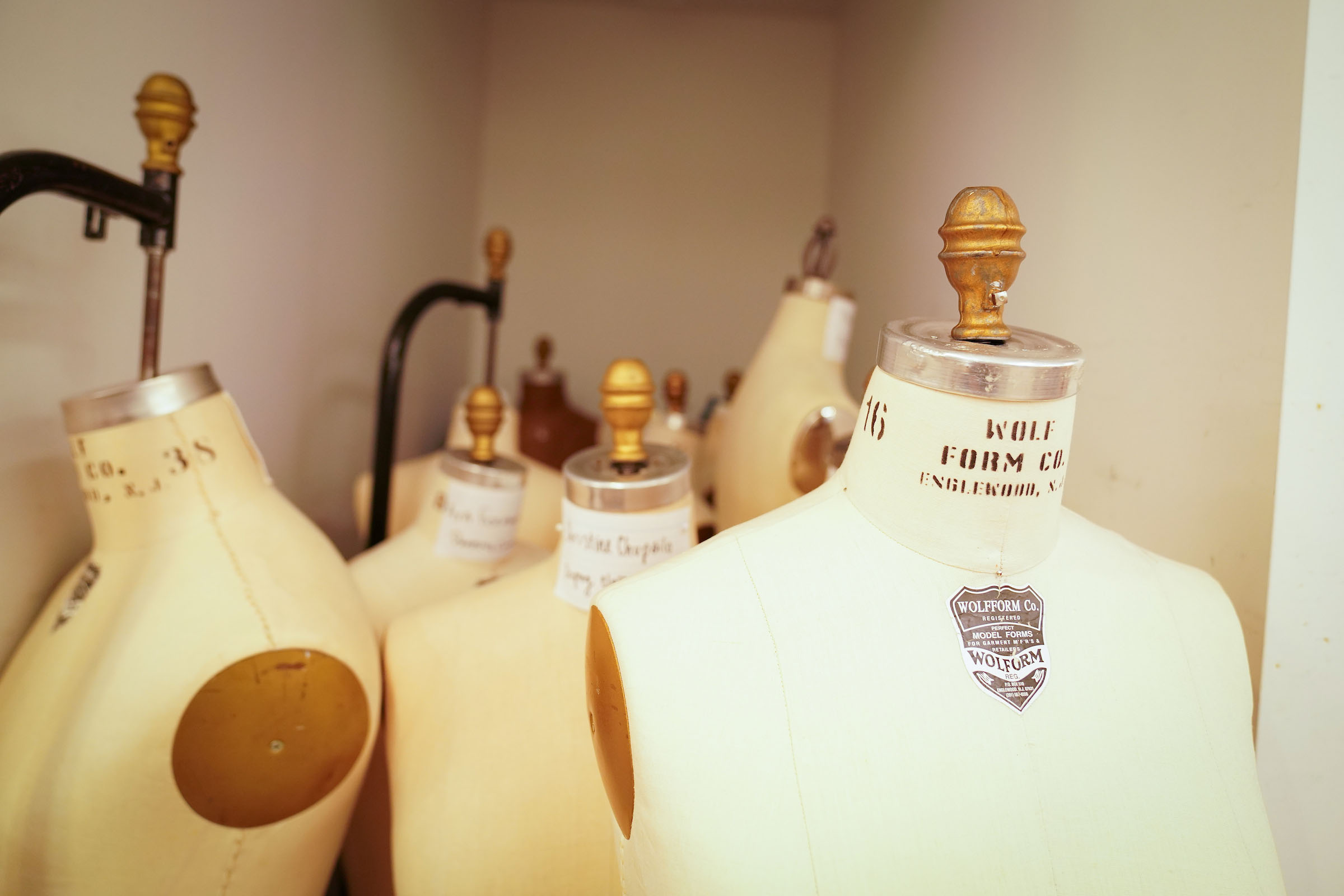
The drapers are responsible for interpreting the designs and constructing the costumes. Each draper is assigned certain performers and is responsible for every costume those performers wear, whether that means creating new costumes or making alterations to existing costumes from the stock or to newly purchased costumes. When constructing costumes, the draper begins by creating a pattern and then producing a mock-up of the costume using muslin, an inexpensive fabric, draped over a dress form that has been customized to reflect the performer’s measurements.
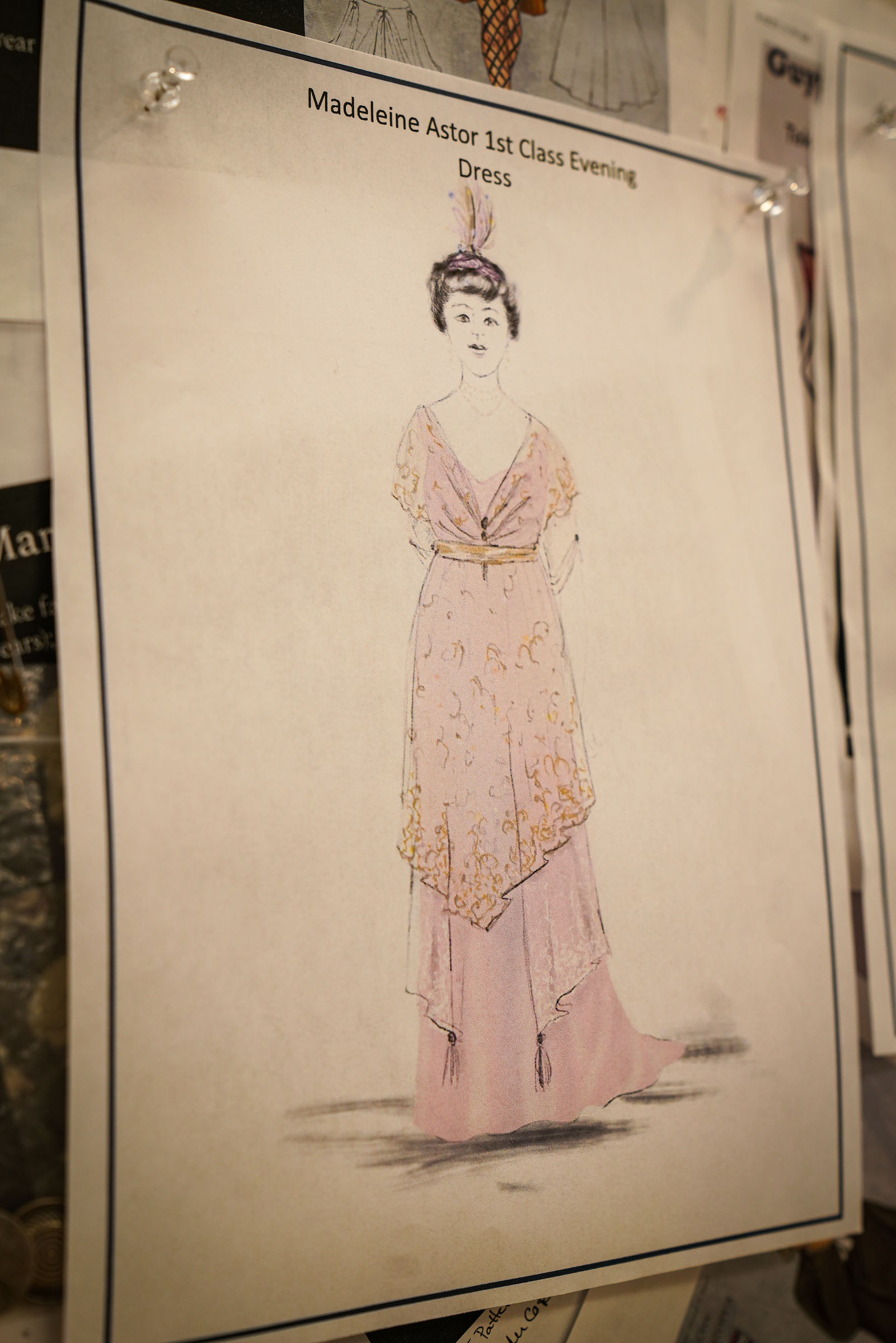
This rendering of Mrs. Astor’s evening dress for Titanic reflects costume designer Suzanne Young’s vision, which then is brought to life by the cutter/draper in the costume shop. Photo: Chris Boyes
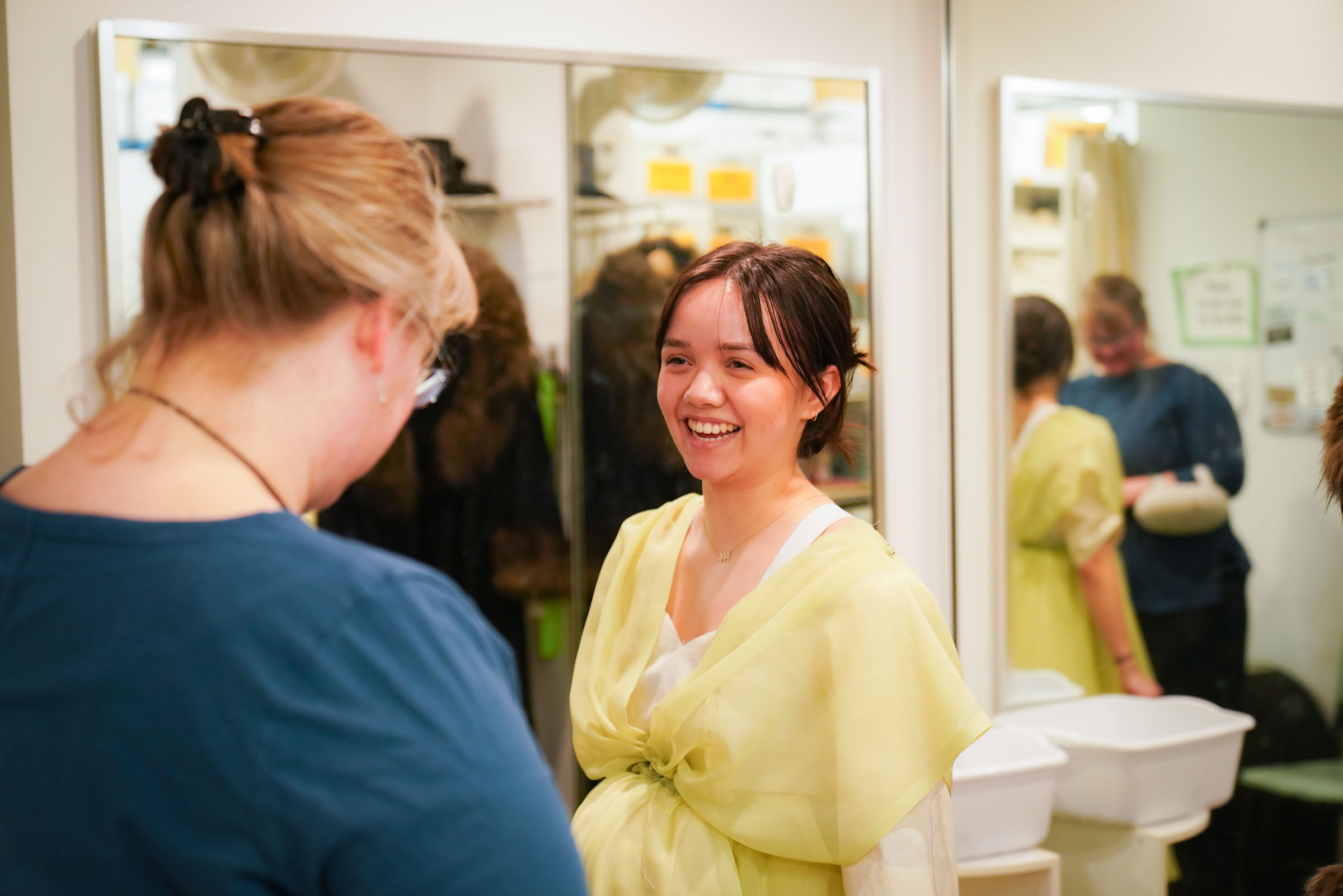
Leslie Ann Smith (left) works with Emily Murakami (BFA ’27, musical theatre) at her first costume fitting for her role as a pregnant Mrs. Astor in Titanic. The muslin mock-up helps the cutter-draper work out any fitting issues. Photo: Chris Boyes
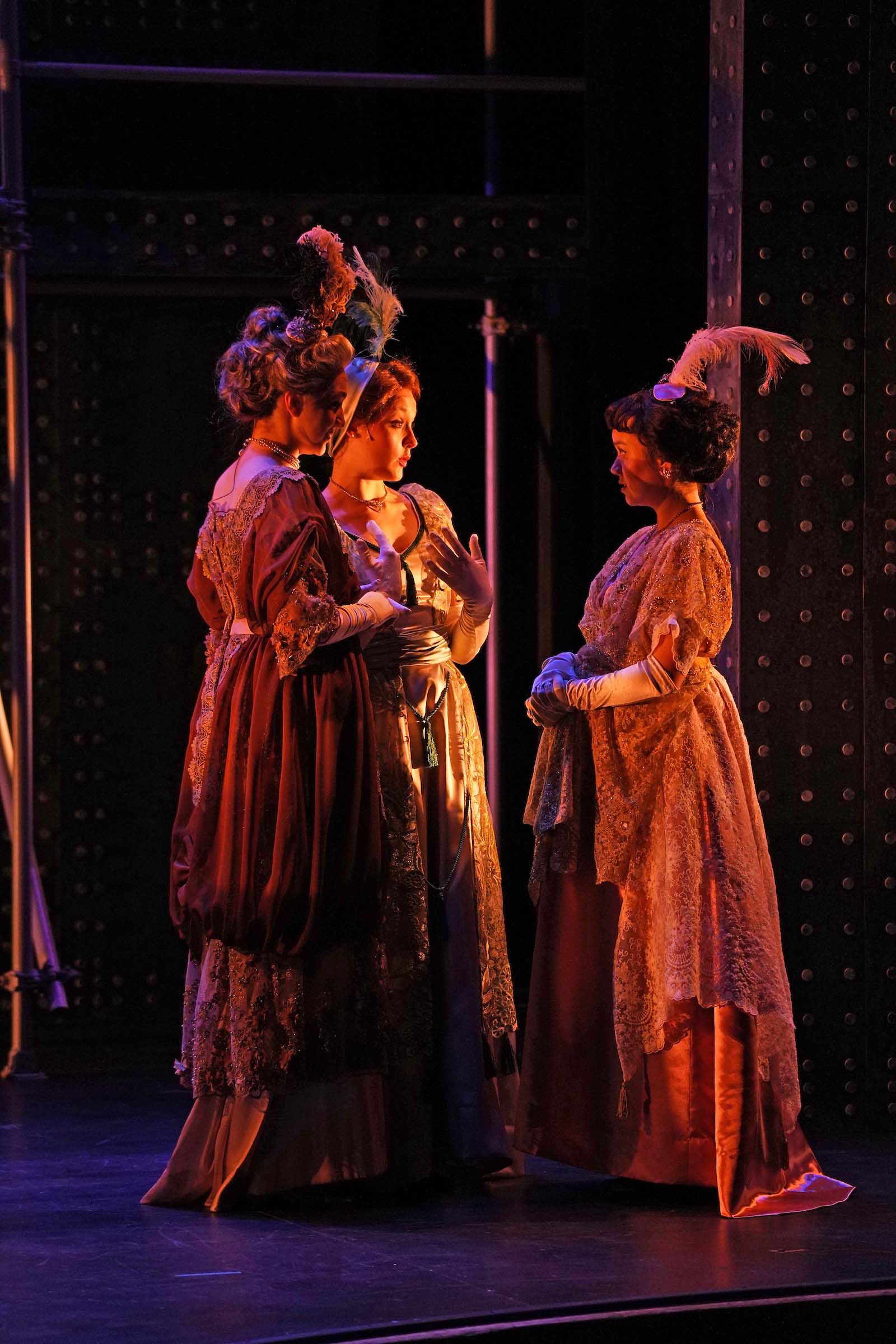
As Mrs. Astor in the spring 2025 production of Titanic, Emily Murakami (right) wears the completed evening dress. Photo: Peter Smith
Each performer comes to the Costume Shop for at least two and as many as four fittings, attended by the draper and the costume designer. At the first fitting, the actor tries on the mock-up; this fitting is a “trial run,” according to lead draper Tj Williamson, to work out any fitting issues. “Because, of course, humans aren’t dress forms, and dress forms aren’t humans,” she said. Trying on the mock-up also ensures that the style lines match what the designer envisioned. For performers in musicals, that first fitting is when the draper accounts for how the microphone pack will affect the costume, using a block of wood as a stand-in. Brinker noted that several weeks pass from the initial fitting to the final one, sometimes necessitating alterations to costumes along the way. “A whole semester of rehearsals and singing and dancing sometimes means the students bulk up or they’ve lost a little weight,” she noted.
Once the drapers have cut the fabric for new costumes, the stitchers sew the pieces together. The stitchers also make any needed alterations to existing costumes, which can involve substantial changes that go well beyond altering for size. The shop’s staff includes two professional stitchers; students working in the shop for course credit or part-time work also help with stitching and a wide variety of other tasks, from sewing on buttons or snaps to ripping seams to creating mock-ups. As with any of the theatrical shops, students come to the Costume Shop with varying levels of experience. They gain skills through the mentorship of the professionals in the shop and through sheer repetition. “Sewing is like any skill,” Brinker pointed out. “The more you do it, the better you get, and the faster you get.”
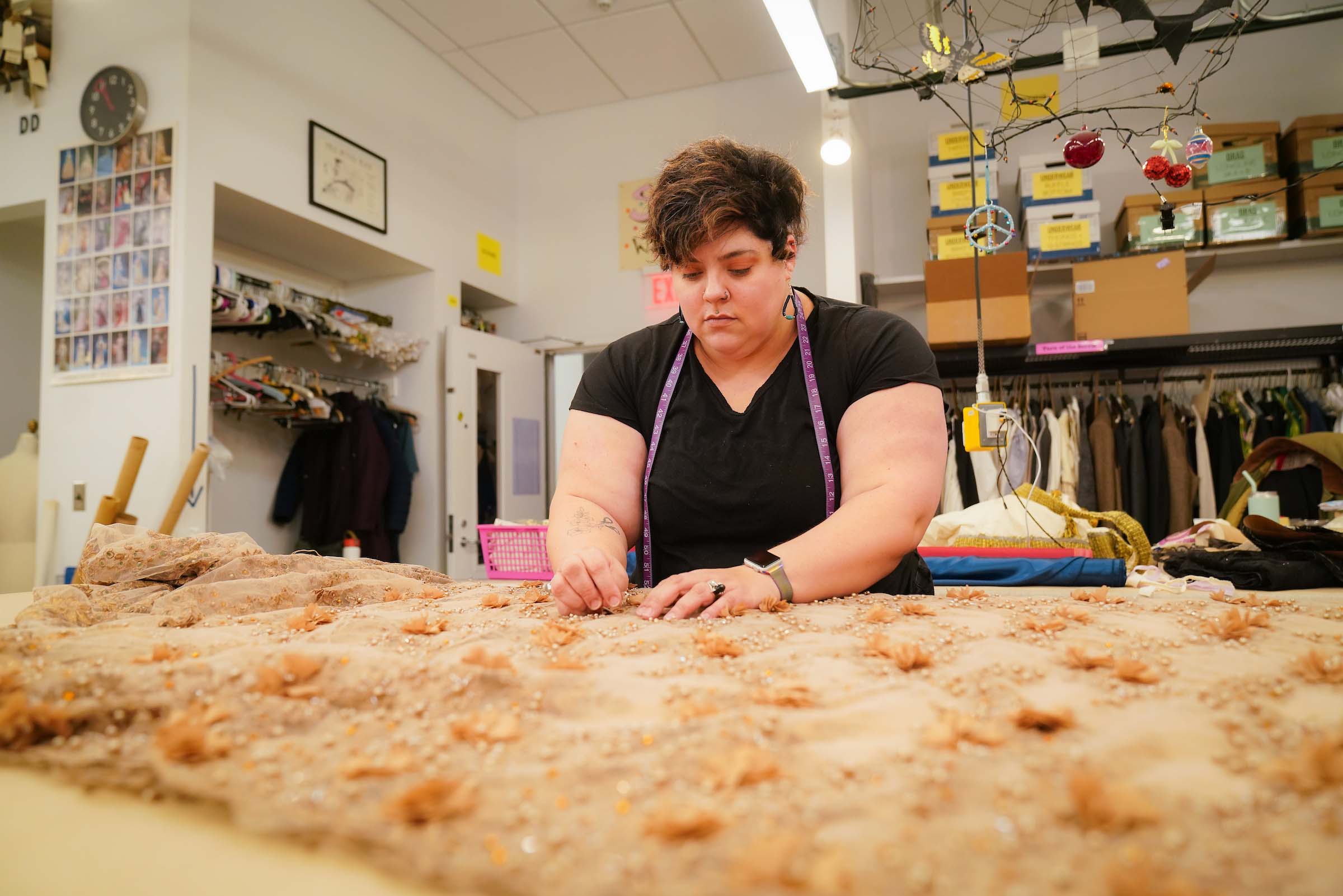
Lani Tortoriello does the painstaking work of marking a pattern onto heavily beaded fabric for Ida Straus’s evening dress for Titanic. Photo: Chris Boyes
Even those students with experience making their own clothes have much to learn in the Costume Shop. “The way we make our own clothes is different from the way we make costumes,” Brinker said. “We’re going to make the costume to go in this show and then go into our stock and be pulled out for a different show. It has to be easily altered to fit somebody else and be changed. So we build everything with extra seam allowance on the inside and ways to get to all those seams so that we can change it.” Another factor to consider when constructing theatre costumes is whether they need to allow for a quick change – those moments in a production where performers come off the stage and must rapidly switch costumes. Quick-change costumes are built differently and must be accounted for from the beginning.
The students who work in the Costume Shop are not just those who plan to construct costumes in the future. Some are stage management students hoping to learn more about the role of wardrobe supervisor – the person responsible for everything costume-related during the actual performances. Some are studying costume design, seeking to better understand how costumes are built, how different fabrics work, and tricks of the trade in terms of rigging costumes for quick changes. Ellie Van Engen (BFA ’26, theatre design & production) studies costume design and has worked in the Costume Shop since her first year at SMTD. She has acquired an array of skills and experience that support her design work, as when she served as costume designer for the fall 2024 production of Julius Caesar. “Working here helped me when I was a designer,” she noted, “knowing better how to talk to the drapers and communicate what I needed, because I’d been on the other side before.”
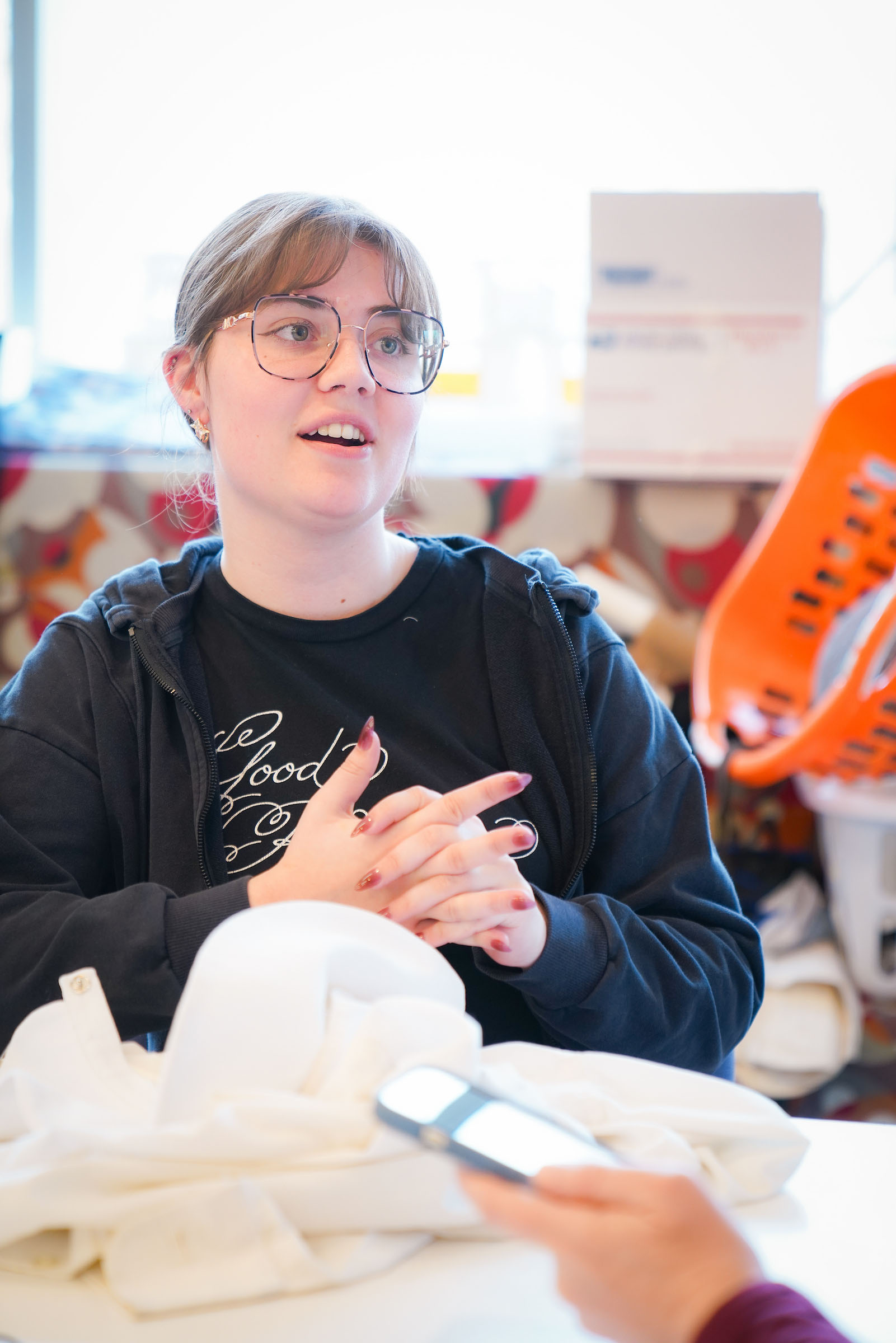
Ellie Van Engen studies costume design and works in the Costume Shop. Photo: Chris Boyes
The Costume Shop staff also includes a crafts artisan, Elizabeth Gunderson, who takes care of everything that’s not clothes – a long list of items including shoes, jewelry, purses, medals, and armor. “I dye things and make things dirty, bloody, anything like that,” she said. The staff is rounded out by the wardrobe supervisor, who organizes the necessary paperwork and trains the run crew that runs the performances, and the costume stock manager, who works with designers to have items pulled from the warehouse and transported to the shop and theatres for use in productions.
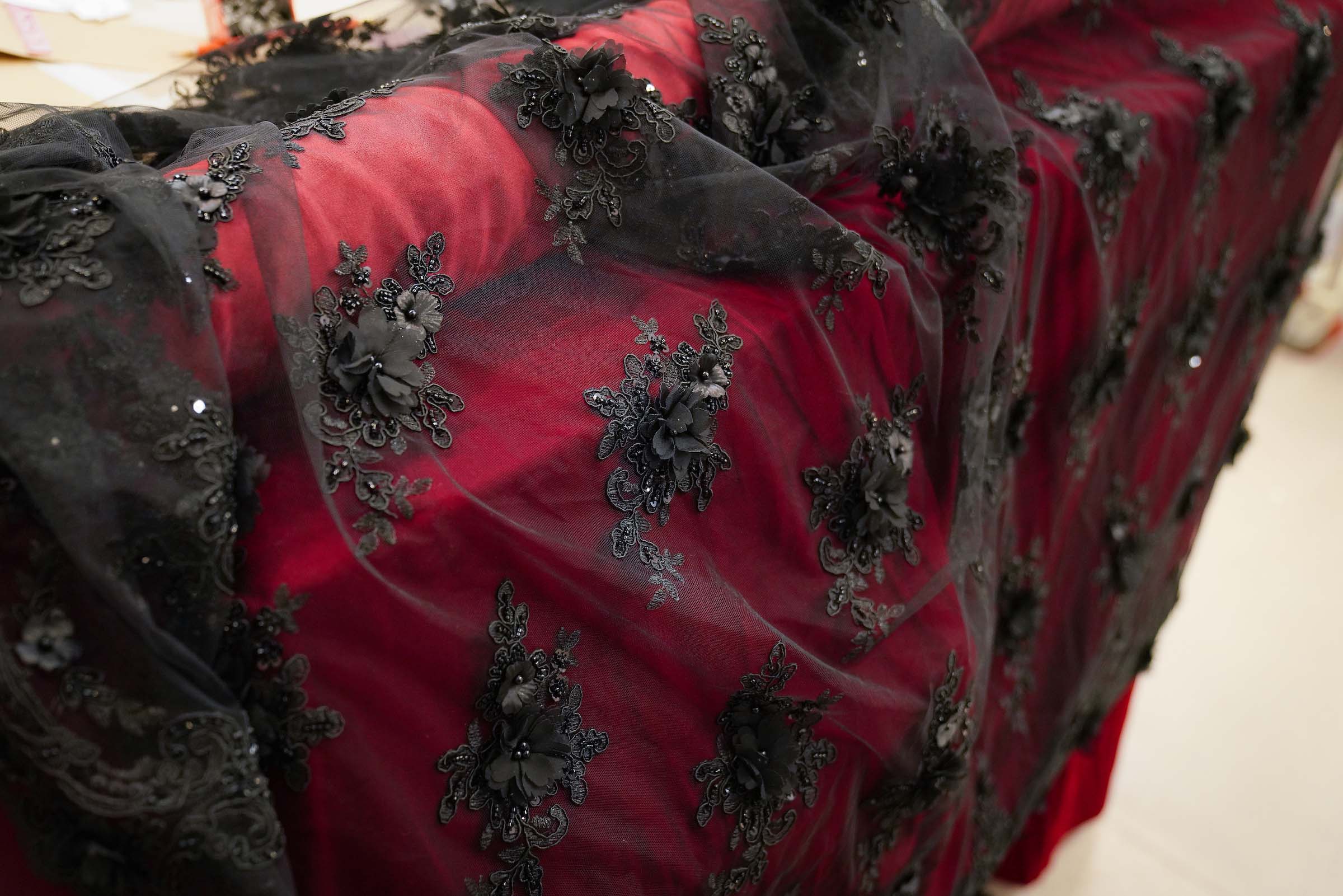
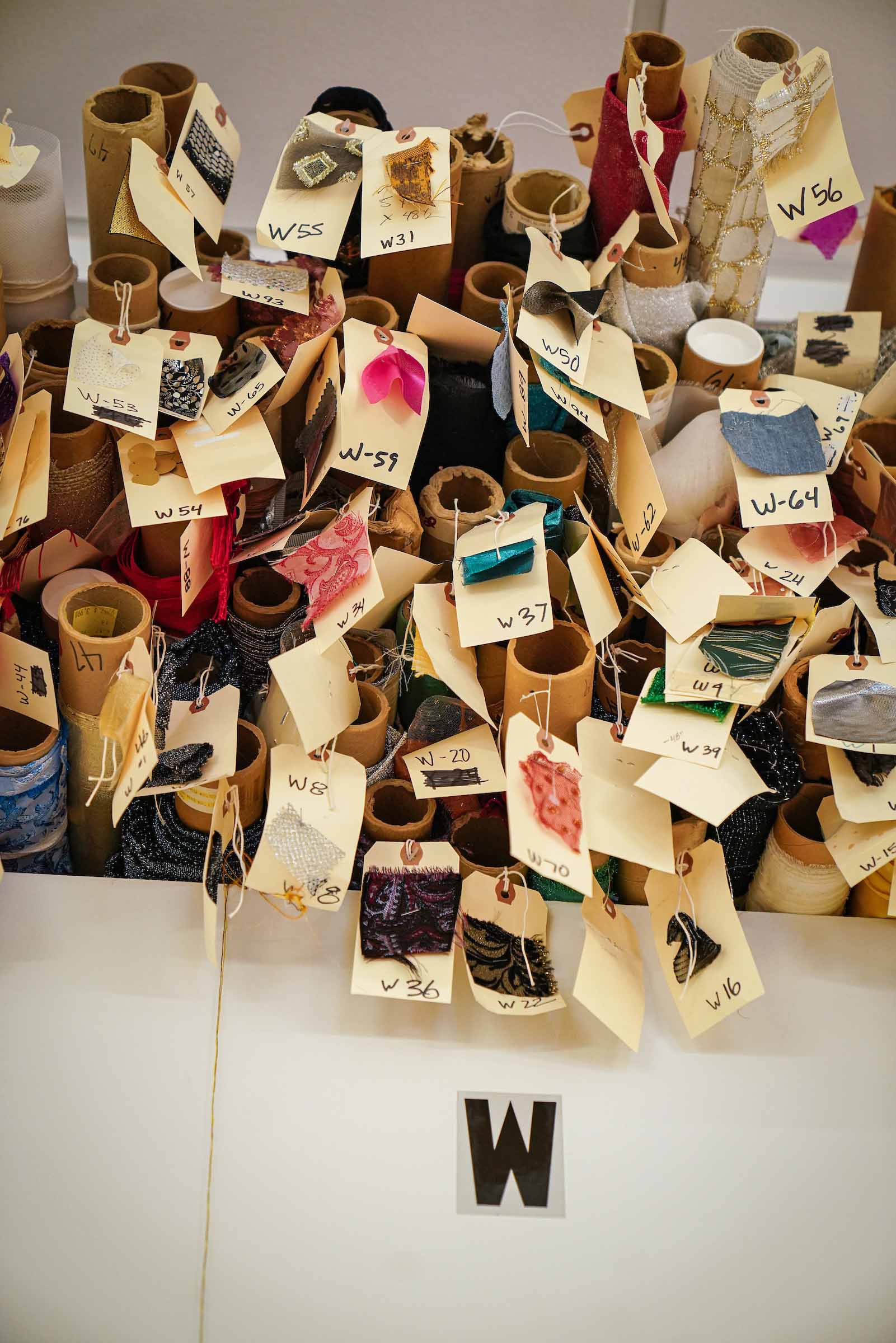
These fabrics were selected to be made into an evening dress for Titanic. Photo: Chris Boyes
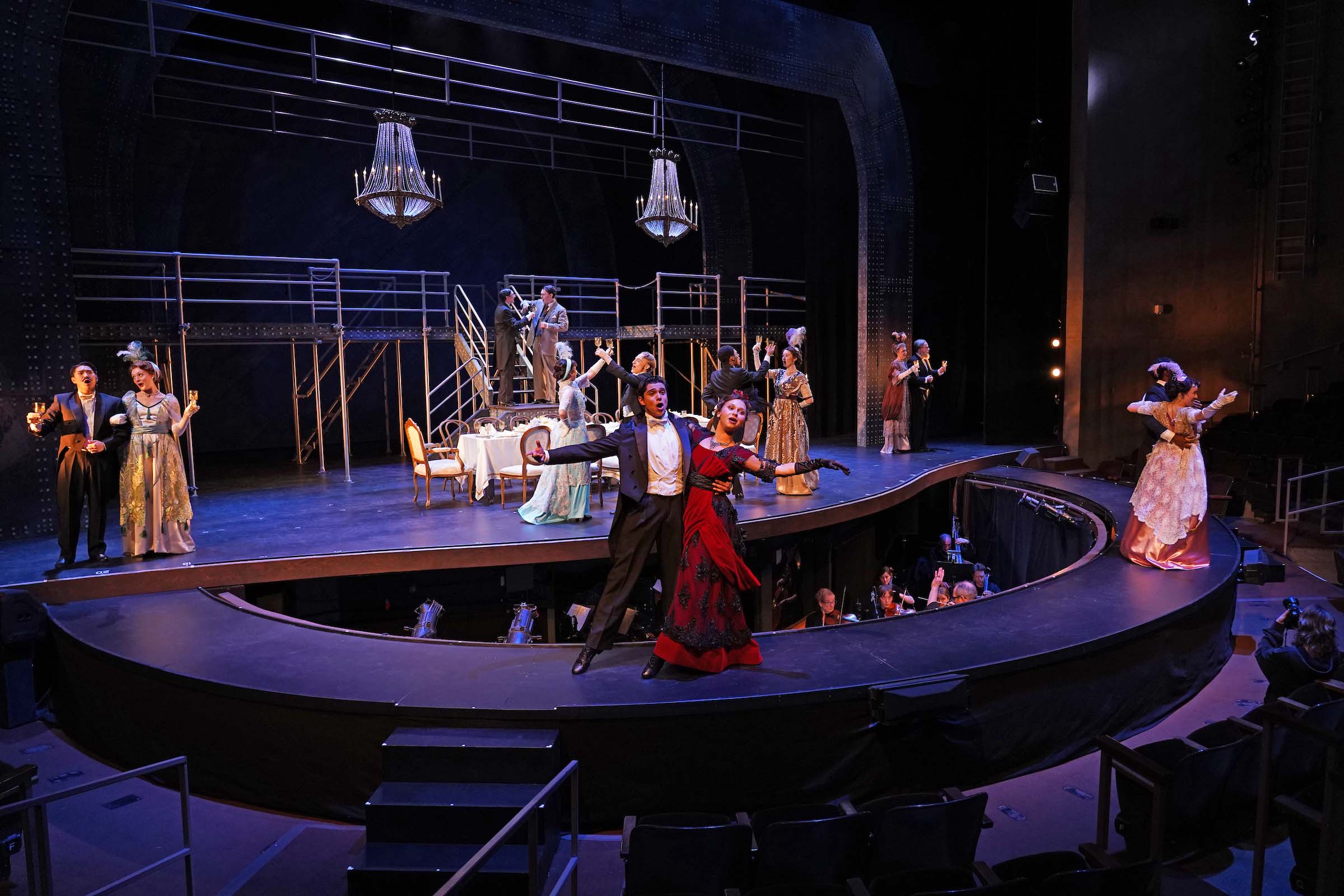
What started as rolls of fabric became a beautiful gown for the spring 2025 production of Titanic. Photo: Peter Smith
At the helm, Brinker and Leslie Ann Smith, assistant Costume Shop manager and a draper, manage the schedules, workflow, and budgets. The hardest piece of the puzzle, Brinker noted, is taking into consideration the full picture of all the productions in a given semester. Each director and costume designer understand the needs of their own production, but it’s the shop managers who look across all of the productions in a given semester and determine how to juggle the many different needs – which costumes can be pulled from the stock and altered, which ones might be rented or purchased, and which ones should be newly constructed, for example – while also considering budgets, labor, and coordinating students’ costume fittings around their busy schedules. While building new costumes requires the most time and work, it provides an invaluable creative experience for all involved. “That’s my favorite thing about the shop,” Van Engen shared: “watching a design go from drawing and idea to, all of a sudden, it’s on a person, and it’s real.”
Photo Gallery