Doctor of Musical Arts in Conducting, Band & Wind Ensemble
Application deadlines are specific to degree programs. See our Graduate Admissions page for a list of all deadlines.
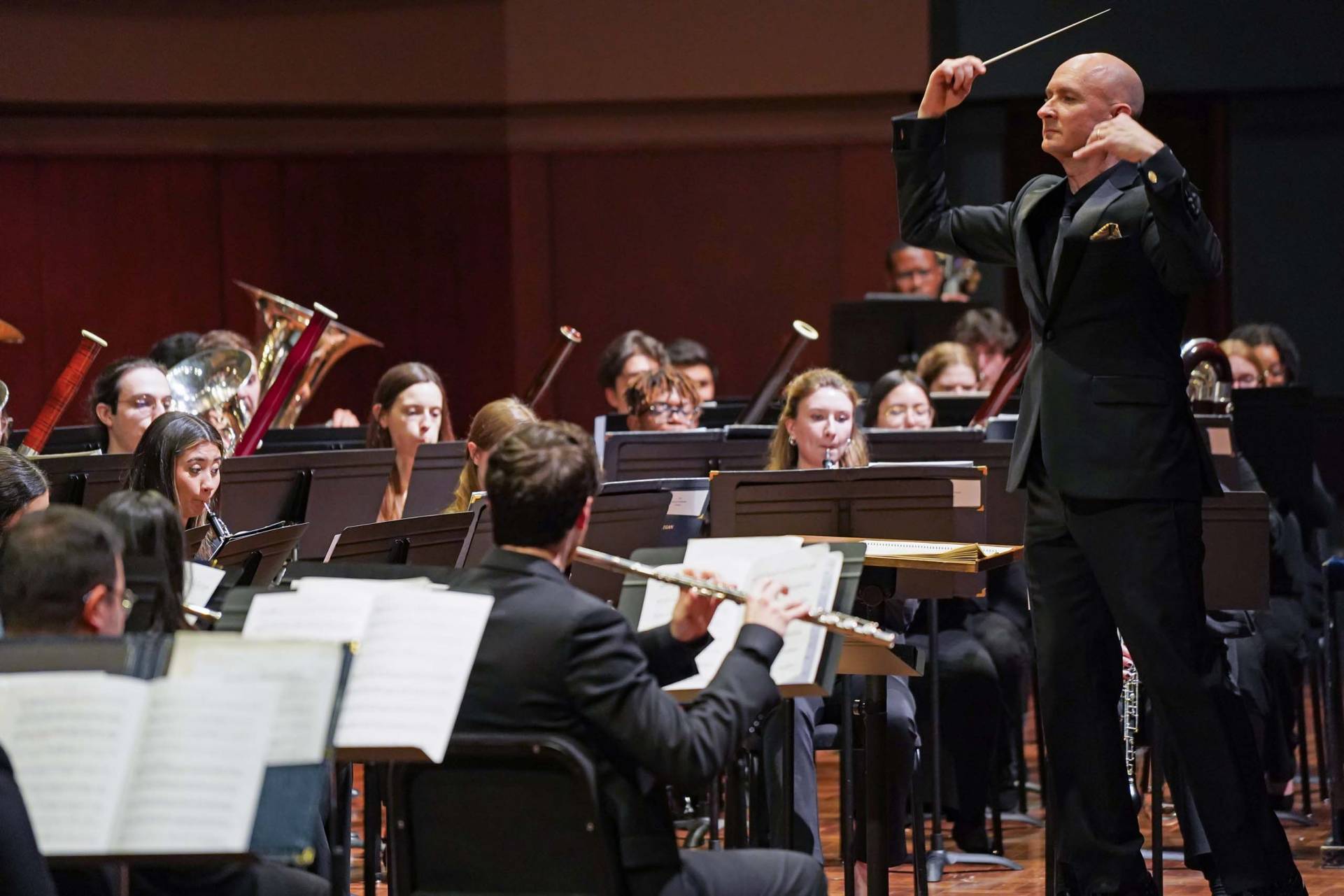
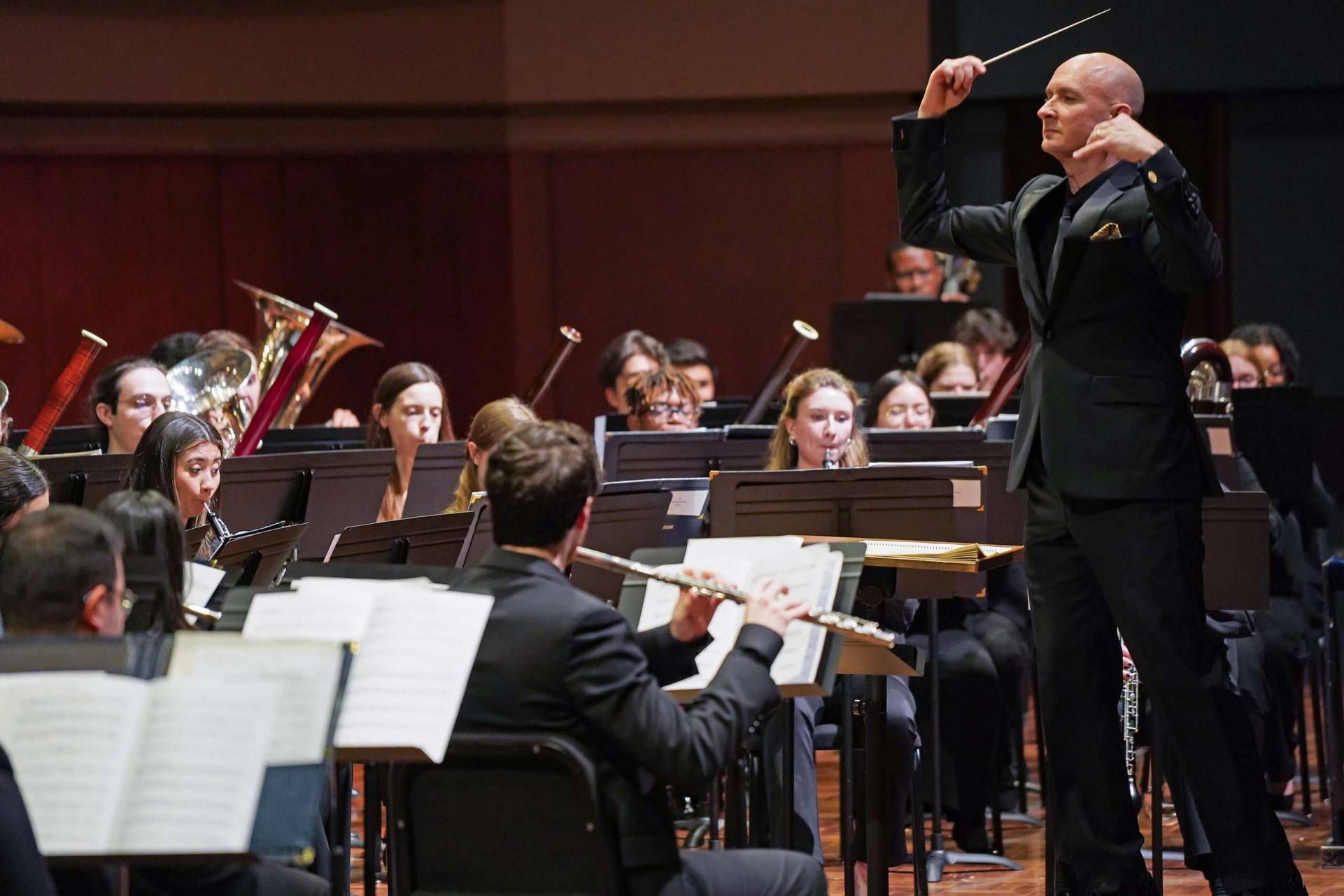
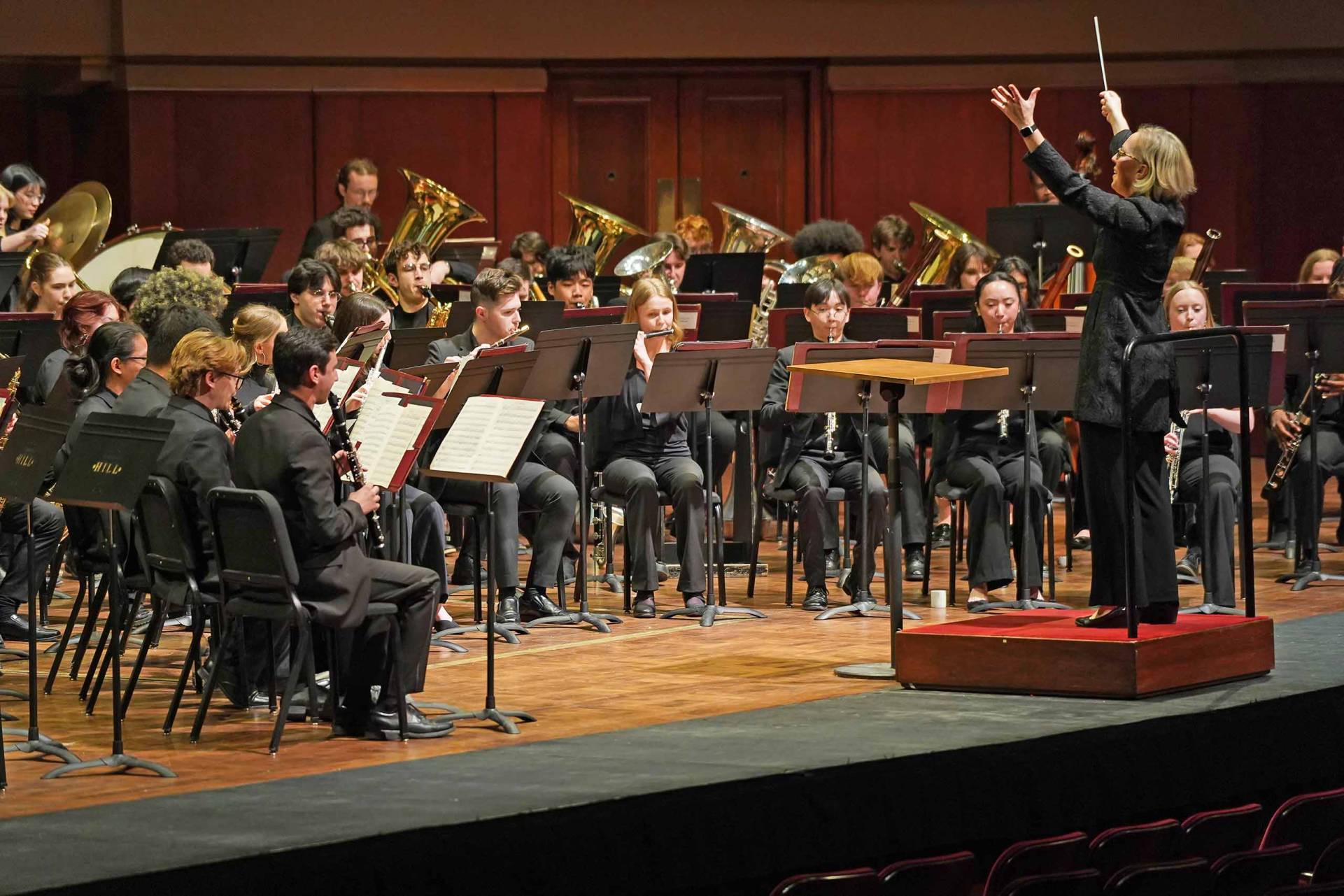
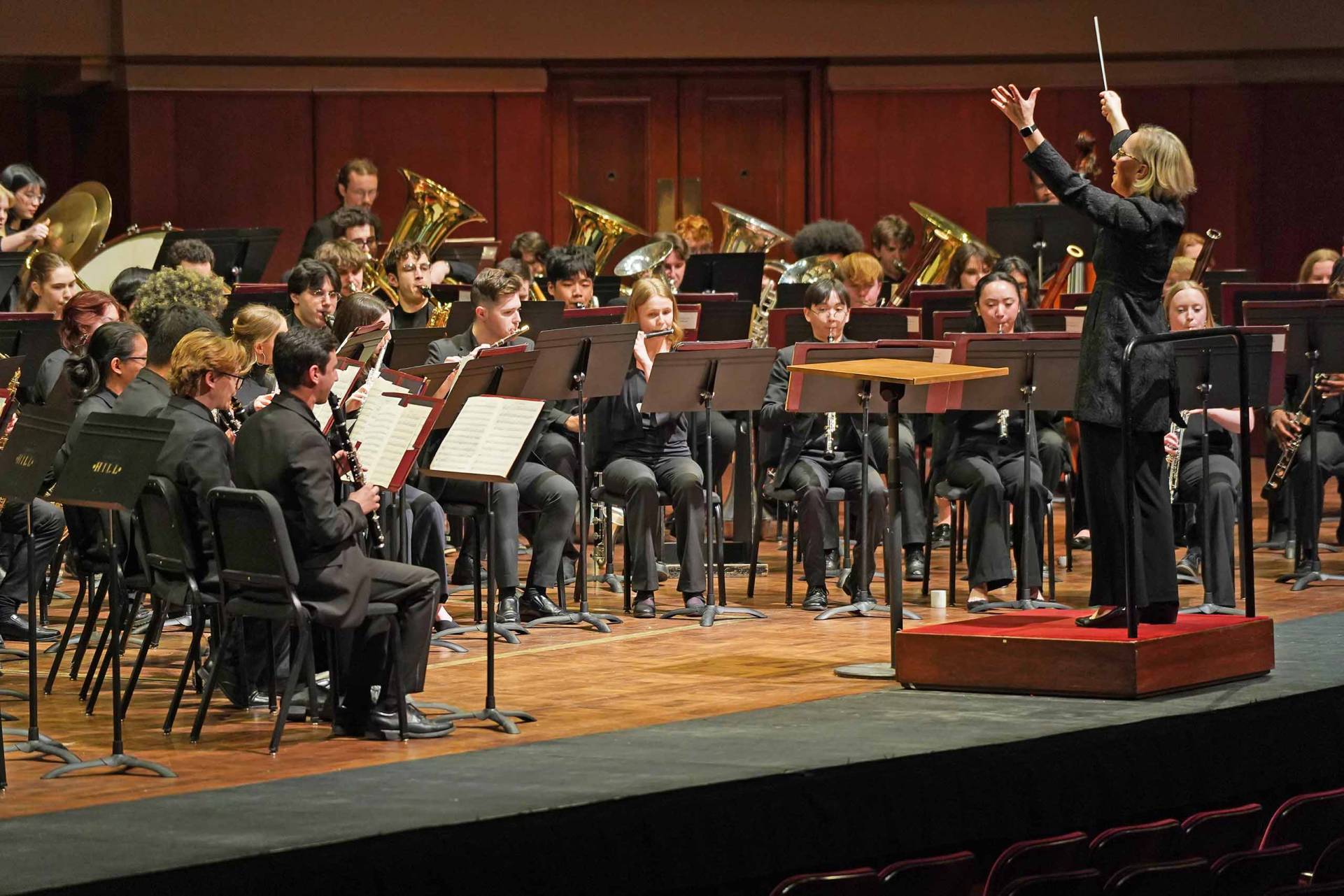
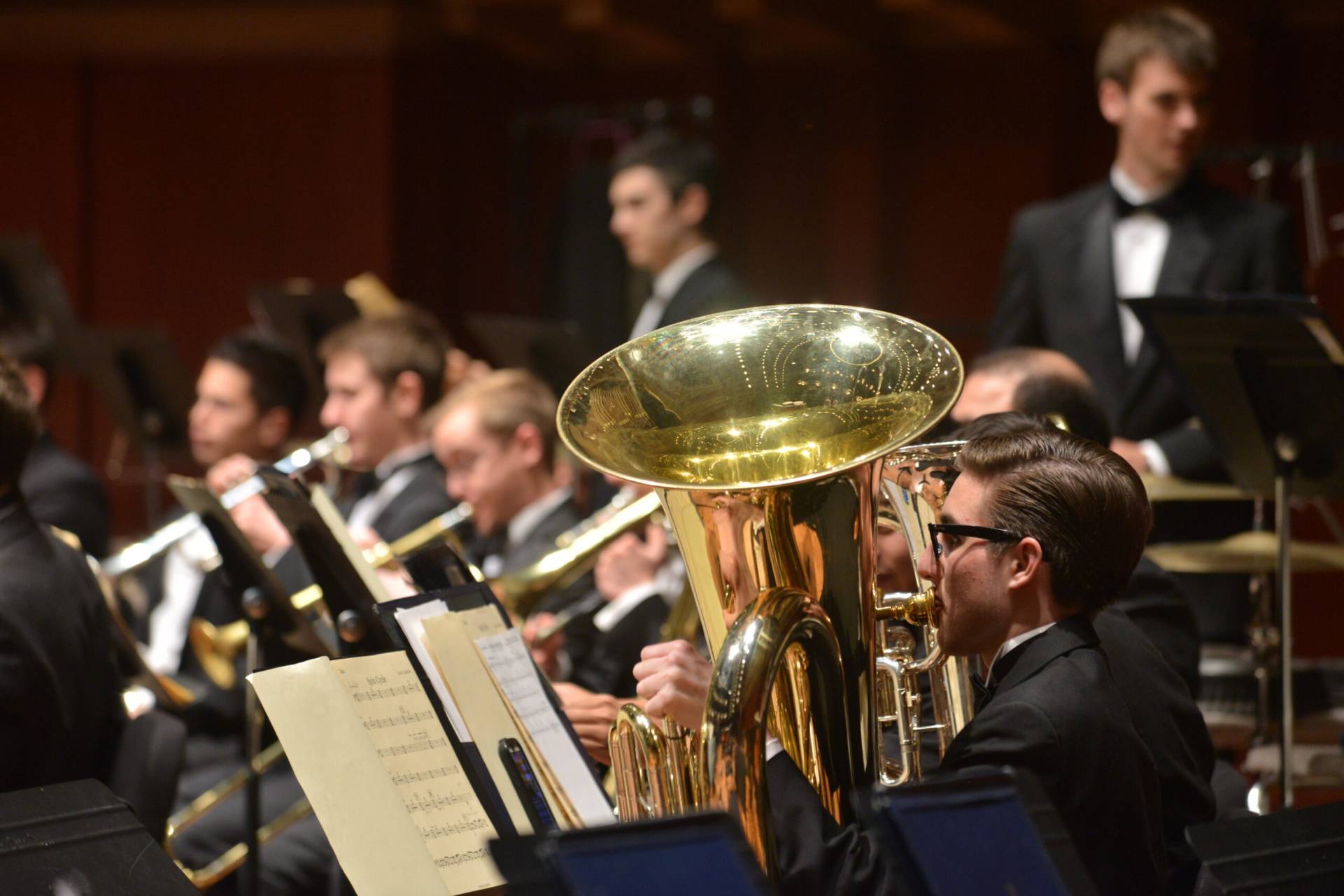
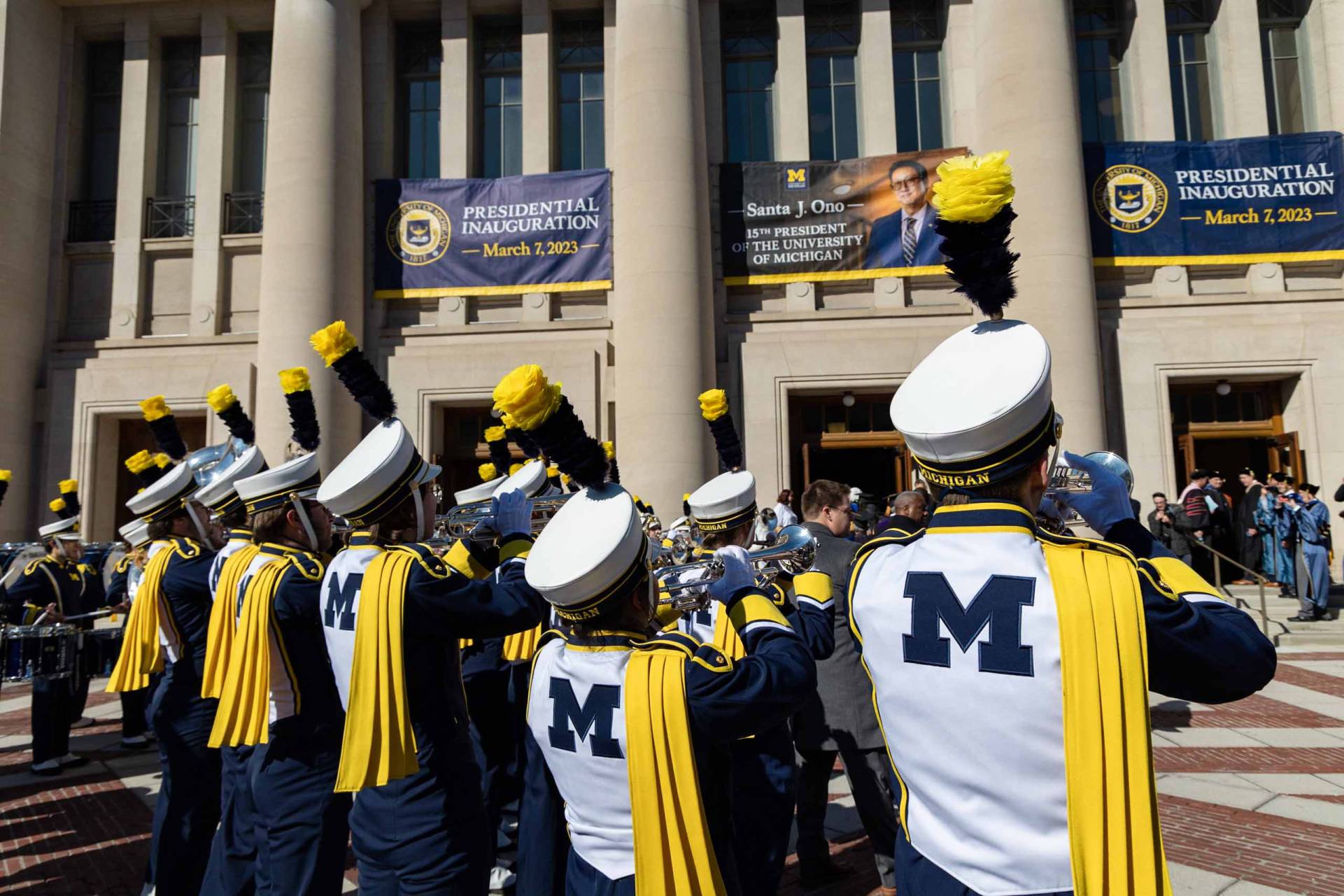
Designed for students seeking to become highly-qualified professional conductors through intensive study with a major artist-teacher, this program offers an exceptional and rigorous musical education that includes conducting and rehearsal technique, score study, and surveys of historically important and diverse, contemporary repertoire. The faculty employ an apprentice-like approach to mentoring and scholarship with significant time allotted to each student, emphasizing personal and musical growth and leadership development in all situations – artistic, academic, and administrative. Each DMA student serves as an assistant conductor to the conducting faculty in a variety of musical environments, works with faculty, student, and guest composers, and has many opportunities to conduct a variety of ensembles within the historic band program. The University of Michigan Band program is a leader in commissioning new works from a diverse range of composers, while also maintaining a rigorous focus on the historical canon. The DMA culminates with conducting public performances with repertoire equivalent to three concerts in lieu of a dissertation.
Curriculum
Completion of the program normally requires six terms of full-time study beyond the master’s degree. Students are expected to attain candidacy at the beginning of the sixth term.
- Ensemble Conducting
- Private Lessons
- Musicology & Music Theory
Final Project:
The dissertation requirements consist of conducting public performances with repertoire equivalent to three concerts. The programs should include a diversity of musical styles.
Silent Advisor
Degree requirements and term-by-term layout for current students.
Funding
Nearly all DMA students receive full-tuition fellowships. Most also receive health benefits and a stipend attached to a Graduate Student Assistantship, which can vary in proportion to the appointment fraction and the duties associated with it. In addition to the funding packages offered by the SMTD, Rackham students are also eligible to apply for a wide range of fellowships to fund research, travel, and performance.
Residency Requirement
At least one academic year of full-time residence is required.
Faculty
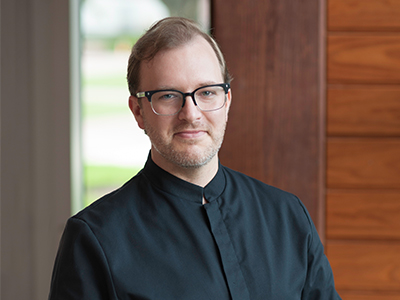
Matthew Abernathy
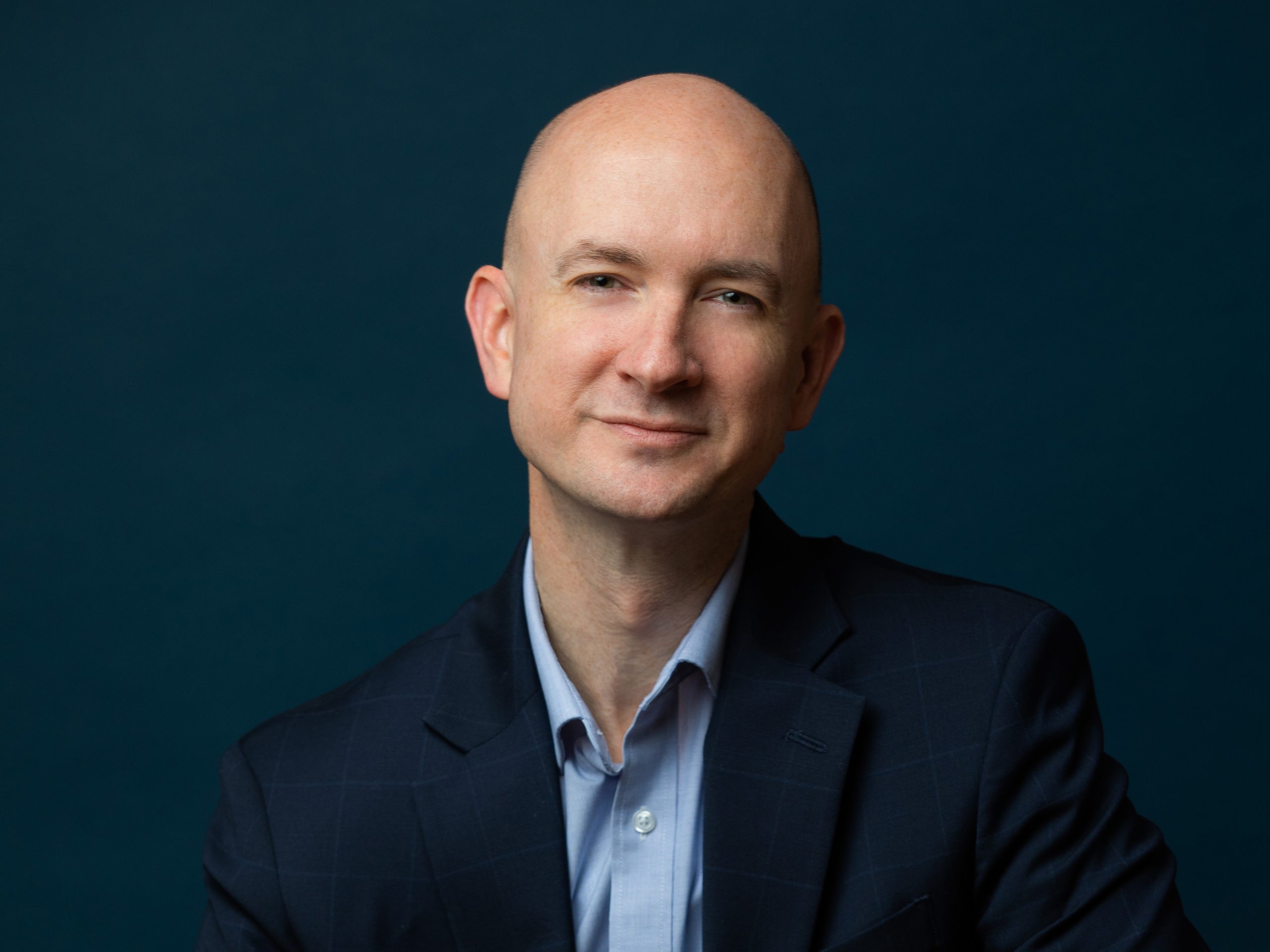
Jason Fettig
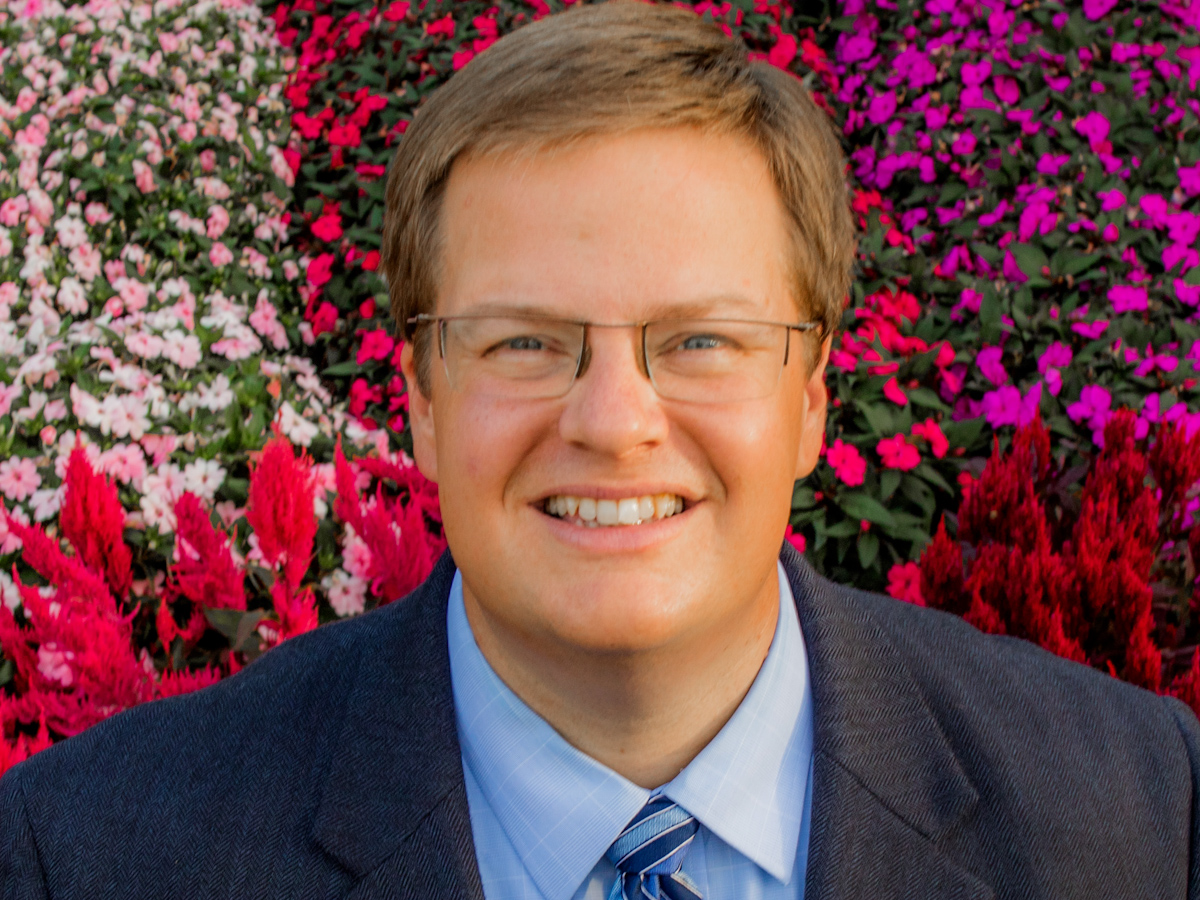
Richard Frey
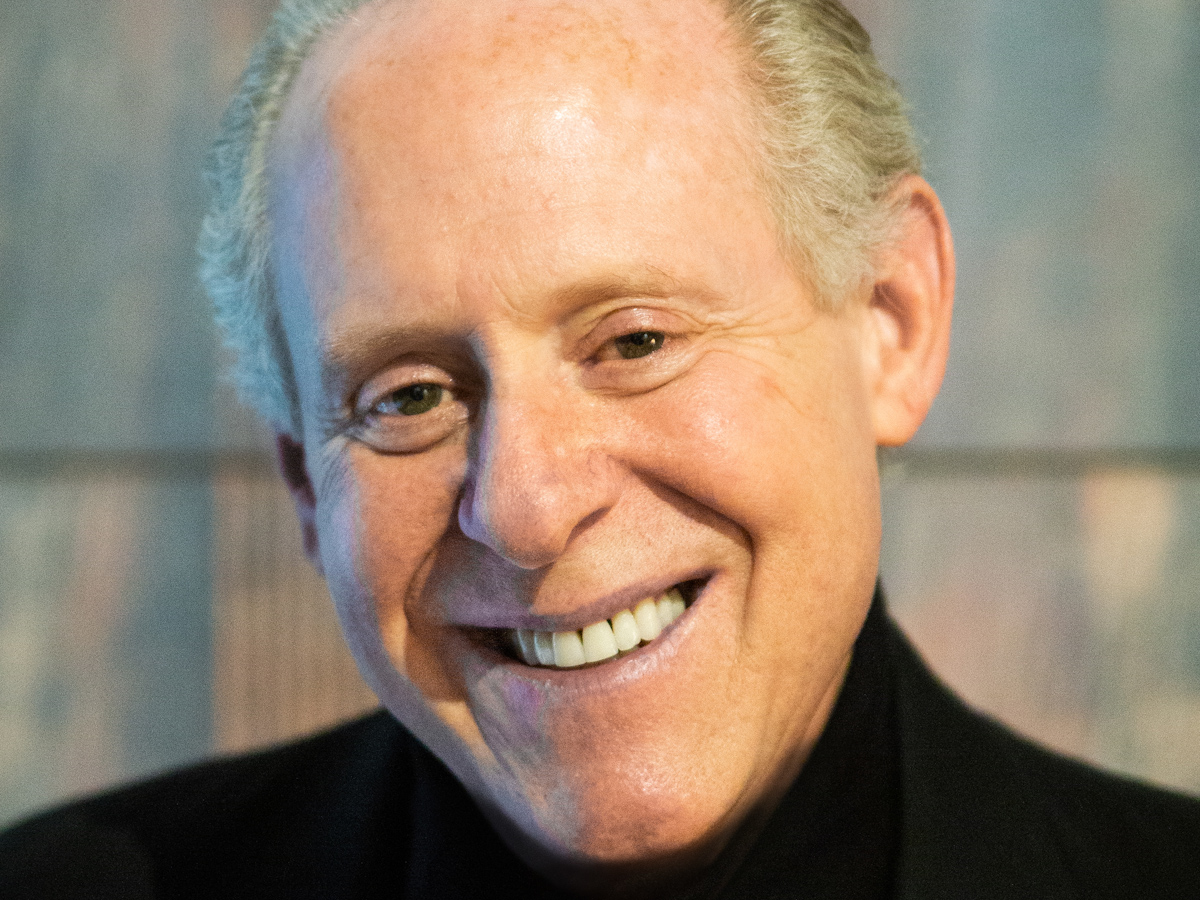
Kenneth Kiesler
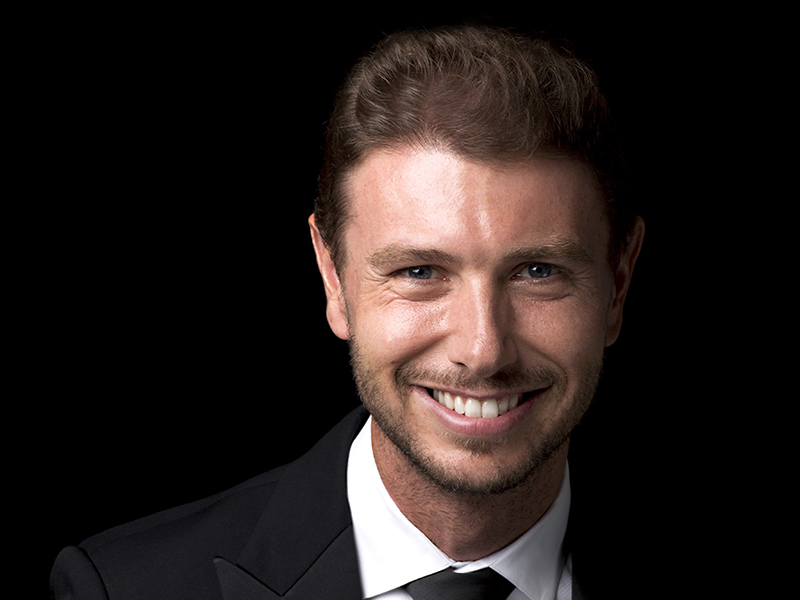
Jayce Ogren
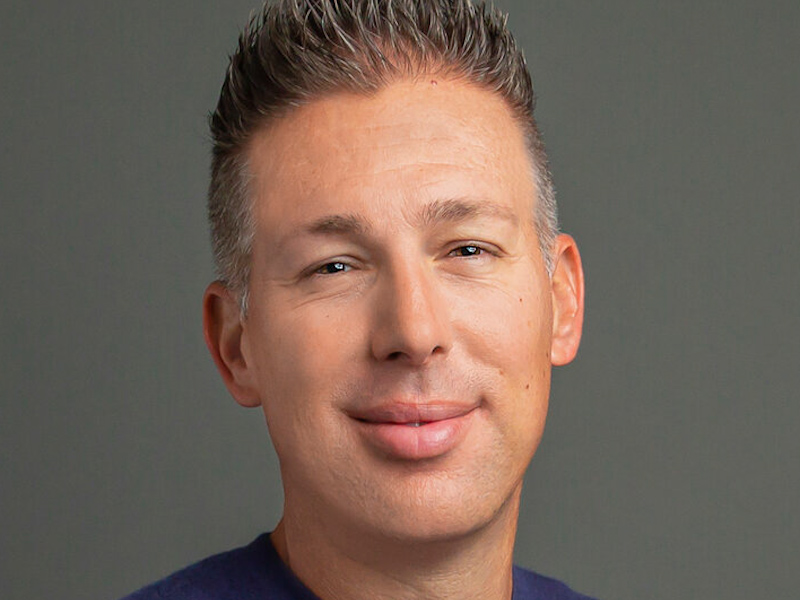
John Pasquale
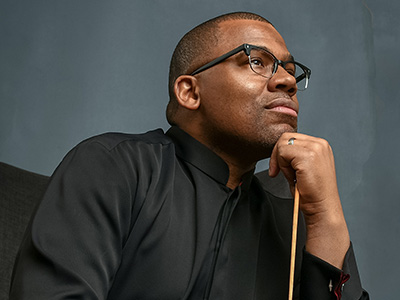
Eugene Rogers
Julie Skadsem
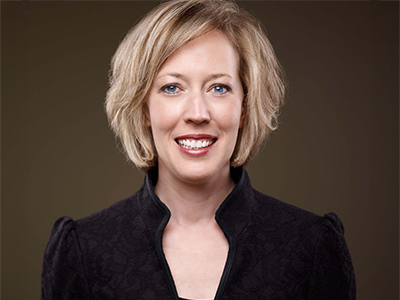
Courtney Snyder
Performance Opportunities
From large ensembles in celebrated concert halls to chamber groups in intimate recital spaces, performance opportunities across all disciplines abound, with nearly 900 student performances each academic year. Whether your focus is on early, classical, or contemporary music, whether your passion is for jazz, electronic, or world music, there is an ensemble – or in many cases, multiple ensembles – to suit your interests.