
During the summer of 2026, fourteen U-M band students, along with faculty members, spent the week of July 19–25 in Rio de Janeiro, Brazil, studying, performing, and engaging with Rio’s musical and cultural traditions. The students performed at the international conference of the World Association of Symphonic Band Ensembles (WASBE), attended educational sessions focused on Latin American music and culture, and participated in an international conductors competition featuring conductors from Spain, the United States, Brazil, and Colombia. This trip marked the first time a U-M band ensemble performed in South America and the first time a U-M ensemble performed at the WASBE international conference.
The trip was led by Courtney Snyder, chair of the Department of Conducting, associate professor, and associate director of bands; Jason Fettig, professor of music and director of bands; and Richard Frey, lecturer and assistant director of bands.
Performing for the international conductors’ competition and working with conductors from four different countries exposed students to varied conducting styles, rehearsal techniques, musical perspectives, and interpretations. They learned to adapt quickly to different artistic approaches while strengthening their ensemble responsiveness and communication skills. The students also performed at two historically significant Rio de Janeiro venues, Teatro Municipal and Igreja de São Francisco de Paula, enabling them to experience the enthusiasm of Brazilian audiences and engage with the broader community in a way that differed substantially from their typical performance experiences at U-M. Fettig observed, “when young musicians have the opportunity to collaborate and perform together outside of our familiar world, something magical happens. Everything becomes more visceral and more tangible as you experience different communities and cultures responding to what you have come to share with them. This awakening not only brings cultures closer together, it brings the performing artists closer as well, and I was grateful to have the opportunity to watch our students bond through this experience and create new pathways for their collective artistry.”
Snyder further reflected on the impact of the trip: “The program expanded the students’ musical, cultural, and professional perspectives,” she said. “They returned with greater knowledge of Brazilian and Latin American music, increased confidence working across cultural and linguistic differences, experience performing for international conductors and audiences, and a deeper understanding of the cultural contexts behind the music they perform. The experience ultimately helped them become more informed, adaptable, and culturally responsive musicians while encouraging them to advocate for a broader and more inclusive concert band repertoire.”
Below, Dave Kim, one of the students who participated in the program, shares his reflections on this extraordinary experience.
Reflection by Dave Kim (BM ’26, clarinet)
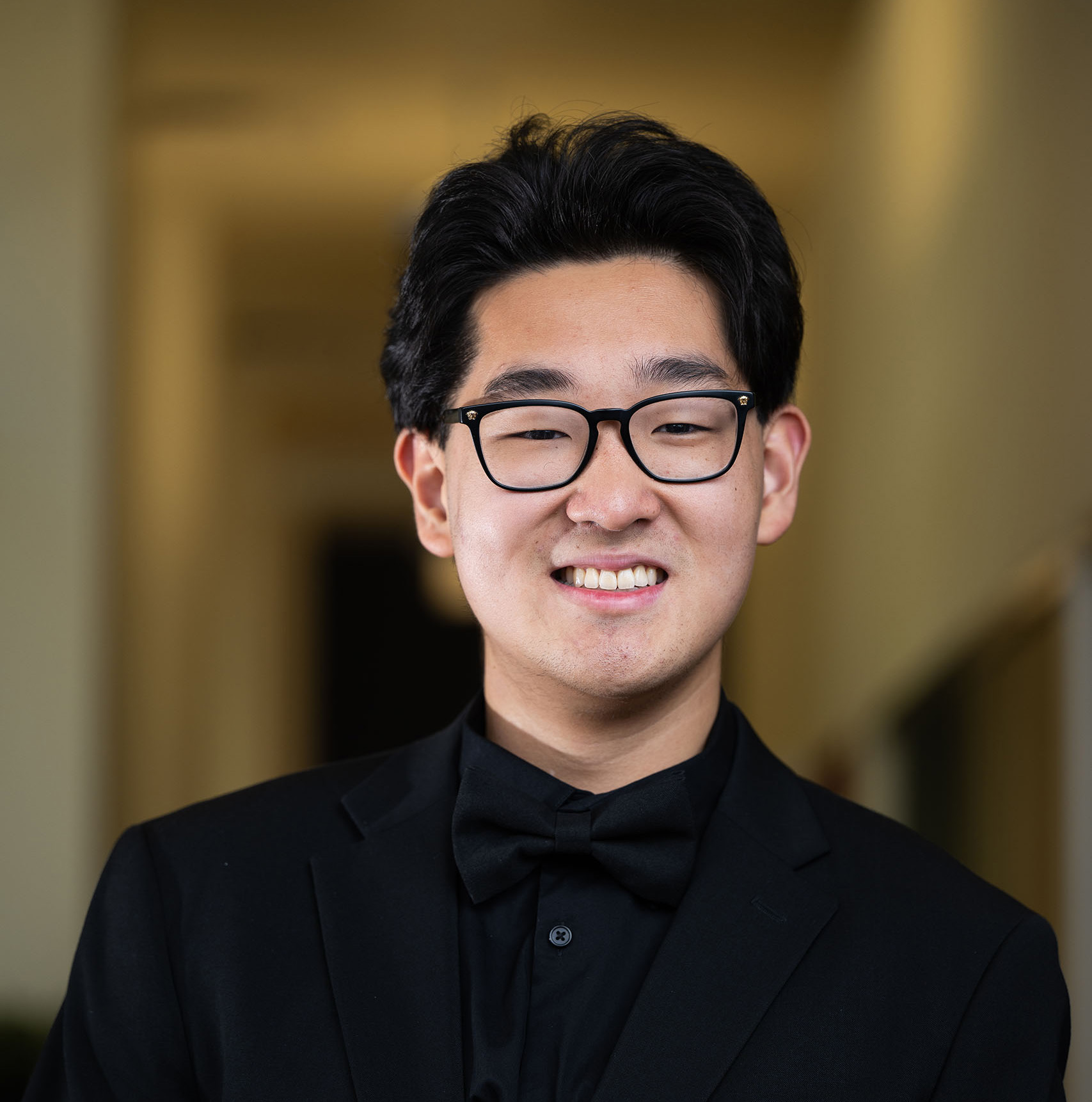
Dave Kim
Going into this trip, my perception of Rio de Janeiro mostly stemmed from the movie Rio. The film’s plot concerns two birds, Blu and Jewel, and it features the sights and sounds of Carnival and samba music. If you’ve watched the film since its release in 2011, you might remember the stunning images of the Christ the Redeemer statue as well as the natural landscape encircling the lively city.
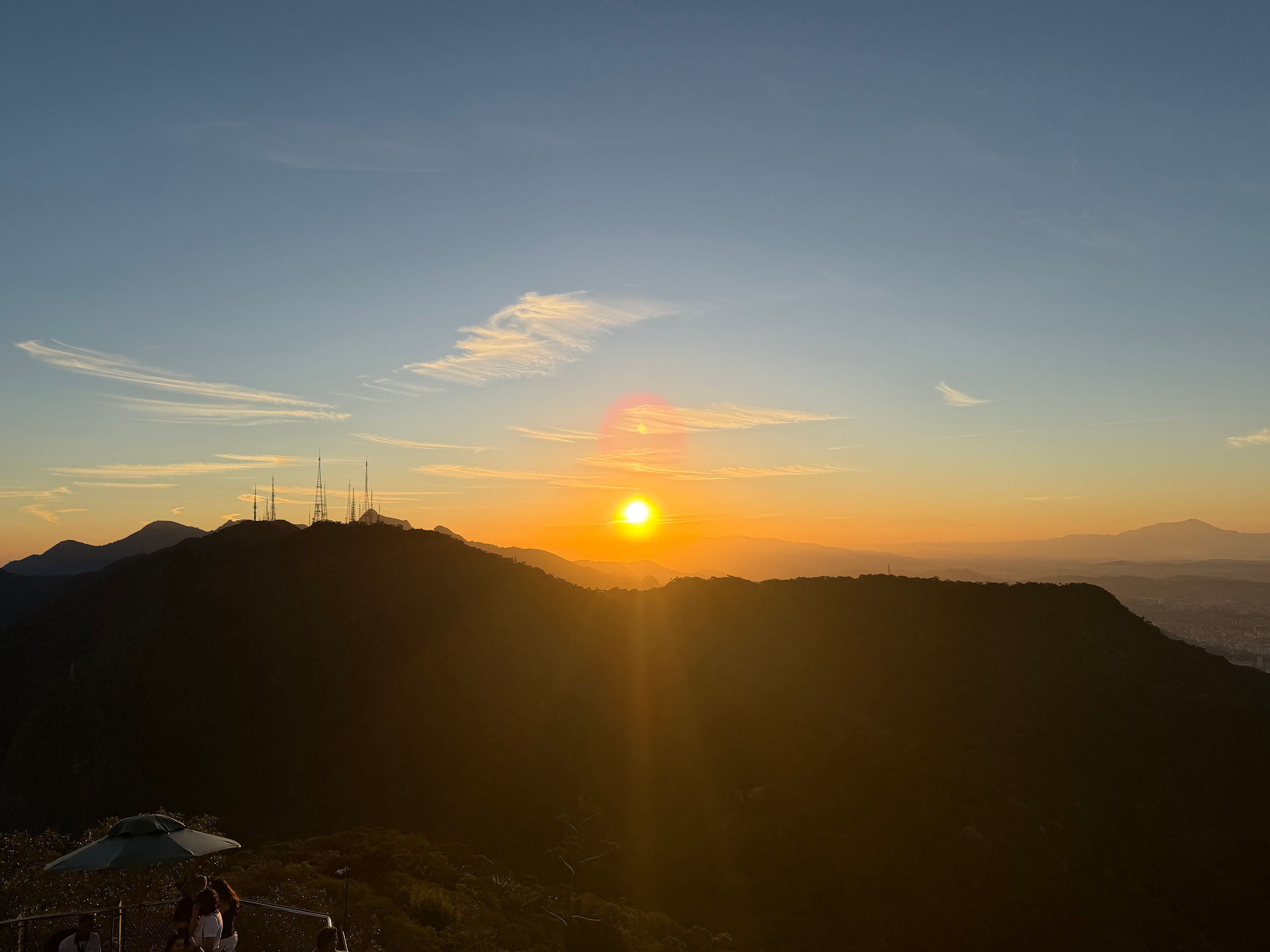
Sunset on Corcovado Mountain. Photo: Dave Kim
We jump-started this adventure by meeting Manu Peclat, our outstanding tour guide, at the airport. We then went straight to Christ the Redeemer on Corcovado Mountain. After taking a cog train up the 700-meter mountain, we were greeted by a breathtaking sunset (as well as hundreds of other tourists). After dark, we made our way back down and departed for our welcome dinner at the Churrascaria Palace Brazilian Steakhouse. With a generous variety of seafood and charcuterie items at the buffet and a scrumptious selection of meats, this meal was easily my favorite of the trip.
On the second day, our musical engagements in Brazil began. We were fortunate to be the ensemble playing for the primary live round of the 1st WASBE International Conducting Competition, and we played for four wonderful semi-finalists. These conductors from Spain, Germany, Colombia, and the United States phenomenally rehearsed and performed excerpts from Mozart’s Serenade for Winds in C Minor and Stravinsky’s Octet. Following the conducting competition and a short lunch break, Manu took us to see Igreja de Nossa Senhora da Candelária, Centro Cultural Banco de Brasil, and Imperial Palace, all historically significant monuments within the city. Following our excursion, we headed towards the infamous Rio de Janeiro Municipal Theater to watch the Lençóis Paulista Wind Orchestra perform as part of the WASBE Conference. Performing all Latin-American premieres for wind ensemble, the group encapsulated characteristics of Brazilian samba and bossa nova with accuracy and a level of authenticity that could not be replicated outside of Latin America.
Day three was dedicated to discovering more of Rio de Janeiro’s intriguing culture and history. After exploring the local street markets and trying a Brazilian McFlurry (essentially a McDonald’s McFlurry with Ovomaltine rocks – chocolate-covered treats – and white chocolate oreos), our group of 18 visited the National Library located in Cinelândia square. This depository is the largest library in Latin America and holds over nine million total items, including thousands of musical scores written in Brazil. After leaving the library, we walked into the most surreal experience of the entire trip: the Catedral Metropolitana de São Sebastião, which resembles a towering Mayan pyramid. The massive interior of the cathedral, which has 5,000 seats and a standing capacity of 20,000 people, left me in awe. After Manu’s tour-guide explanation of its history, we sat and took in the architectural titan for about half an hour.
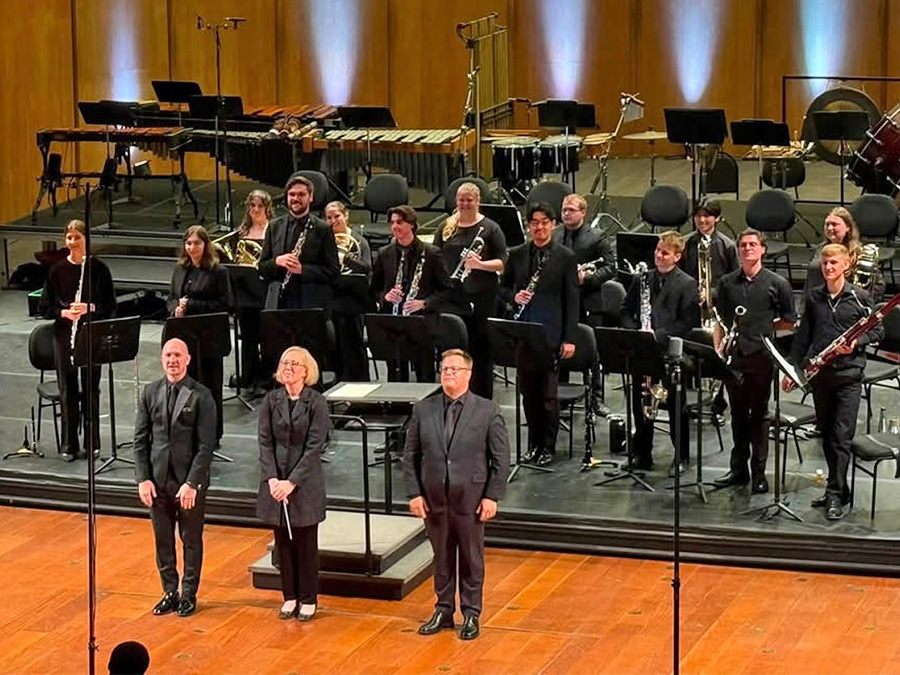
SMTD students and Jason Fettig (left), Courtney Snyder, and Richard Frey take a bow after their performance at the Rio de Janeiro Municipal Theater.
Our fourth day was the day we performed for the WASBE Conference back at the Rio de Janeiro Municipal Theater. While working on the music we performed, we had an incredible time collaborating with composers Gao Hong (on her chamber work China Breeze) and Rubén Dario Gómez (on his chamber winds premiere Siempre Hay una Primera Vez). Other pieces we performed at this concert included Dr. Richard Frey’s arrangement of Antonio Carlos Gomes’s Overture to Fosca, Gilda Lyons’s ethereal You Are Here, and Stravinsky’s timeless Octet. It’s also worth noting that earlier that day, we spent the morning at Ipanema Beach. The beautiful weather and calm waves served as pillars for a memory that will stay with me forever.
Day 5 was stamped by our final musical experience: the WASBE Fringe Festival performance at the Largo de São Francisco de Paula. The acoustics and meticulous design of the interior made it the perfect location to perform our final concert. We performed the Gómez and Gomes works as we had done in the first concert, then added Mozart’s Serenade in C Minor, Robert Spittal’s Consort, Emile Bernard’s Divertissement, and many woodwind and brass quintet arrangements.
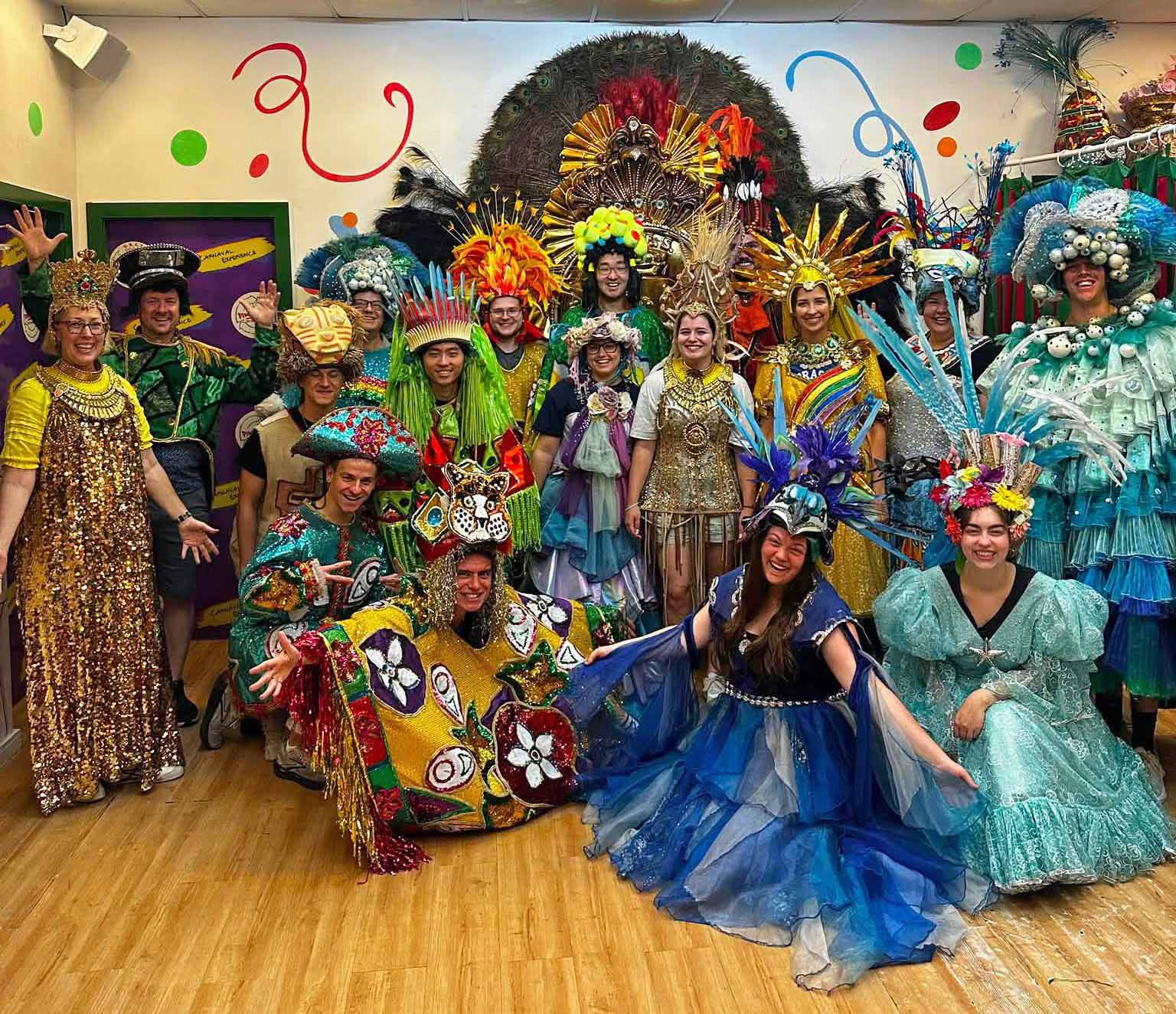
Students and faculty get the full experience at a samba workshop. Photo: Manu Peclat
Our incredible experience in South America concluded with a samba workshop, where we dressed up in costume, danced with a Carnival performer, and learned about the history of the famous Carnival festival that occurs in late February. It was interesting to see many of the (very) large props used during the Carnival parade; many of the vehicles used were two stories high, all built out of wood and nails.
Going into this adventure with an open mind for growth certainly allowed us to learn about the realities of living in Brazil while witnessing the many wonders that make Rio de Janeiro so special. I came home with many lifelong friends and a deeper appreciation of Latin American culture. My gratitude goes to Dr. Courtney Snyder, Professor Jason Fettig, Dr. Richard Frey, my 13 incredibly talented colleagues, WASBE, and of course Manu Peclat.