
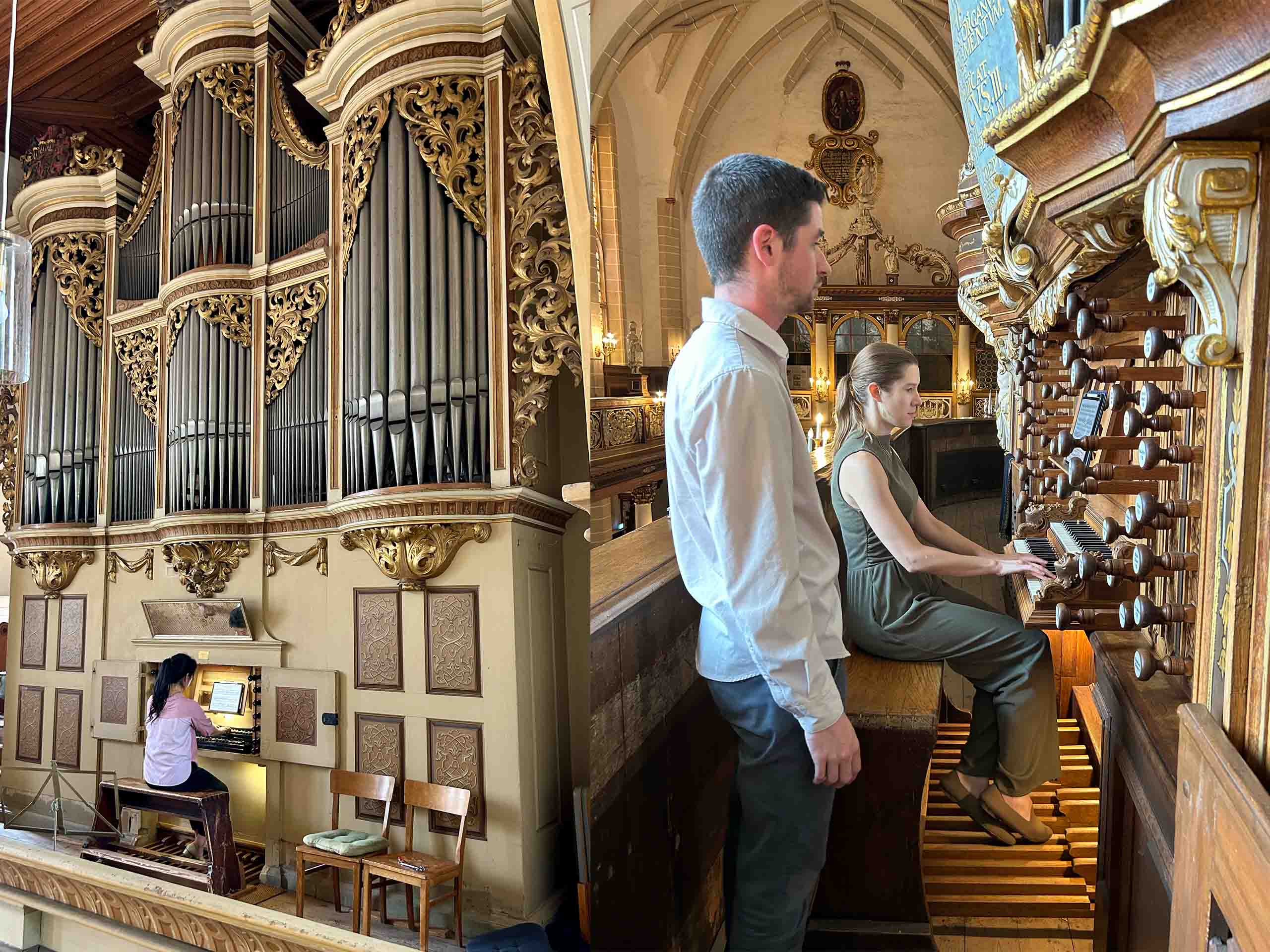
In June 2026, the Department of Organ embarked on a 10-day tour of historic organs in the German states of Saxony and Saxony-Anhalt, funded in part by a grant from the Office of Global Engagement. The group included seven students, organ professors Nicole Keller (who also serves as department chair and university organist) and Caroline Robinson, and organ technician Stephen Warner. With Leipzig serving as home base, the group traveled to Merseburg, Dresden, Altenburg, Rötha, Störmthal, and Naumburg, visiting organs built by Germany’s most celebrated organ builders, including Wilhelm Sauer, Friedrich Ladegast, and Gottfried Silbermann.
Dr. Martin Schmeding of the Hochschule für Musik und Theater “Felix Mendelssohn Bartholdy” in Leipzig served as the group’s host and tour guide, introducing each instrument in its historical context and demonstrating the stops and mechanisms. This extraordinary access offered students the opportunity to hear, play, and study music of Bach, Mendelssohn, and Liszt on some of the very organs that shaped and inspired their composition. “The enrichment from this experience will last a lifetime,” noted Robinson. “The aural, tactile, and visual memories will fortify the foundation of contextual awareness for all of the repertoire associated with these organs and lend insight into its adaptation onto other instruments. Additionally, the students came away having grown stronger bonds with each other – classmates now, but colleagues in their lifelong careers – and their professors.”
Keller concluded: “This experience was life changing for students and professors, providing a spiritual and physical connection to the sounds and musical atmosphere that forged the course of organ repertoire for more than 300 years. Recordings can never compare to sharing an acoustic space with these majestic instruments, nor could they replace the learning experience of feeling the action, managing the wind, and hearing how the sound fills the space. These study trips are not luxuries, but the completion of a well-rounded education we will continue into the future.”
Reflection by Chanmi Kim (MM ’28, harpsichord; DMA ’28, sacred music) and David Stultz (DMA ’26, sacred music)
From June 16 to 25, we had the incredible opportunity to travel to Leipzig, Germany, with the University of Michigan School of Music, Theatre & Dance Organ Studio, visiting stunning organs throughout the city and surrounding towns. Led by organ professors Nicole Keller and Caroline Robinson, our group included current students and alumni.
We each made our own way to Leipzig separately. After settling into the hotel, we shared a meal of traditional German food at a nearby restaurant, trading excitement about the organs ahead and our first impressions of Germany. That evening, we were treated to an unforgettable Bachfest concert of several J.S. Bach cantatas at the historic Thomaskirche. Feelings of tiredness and jet lag were quickly outweighed by reactions of joy and musical inspiration while listening to the outstanding performance conducted by Sir John Eliot Gardiner.
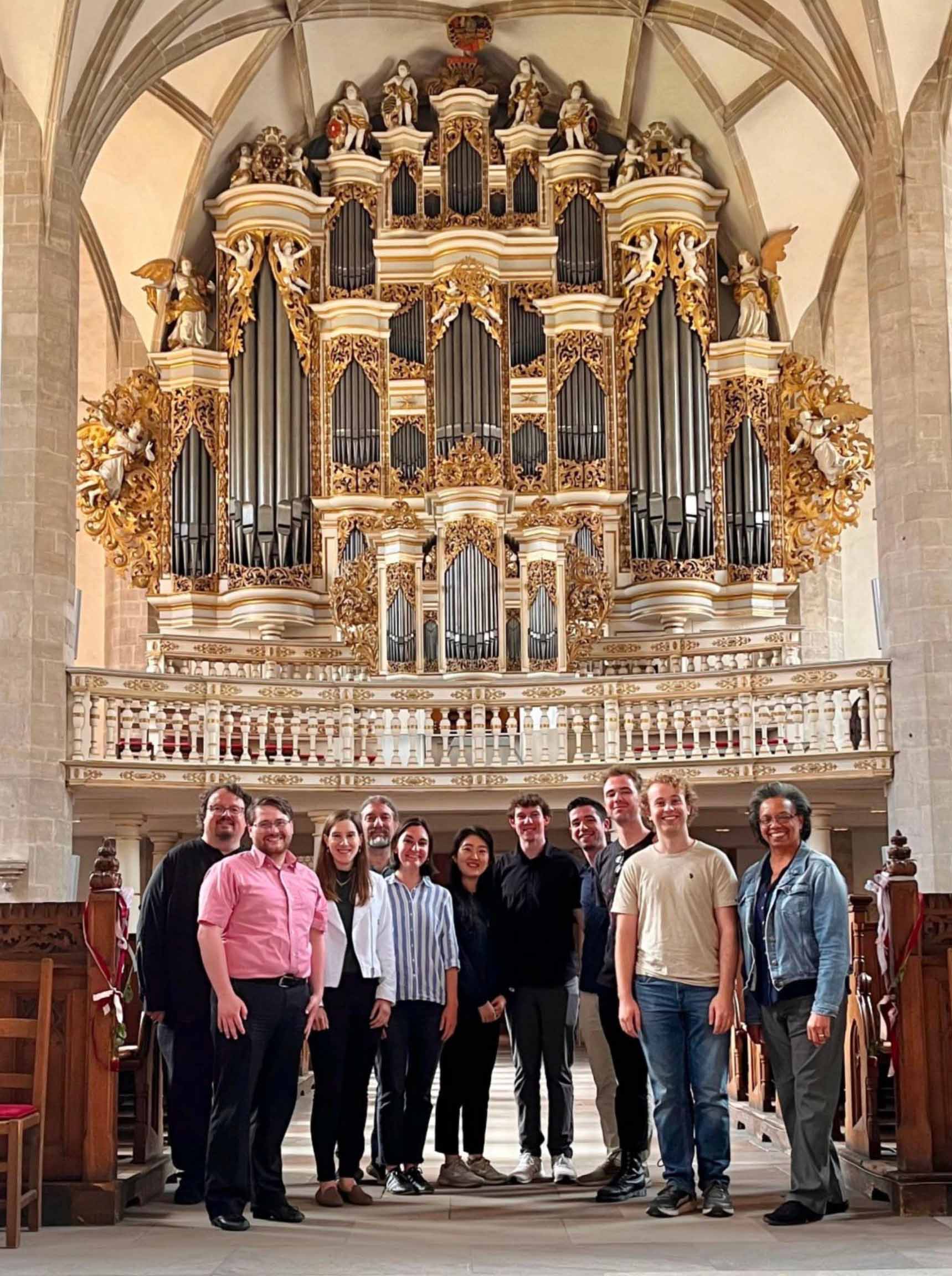
A group photo in the Merseburg Domkirche.
The first full day, June 17, kicked off with a short commute to the Merseburg Domkirche. This site holds a special connection to Liszt, and Professor Martin Schmeding – artistic director of the European Organ Academy at the University of Music and Theater Leipzig – gave us a sensational and informative demonstration, performing Liszt’s entire Prelude and Fugue on B-A-C-H on the 1855 Ladegast organ. Hearing the whole work in that space was tremendously enriching. Professor Schmeding demonstrated each organ with excellence throughout the trip and generously provided transportation via the university bus. We extend our utmost gratitude to him for organizing all the church visits and making this trip memorable beyond measure.
The following day, June 18, took us to Dresden for two church visits. In the morning, we once again experienced awe and inspiration playing the 1755 Silbermann/Hildebrandt organ at the Hofkirche. In the afternoon, we visited the 1962 Jehmlich organ at the Kreuzkirche, with its unusually striking 32-foot reeds in the facade. Between the two contrasting instruments and the several seconds of room reverberation, we found ourselves thoroughly enjoying the chance to experiment with an almost infinite range of registrational color, and we came away deeply inspired.
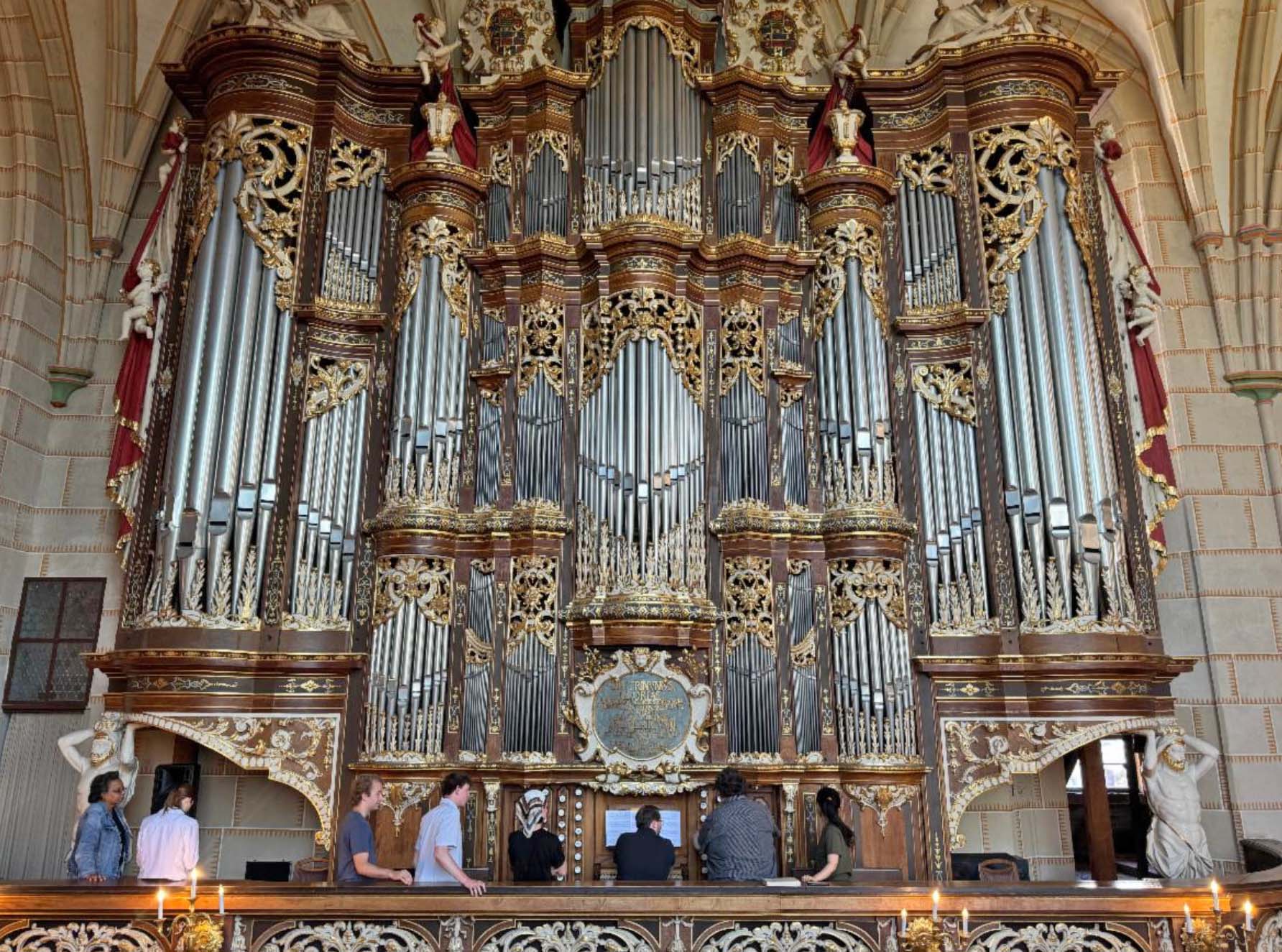
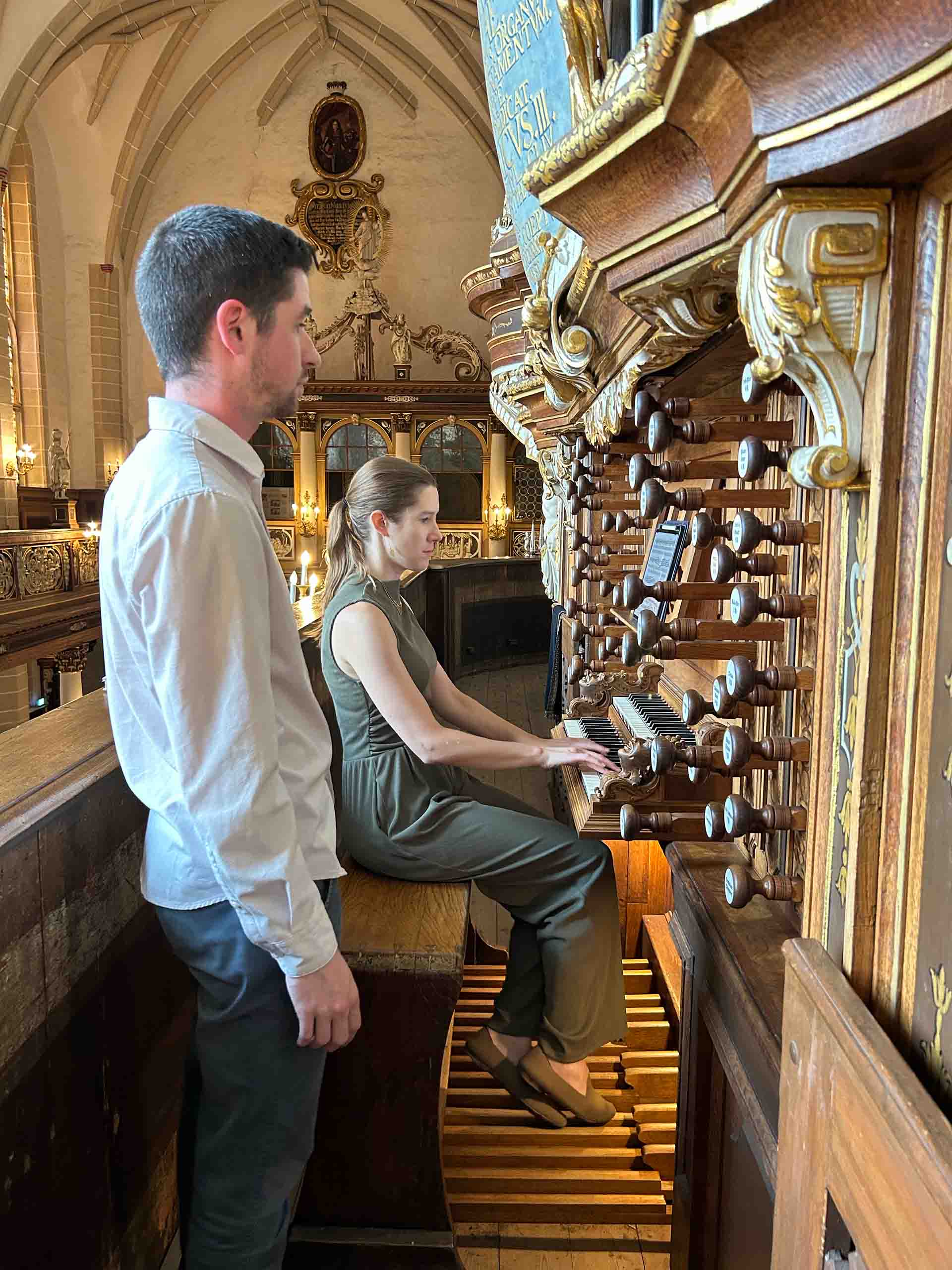
On June 19, a day trip to the Altenburg Schlosskirche St. George gave us the opportunity to play the 1739 Trost organ, with its softer flute and string color stops. Bach himself examined and played this very instrument in 1739. Simply sitting at that console felt like a direct link to history.
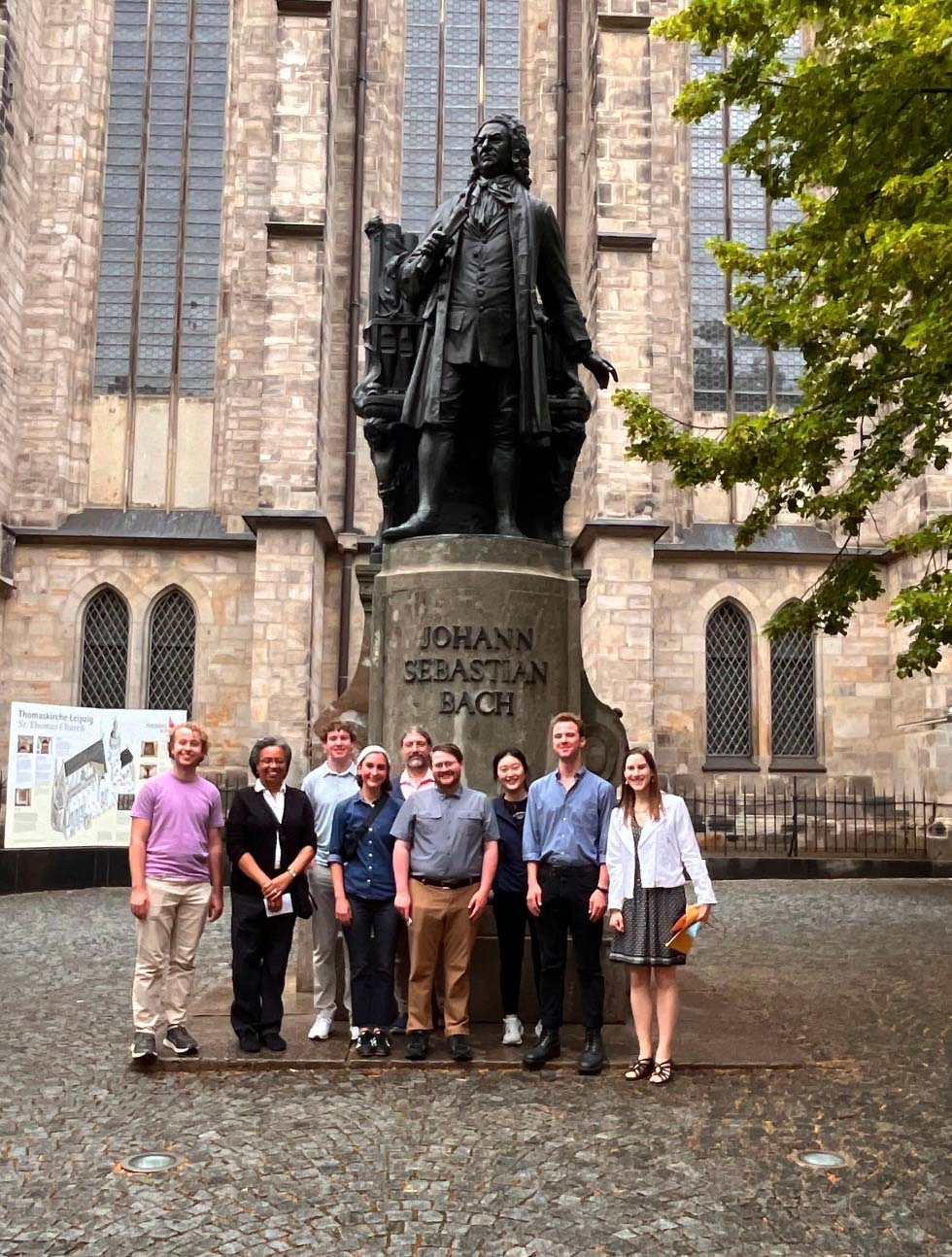
The group poses at the base of the J.S. Bach statue at the Thomaskirche, Leipzig.
The next day was free, so we visited the Bach House and took in more Bachfest performances. On Sunday, June 21, we attended a Bach-style worship service at the Thomaskirche, sitting close to the Bach-inspired 2000 Woehl organ and watching masterful service playing and improvisation from the organist. That afternoon, we toured the Leipzig Historical Instrument Museum and the Mendelssohn Haus.
On June 22, we returned to the Thomaskirche to play both the Woehl organ and the 1908 Sauer organ, moving between German Baroque and Romantic repertoire within the same space. The Sauer’s Rollschweller – a wheel beside the expression pedals that adds or subtracts stops as it spins – was an especially challenging and novel experience. The day concluded at the Nikolaikirche with the five-manual 1862 Ladegast/Eule organ, its console strikingly designed by Porsche. There we enjoyed experimenting with Romantic and contemporary repertoire we hadn’t tried before, exploring the instrument’s colors.
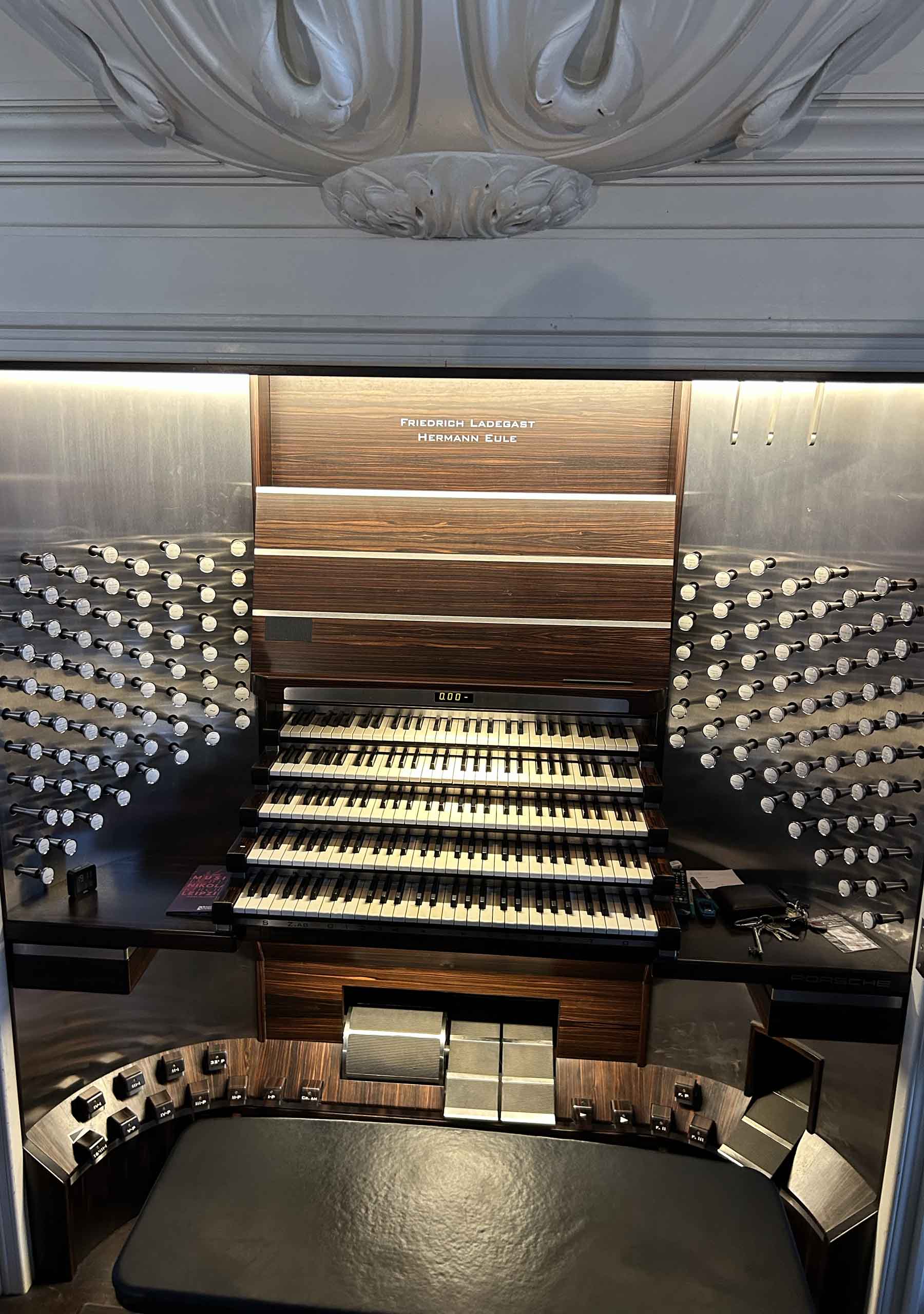
The Ladegast/Eule organ console, located in the Nikolaikirche in Liepzig, was designed by Porsche.
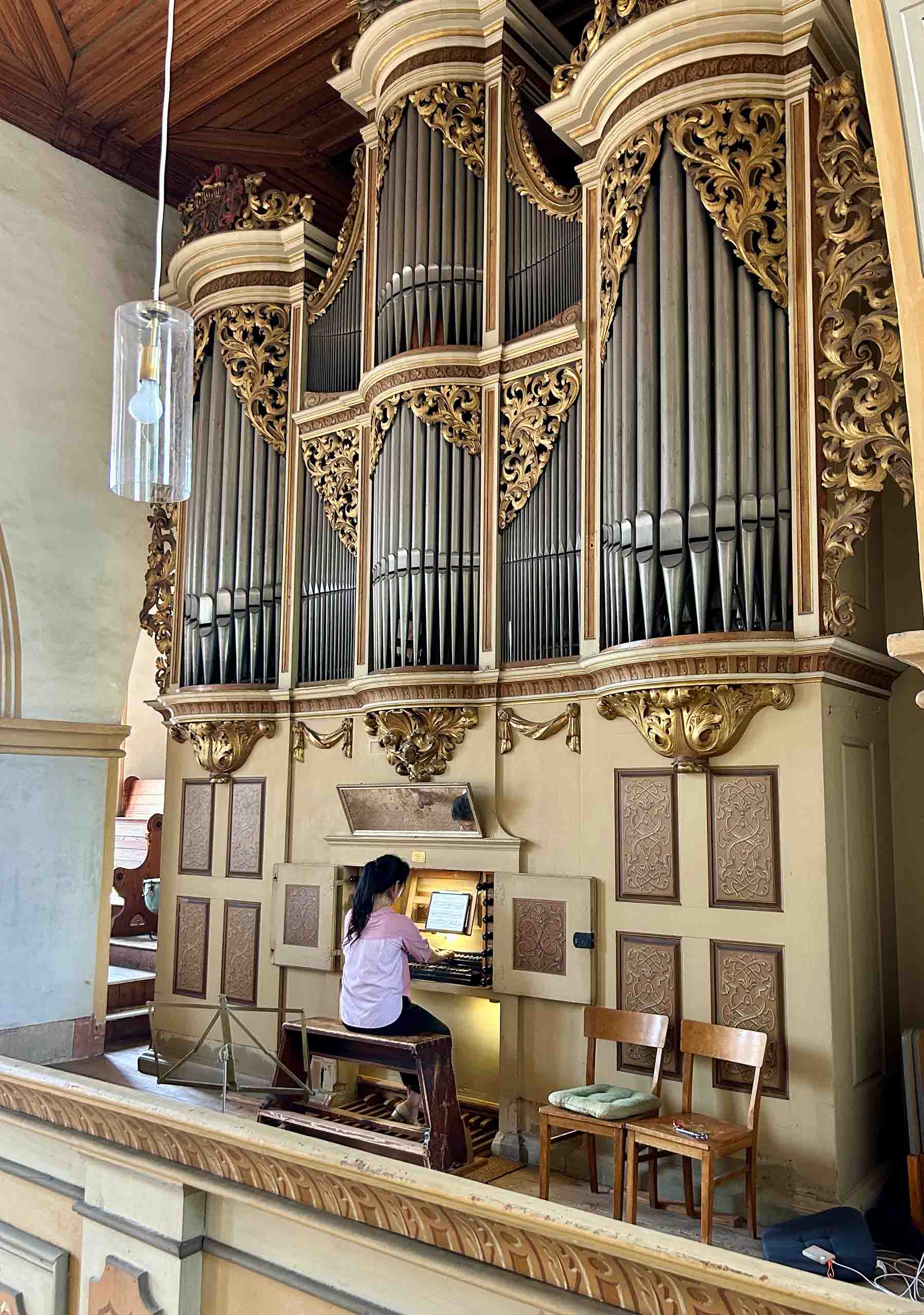
Chanmi Kim plays the 1721 Silbermann organ in the Georgenkirche, Rötha.
The second-to-last day, June 23, involved visiting three organs across Rötha and Störmthal. At the Georgenkirche in Rötha, we played the 1721 Silbermann organ – the very instrument that served as the model for U-M’s own Marilyn Mason Organ (built by C.B. Fisk in 1985), which made the experience feel especially personal. The Marienkirche, also in Rötha, held another 1722 Silbermann organ with unequal temperament and characteristic bright Silbermann color. In the afternoon in Störmthal, we took turns playing the 1723 Hildebrandt organ, dedicated by Bach himself that same year.
The final day, June 24, brought us to the Wenzelskirche in Naumburg. The highlight was a U-M student recital on the 1746 Hildebrandt organ, in which three of us performed, presenting works by Bach and Müthel. Professor Schmeding introduced each performer before we played, and afterward the rest of the group had the chance to try the organ for themselves in that stunning space.
This trip to Leipzig was a source of ultimate musical inspiration. Playing the very keys of history offered a genuine learning experience, revealing glimpses into the lives of many impactful German composers and organ builders. Once-in-a-lifetime memories were made – not just from stepping back in time to play these organs, but from the outstanding fellowship and cordiality shared throughout the trip, made even more enjoyable over some German schnitzel and beer! We can only wonder where the U-M Organ Studio will go next.