
Supported by the SMTD Faculty-Led Global Engagement Fund and the Faculty-Led Education Abroad Program, an inspiring summer program enabled School of Music, Theatre & Dance students Ladina Schaller (BFA ’26, dance), Ceri Roberts (BFA ’27, theatre design & production), and Yuchen Ma (BFA ’27, theatre design & production) to engage with the rich traditions and contemporary expressions of Korean performing arts and cultural heritage. Led by Jungah Han, assistant professor in the Department of Theatre & Drama, this study-abroad program, “Discovering Traces of Korean Cultures and Performing Arts,” offered an immersive, interdisciplinary experience that seamlessly bridged academic learning and cross-cultural collaboration.
Reflection by Jungah Han
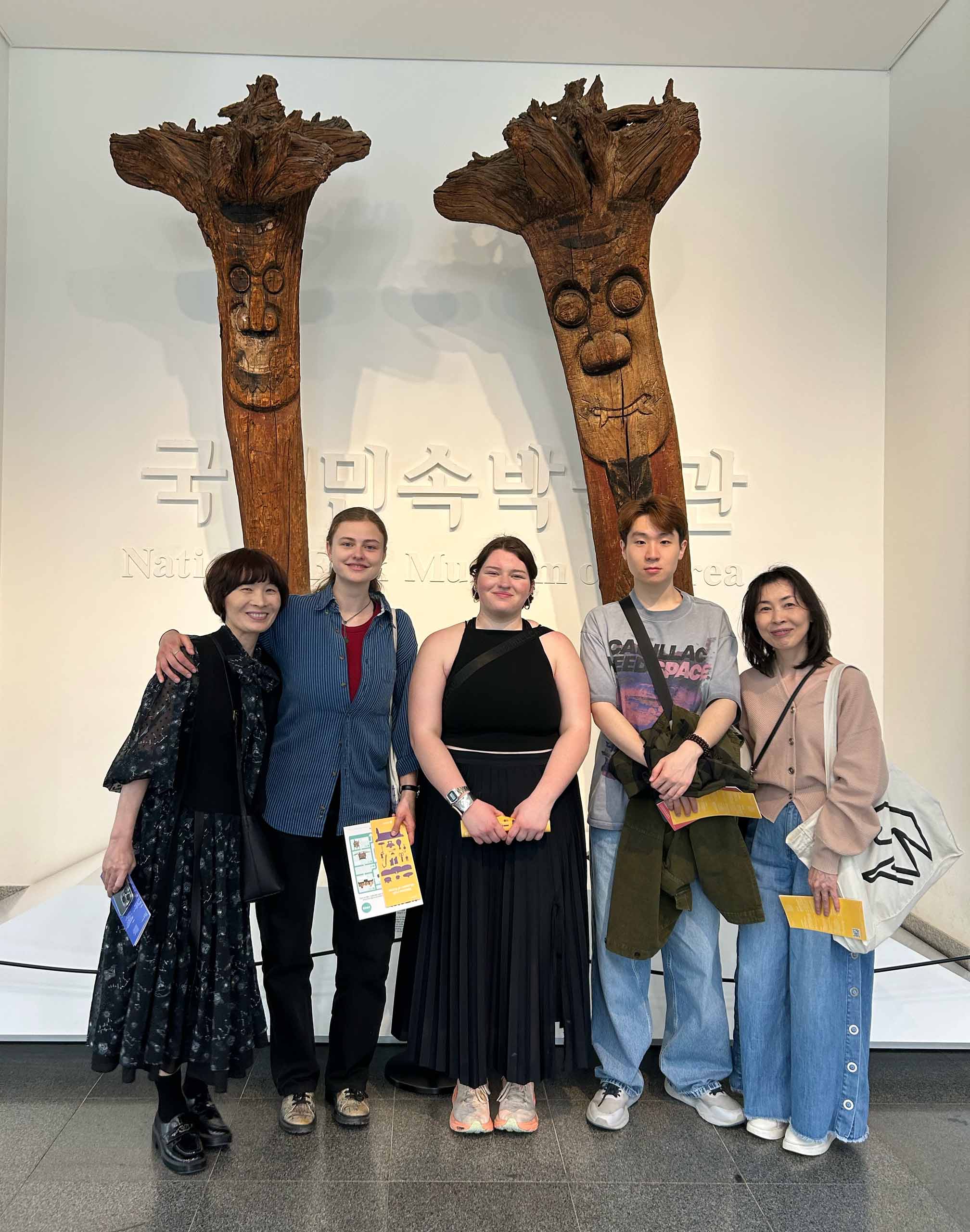
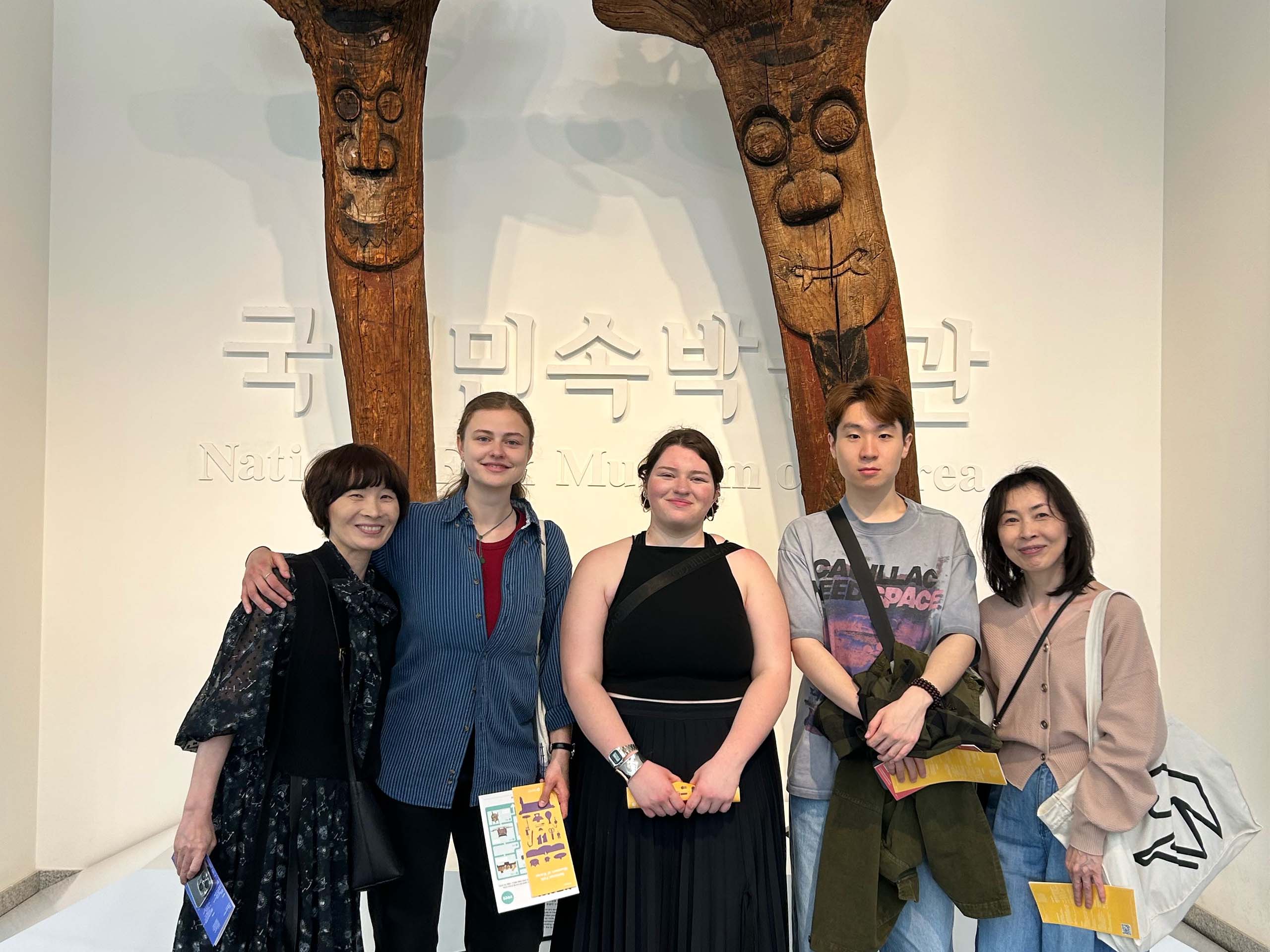
Professor Jungah Han (right) in South Korea with (from left to right) Sunmi Han, the trip’s onsite collaborator, Ladina Schaller, Ceri Roberts, and Yuchen Ma
Over the course of two intensive weeks in South Korea, students engaged in a curated curriculum that combined hands-on workshops, cultural site visits, and collaborative exchanges with Korean artists and students. In partnership with prestigious institutions – including the National Dance Company of Korea, the National Changgeuk Company of Korea, the Korea National University of Arts, and Gangneung Wonju National University – the program explored the dynamic intersections of traditional and contemporary Korean performing arts.
This program was never just about learning technique. It was about cultivating empathy, curiosity, and dialogue across cultures. My goal was to engage students not just as observers, but as participants and collaborators.
A Journey Beyond the Classroom
From the historic palaces of Seoul to the modern galleries of Korea’s eastern coast, students explored Korea’s rich artistic and historical landscape. The program opened with a special reception at the National Dance Company of Korea, including an in-depth tour of its performance venues and a rare meeting with the organization’s CEO. A highlight was a movement workshop led by Artistic Director Jeong-Deok Kim, which invited students to engage with choreography through the lens of interdisciplinary design and embodied performance.
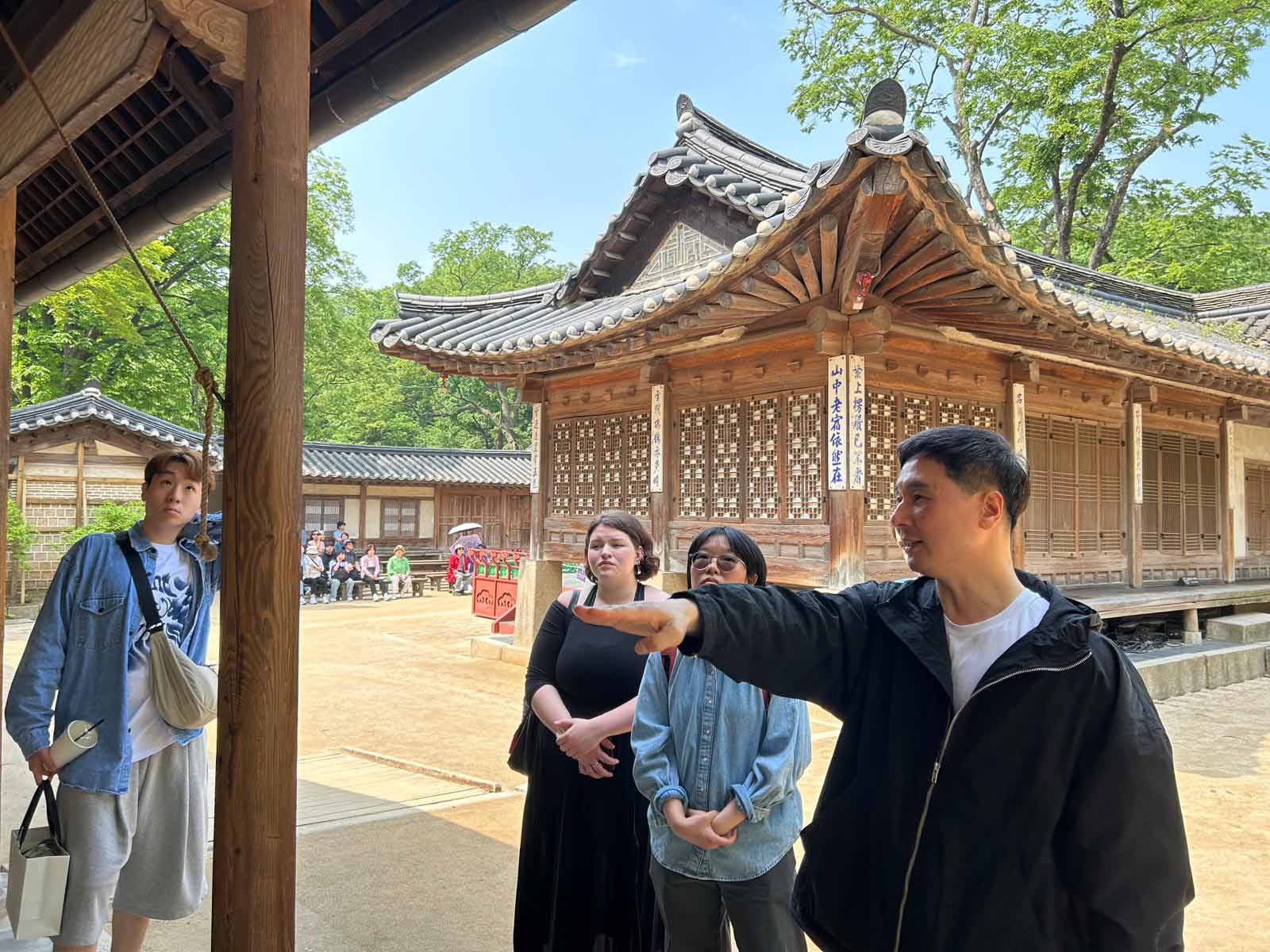
Jeong-Deok Kim (right), the artistic director of the National Dance Company of Korea, tours Changdeokgung Palace with students Yuchen Ma (left) and Ceri Roberts and U-M alum Brenda Cai. Photo: Ladina Schaller
Site visits to Gyeongbokgung and Changdeokgung Palaces, the National Museum of Korea, and the Seoul Museum of Craft Art offered invaluable context, allowing students to experience the continuity between Korea’s cultural past and its modern innovations. At Haslla Art World – a coastal art space blending nature, architecture, and contemporary installation – students were encouraged to reflect on the integration of environment and creativity in Korean visual culture.
Performance and Collaboration
Beyond observation, students had direct encounters with Korea’s vibrant performance scene. They attended rehearsals, including a striking performance rehearsal of Five Vibe, which blended electronic dance music with traditional percussion, and a reinterpretation of The Merchant of Venice in the Korean Changgeuk (traditional Korean musical/opera). Interactions with Korean university students, shared design presentations, and artistic dialogue laid the foundation for meaningful academic exchange and potential future collaboration.
The workshops were more than physical training. They were platforms for reflection, creativity, and meaningful cross-cultural exchange. Watching students stretch beyond their comfort zones was one of the most rewarding aspects of the program.
Everyday Discoveries and Lasting Lessons
In addition to its formal components, the program was marked by spontaneous moments of learning and connection – missed buses, neighborhood bakeries, conversations on etiquette, and shared meals. These experiences were integral to the students’ growth as global citizens.
As much as the performances and places, the beauty of this program lies in the people – artists, faculty, and students – who came together to learn from one another.
The program concluded with student presentations of final projects, which ranged from solo and group performances to innovative set designs and research-driven work. A culminating tour of Changdeokgung Palace, led by Jeong-Deok Kim, offered students an unforgettable synthesis of art, history, and personal narrative.
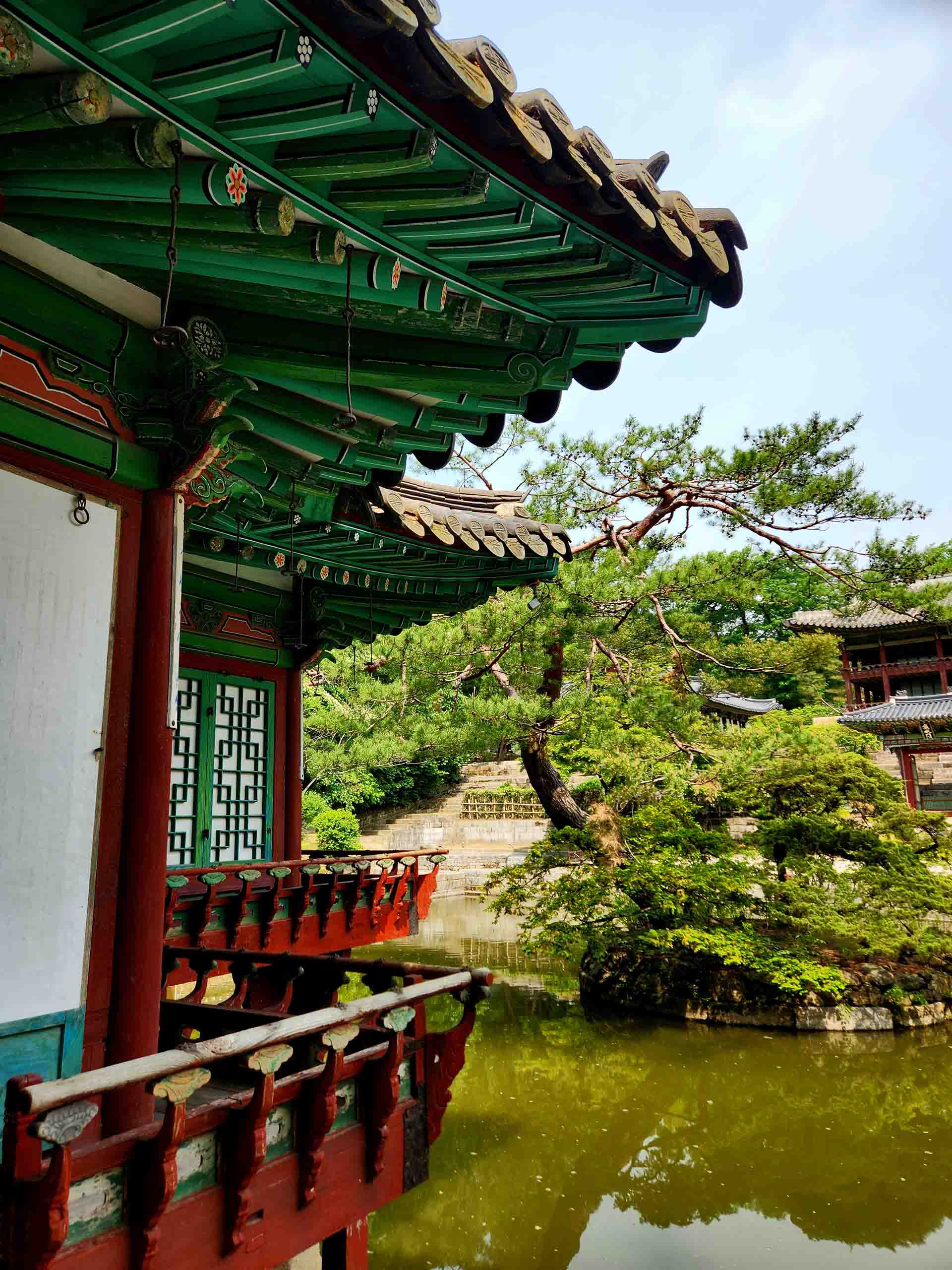
Changdeokgung Palace. Photo: Ladina Schaller
As a continuation of this impactful endeavor, I am currently developing a proposal for a formal student exchange program with partner institutions in Korea. My aim is to establish sustained academic pathways for students to deepen their engagement with global performing arts through structured, reciprocal learning opportunities.
Reflection by Ladina Schaller
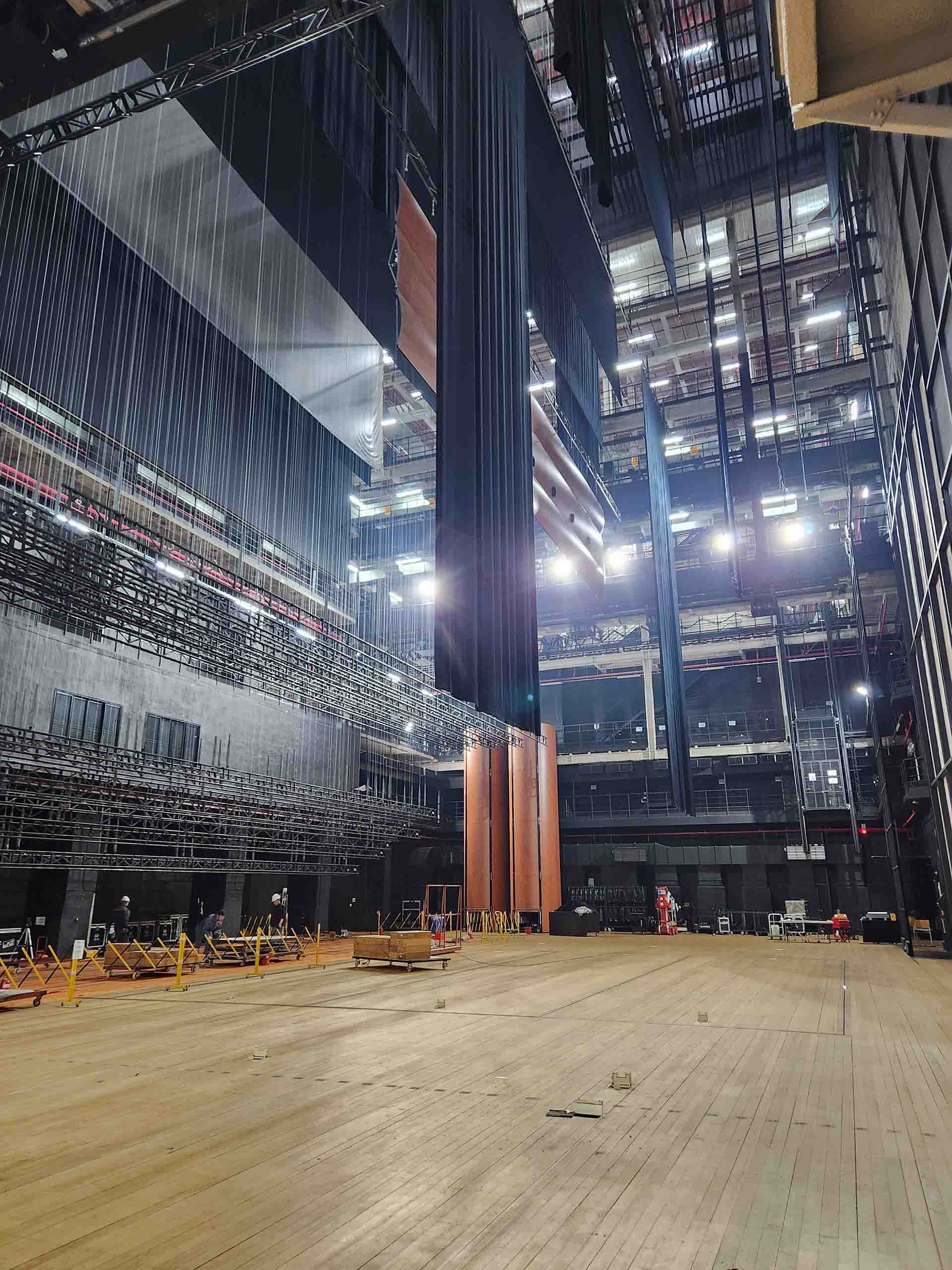
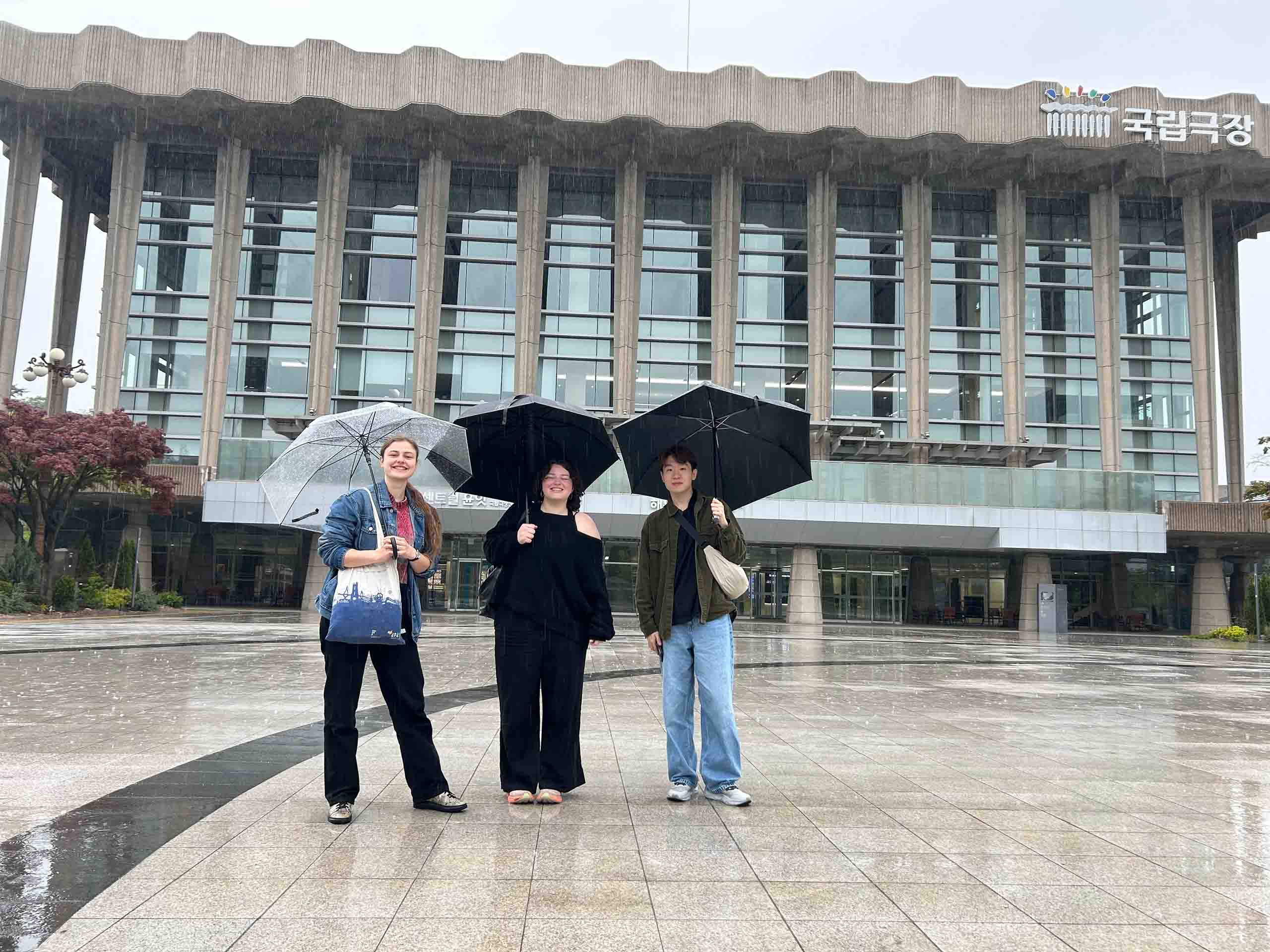
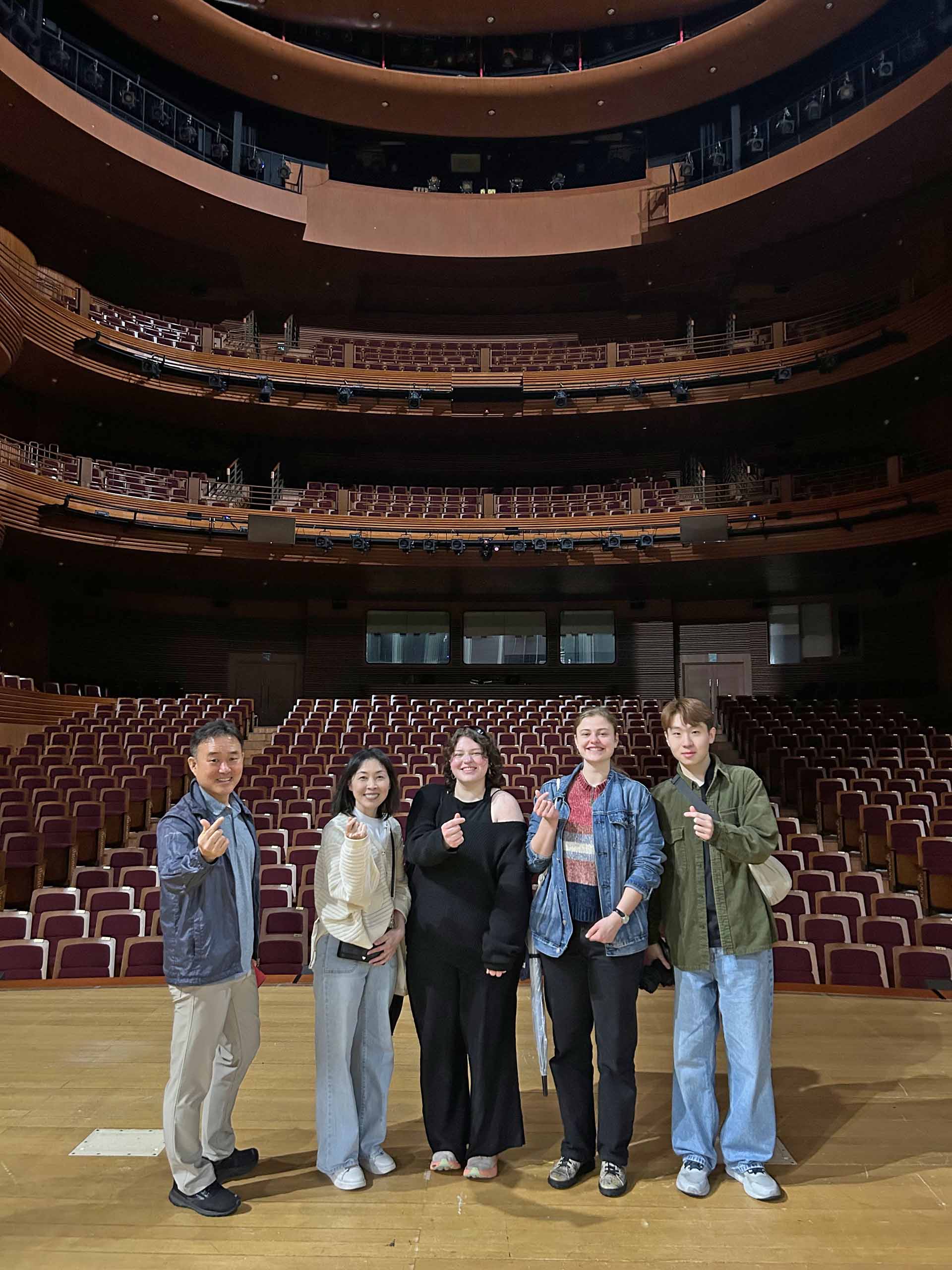
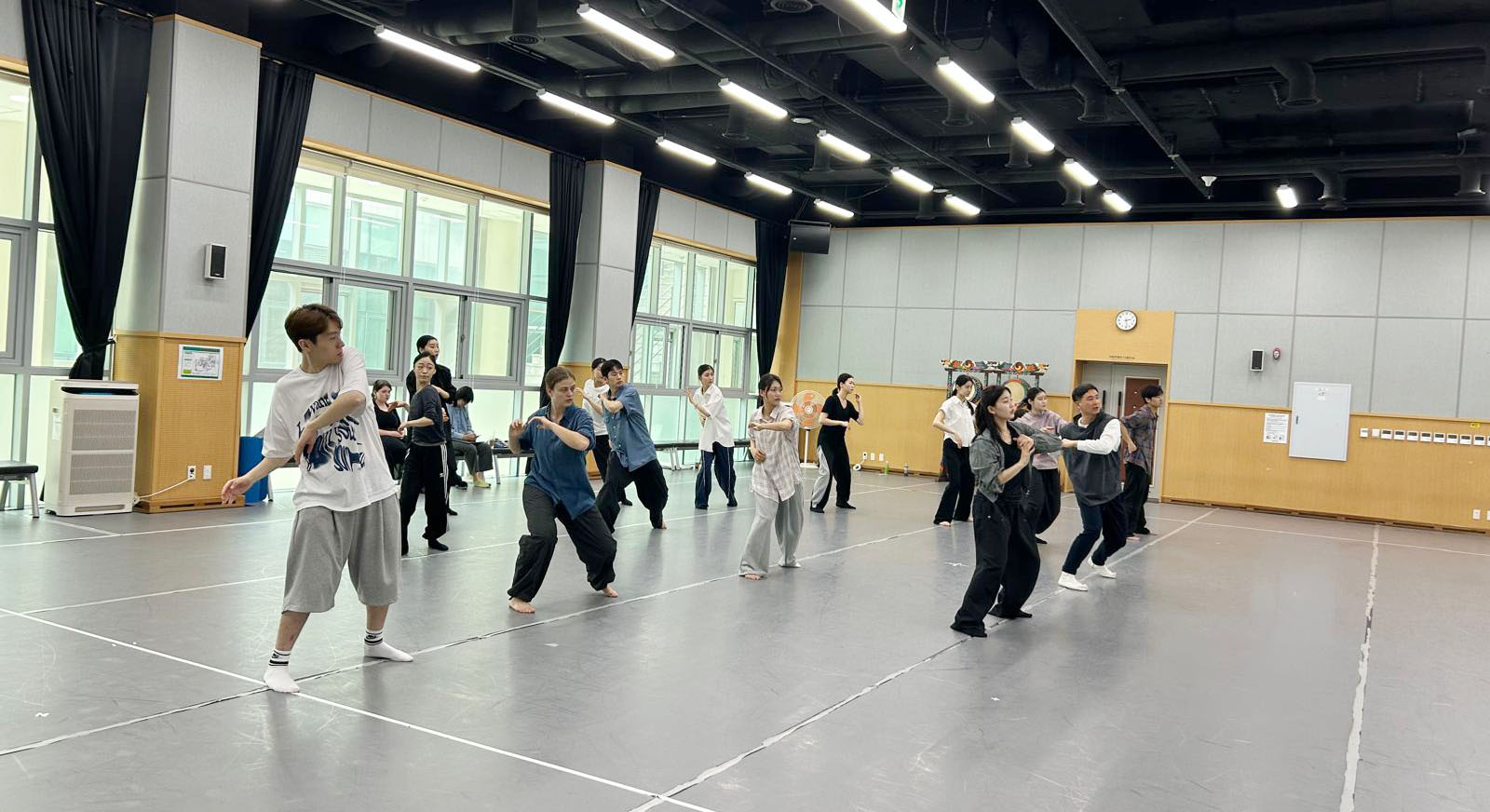
We started our first full day in Korea with a bus ride and a quick breakfast before heading to the National Theatre of Korea. Under this umbrella name and all in one place are the home bases for the National Theater, the National Dance Company, the National Changgeuk Company, and the National Orchestra. We were received very graciously by Jeong-Deok Kim, the artistic director of the National Dance Company of Korea, and by In-Gun Park, the CEO of the National Theater. After a brief welcome meeting we received a tour of the Haeoreum Grand Theater. We got to walk through all the performance spaces as well as the scene and prop shops. We were most in awe of the electric fly system (used to move scenery, curtains, lights, and other elements). It is in heavy use, since a lot of the performances are very narrative and thus contain many backdrop changes. After the tour the artistic director invited us to a wonderful private lunch in the theatre cafeteria. The afternoon brought the first day of the dance workshop. In one of the company’s rehearsal studios, Jeong-Deok taught all four of us the first part of a solo he had choreographed in his personal style that blends movement from traditional Korean dances and Korean martial arts. He spoke (translated by Professor Han) a lot about the circularity of energy and about how movement always starts and returns back to one’s core. Afterwards he very kindly drove us to a grocery store and then took us out for a Sujebi dinner (hand-torn dough soup).
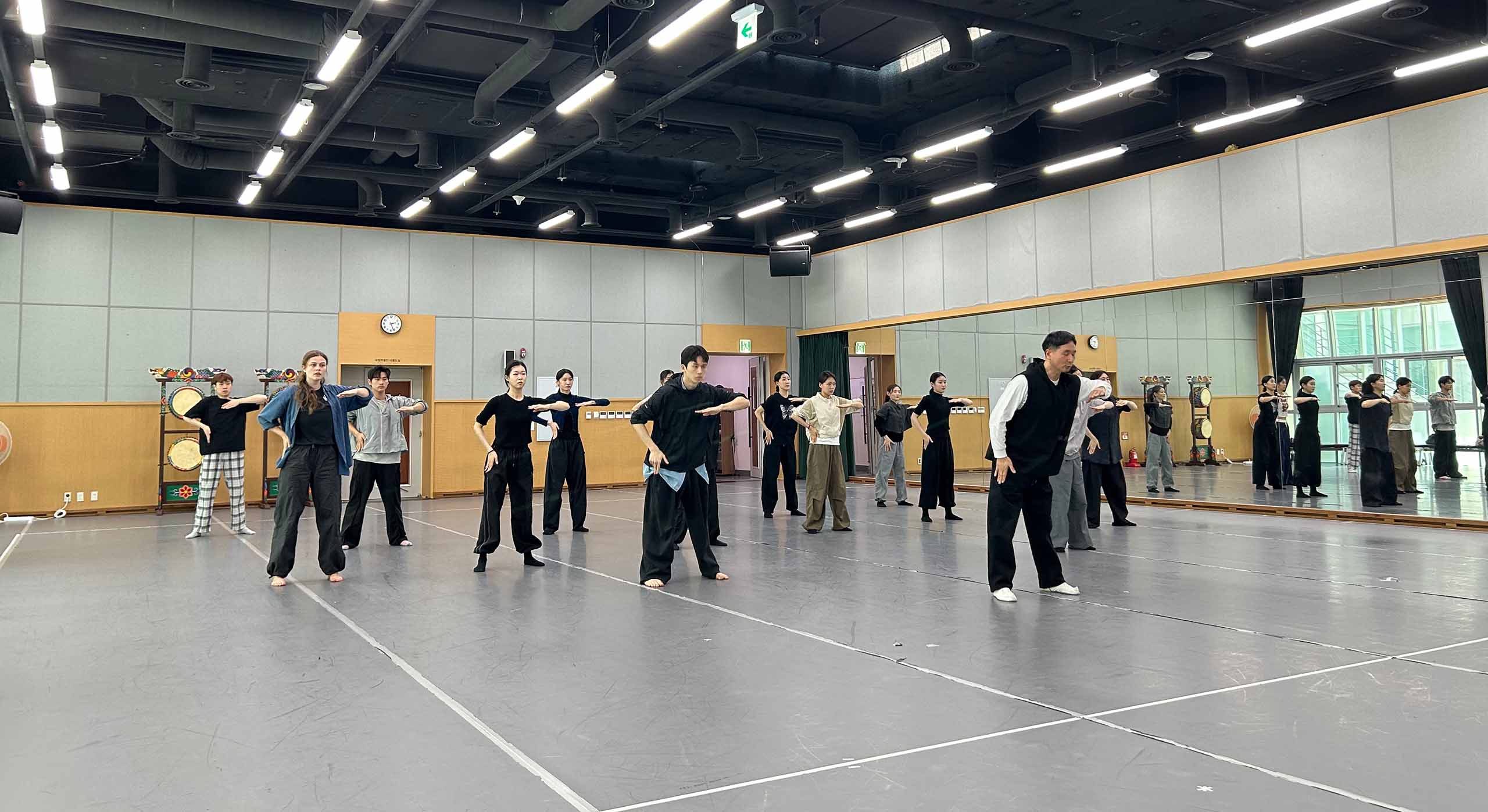
Day two started with a performance by the national Gugak Orchestra, where we were introduced to many traditional instruments and the musical storytelling style called pansori. Afterwards we were able to meet with the choreographer Hyo-Seung Ye, who had recently begun a project with the National Dance Company titled Five Vibe. He told us about his inspirations for the work, and we asked questions about movement roots, design elements, and the overall creative process. After the chat we got to sit in on their rehearsal. Next we had our second workshop with Jeong-Deok, who offered different ways for the design students to be involved. Ceri decided to work on a costume design for this choreography, so they held a first design meeting to talk about the director’s preferences and requirements for costuming. Yuchen decided to join me in learning the solo.
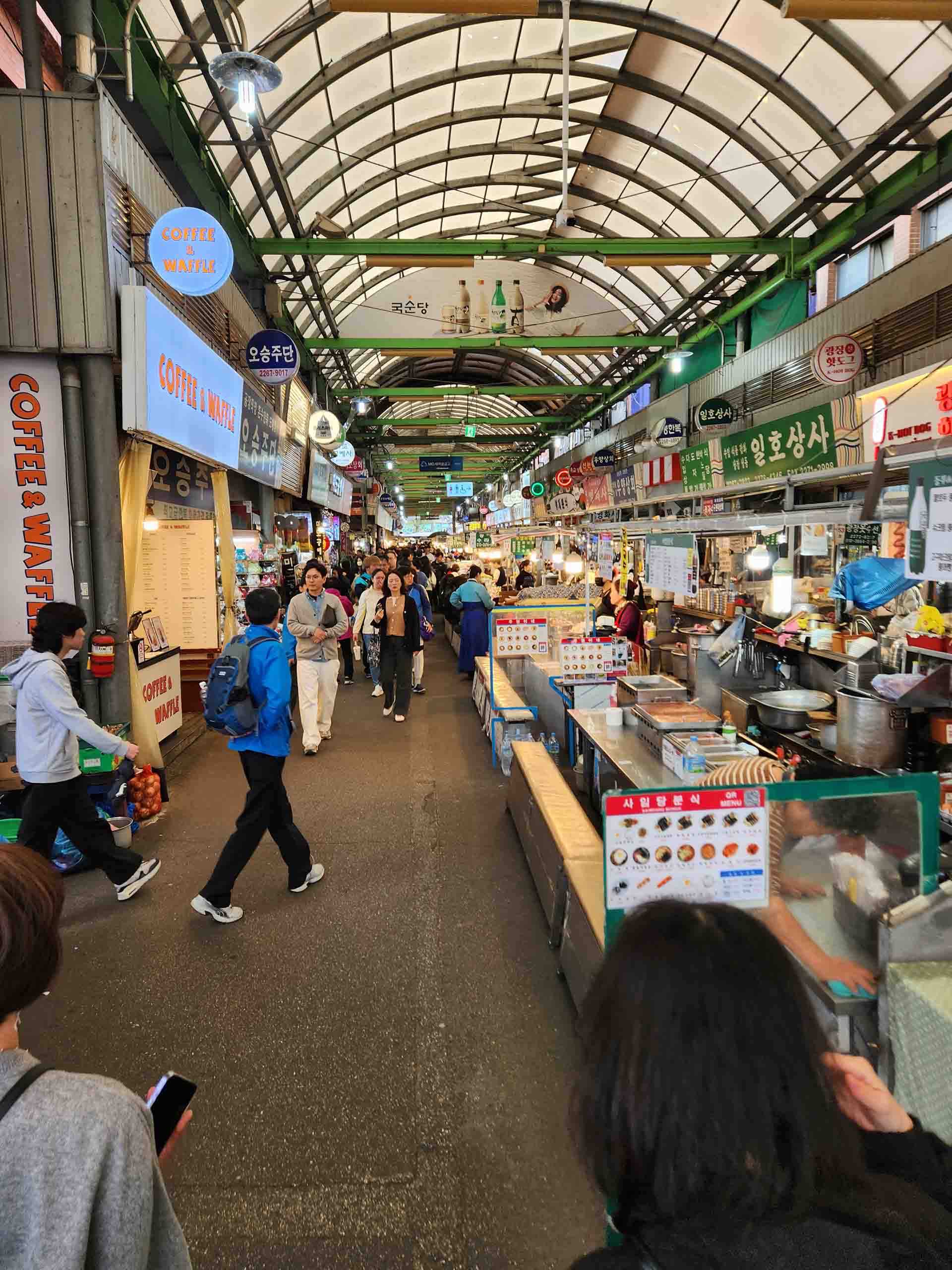
On day three we were joined by Sunmi Han, who showed us around town. First we visited the National Museum of Korea, which contains many historical artifacts, including some incredibly stunning maps. Sunmi led us around to visit the sights and tastes of shopping centers, the Gwangjang Market, Hanbok stores, and the Dongdaemun Design Plaza, which is full of interesting installations and a huge magazine collection.
Day four started with some free time that everyone used differently. In the afternoon, the artistic director took us to see an incredible show called Fuerza Bruta, set in an empty warehouse. The performers made music and danced, mostly suspended in the air and rigged up in crazy scenic installations. Afterwards he took us to eat ramen down by the river. It felt great to be in a more natural and slower paced environment right there in the city. We had a great conversation that evening, during which we all shared how we came to our art form, and the director gave some advice learned on his rather winding pathway.
On day five we visited the Korea National University of Arts to meet a Yale alumnus, Professor KyoungJun Eo, who is the head of the design department. Their program is very hands-on, and the students run a lot of their own projects and help maintain and run parts of the facility. We toured the building and got to see the studios of each cohort, computer lab, 3D printing room, four black box theatres, and the scene shop that Eo and his students equip and maintain. It was great fun to see many scenic students at work loading in for a show, a very familiar sight to us even though it is halfway around the planet and happening in another language. After our visit, Eo very kindly took us out for dinner. On May 5th there was a national holiday called Children’s Day. So along our adventures we crossed paths with many families taking their kids out for a treat.
On day six we visited Gyeongbokgung Palace, the National Folk Museum, Insa-dong Street, and the Craft Museum. This day was full of the wealth of Korean history, culture, and art, which all go hand in hand. Being students of scenic and costume design as well as of dance, we all found different but surprisingly similar interest and joy in what we got to see. The way of life of a people, their values, and the adaptation to the changing seasons informs aesthetic and practical decisions. This is reflected in architecture, fashion, everyday items, and customs. Being confronted with all of it at once was very educational, letting us discover links between everything and allowing us to slowly form a web of our idea of Korean culture and art.
Day seven started with a couple of free hours, during which Ceri, Jungah, and I visited a salon to get haircuts, which was quite the experience. Afterwards we took the subway out to Lotte World Park, where we visited the mall, walked around the lake, and enjoyed some food. On day eight we had an early start. After picking up the rental car we began the four-hour drive to the other coast and the city of Gangneung. It was wonderful to get out of the city and take in the rolling, forest-covered hills sprinkled with only a few small towns. Once we arrived, we headed to the Gangneung–Wonju National University to meet up with Sunmi Han and her class of fashion students. Here, the UMich design students and Jungah presented the materials that had been prepared back in Michigan. Next, Sunmi presented to us about what they do at the fashion school. Afterwards we met the director of the department, who gave us a tour of the building and then invited us to the school cafe, where we spent some time chatting with the students (with Google Translate as our trusty friend). It was very nice to be able to speak with other students and share hopes for the future as well as pictures from our work, even though we all work with different media. In the evening, Sunmi and a handful of her students took us out to dinner, after which we all went for a night walk along the beach.
The next morning, on day nine, we headed out to Haslla Art World. We were all truly mind-blown by this amazing installation. The buildings and the outdoor sculpture garden sit within the foggy hills and overlook the ocean. The winding path through in- and outdoor spaces takes one through an infinite number of worlds, sensations, and sounds. After dinner and goodbyes to Sunmi we drove back to Seoul.
On day 10 we were joined by a friend of ours who is a Korean UMich student. He showed us around town, took us on a walk through Seoul Forest, and took us for a soybean sprout soup lunch. Afterwards we went to Nori Madang, an outdoor theatre, where we got to listen to more pansori as well as some very lively festival music. At the end of the day we headed home and prepared our own little dinner.
Day 11 was a free day. Some of us visited Deoksugung Palace, which is unique for its mix of Korean- and Western-style diplomatic buildings, while the others explored Hongdae Street. At one point we met up and had our first taste of injeolmi ice cream.
On Day 12 we headed back to the National Theater. In the morning, we watched the Changgeuk Company in a rehearsal. Changgeuk is a genre of traditional Korean opera. Using pansori, the performers sing, act, and dance to tell a story. After lunch, Ceri held a meeting with Jeong-Deok about the progress on the costume design. Then we joined the artistic director and the company interns (sort of like a junior company) back in the studio. Ceri continued working on sketches while Yuchen and I joined the dancers in learning some of their new repertoire. It was great to be in a dance studio with people our age and to be able to understand each other without speaking the same language.
On the morning of our last day the artistic director wanted to take us to Changdeokgung Palace. Unlike the others, this palace had a large, more residential-style area full of greenery behind the main public buildings. Jeong-Deok spoke of this being a place where much art was cultivated. He made a comparison with Versailles and Louis XIV. At Changdeokgung, dance was elevated to a symbol of power and its quality equated to status. After the excursion we went back to the National Theater to have a last work day with the company interns. At the end of the day we held our presentations. We all presented our scenic design/choreography, prepared back in Michigan, after which Yuchen and I presented the newly learned solo and Ceri presented their costume design for it. One of the company’s dancers finished by presenting a solo of his own. Afterwards we chatted some more with the dancers, exchanged contact information, and said our goodbyes to everyone at the theatre. The artistic director joined us for our last dinner, after which we gave our thanks and goodbye gifts.
I am so grateful for having had the opportunity to be on this trip. Your mind is never quite so open and receptive as when you are getting to experience a new culture. Every sight, sound, and taste contains new knowledge. And it is such a gift to be able to do this through an art form in which I feel at home. On this trip, dance offered itself as a bridge between languages, cultures, and countries. I am thankful to everyone who enabled this trip, to the people I was travelling with, and to the new friendships formed, through both our existing commonalities and the new knowledge shared.
Reflection by Ceri Roberts
The morning of our first day started with a quick breakfast and a rainy bus ride to the National Theater of Korea. We were greeted by the artistic director of the National Dance Company of Korea, Jeong-Deok Kim, and the CEO of the National Theater of Korea, In-Gun Park. We then toured the facilities, including that of the Haeoreum Grand Theater, a wonderful multi-story performance space with a large proscenium stage and a gorgeous wood-paneled auditorium. That afternoon, we had a workshop with Jeong-Deok Kim in which he taught us the first part of a solo. All of us, design and dance students, gave it a try. Kim is a brilliant teacher who explains movement and meaning through imagery and intense description. He spoke to us about breath, movement, and flow. I found the light yet grounded nature of Korean dance to be extremely interesting as it expects dancers to be light, quick, and graceful, yet grounded and strong.
Day two began with a performance by the national Gugak Orchestra that had been created to introduce traditional instruments and a form of musical storytelling called pansori to children. This performance included something that I was not expecting: puppets! The puppets were all animated by actors onstage, some needing up to three puppeteers, while others only required one. These puppets truly enhanced the imaginative and colorful stage crafted to grab the attention of the children in the audience.
Later that day we met with the director of the production Five Vibe, Hyo-Seung Ye, during its early rehearsals. We spoke about the dance piece and the director’s artistic history. I asked questions about the costume and set designs; he told me that he envisioned the stage with a pile of speakers and the dancers’ costumes with a color palette changing to reflect their level of distress throughout the show, using distressed denim. He was very open to sharing his inspirational images, and it was so interesting to interact with a show early on, both in the rehearsal room and in the design process.
We then met Kim for the second workshop. He offered me the opportunity to do costume design for the piece, and I accepted. I met with him and Jungah to discuss what he had envisioned for this piece. He wanted the design to be inspired by the movement, and he said that he was happy that I had tried to learn the dance myself, saying it would strengthen my understanding of the soloists’ costume needs. I was personally inspired by the duality of Korean dance, in which light, flowy movements are paired with grounded, strong, sharp steps.
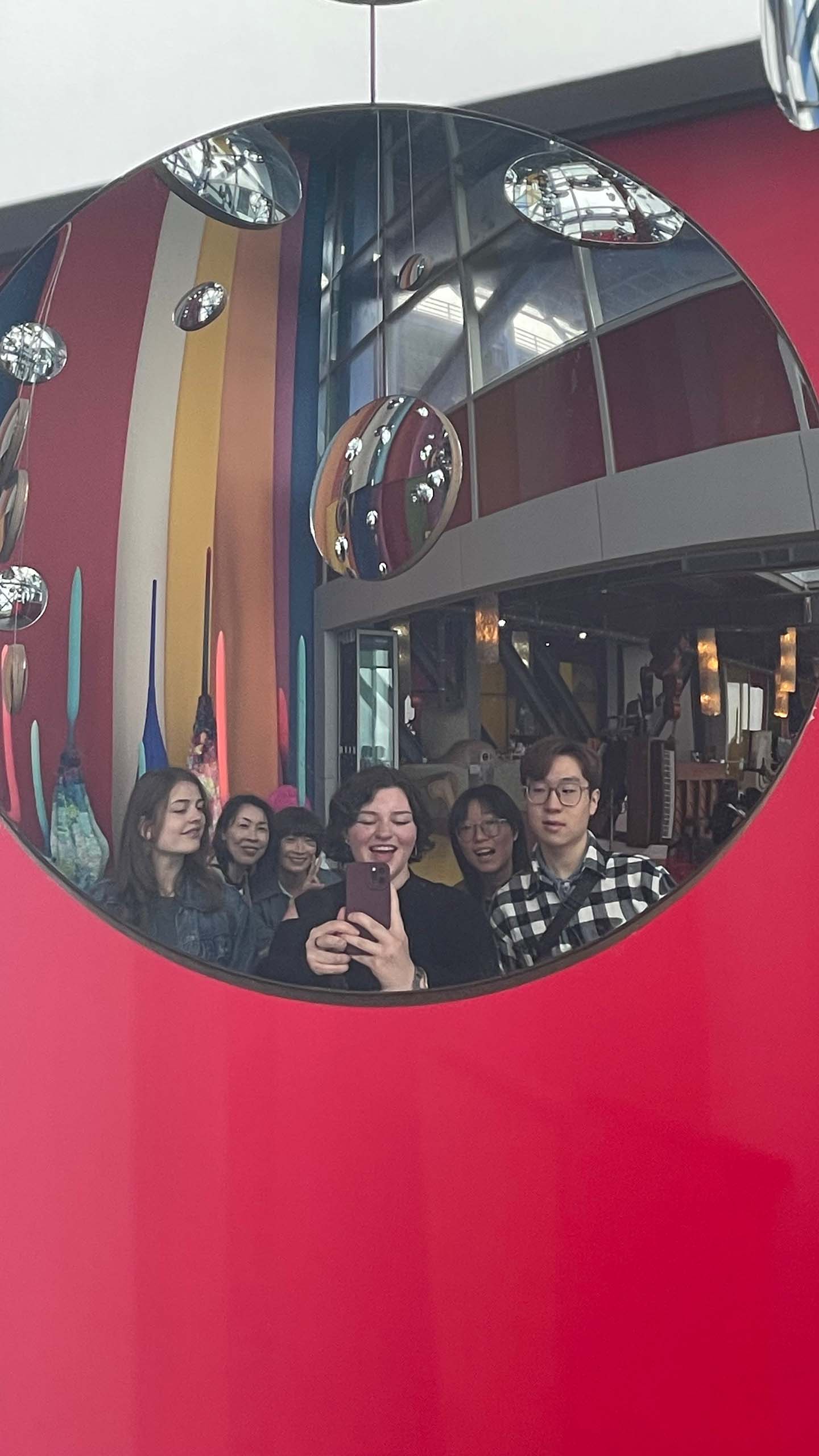
On day three, the group was joined by the on-site collaborator, Sunmi Han, who took us on a tour around Seoul. The first stop was the National Museum of Korea, home to hundreds of artifacts that tell the story of Korea’s history, from ancient to modern times. We then visited the Dongdaemun Design Plaza, designed by architect Zaha Hadid; this multi-story architectural spectacle holds many art galleries, public spaces, and my favorite: a library of hundreds of magazines spanning many different mediums and themes. I could have spent weeks in that library reading through all of the fashion magazines.
After free time in the morning of day four, we all met up for Fuerza Bruta, an acrobatic show that has been touring the world since 2003. We had been graciously invited by Jeong-Deok Kim. This performance was set in an empty warehouse without seats. In this large space, the acrobatic performers flew around us and maneuvered massive inflatable whale puppets above the audience. Truly, there aren’t enough words to describe how breathtakingly exciting this show was. The space transformed multiple times throughout the performance, from a large globe floating above the crowd, to a foil covering coating the walls. This show was a technical spectacle mixed with incredible acrobatic skills of the performers that kept the audience guessing.
On day five we went to the Korea National University of Arts to meet Professor KyoungJun Eo, the head of the design department. During a tour of the university facilities, we got to peek in on the tech process of a student show. This was one of my favorite parts of this trip. It was wonderful to see a scenic design student just like me go through the same technical process while loading a set into a small black box theatre just like ours in Ann Arbor. It truly reminded me of how universal theatre and art are, especially the experiences of young university artists.
Overall, this trip highlighted the incredible design industry of Korea, as well as the fusion of traditional arts with newer artistic mediums and styles.
Reflection by Yuchen Ma
On May 2, we went to the National Dance Company of Korea and watched two performances. The first one was called Shinnarak Mannarak, performed by the national Gugak Orchestra. This performance used pansori, a traditional Korean opera art form for audiences ranging from young children to adults.
In the afternoon, we watched a rehearsal of Five Vibe, a modern dance performance that incorporates traditional Korean music and instruments as its background. I really liked the background music of the show, which used a strong drumbeat synthesizer; it complemented the dancers’ movements very well. After the rehearsal, we had a separate meeting with the choreographer, Hyo-Seung Ye, where we heard about his past work experiences and his thoughts on Five Vibe.
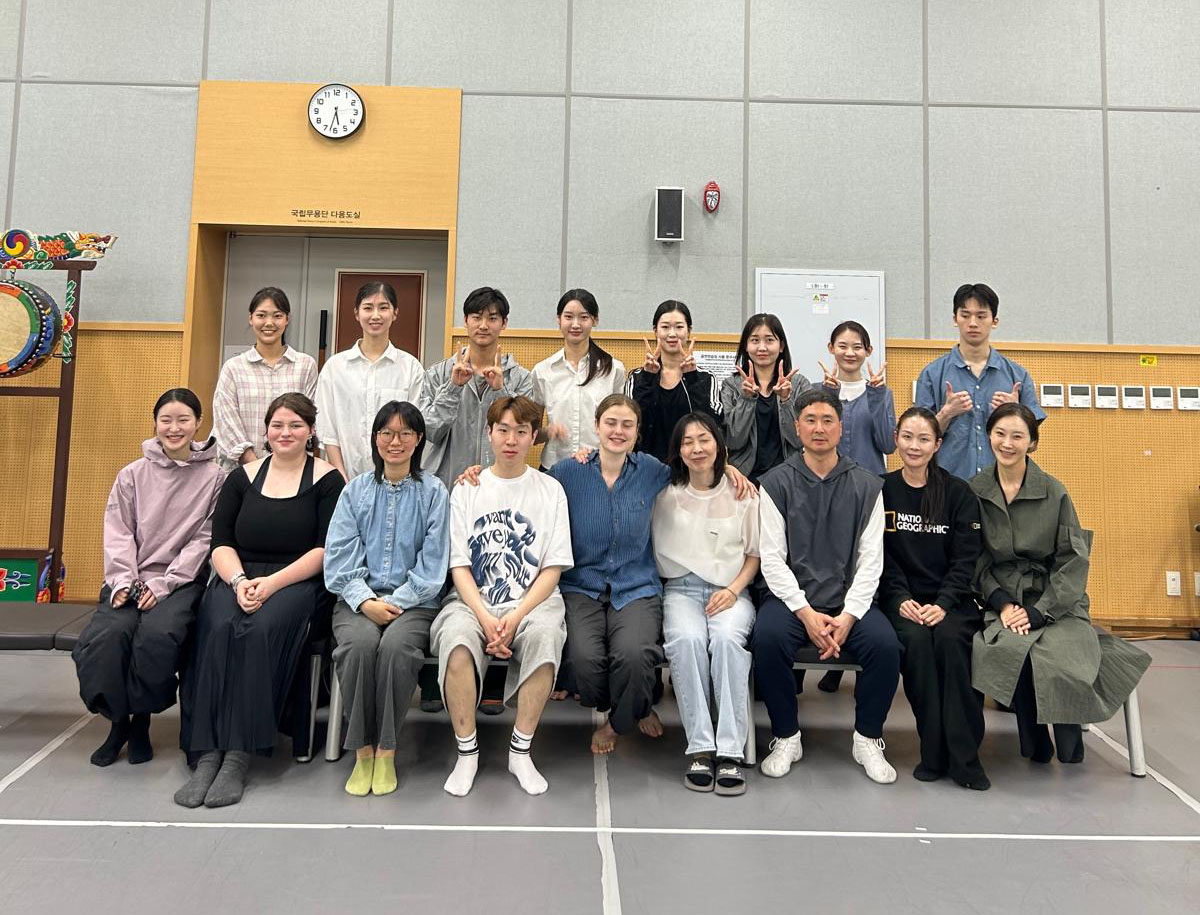
Then, we joined our Korean contemporary traditional dance learning workshop. We were taught by the artistic director of the National Dance Company of Korea, Jeong-Deok Kim. He guided the four of us through the opening section of a solo he had choreographed in his distinctive style – a dynamic fusion of traditional Korean dance and martial arts. As a beginner in dancing, I tried to follow his movements step by step and felt the flow in my body. As we practiced, he encouraged us to feel the weight of the air, the tension in our muscles, and the grounded strength beneath our feet. Each gesture, he said, must originate from the body’s core and eventually return there, completing an unbroken cycle.
After a few days, we joined the workshop with more professional dancers and learned a group dance together. With the foundation from the individual training earlier, during the group practice, I memorized the director’s words and technical key points. I learned new moves and finally succeeded in presenting the group dance. This was a very precious learning experience for me, from which I grasped the core of traditional Korean dance. At the end of this learning experience, I also presented my stage design to the artistic director and other dancers. These designs were prepared when I was at school, based on my understanding of traditional Korean culture and dance styles. I did a lot of research in the early stages and finally designed my ideal performance space for a dance. Moreover, I also gave a design presentation at Gangneung-Wonju University and had a great conversation with their college students, major dean, and professors.
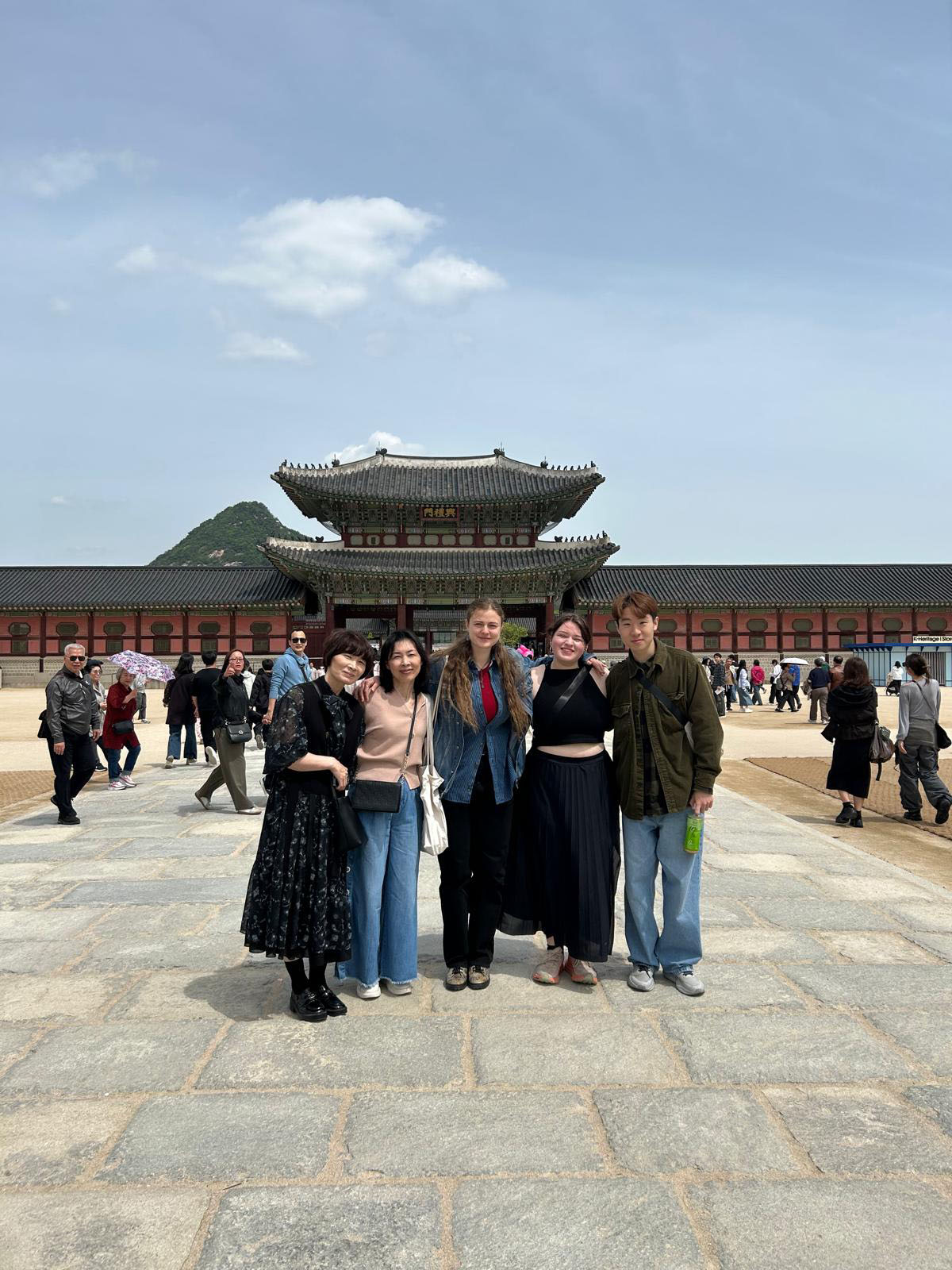
The next day, we went to three famous museums in Seoul. First, we visited Gyeongbokgung Palace together. Passing through the towering Gwanghwamun Gate, I entered a vast courtyard paved with gray stone. The heart of Gyeongbokgung felt like a poem carved into space. At the Hyangwonjeong Pavilion, a slender wooden bridge stretched across a still pond. The water mirrored the pavilion’s graceful shape. Near noon, I joined a small crowd gathered to watch the Changing of the Guards ceremony. The vivid red and navy uniforms of the guards gleamed under the sun, and the deep drumbeats resonated through the courtyard. The ritual felt both theatrical and sacred. Later, we visited the National Museum of Modern and Contemporary Art and the National Folk Museum of Korea. The Monk Artisans of the Joseon Dynasty: Buddhist Sculptures and Paintings really impressed me. This special exhibition shed light on the world of monk artisans. At the same time, it also pays attention to how Korean Buddhist culture was influenced by other countries and thus continuously developed, eventually forming its own unique style. This exhibition made me feel the charm of the mutual influence and collision of East Asian cultures.
Overall, I gained a great deal from this study experience in Korea. I not only personally experienced and learned various traditional Korean performing arts but also came to understand the influence of traditional culture on contemporary performing arts.