
Michigan Muse Spring 2026 > Insights into the Art of Conducting
Insights into the Art of Conducting
By Marilou Carlin
If you’ve ever seen a music conductor lead an ensemble – or have been led by one yourself – you might think you know what their job is: To set the pace of the music, cue the musicians on when to play, and elicit emotion, intensity, and mood through facial expressions and body language – what the uninitiated might call “a lot of arm waving.”
But that’s just the tip of the iceberg; most of the conductor’s job actually takes place offstage and begins long before the first note is played or sung in concert.
To understand more about this enigmatic art form, including what draws people to the field and how they teach the craft, we posed a set of questions to SMTD’s three large ensemble directors – Kenneth Kiesler (orchestras), Jason Fettig (bands), and Eugene Rogers (MM ’01, DMA ’08, choral conducting) (choirs) – along with jazz conductor and chair of the Department of Conducting, Ellen Rowe, and one of SMTD’s most celebrated conducting alums, Elim Chan (MM ’11, DMA ’15), who this spring will conduct, among other top orchestras, the Cleveland Orchestra, the New York Philharmonic, and the San Francisco Symphony. Their combined insights help to illuminate this fundamental and fascinating profession.
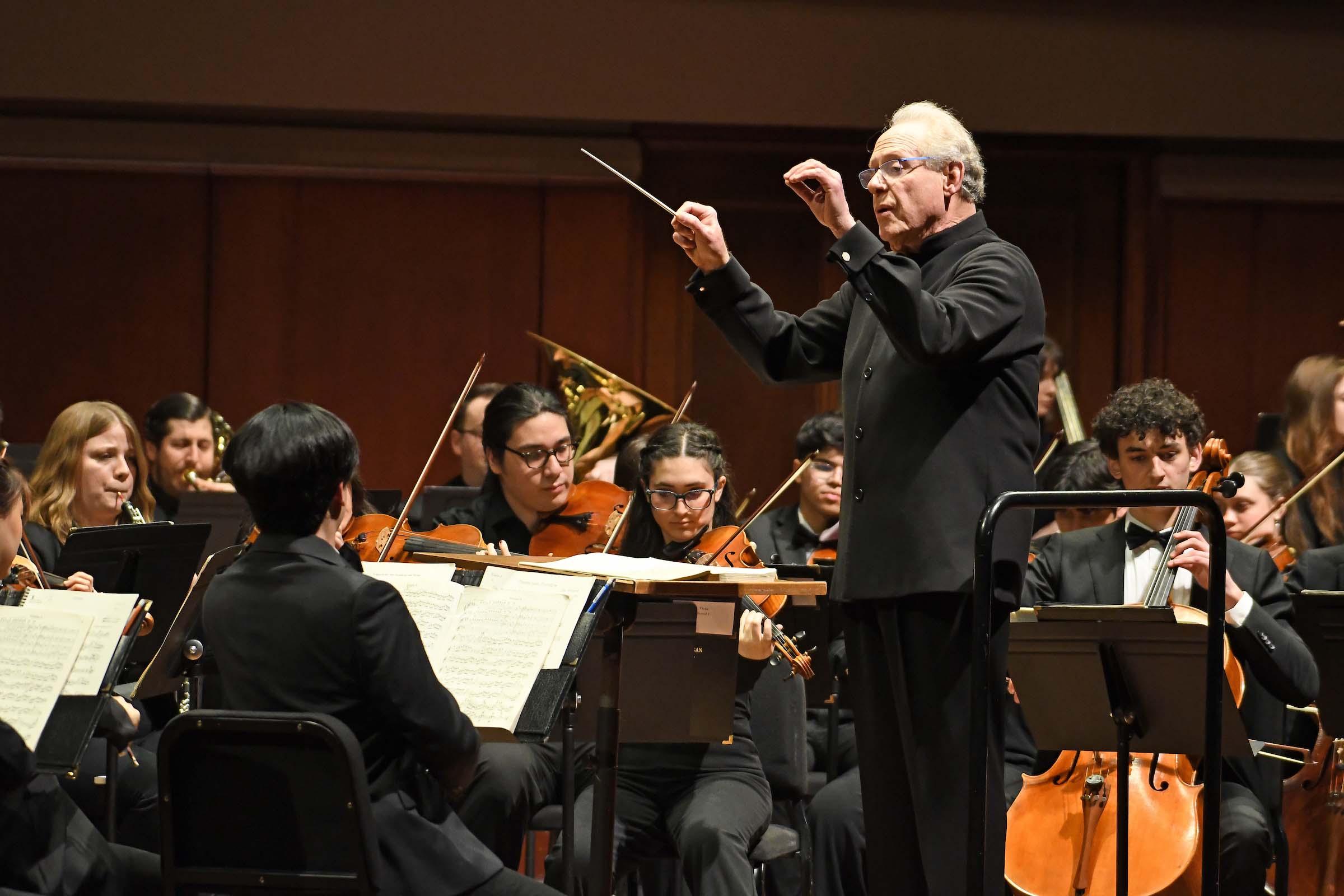
Kenneth Kiesler conducting a USO concert in Hill Auditorium, February 2025. Photo: Peter Smith
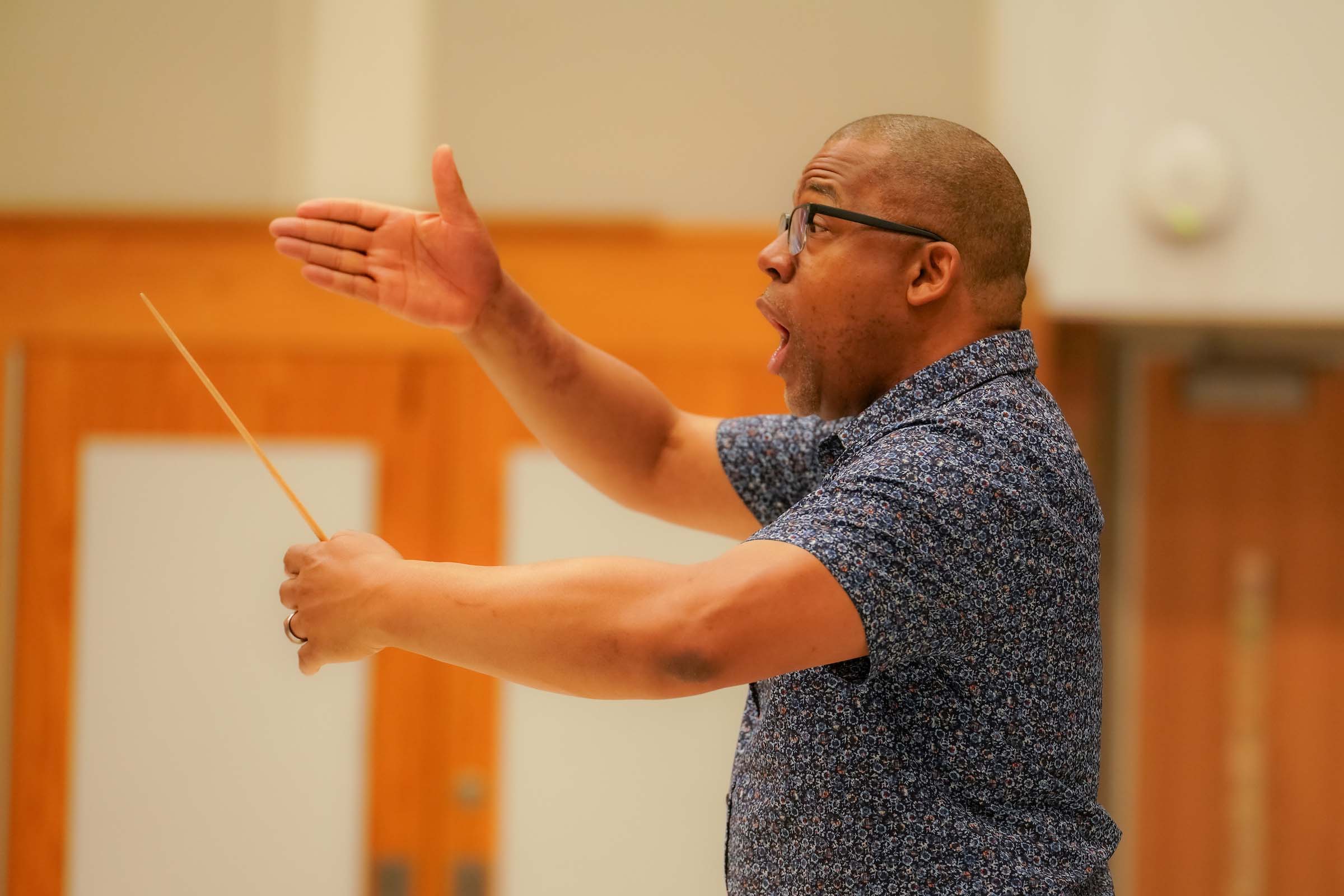
Eugene Rogers during a Chamber Choir rehearsal in Kevreson Hall, May 2024. Photo: Chris Boyes
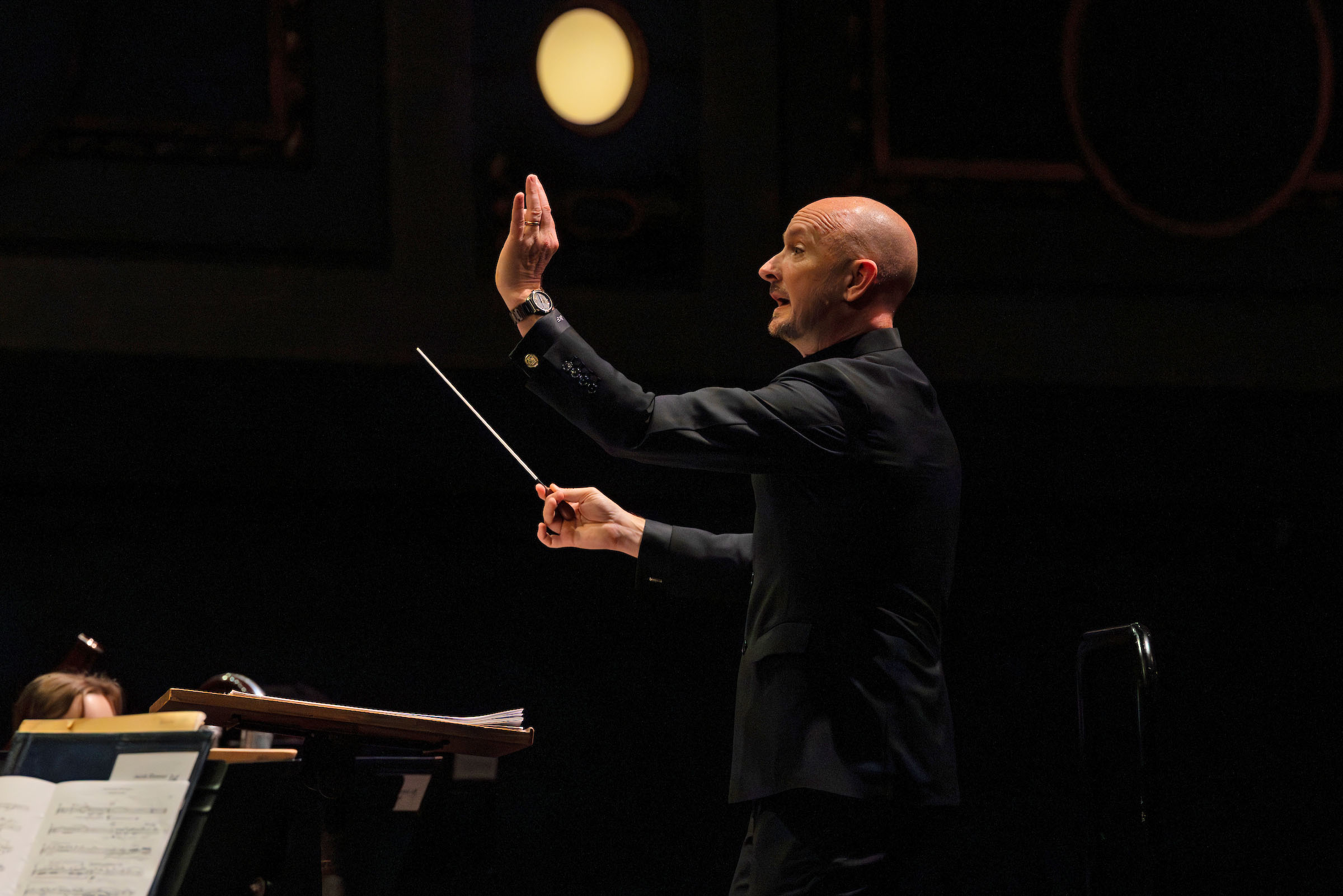
Jason Fettig conducting the Symphony Band in Hill Auditorium, October 2025. Photo: Robert Coelius
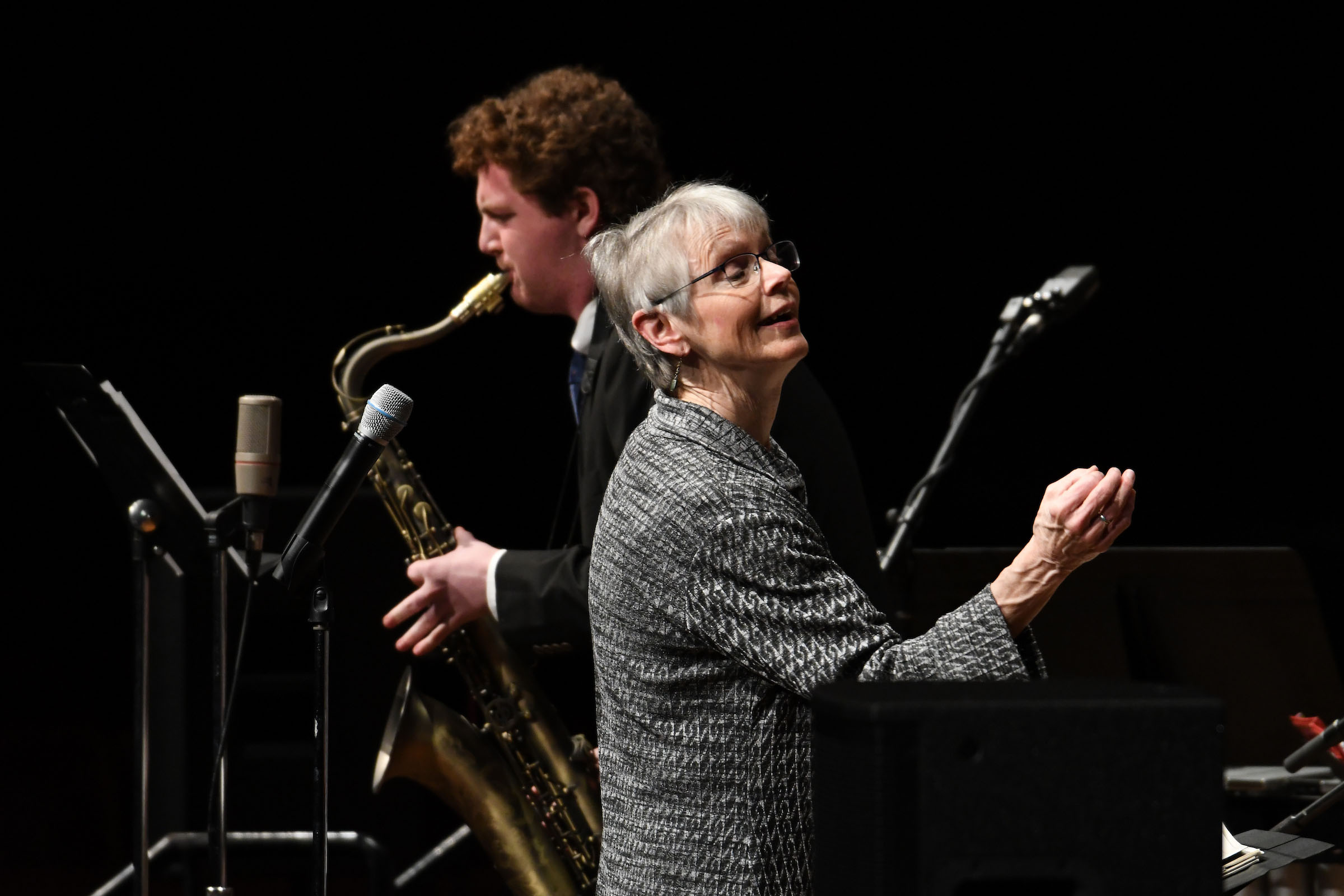
Ellen Rowe conducting the U-M Jazz Ensemble, February 2025. Photo: Peter Smith

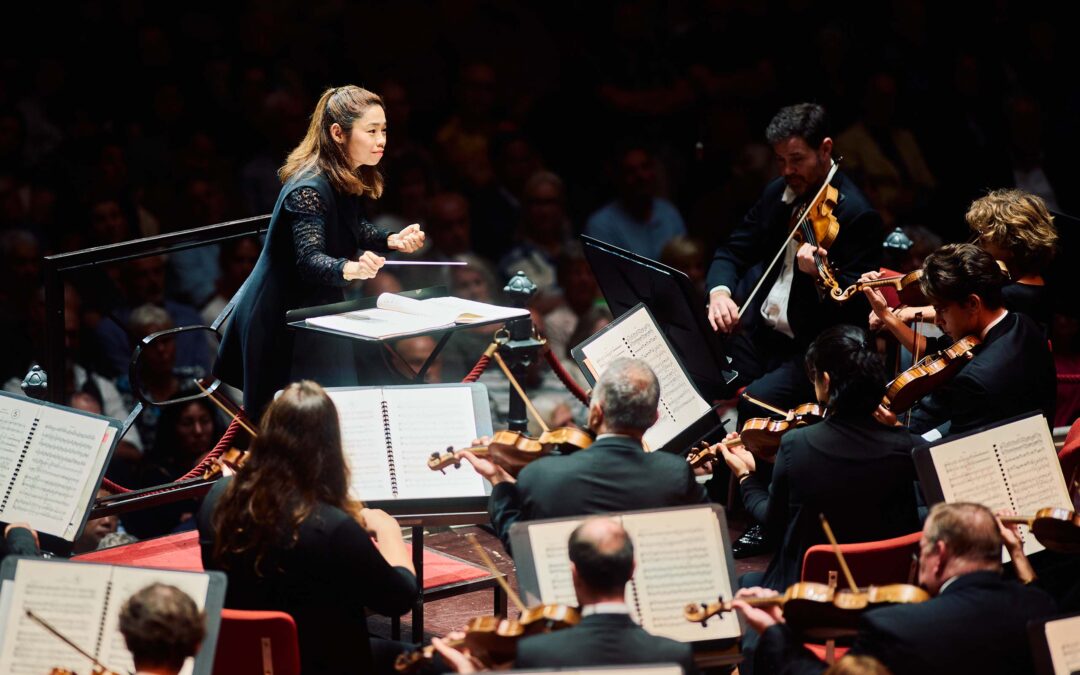
Elim Chan. Photo: Marco Borggreve
What makes a great conductor?
ELIM CHAN: The ability to go very deep into the music, being a good listener, having empathy, being open-minded and curious, and having your own vision for the music and the sound – being able to draw and hold your own line.
EUGENE ROGERS: A great conductor is defined by a sustained and deeply rooted commitment to the craft, to the music itself, and perhaps most importantly, to the people they are entrusted to lead. Technical facility, while essential, is only the foundation. The ability to synthesize life experience, historical understanding, stylistic awareness, and emotional intelligence into meaningful musical leadership takes a lifetime to cultivate. In this sense, greatness in conducting is less a destination than an ongoing, lifelong process.
JASON FETTIG: What all great conductors share is a total commitment to the musical moment and a full and complete embodiment of the sound. Our job is to physically represent how the sound of the band, orchestra, or chorus would look if it were an entity you could actually see.
KENNETH KIESLER: One of the keys to being a great conductor is doing many things simultaneously and being an empathic and sympathetic person who understands, or seeks to understand, what others need in order to be successful. A great conductor also has to be a great musician – not simply playing an instrument or understanding how instruments are played, but being able to understand what those little black and white dots on the page mean in an insightful way.
ELLEN ROWE: Great jazz ensemble conductors are usually possessed of excellent ears – in other words, the ability to tune chords; listen for blend, balance, and color; and hear wrong notes. The conductor needs to be able to inspire the members of the ensemble and create an environment where they want to strive to play their very best.
One of the keys to being a great conductor is doing many things simultaneously and being an empathic and sympathetic person who understands, or seeks to understand, what others need in order to be successful.
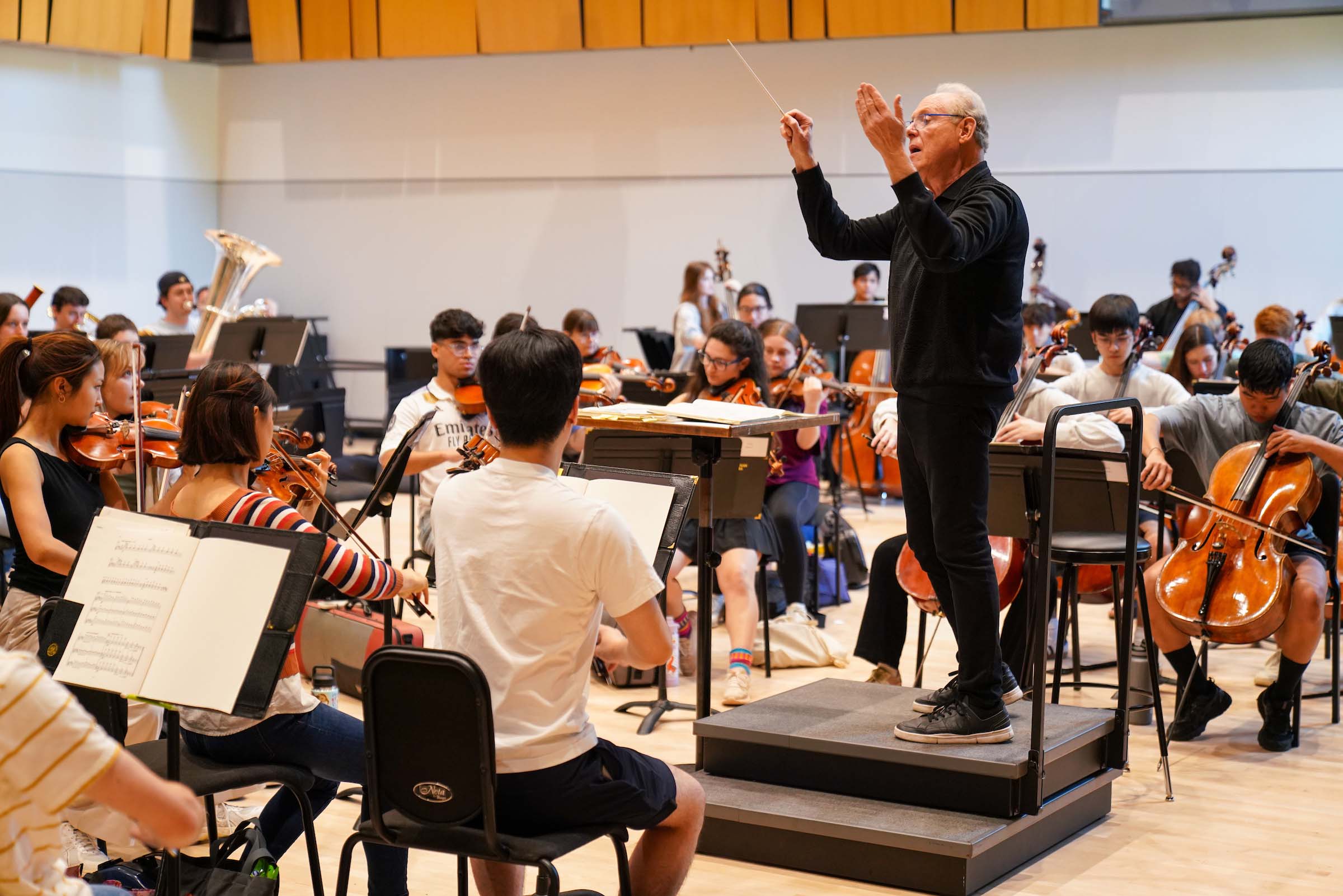
Kiesler conducting a University Symphony Orchestra rehearsal, September 2024. Photo: Chris Boyes
What made you want to become a conductor?
KIESLER: When I was 15, our choir director got sick before the December concert, and they were going to cancel it. I asked if I could jump in. I said, “We worked too hard for you to cancel this,” so the band director taught me a couple of beat patterns and I tried to do it … and I’ve been trying ever since.
ROGERS: I took my first formal conducting class during my undergraduate studies, and the experience was immediately transformative. It felt, quite literally, as though I had been given oxygen to breathe. Conducting revealed itself not merely as a physical craft, but as a demanding act of leadership, interpretation, and service.
FETTIG: I was always a musician who felt music deeply and in a physical way. I always moved spontaneously when I played the clarinet. I was fortunate to be given opportunities to try my hand at conducting while still in high school, and I immediately caught the bug.
CHAN: As an eight-year-old in primary school in Hong Kong, I saw Ms. Wing-sie Yip conduct a concert consisting of movements from all different pieces of music, from Tchaikovsky to Stravinsky to Holst and many others. Suddenly I felt as if I had permission to do the same. She became a symbol for me to allow myself the dream of becoming a conductor and to work towards that goal.
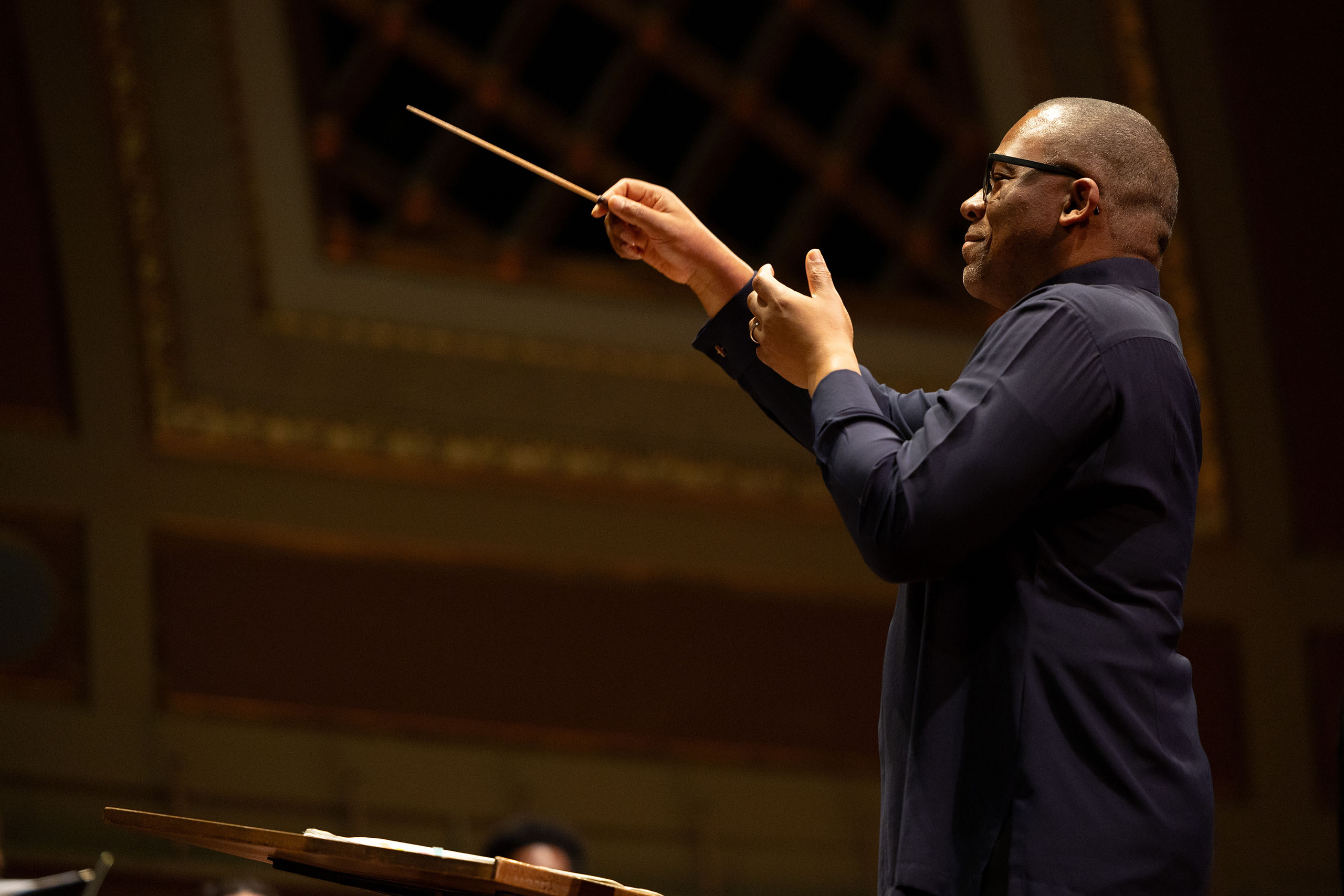
I took my first formal conducting class during my undergraduate studies, and the experience was immediately transformative. It felt, quite literally, as though I had been given oxygen to breathe.
Rogers conducting the U-M Chamber Choir in Hill Auditorium, November 2024. Photo: Lucas Chen
What are a conductor’s responsibilities beyond conducting concerts?
ROGERS: Extensive correspondence, score and part preparation, seating and staging charts, auditions, uniform coordination, repertoire selection, and long-term curricular and artistic planning. Conductors also work closely with staff and administrators to ensure that every aspect of a performance, from musical preparation to venue logistics, is executed with care and professionalism. In the nonprofit and professional choral sectors, these responsibilities expand further. Conductors are often involved in hiring collaborative artists, commissioning new works, recruiting singers, selling tickets, applying for grants, and sustaining an organization’s visibility and relevance within the broader arts ecosystem. In both contexts, the conductor serves not only as a musical leader, but also as a strategist, advocate, and steward of the ensemble’s artistic mission.
ROWE: Auditioning the students for the ensemble and assigning placements, setting concert dates, picking repertoire, looking for opportunities to tour or play off-campus, booking guest artists, commissioning jazz composers, encouraging student composers to bring music in to be played, setting up students with PR and social media skills to advertise concerts and promote the group.
KIESLER: A conductor is also a teacher, a music theorist, a composer, a cheerleader, a consoler, a planner, an organizer, an entrepreneur, and a great musician. We also have to be sleuths, detectives, able to decipher codes – each composer speaks in a different language, a different code. Conductors also have to be historians, and maybe even theologians.
CHAN: The rehearsal process is extremely important, as this is where it all comes together. It’s my chance to get to know the players, to enable them to try out different things to help us all to improve ahead of the performance, and for me to create a space where everyone can perform at their best.
FETTIG: The conductor is first and foremost an ambassador of music and a caretaker of the ensemble that he or she leads. Much of that work happens off the podium: planning the artistic direction of the organization and attending to the health and success of the musicians that serve in that ensemble. A huge part of the effectiveness of any conductor also lies in their own substantial preparation, which happens far away from the limelight and applause.
The conductor is first and foremost an ambassador of music and a caretaker of the ensemble that he or she leads.
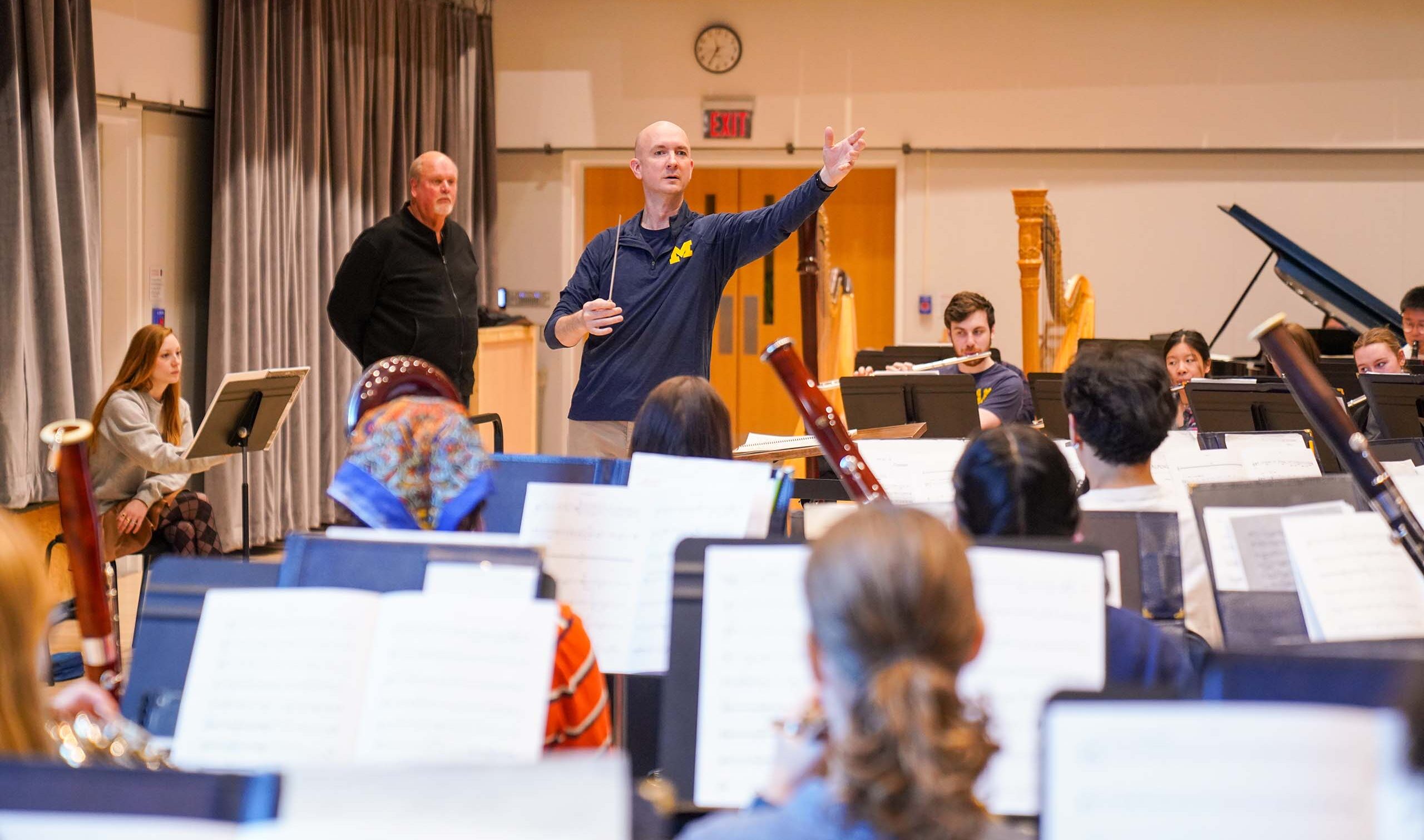
Fettig conducts a Symphony Band rehearsal, November 2023. Photo: Chris Boyes
What’s an aspect of a conductor’s job that people might not expect?
KIESLER: The fact that we have to be business people – we’re essentially executives of a corporation. For example, I took the Illinois Symphony from a small organization with a $55,000 budget to over a million dollars in the space of two years. I spent many, many hours visiting donors and speaking to corporate boards and corporate leaders to secure financial support. Here at Michigan we have a lot of recordings and commissions, so that involves contracts, lawyers, negotiating, keeping things moving forward.
FETTIG: Every conductor is a teacher/mentor/guide. Whether in the professional world or in academia, conductors are, by their very nature, leaders, and leaders are teachers. That means that even though our art is a silent one on the stage, conductors must be skilled people-readers, humble, empathetic, courageous, and motivating communicators [using] their voice and presence.
CHAN: Everything that happens off-stage. It’s important for me to create a community – knowing the audience, knowing the players and also the donors, the sponsors, and the orchestral management. There is no off switch; I’m always on, as there are always so many people to meet and so much to think about in the overall process.
ROWE: Dealing with the fact that you rehearse acoustically for weeks with no microphones, just a bass and guitar amp, but then when you perform in the U-M venues, you have microphones to amplify the sound in the hall, and you need to work with the sound person to try and make sure the mics aren’t changing the overall sound of the group.
It’s important for me to create a community – knowing the audience, knowing the players and also the donors, the sponsors, and the orchestral management.
Chan conducting the Royal Concertgebouw Orchestra in August 2024. Photo: Eduardus Lee
What is your process for choosing repertoire?
FETTIG: I revel in finding creative ways to marry disparate works or composers together in such a way that they reveal something new about the music. This is a huge part of music used as a curriculum in working with students as well. There are SO many considerations when choosing the music for students to rehearse and perform that will provide necessary experiences, skill development, and emotional evolution for students as performers and musical ambassadors.
ROGERS: My approach to programming is informed by a number of interrelated considerations: available rehearsal time, the technical and expressive strengths of the ensemble, the overarching focus of the concert, and, most critically, the mission and values of the organization. Every repertoire choice must serve both the musicians and the larger artistic purpose of the ensemble.
KIESLER: We choose repertoire to build the orchestra, whether that’s refreshing or re-energizing or keeping vital the way the orchestra plays. And of course we want to serve the audience, and that’s different in different locations and at different times. And then we need to serve the whole art of music with programming, and we need to take care of ourselves as artists – to challenge ourselves, because if we’re not growing, we’re declining. In a professional situation, I might prioritize marketing and ticket selling, but at Michigan I also have to think about what the students need.
ROWE: I am always trying to mix newer pieces in with the historically important writers from the 1940s, ’50s, and ’60s. I’m committed to playing works by women composers as well as men and have lately been introduced to some wonderful younger Asian and Asian American writers who are definitely underrepresented in the canon. I make sure to have a stylistically varied program (straight ahead swing, blues, funk, ballads, Latin, and so on), and I do my very best to make sure each jazz major gets at least one improvised solo during the concert.
What is involved in training students to become conductors?
ROWE: The big challenge is to get them comfortable reading and being able to “hear” transposed scores. They need to develop the discipline to do the all-important score study so that they can plan rehearsals well. Then once they are in front of a group they need to learn to develop good rehearsal technique. That involves having a clear idea of what they want to get accomplished in the short amount of time they may have and to start developing a tool kit of pedagogies to be able to deal with a range of problems including technical issues, intonation problems, stylistic inaccuracies, volume, and so on.
Students need to learn to develop good rehearsal technique. That involves having a clear idea of what they want to get accomplished in the short amount of time they may have and to start developing a tool kit of pedagogies to be able to deal with a range of problems.
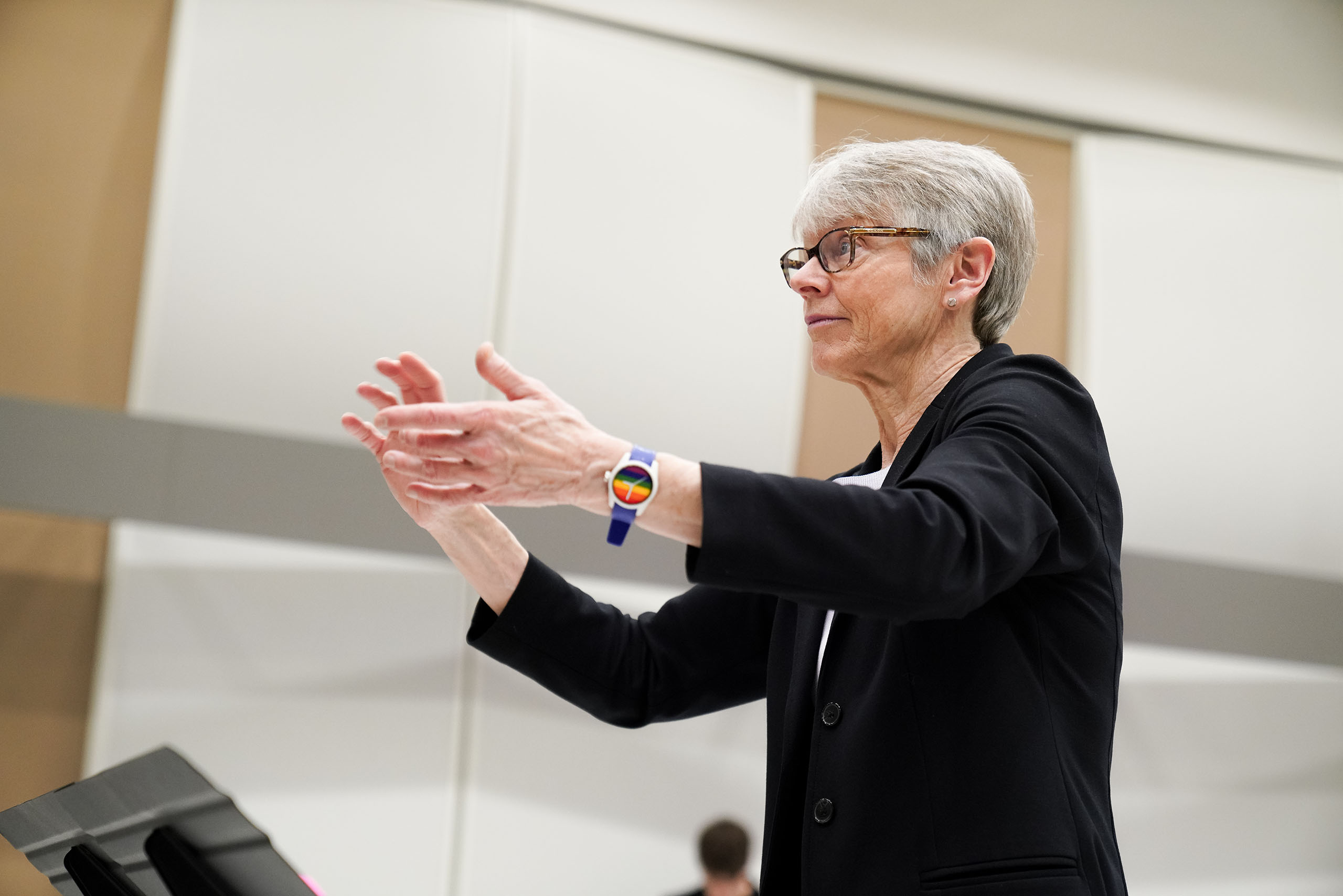
Rowe conducting a Jazz Ensemble rehearsal, February 2023. Photo: Chris Boyes
KIESLER: We need to teach certain techniques that are fundamental: score reading, transposition, physical technique. And we also need to share our experiences when it comes to planning rehearsals, choosing repertoire, programming, even budgeting. But most importantly, understanding the music and communicating it and understanding people and communicating with them. Something that I share with my students is this: Without intention there can be no communication; without communication there can be no relationship; without relationship there can be no collaboration; and without collaboration there can be no community.
FETTIG: Everything! As teachers of conducting, we want our students to leave a program understanding that a complete conductor understands all of the skills and responsibilities I’ve listed, from leadership and communication, to scholarship and curiosity, to confidence and resilience, to generosity, humility, and unabashed expressivity. The most important lesson that we all must learn is why we do this in the first place. Conducting and leading is a calling, and it is hard! It is only fulfilling if we are deeply immersed in the irrepressible joy found in collaborating to bring great music to life.
In this video, Jason Fettig provides an engaging and illuminating commentary on the art of conducting, walking viewers through select measures in the U-M Symphony Band’s performance of Percy Grainger’s In a Nutshell. He demonstrates how he uses not just his conductor’s baton but his whole body, from his face down to his toes, to communicate with the band.