
Michigan Muse Fall 2026 > Enriching the Vibrant Chamber Music Department Through Artist Residencies
Enriching the Vibrant Chamber Music Department Through Artist Residencies
By Judy Galens
In November 2025, Tree City Winds – a reed quintet consisting of graduate students at the School of Music, Theatre & Dance – had the extraordinary opportunity to spend several days in Amsterdam at the inaugural Calefax Reed Festival, held at the Muziekgebouw Concert Hall. Founded by the Calefax Reed Quintet, the festival was an international gathering of musicians and featured workshops, talks, an instrument market, and of course plenty of performances. Tree City Winds performed a recital in the Muziekgebouw atrium, premiering several pieces composed by SMTD students, and they also performed alongside members of the Calefax Reed Quintet, Akropolis Reed Quintet (a Grammy-winning ensemble founded at SMTD), and Professor Nancy Ambrose King, who was a featured soloist at the festival.
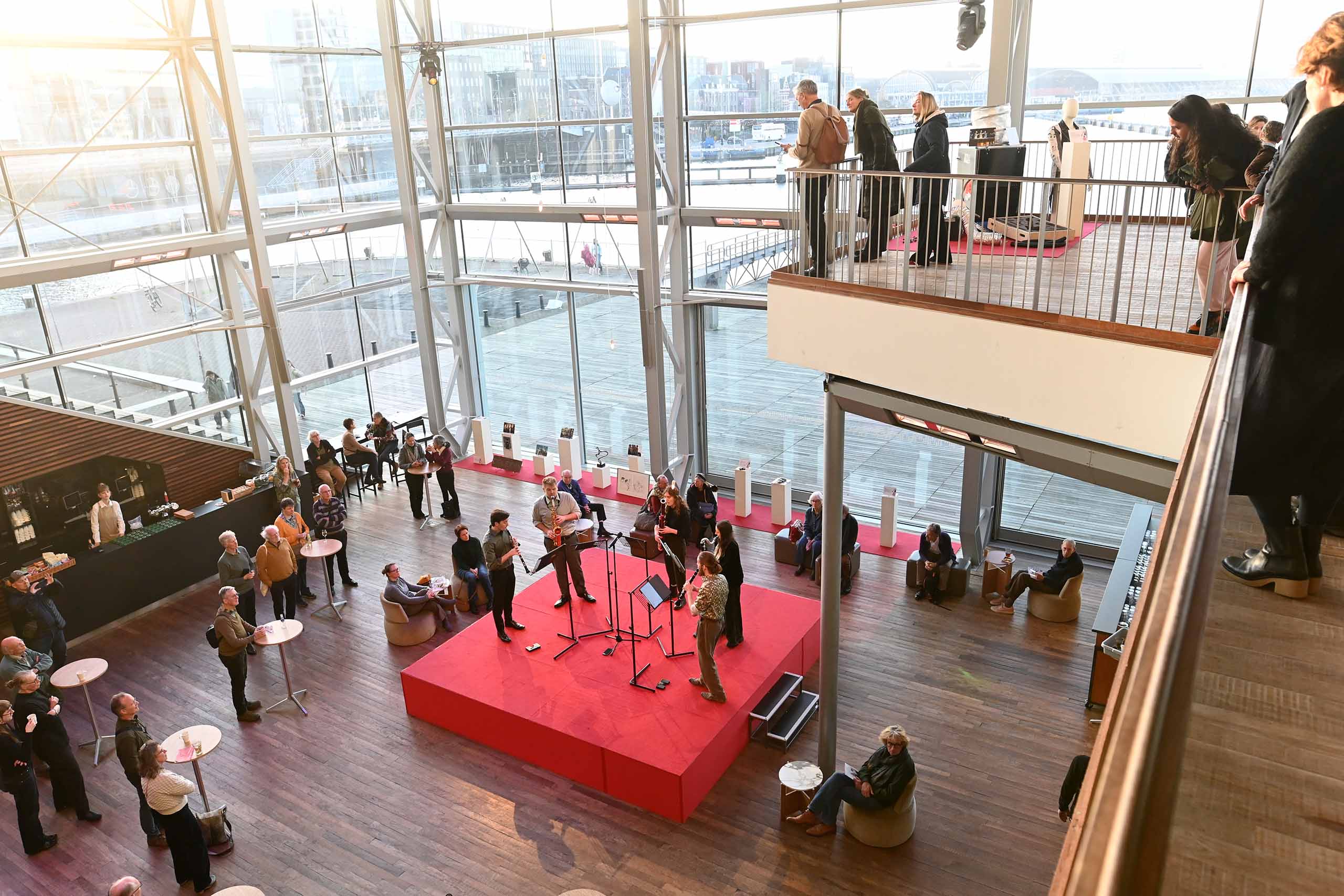
The Tree City Winds quintet performs at the Calefax Reed Festival in Amsterdam, November 2025. Photo: Wout Nooitgedagt
This festival was not the first connection between SMTD students and the groundbreaking Calefax Reed Quintet, an ensemble that pioneered the modern reed quintet genre more than 40 years ago. The quintet has been in residence at SMTD twice, in 2023 and 2024, spending several days on campus interacting with and coaching students.
The Calefax residencies at SMTD and the appearance of Tree City Winds at the Amsterdam festival all sprung from the same source: the Chamber Music Artist Mentor Program. This donor-funded initiative enables the department to host accomplished ensembles and artists for residencies in Ann Arbor. Guest artist visits take place frequently at SMTD and give students valuable exposure to – and the ability to make connections with – an array of artists in their field. The Chamber Music Artist Mentor Program seeks to amplify those benefits with substantive visits that frequently last multiple days, jam-packed with master classes, coaching and mentoring sessions, and performances. The program also provides funding that enables student musicians to travel outside of Ann Arbor, performing alongside the professional chamber groups.
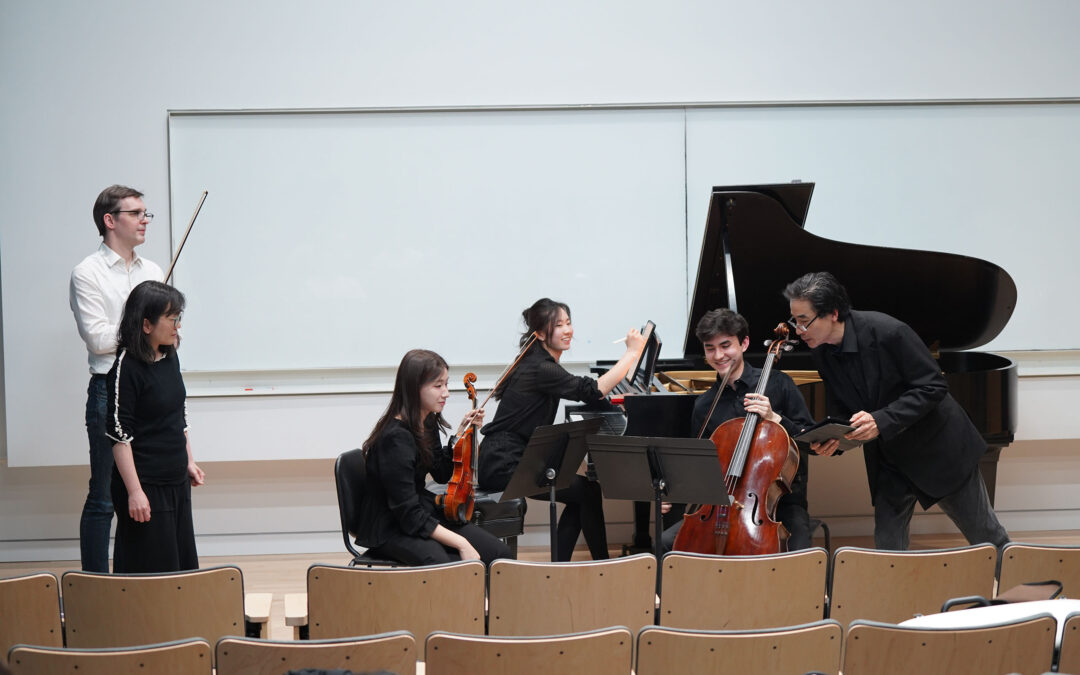
In addition to the many advantages of the Chamber Music Artist Mentor Program, the department has benefited tremendously in recent years from the multi-year residency at SMTD of the Telegraph Quartet. This dynamic and accomplished string quartet began its residency in fall 2024 and quickly embedded itself into the daily life of the school. In addition to maintaining a busy performing and recording schedule, Telegraph’s members have taught studio classes, coached dozens of student ensembles, and mentored many students one-on-one. They have also given numerous free public recitals on campus, enriching not just SMTD but the entire community.
Matt Albert, professor and chair of the Department of Chamber Music, described the way guest artist residencies integrate with the department: “We have the opportunity to present students with so many different kinds of chamber music artists. And whether they’re here for two days or longer, students get to see and reflect on different ways of teaching. The way artists model their own professional behavior has a huge impact on students, and that impact complements that of SMTD faculty.”
A Department Devoted to the “Music of Friends”
Compared to most of the other music departments at the School of Music, Theatre & Dance, the Department of Chamber Music is a youngster. While faculty and students have long engaged in chamber music at SMTD, the department itself was only established 11 years ago, in the 2015–16 academic year.
Every student taking chamber music coursework becomes part of a chamber ensemble. Prior to the start of the semester, students respond to a detailed questionnaire about their musical interests and goals, what type of ensemble they’d like to be part of, who they’d like to perform with, and so on. Then comes the challenging part for Albert and other chamber music faculty members: placing more than 200 students into 60-plus ensembles. “It’s our job as faculty to take all that student-directed information, those stories, those preferences, and put the groups together, match them up with coaches, find pieces that match with what students want to study and are excited to work with,” he related. “That is one of the most complicated and chaotic and beautiful parts of running a chamber music department.”
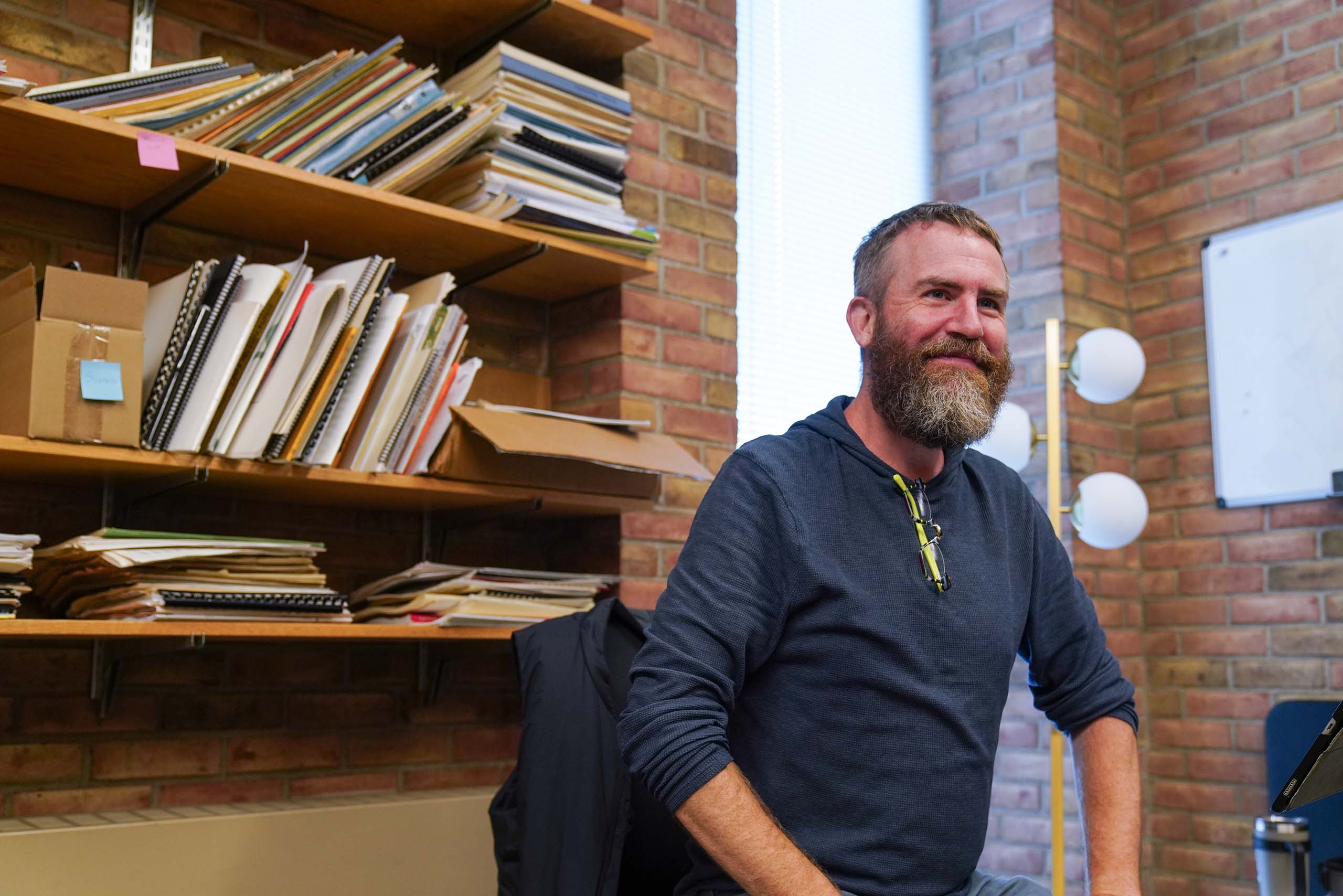
Matt Albert leads a chamber music rehearsal in his studio. Photo: Chris Boyes
Aside from their size (often three to six musicians), what sets chamber groups apart from large ensembles is the fact that they are conductorless, and each part is played by only one member in a kind of musical conversation. Chamber music is often described as the “music of friends,” a phrase attributed to the 20th-century English composer Richard Walthew that aptly describes its reliance on communication, negotiation, and mutual respect.
“A chamber music group is only as in tune as the most out-of-tune person in the group,” Albert noted. “They’re only as together as the person whose rhythm is struggling the most. So it is in everyone’s best interest to help one another understand the music, understand the flow, understand what you’re trying to say, and then learn the techniques to make it as effective as possible.”
Building on the Mission of the Department of Chamber Music
In keeping with the collaborative nature of chamber music, the task of coordinating the Chamber Music Artist Mentor Program also requires a team effort. Amy I-Lin Cheng, associate professor of piano and chamber music, serves as the director of the program. She works closely with Albert and other faculty members in the planning and execution of the residencies. They consider a multitude of factors when deciding which artists to invite to campus, seeking to complement and add to the vibrant chamber music community at SMTD. “We make sure to bring wind groups, brass groups, groups that work in tangential or complementary genres,” noted Albert. “We like having groups who are expanding what it means to work in the classical world.”
The artist mentor program is supported by the Chamber Music Artist-in-Residency Fund, which was established by an anonymous donor. The program began in the winter of 2022 and has picked up steam every year since, with the department hosting nearly two dozen prominent ensembles and individual artists over the past four years.
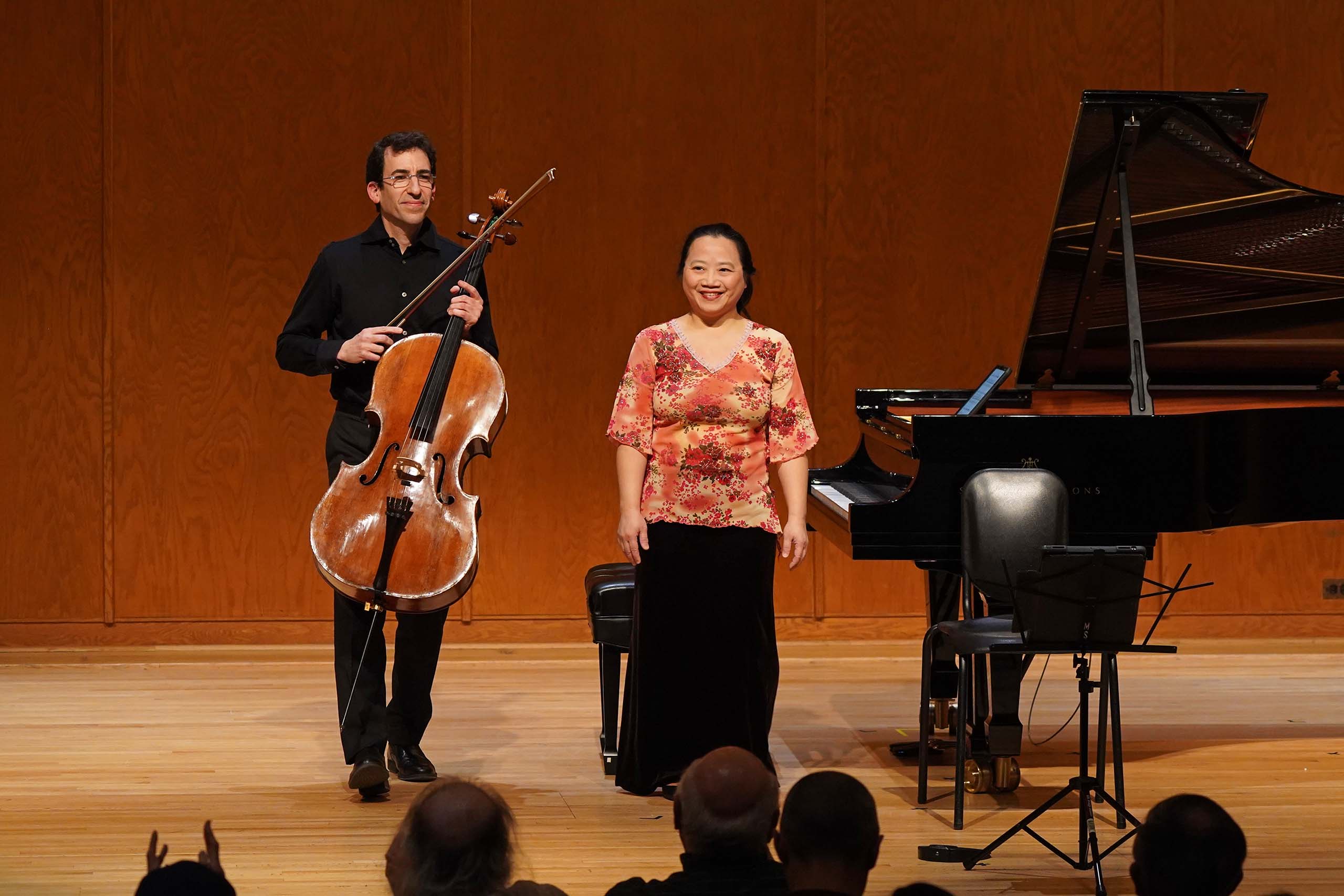
Amy I-Lin Cheng, with cello professor Amir Eldan, after performing in the Faculty Showcase, February 2024. Photo: Peter Smith
The core activity of the residencies is coaching sessions, where the guest artists observe the students performing and offer guidance on not just how well they play, but how well they play together – listening to each other, collaborating, and communicating. After a March 2026 coaching session with the acclaimed Horszowski Trio (guest artist mentors, 2023–26), Chelsea Ahn (MM ’27, piano, chamber music) observed, “In my chamber group, we all have slightly different playing personalities, and it was interesting how the Horszowski Trio’s teaching style made us think more as an ensemble. Their comments were catered to improving overall synergy rather than playing individual parts well.”
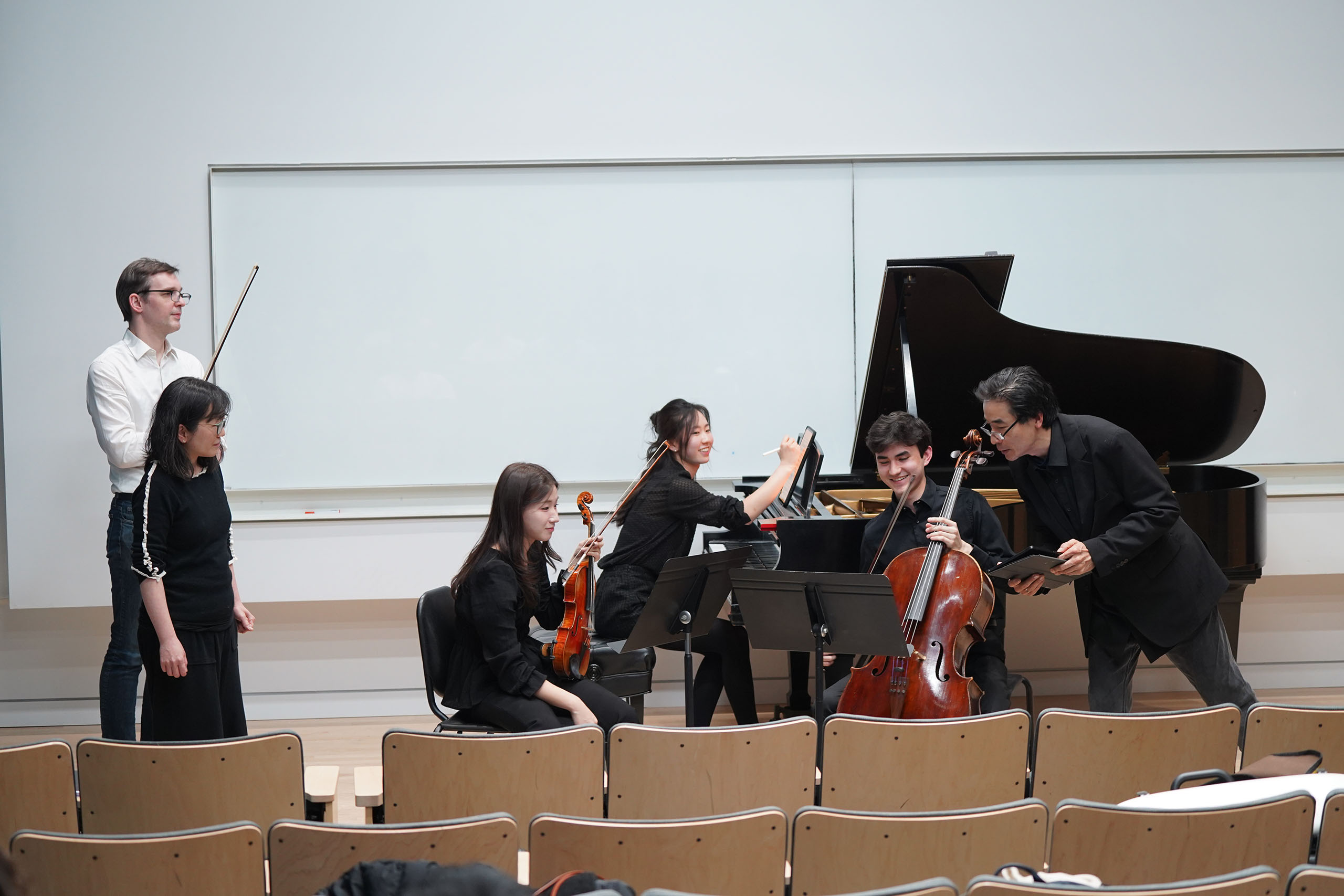
The Horszowski Trio – Jesse Mills (left), Rieko Aizawa (second from left), and Ole Akahoshi (right) – works with SMTD students (l. to r.) Angela Lee, Chelsea Ahn, and Matthew Averyt during their March 2026 residency. Photo: Peter Smith
Cheng also makes sure the residencies include an informal meet-and-greet session where students can chat with the visiting artists. “The students open up and ask really great questions to gain valuable insights from the guests,” Cheng said. A highlight of each residency is the guest artists’ performances, which give students an opportunity to see these ensembles put into practice what they teach. The concerts are free of charge and open to the public. “It’s really amazing that these are touring groups that usually go to big venues or tour internationally,” Cheng noted, “but we get them in one of our recital halls.”
The residencies add important layers to all that is taught to students by SMTD faculty. “Our modeling, our mentorship, our teaching is a constant backbone for them,” Albert noted. The guest artists “often say the same things or model the same things that we do, but in such a radically different and fresh way that it can unlock something that then helps students’ learning move forward. It’s so exciting to see that impact.”
Mentorship and Performance Beyond Ann Arbor
In addition to the many advantages of hosting guest ensembles on campus, the opportunities for students to travel to other locales to learn from and perform with professional artists offer rare and special experiences. The relationships forged through the artist mentor program lay the groundwork for these trips, and the Chamber Music Artist-in-Residency Fund provides financial support to cover the students’ travel expenses.
The first of these trips took place in May 2024, when SMTD’s Trio Lineas was paired with Da Capo Chamber Players – directed by pianist Steven Beck (guest artist mentor, 2023) – for a three-day mentoring and coaching experience in New York City. The experience, described by the trio as “an extraordinarily enriching artistic and educational experience,” culminated in a joint concert with Da Capo Chamber Players, a performance that marked Trio Lineas’s New York City debut.
In June 2025, the OUT Ensemble, a woodwind quintet of SMTD chamber music students, traveled to Washington, DC, for coachings with members of the “President’s Own” United States Marine Band. The Marine Band musicians offered more than just artistic feedback; they shared practical guidance on competing in the chamber music competition circuit and pursuing funding through grants and other sources.
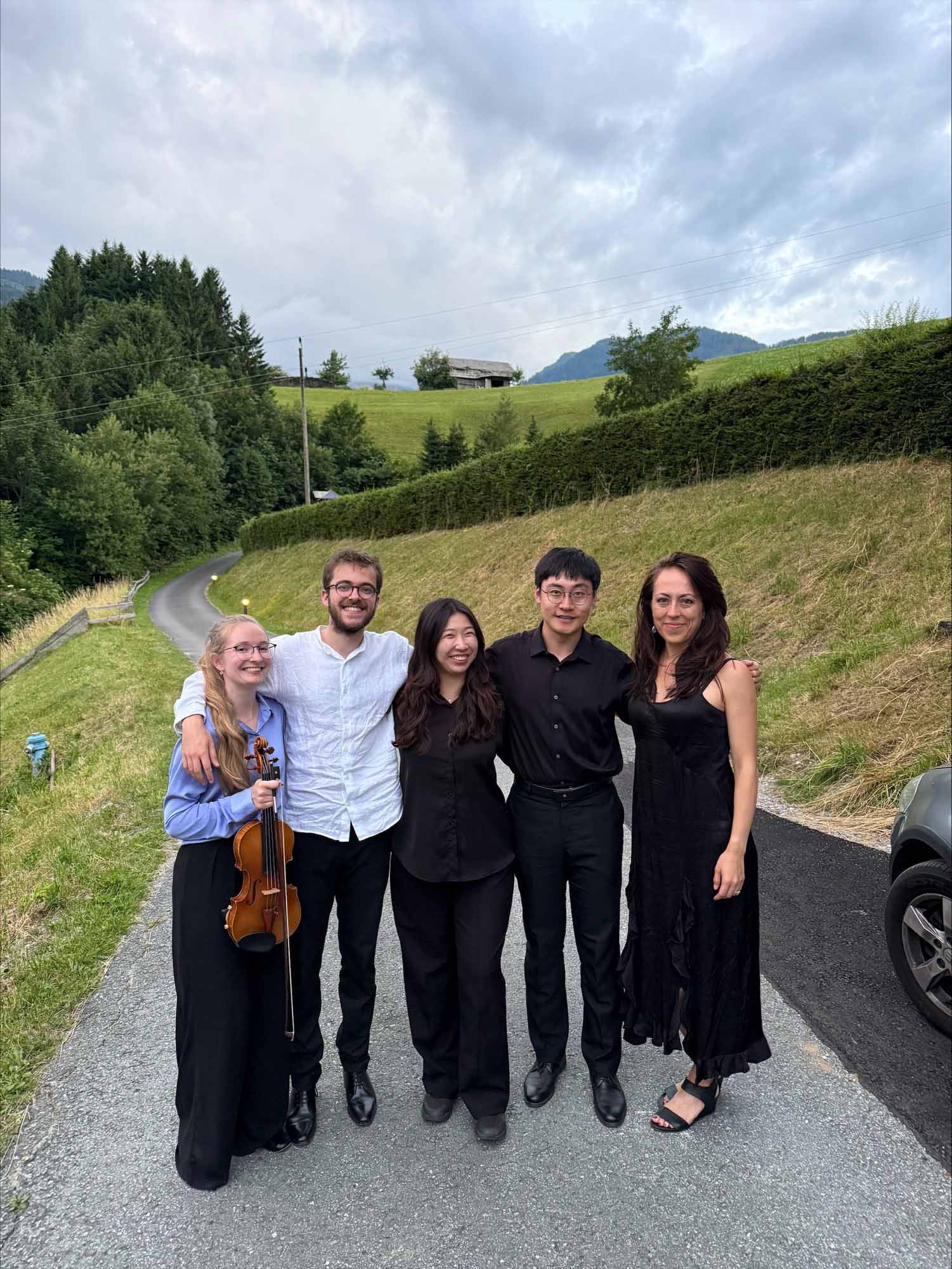
Youngeun Lee (center) and Jinzhao Xu (second from right) are pictured with the other Fellowship Program participants and Tanya Bannister (right), Concert Artist Guild president, at AlpenKammerMusik in Austria.
That same summer, two students – Jinzhao Xu (DMA ’27, piano) and Youngeun Lee (DMA ’28, cello) – participated in the Fellowship Program at the AlpenKammerMusik festival in Liesing im Lesachtal, Austria, working directly with the NYC-based founders and directors of the festival. The students acted as assistant faculty, working with festival instructors (including SMTD clarinet professor Chad Burrow), artists from major ensembles, and leaders of management agencies like Concert Artists Guild. They also shadowed administrators, learning the nuts and bolts of how to operate a music festival that caters to young artists, professionals, and talented amateurs. “This festival has given me much more than just technical growth,” Xu shared. “It has prompted me to reflect deeply on what I truly want to express through music and what role I wish to play in this world as a musician. Beyond deepening my understanding of myself, I was moved and encouraged to see music bringing together people from across the globe, united by beauty and expression.”
In November 2025, in addition to Tree City Winds participating in the Calefax Reed Festival, five SMTD chamber music students joined the Telegraph Quartet on a Bay Area concert tour, presenting concerts in San Francisco and Berkeley and gaining invaluable professional experience by traveling with and performing alongside the Telegraph Quartet.
Telegraph Quartet Adds New Levels to the Chamber Music Experience at SMTD
Having students join them on their Bay Area tour is just one example of the generosity and deep engagement the Telegraph Quartet has demonstrated since joining SMTD as artists-in-residence in fall 2024. “They have integrated into the fabric of what we do here,” Matt Albert shared, “and complemented, expanded, and really challenged it.”
The members of the quartet – Eric Chin and Joseph Maile (violins), Pei-Ling Lin (viola), and Jeremiah Shaw (cello) – have exceeded the high expectations for their residency. They have engaged in abundant coaching and mentorship sessions with student groups, and in each semester, they have presented several Chamber Music Forums – department-wide performance classes where they work with chamber music groups across SMTD.
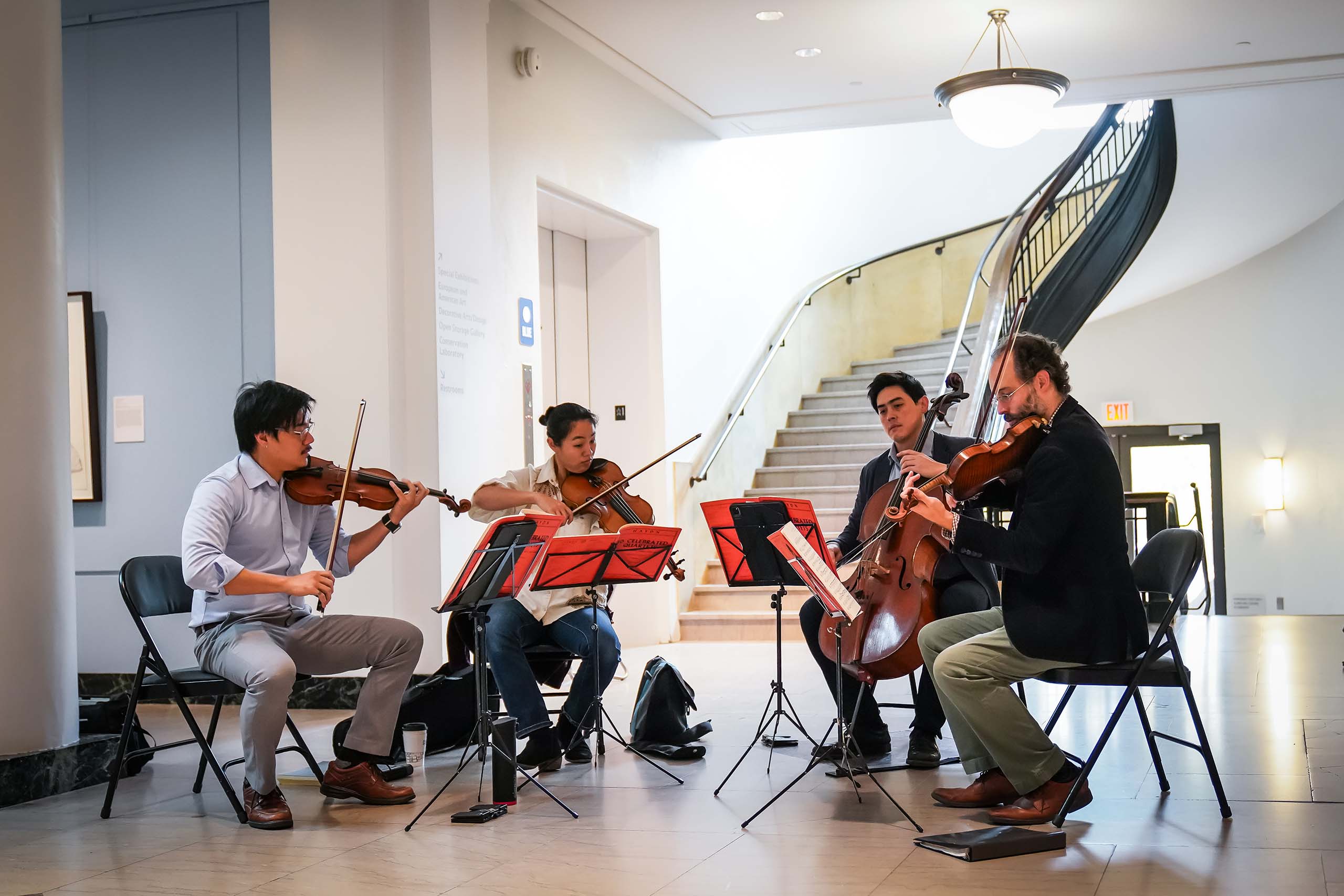
The Telegraph Quartet performs at the U-M Museum of Art, a Campus Voting Hub, during the November 2024 election season. Photo: Chris Boyes
Benefitting SMTD students and music lovers throughout the area, the Telegraph Quartet has performed several public concerts across campus and at other local venues, demonstrating their broad creative explorations, dynamic performance style, and musical commitment to each other. These performances have often included several doctoral and master’s students, working immersively alongside the Telegraph Quartet. Albert described the quartet’s recitals as “exceptional” as well as influential: “To see them perform at this really high level and achieve something remarkable and magical with a piece, it makes me go to the practice room and really think about what I’m doing, and I know it does for the students as well.”
The initial plan was for the Telegraph Quartet to be in residence at SMTD for three years, but that period has recently been extended to a fourth year, thanks to the support of SMTD donors David (BA ’86, MD ’90) and Bernadine Wu (BS ’89, MD ’92), who were impressed by the quartet’s impact on students and the entire community. “Their creative energy, musical dynamism, and willingness to engage audiences and students are an invaluable resource for the school and a model for other institutions,” the Wus stated. “I can’t say enough how wonderful it’s been having the Telegraph Quartet at SMTD,” Amy I-Lin Cheng shared. In addition to their substantive interactions with students, the quartet also serves as an example for students of “an active, visible, high-level performing ensemble,” Cheng said. “Having the quartet as a part of our community to encourage and to foster the chamber music culture from within is incredibly beneficial for students.”