

Michigan Muse Fall 2025 > View from the Pond
View from the Pond
Making Music Around the World: SMTD Ensembles Go on Tour
Music in the Mitten
At the beginning of May, two different SMTD ensembles – the Jazz Ensemble and the Symphony Band – criss-crossed the state of Michigan, interacting with middle school and high school students and giving free community concerts. Members of these ensembles bonded with each other, explored the state, and shared the joy of music with people of all ages. The exposure to college-level musicians, being taught by them and hearing them perform, can have a significant impact on younger students, helping them envision themselves as college and lifelong musicians. Some may even be inspired to apply to Michigan.
The Jazz Ensemble, led by Ellen Rowe, began their tour in Michigan’s Upper Peninsula, visiting Marquette, Iron Mountain, and Hancock, before heading downstate to Midland, the Grand Rapids area, and Holland. Rowe – chair of the Department of Conducting and Arthur F. Thurnau/Earl V. Moore Collegiate Professor of Music – led the ensemble in teaching clinics at high schools, having a jam session with local college students in Hancock, and performing abundant concerts.
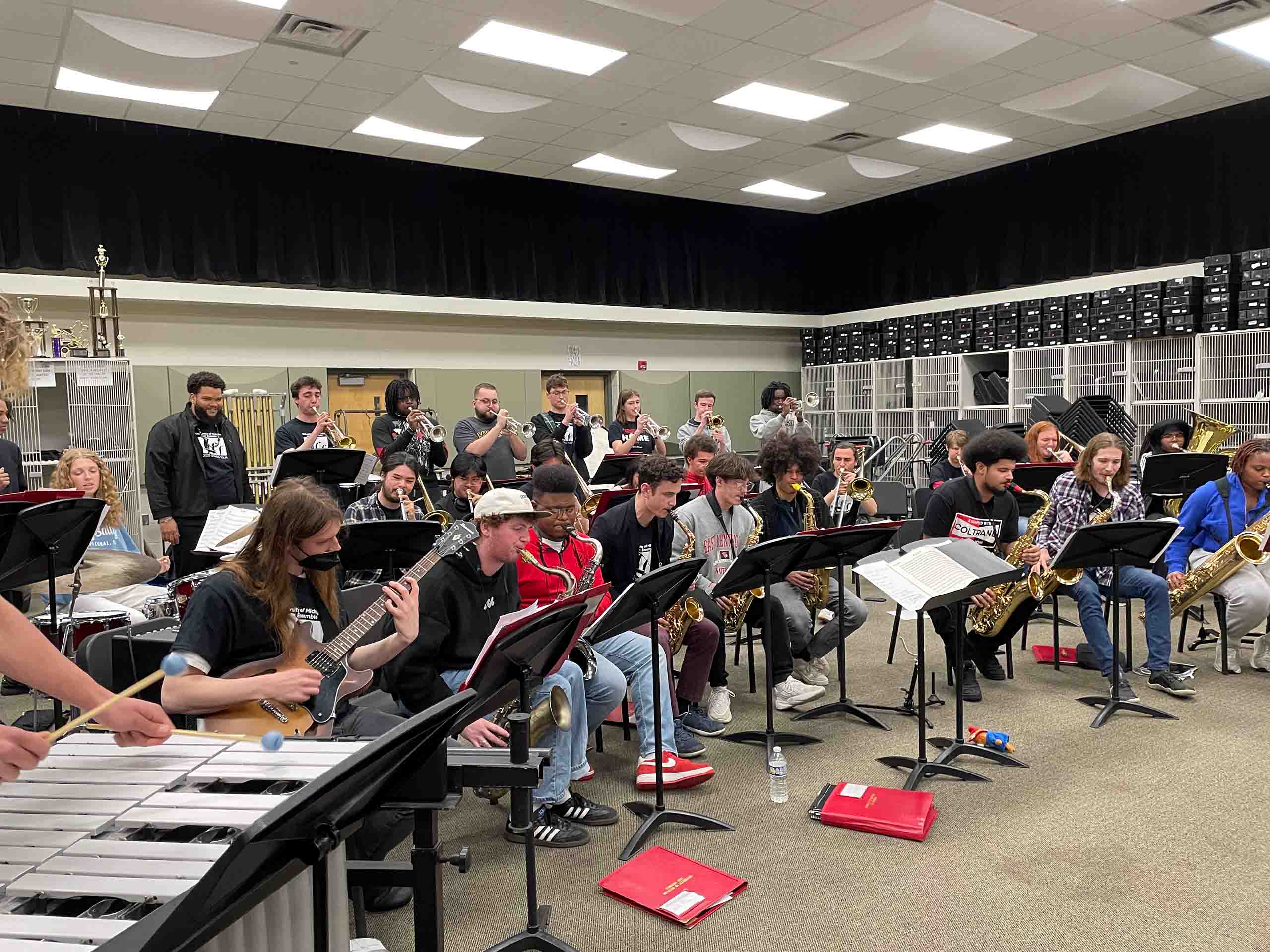
In several towns, local high school jazz bands – and in one case, faculty from Michigan Technological University – served as opening acts for Jazz Ensemble performances. “This year’s Jazz Ensemble tour provided a great opportunity for the band to do outreach, community engagement, and recruiting within the state,” Rowe stated. “I was really proud of the great job our students did working with the younger students at the various schools we visited and how beautifully they represented SMTD through their teaching and performing. An added bonus was having Kris Johnson, our new jazz trumpet professor, along on the trip!”
Over the course of seven days, the Symphony Band – on that ensemble’s first tour since 1991 – conducted 10 clinics and performed eight concerts in communities from southeastern Michigan, to mid-Michigan, to the west side of the state, to the northern Lower Peninsula. They concluded their “State of the Arts” tour with a clinic at the Interlochen Center for the Arts and a concert in Grand Rapids, led each step of the way by Jason Fettig, professor of music and director of bands. “I was delighted to have the opportunity to bring the University of Michigan Symphony Band back out on the road after a long hiatus to share the artistry and stories of our students with young musicians and community members all across our state,” he said. The tour was made possible by funding from the U-M Arts Initiative, which partnered with SMTD, the Office of Enrollment Management, the Office of Government Relations, and the state’s U-M Alumni Association chapters to make it happen.
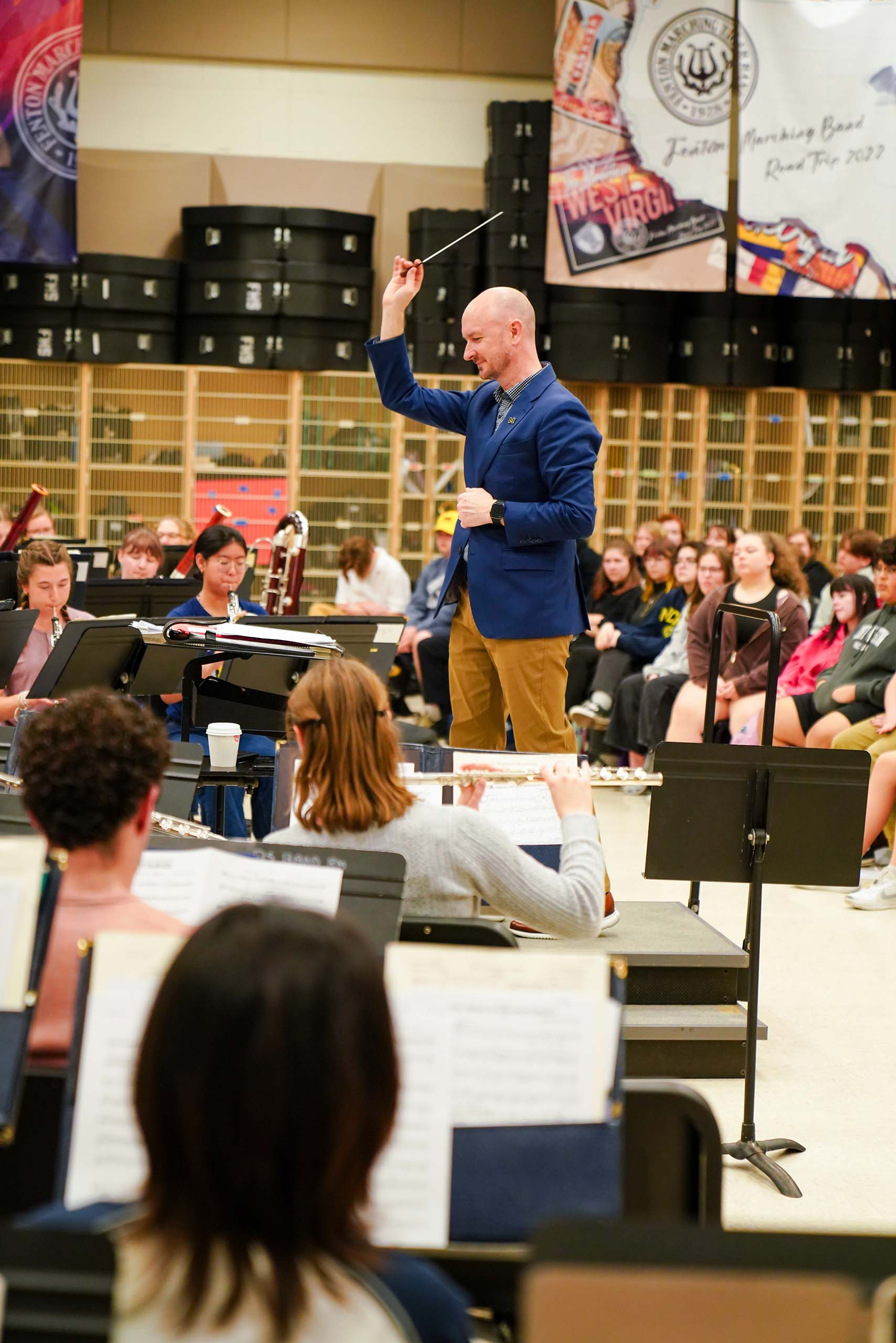
Beyond the pure pleasure of abundant performing, Fettig viewed the tour as a wonderful opportunity for SMTD students to gain experience as teachers and mentors during the clinics, with Fettig guiding them through that experience. The tour also served, he noted, as a thank you from U-M to the state: “Music is one of the most powerful unifying forces, and I cannot think of a better way to highlight that power than to bring the historic Symphony Band directly into the communities that have helped make this university among the finest in the world.”
A Journey to South Africa
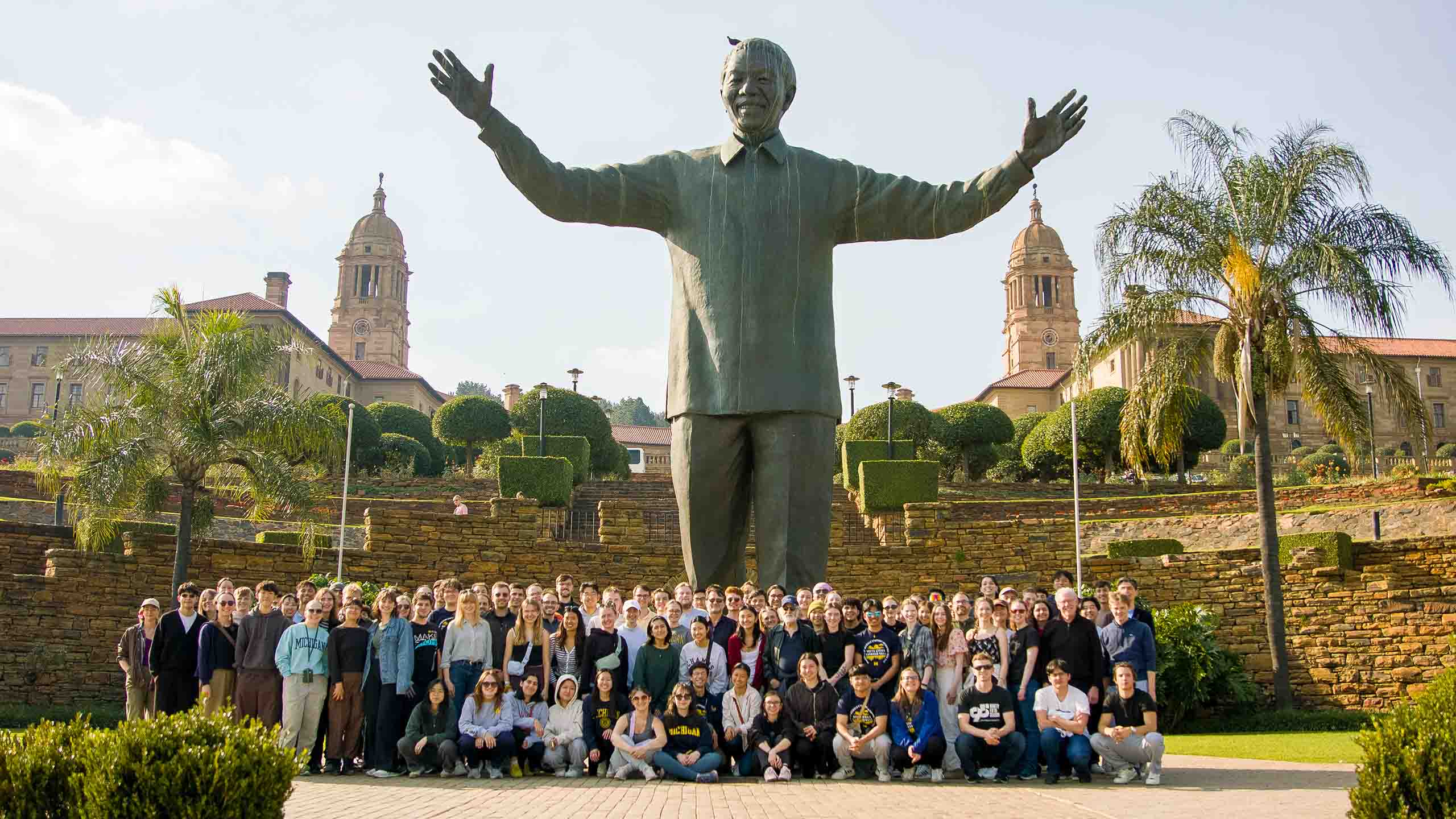
The University Symphony Orchestra (USO), led by its music director Kenneth Kiesler, professor of music and director of university orchestras, went much farther afield, traveling to South Africa for two weeks in late May. The USO gave the first of six concerts at the Aula on the campus of the University of Pretoria. In Soweto, a township of Johannesburg, the performance took place at Regina Mundi Church – known as the “people’s church” due to its role as a gathering place during the anti-apartheid movement. The ensemble performed at the University of Witwatersrand (known as Wits) in Johannesburg and, in Cape Town, at the Hugo Lambrechts Music Centre and the concert venue known as City Hall. Performing with the USO throughout the tour were three soloists: Daniel Washington, professor of voice at SMTD; Grammy-winning vocalist Karen Slack; and Goitsemang Lehobye (MM ’18, SM ’20, DMA ’24, voice). Lehobye is South African, born not far from Pretoria. The tour concluded in New York City with a performance at Carnegie Hall.
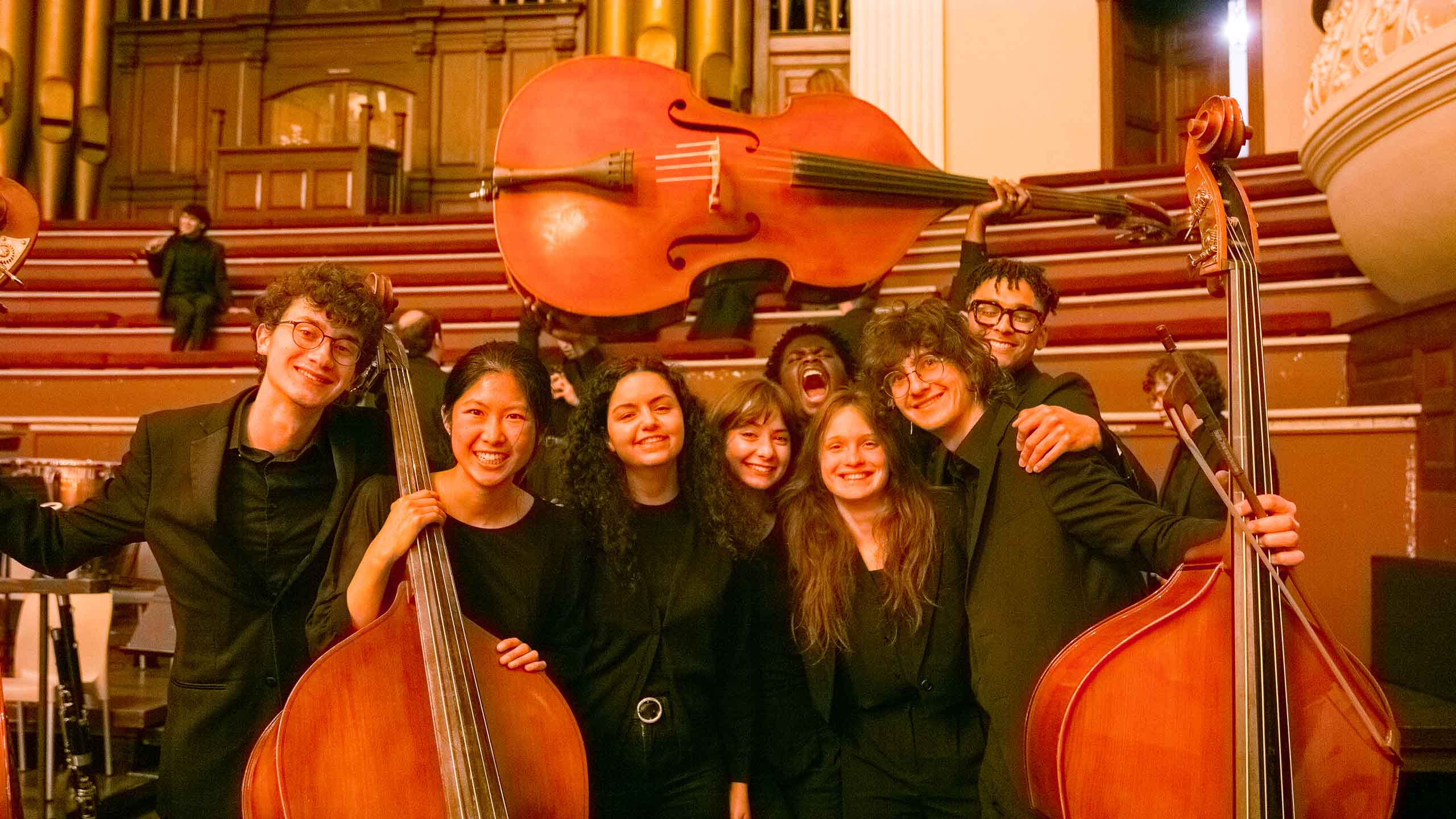
In between performances in South Africa, the students visited historical venues, cultural sites, and natural areas, including a safari in the Pilanesberg Game Reserve. They gathered at schools and community centers for musical and cultural exchanges, playing side-by-side with students from several universities and playing together with the youth orchestra at the Morris Isaacson Centre for Music in Soweto. “We learned about the culture of South Africa, and our music-making soared as we played the same program so many times in so many places,” Kiesler shared. “All of that was important. But the greatest takeaway was how our music and music-making connected us with the audiences in a palpable, deeply moving, and unforgettable way.”
Prior to arriving in South Africa, the student musicians rehearsed a Xhosa song, “Bawo Thixo Somandla.” In South Africa, the students learned the traditional gestures and swaying movements to go along with it. At the end of each performance, the musicians set down their instruments, stood up, and sang. “Even before we began to sing,” Kiesler said, “there was a kind of excited anticipation as the audiences realized this was unusual and that something different was going to happen. When we started singing, standing still, the audiences were already cheering and ululating, and then, when we started the movements, the places erupted.” After the Soweto concert, the entire audience began singing back to the orchestra, dancing and celebrating in a joyous exchange.
A Musical Exploration of Germany and Austria
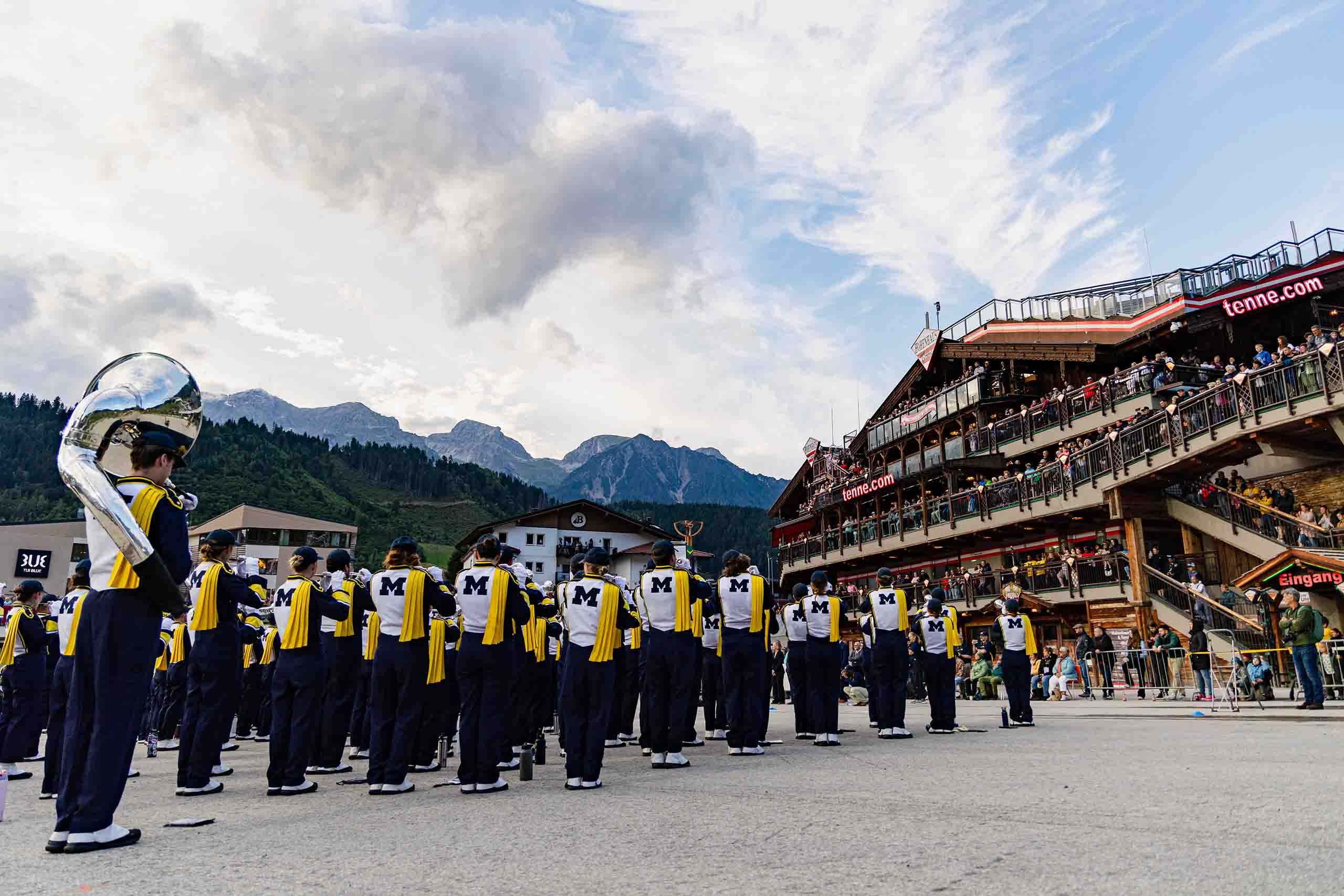
In June and July, the Michigan Marching Band (MMB) spent more than two weeks traveling in Germany and Austria. The group of more than 250 students and about 30 staff and faculty visited a number of historical, natural, and cultural landmarks; took a day trip to Strasbourg, France; and participated in a cultural exchange with students at the St. Landolin Schule in Ettenheim, Germany. And of course, the MMB performed, displaying their musical and marching skills for enthusiastic audiences.
In Germany, the band marched in a parade and gave a concert in the town center of Ettenheim. They performed with the Polizeiorchester Bayern, the professional symphonic wind orchestra of the Bavarian Police, in Kempten, and they performed at Musikfest in Aitrang. They then spent three days immersed in the Mid Europe festival in Schladming, Austria, which featured musicians from around the world gathered to perform dozens of concerts, share traditions, and thrill audiences. The MMB performed again with the Polizeiorchester Bayern during the festival’s opening concert and participated in Die Lange Nacht der Musik, a marathon open-air extravaganza involving hundreds of musicians on four stages playing over the course of eight hours. Their final performance at the Mid Europe festival was as part of the Schladming Tattoo, a traditional marching show featuring Austrian and international marching bands. The festival’s promotional materials stated, “We are thrilled to welcome another marching band from the USA: the Michigan Marching Band, known for electrifying American football stadiums and audiences of over 100,000, will deliver a breathtaking show at the Planai Stadium.”
“We couldn’t have been more excited to take the University of Michigan Marching Band to Europe,” said John Pasquale, Donald R. Shepherd Clinical Professor of Conducting, director of Michigan Marching and Athletic Bands, and associate director of bands. “As the first overseas tour of MMB students in a long time, we were thrilled to have the opportunity for performances and cultural exchanges in such a musically rich part of the world, and we were proud to showcase the long-standing tradition of musical excellence of the Michigan Bands.”
SMTD Alumni Recognized with 2025 Tony and Grammy Wins
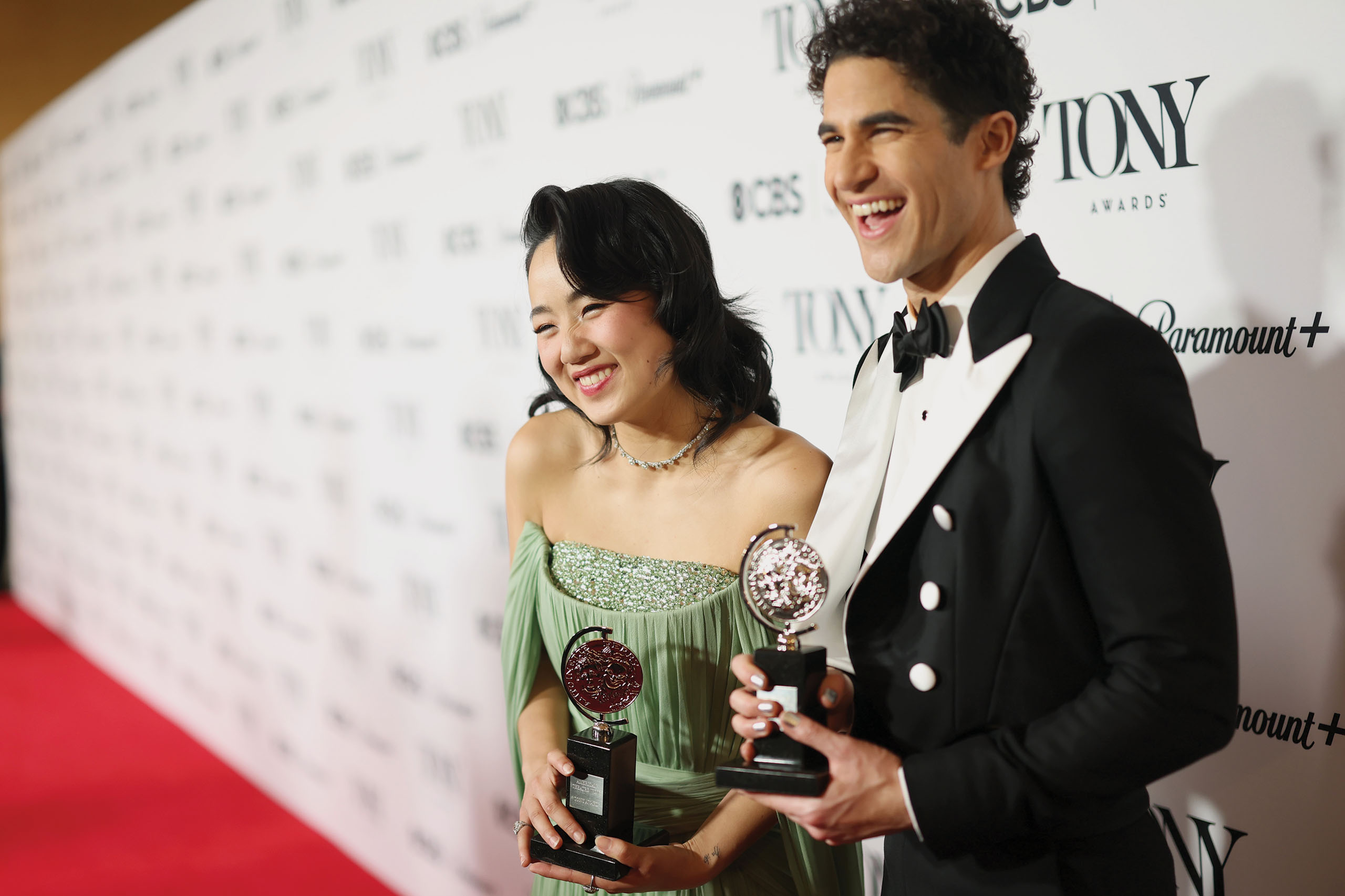
The 2025 Tony Awards proved to be a big night for SMTD alumni, with several productions involving alumni recognized with the industry’s most prestigious awards.
Notably, Darren Criss (BFA ’09, acting) won his first Tony for Best Performance by an Actor in a Leading Role in a Musical for his performance as Oliver in Maybe Happy Ending. A standout this year, Maybe Happy Ending won six awards, including Best Musical, and also featured Helen J. Shen (BFA ’22, musical theatre) as Claire and Christopher James Tamayo (BFA ’22, musical theatre) as standby for Oliver and Gil.
Celia Keenan-Bolger (BFA ’00, musical theatre) was honored with the Isabelle Stevenson Tony Award, a non-competitive philanthropic award, for her advocacy work in the arts. Currently starring in the HBO original series The Gilded Age, Keenan-Bolger won a Tony Award in 2019 for Best Performance by a Featured Actress in a Play, for her role as Scout in To Kill a Mockingbird.
The 2025 Grammy Awards also proved to be a thrilling event for several SMTD alumni. The Akropolis Reed Quintet, which formed at SMTD in 2008, won their first Grammy for “Strands,” which earned the award for Best Instrumental Composition. This track is from the 2024 album Are We Dreaming the Same Dream?, the quintet’s collaboration with composer and jazz pianist Pascal Le Boeuf and drummer Christian Euman. The quintet consists of Tim Gocklin (BM ’12) on oboe, Kari Landry (BM ’11, MM ’13) on clarinet, Matt Landry (BM ’10, music education) on saxophone, Andrew Koeppe (attended ’12) on bass clarinet, and Ryan Reynolds (BM ’12, MM ’14) on bassoon. In addition to her role in the quintet, Kari Landry is a lecturer in the Department of Entrepreneurship & Leadership at SMTD.
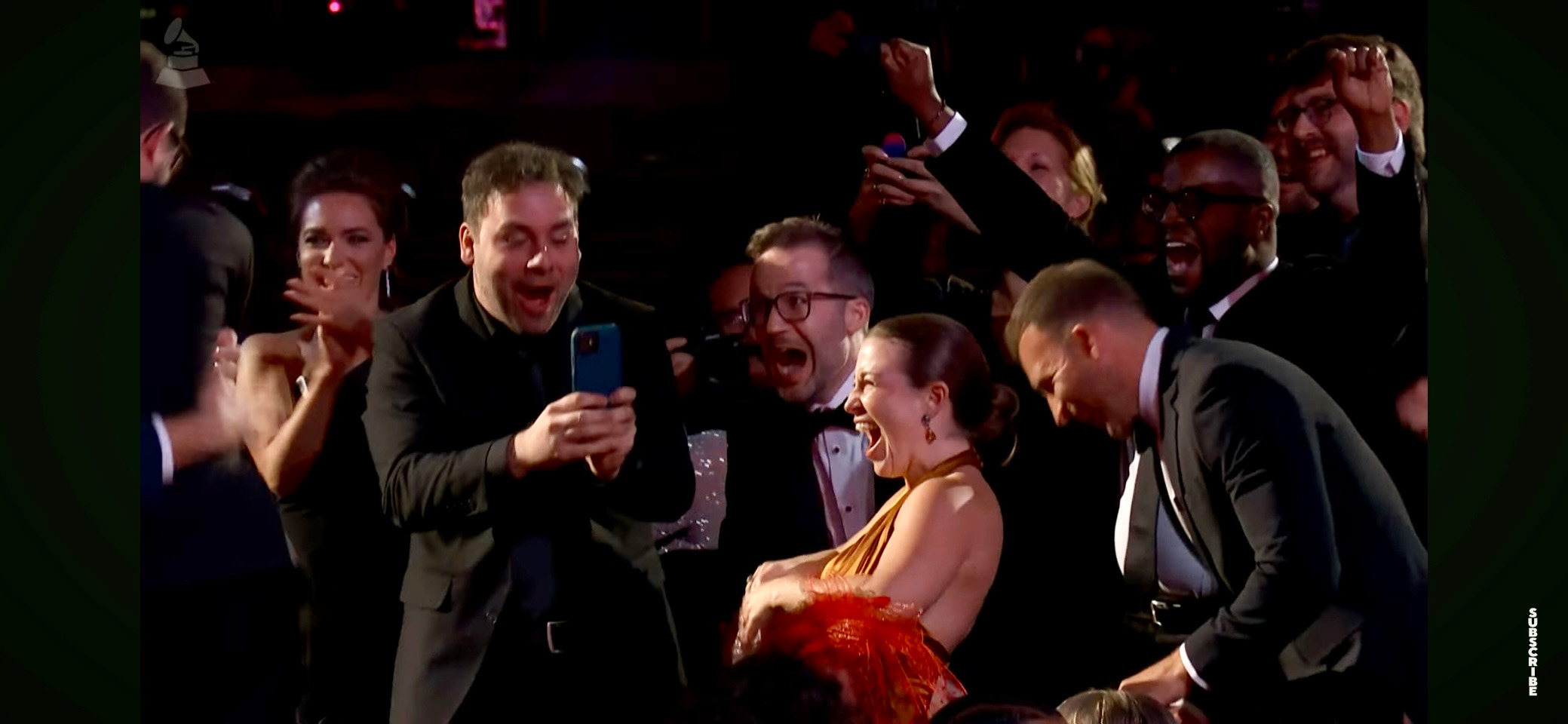
Rob Bisel (BS ’14, sound engineering) won a 2025 Grammy as a co-writer of SZA’s “Saturn,” which won Best R&B Song. Bisel’s partnership with SZA also led to Grammy wins in 2024. He served as a producer, songwriter, instrumentalist, engineer, and mixer on her album SOS, which won the 2024 Grammy for Best Progressive R&B Album and included two songs that were honored: “Ghost in the Machine” (featuring Phoebe Bridgers) took the award for Best Pop Duo/Group Performance and “Snooze” was named Best R&B Song.
Tenor Nicholas Phan (BM ’01, voice) won a 2025 Grammy Award for Best Opera Recording for his starring role in the world premiere recording of Kaija Saariaho’s Adriana Mater. This was his fifth Grammy Award nomination and his first win.
U-M First University to Host Annual Conference for MOLA: An Association of Music Performance Librarians
From May 30–June 2, 2025, SMTD hosted the 43rd annual conference of MOLA: An Association of Music Performance Librarians, marking the first time in the association’s history that the conference was hosted by a degree-granting institution rather than a major orchestra.
Founded in 1983 as the Major Orchestra Librarians’ Association, MOLA is a global organization serving more than 560 librarians affiliated with more than 340 performance organizations. According to MOLA, the role of music performance librarians (sometimes known as orchestra librarians) is to “acquire, prepare, catalogue, and maintain the music for each institution.” These institutions, while often major orchestras, also include universities, military bands, and opera and ballet companies. Among other roles, MOLA provides education, support, and community to performance librarians all over the world.
In addition to abundant sessions, presentations, and workshops – many of which featured SMTD faculty – conference attendees had the opportunity to explore Hill Auditorium, visit displays of the Stearns Collection’s historical and contemporary musical instruments, and see performances by SMTD faculty, current students, and alumni.
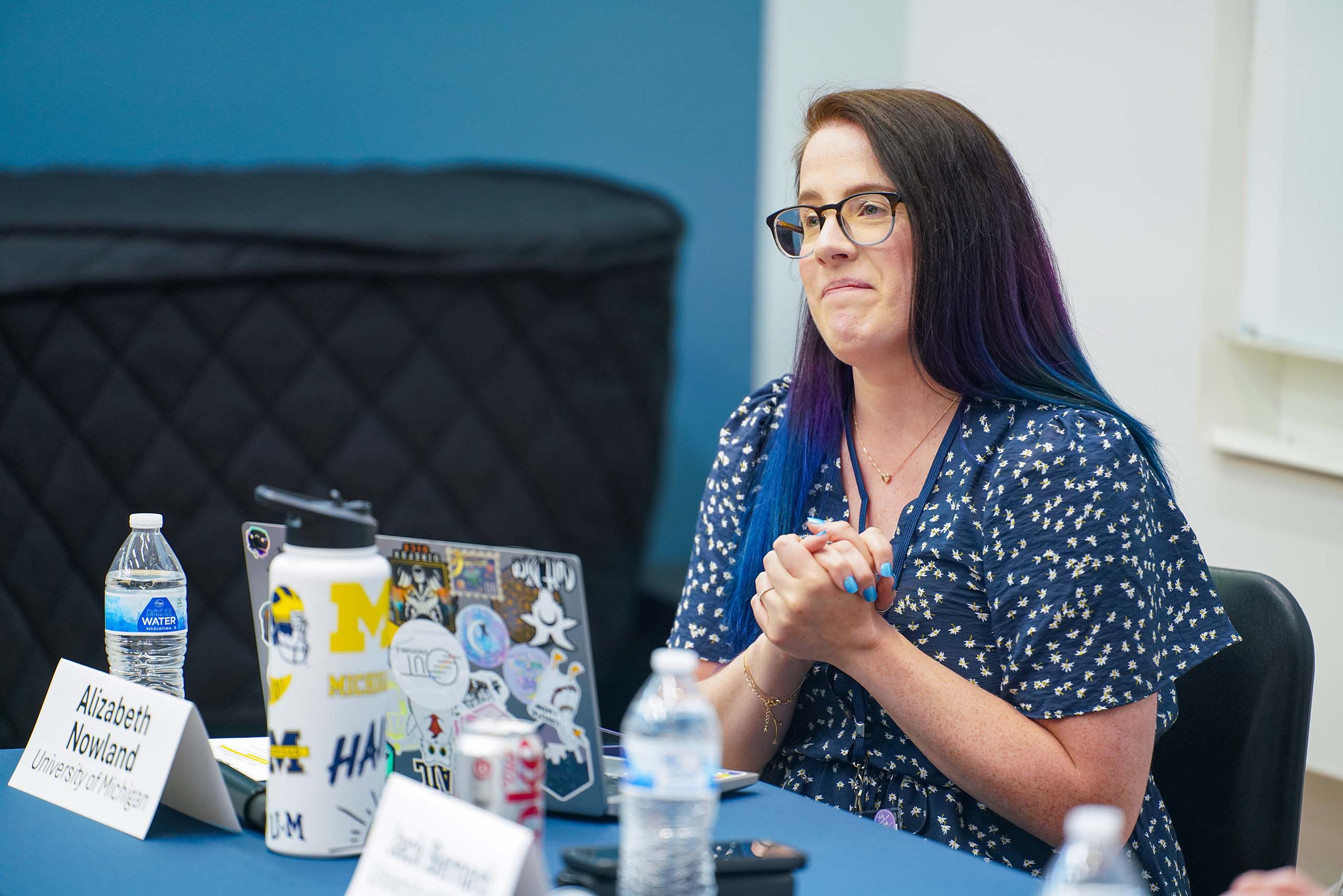
In this interview, Alizabeth Nowland, SMTD’s head performance librarian and licensing manager, discusses the reasons why U-M is an ideal host and relates some of the highlights of the conference.
How would you describe your role as a performance librarian?
In my role, I oversee all music acquisitions and handle all music copyright licensing for the entire university. I facilitate hundreds of performance, mechanical, synchronization, and rental licenses each year to ensure that our performances meet all legal obligations. I support 53 ensembles that include orchestras, bands, jazz ensembles, choirs, campus ensembles, youth ensembles, etc. Our diverse range and sheer number of ensembles is part of what makes the University of Michigan such an important MOLA constituent. To my knowledge, there is no other institution in the world that supports this number of musical ensembles.
Why was SMTD chosen to host this annual conference?
Our quantity of ensembles, incredible student population, status as a research institution, and access to fantastic resources make the University of Michigan an ideal host for the MOLA conference. This is the very first time a degree-granting institution was invited to host the conference. It is a huge honor. Christopher Blackmon, current MOLA president and senior orchestra librarian of the Royal Concertgebouw Orchestra, made this statement about choosing U-M to host this conference:
When the MOLA leadership was discussing the location of the 2025 conference a few years ago, we were very excited when the possibility presented itself to bring our annual gathering to a university campus for the first time in our 40-plus-year history. This year’s conference is a great chance to support and showcase what is happening on a daily basis at our academic member organizations, plus it presents a wonderful opportunity for MOLA to benefit from the current scholarship and broad resources available at a leading research institution. The University of Michigan SMTD, with its internationally respected faculty, collections, and institutes, is an ideal partner in achieving that goal.
What were some of the highlights of the conference?
We had an incredible agenda for our attendees. The conference kicked off with an entire day dedicated to our Tech Fair and pre-conference workshop. We had breakout sessions on the topics of disaster preparedness, mental health, audition preparation, and so much more. Our plenary sessions highlighted the Sphinx Organization (which started at the University of Michigan), the Gershwin Initiative (a jewel of SMTD), and even a special session featuring some of our incredible composition alumni speaking about the creative process of a composer.
75th Anniversary of the Michigan Youth Ensembles Program
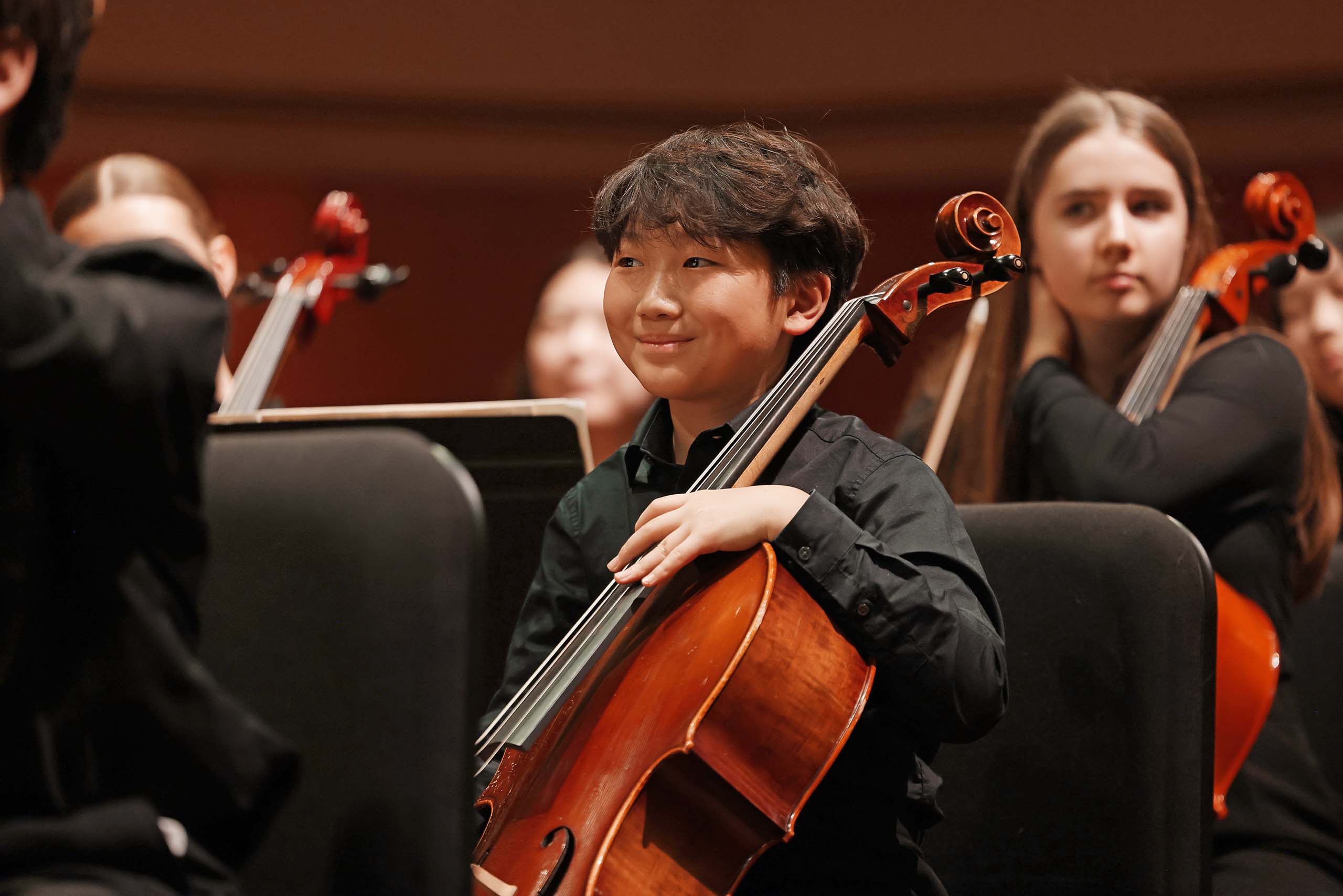
The 2024-25 academic year marked the 75th anniversary of the Michigan Youth Ensembles (MYE) program, SMTD’s oldest continuously run youth program. MYE consists of several ensembles of middle school and high school students – from symphony, philharmonia, and jazz orchestras, to a symphony band, chamber singers, a trombone ensemble, and a percussion ensemble.
“The Michigan Youth Symphony Orchestra, MYE’s flagship orchestra, is a testament to the dedication and collaboration of exceptional students, committed faculty and staff, and supportive parents, all of whom have shaped its storied legacy,” said David Gier, SMTD dean and Paul Boylan Collegiate Professor of Music. “We celebrate not only the legacy of artistic excellence and leadership fostered among its alumni but also the enduring commitment to continue providing inspiring educational opportunities to the talented youth of our communities.”
The Michigan Youth Ensembles program began in 1949, when U-M faculty member Orien Dalley started the first Michigan Youth Symphony. Seventy-five years later, MYE continues to bring together exceptional students to learn and perform. With weekly rehearsals and biannual concerts, the program serves as a way for SMTD conductors, faculty, and graduate students to connect directly with hundreds of in-state, pre-college students. The milestone anniversary was celebrated with a series of concerts in March 2025.
“For the past 75 years,” said Garrett Lefkowitz, senior program manager for youth and adult programs, “the Michigan Youth Ensembles program has been a flagship destination for students of the Southeast Michigan region to develop their musicianship, growing not just as musicians but as individuals. The School of Music, Theatre & Dance is proud of this fantastic institution and looks forward to seeing what MYE accomplishes in the years to come!”