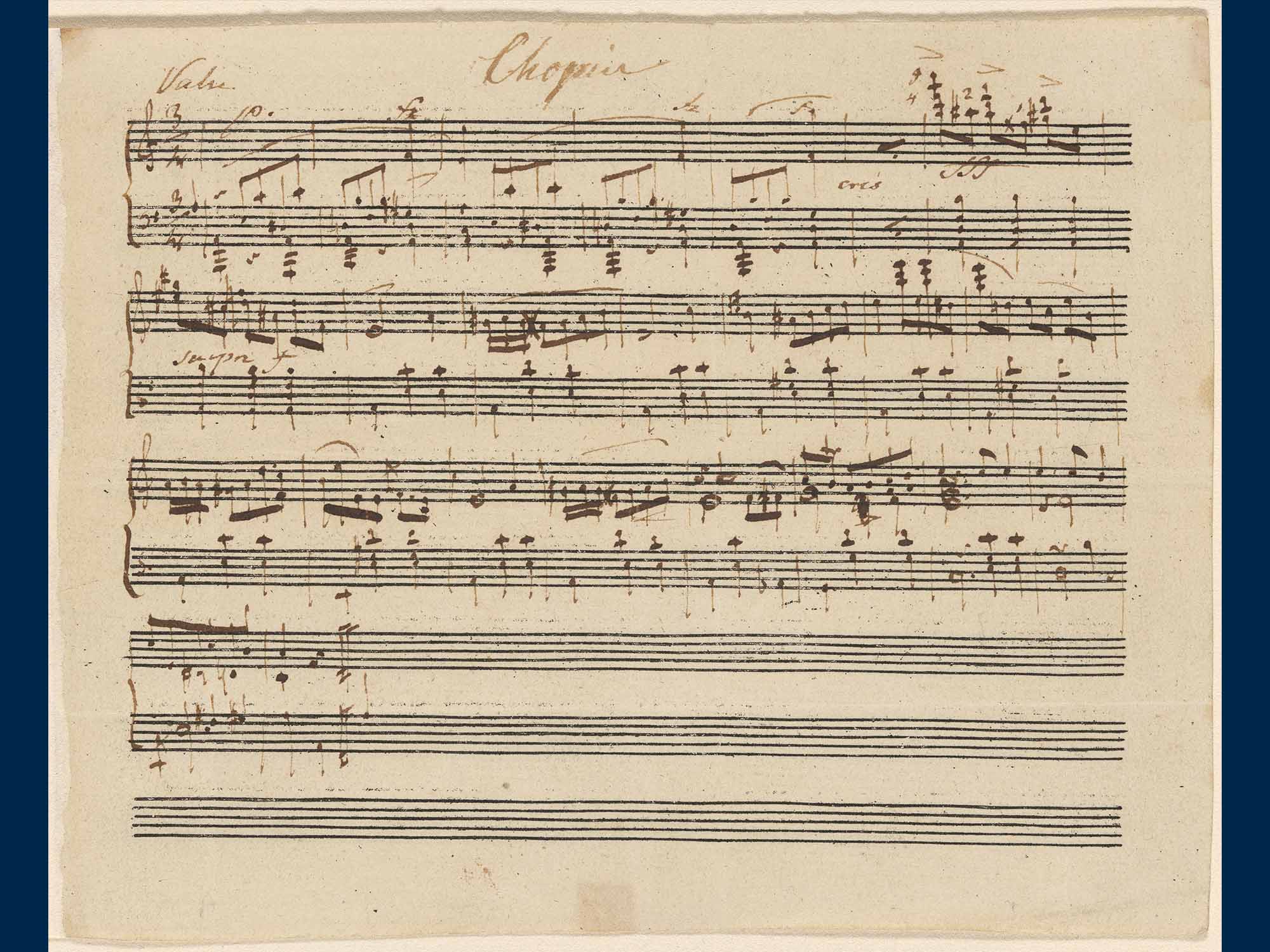
The SMTD Department of Piano recently announced the Chopin Waltz Project, a unique educational initiative to explore one of the most exciting musical discoveries in recent memory: a waltz attributed to Frédéric Chopin, unearthed in 2024 after being unheard for nearly two centuries. This 48-measure piece, dating from 1830–1835 and unearthed at the Morgan Library & Museum, offers a rare opportunity to engage with a work by a major composer that lacks an established performance tradition.
While the discovery of the waltz has generated considerable excitement, some experts have raised questions about its authenticity and completeness. Artur Szklener, director of the Fryderyk Chopin Institute, has expressed doubt that the manuscript represents a complete work, suggesting it is more likely a “sketch of the first musical thought” rather than a finished piece. He does not group it among Chopin’s other waltzes. Additionally, it has been noted that while the manuscript’s paper, ink, and penmanship are consistent with Chopin’s, the name “Chopin” at the top of the page is in a different hand, which adds to the ongoing scholarly debate.
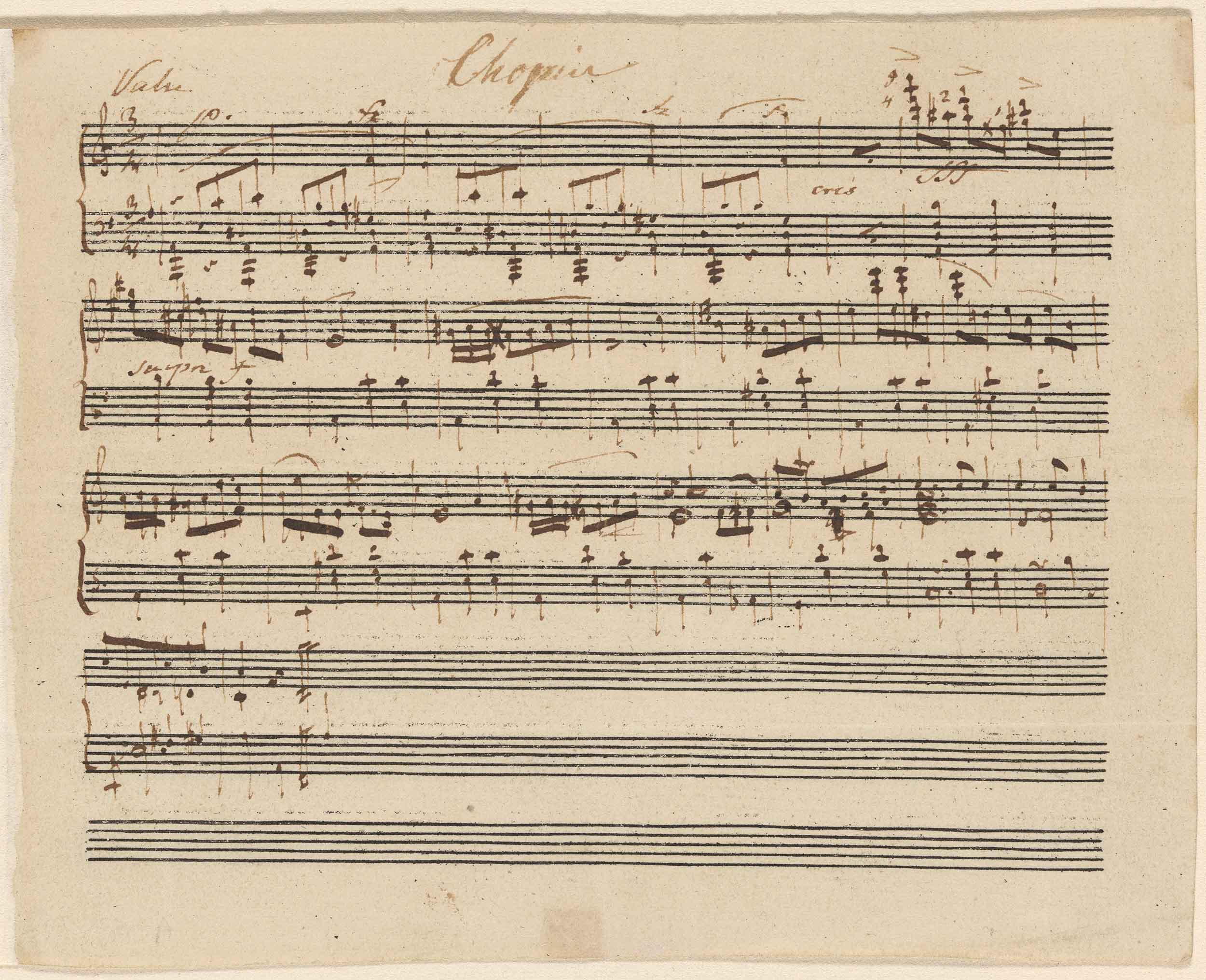
An image of the newly discovered waltz attributed to Frédéric Chopin, held by the Morgan Library & Museum
The Chopin Waltz Project brings together SMTD students and faculty to explore through performance the interpretive possibilities of this historical fragment. Beyond performance, the discovery has inspired new creative works: faculty members Logan Skelton (Artur Schnabel Collegiate Professor of Music in Piano and Arthur F. Thurnau Professor of Music), Arthur Greene (professor of music), and Matthew Bengtson (associate professor of music) have each composed original pieces inspired by the waltz. Further enriching the initiative, project organizer and lecturer Aya Hagelthorn has created her own edition of the score, which is freely available to the public.
The project, housed within the SMTD Piano Literature Corner and Michigan Recording Project, transforms a historical find into a vibrant exploration of interpretation, scholarship, and new creation. It culminates in a rich collection of recorded performances and scholarly interviews, documenting the birth of a new performance tradition while highlighting the department’s commitment to bridging historical scholarship with living artistry. “This project was an invaluable opportunity to bring all of the many talented pianists we have here at Michigan together,” said Christopher Harding, professor and chair of the Department of Piano, “to engage as a group with an exciting moment in pianistic history, with an intriguing and engaging piece of work very possibly by one of our dearest composers. I am so grateful to Professors Bengtson and Hagelthorn for their work in making this happen.”
Interpreting History, Inspiring Creativity
This waltz manuscript offers a fascinating glimpse into Chopin’s early creative mind. The piece reveals a composer in his early twenties blending the turbulent, dissonant harmonies of its opening with the melodic grace and elegant embellishments that would become his signature. For performers and scholars, it’s a thrilling addition to the Romantic repertoire – a piece of history waiting to be brought to life.
The Department of Piano has embraced this work as a unique pedagogical tool. With no established performance tradition to follow, students and faculty were challenged to become musical pioneers, developing their own interpretations from scratch. This process fosters deep analytical skills and encourages a direct, personal dialogue with the composer’s text.
The project’s scope quickly expanded from interpretation to inspiration. The waltz’s brevity suggested to our faculty that it might be a fragment of a larger idea, prompting them to compose their own original works. Skelton, Greene, and Bengtson created new pieces that imaginatively extend Chopin’s musical language. Hagelthorn’s performance-ready edition of the score invites musicians everywhere to join in the discovery.
This initiative powerfully demonstrates how historical scholarship can serve as a catalyst for contemporary artistry.
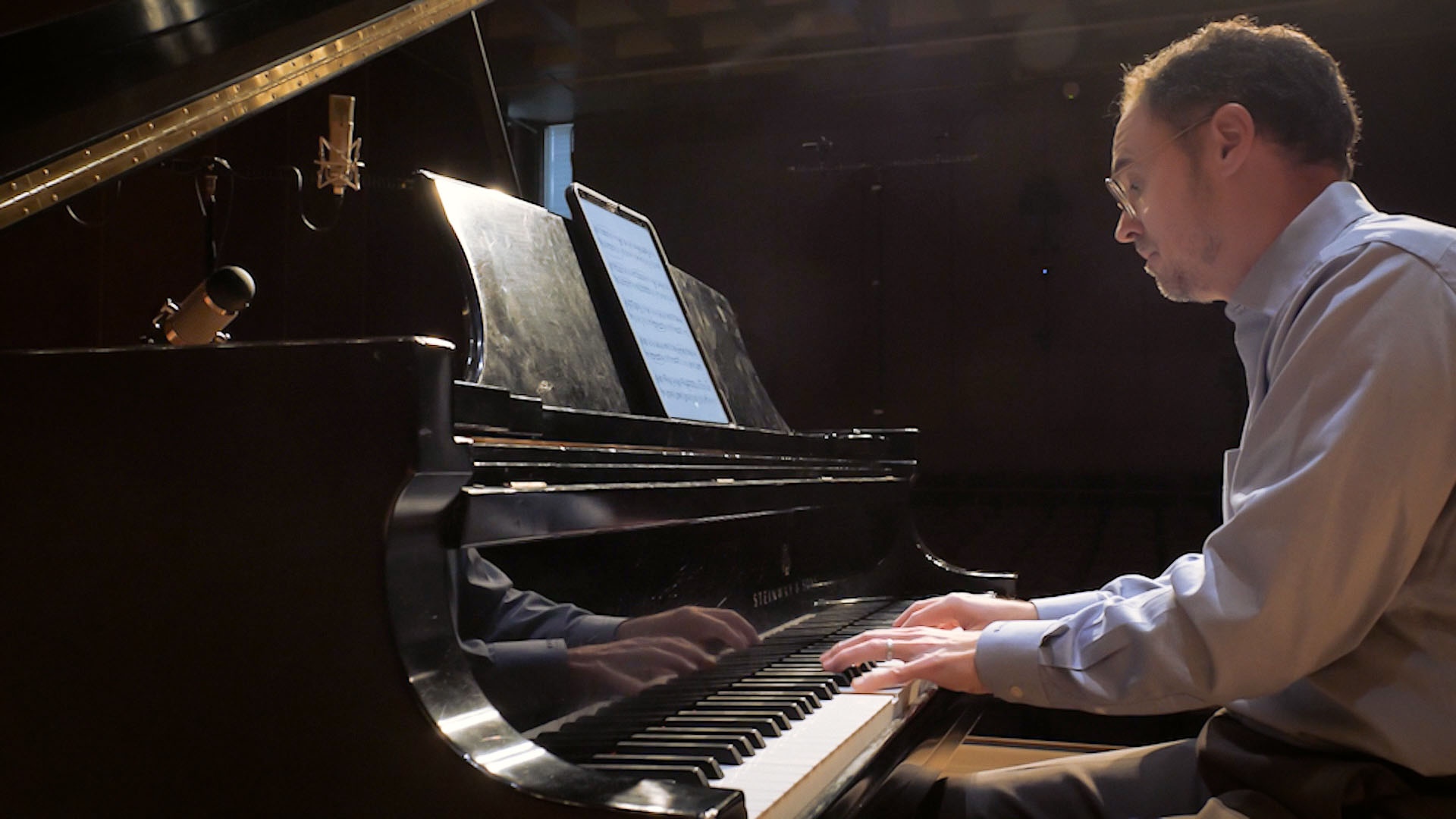
Matthew Bengtson performing his new work composed in response to the Chopin waltz
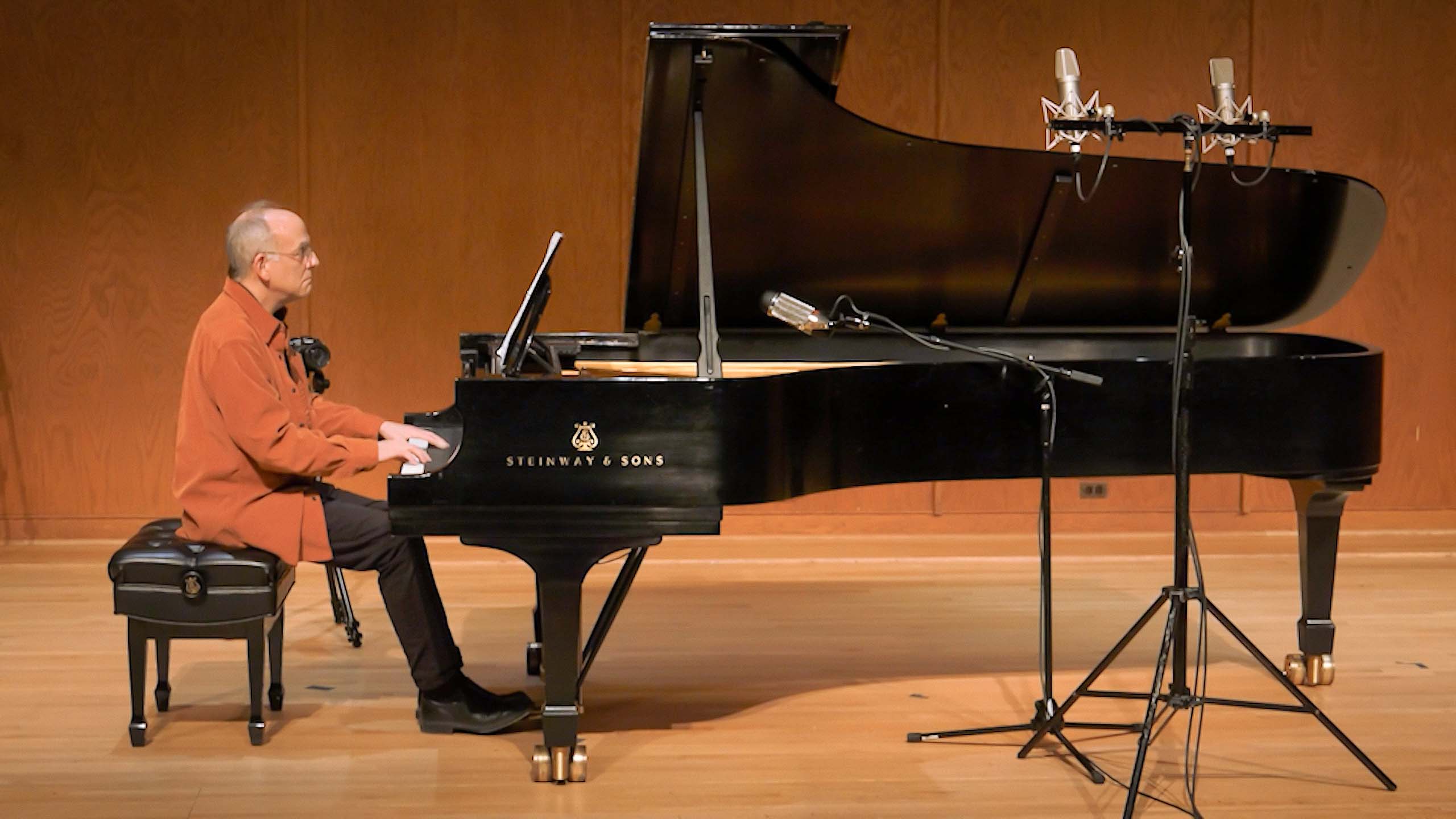
Logan Skelton performing his newly composed piece inspired by the Chopin waltz
A Living Archive for Future Musicians
The Chopin Waltz Project is meticulously documented in a comprehensive video archive, produced by Dave Schall (MM ’98, bassoon) of Dave Schall Acoustic. This collection serves as a permanent educational resource, offering a multi-faceted look at how today’s musicians approach a “new” work by a canonical composer. The recordings, which also include multiple performances of the newly composed pieces, are organized into dedicated playlists, allowing viewers to explore the diverse artistic voices within the SMTD community.
- Faculty Performances: Interpretations from Matthew Bengtson, Amy Cheng, John Ellis, Arthur Greene, Aya Hagelthorn, Christopher Harding, Elena Lacheva, Ana María Otamendi, and Logan Skelton.
- Student Performances: A showcase of the talented emerging artists in the piano department.
- New Compositions: Original works inspired by the Chopin fragment from Skelton, Greene, and Bengtson. Separate playlists are available showcasing these pieces.
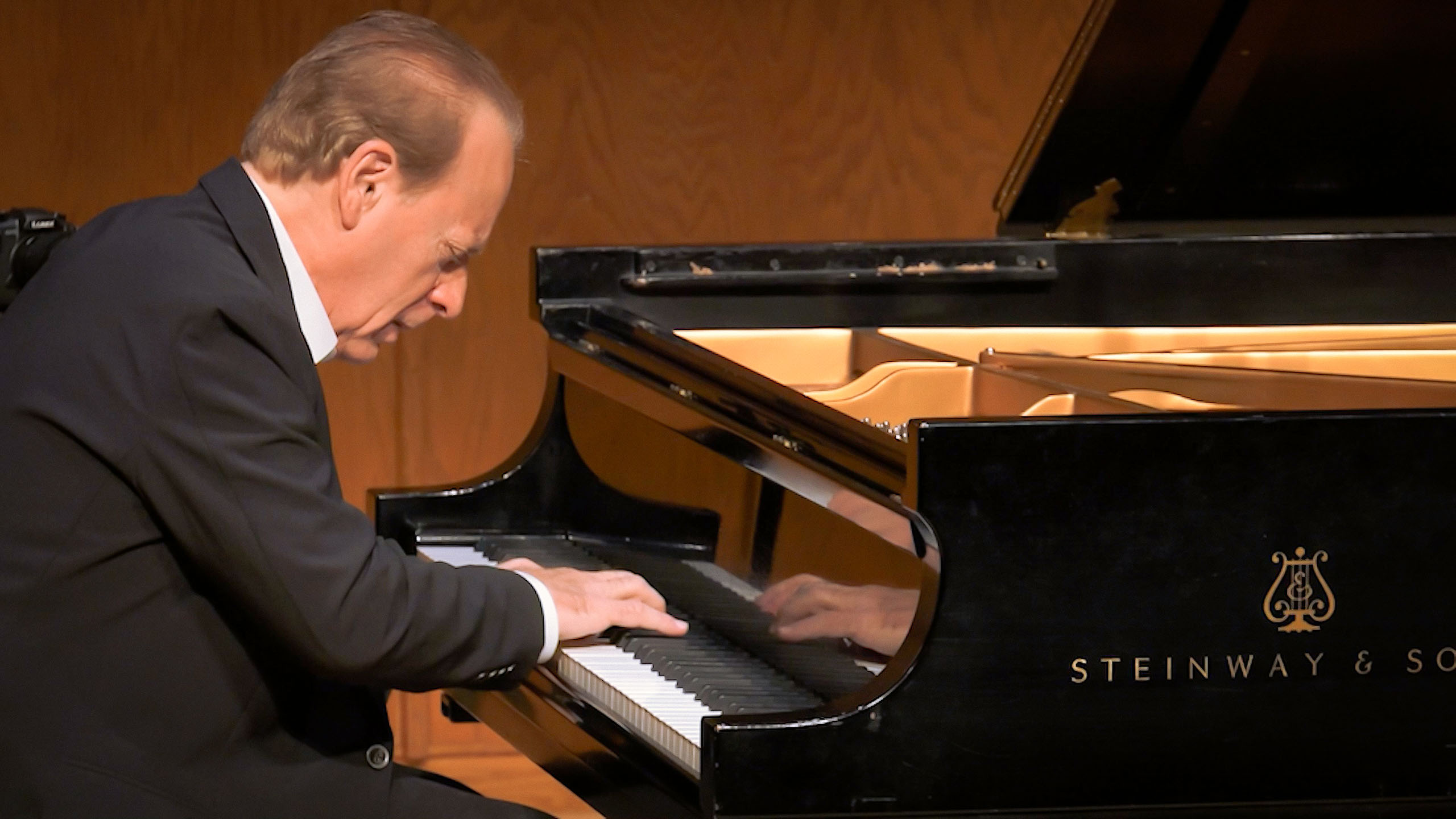
Arthur Greene performing his new improvisational work inspired by the Chopin waltz
This living archive provides invaluable material for anyone studying performance practice, composition, or Chopin’s legacy. As part of the Michigan Recording Project (MRP) – an initiative dedicated to recording and preserving rarely performed piano repertoire – the Chopin Waltz Project perfectly embodies the spirit of exploration and scholarly excellence that defines our school.
Videos of Faculty Presentations of Chopin’s Newly Discovered Waltz and Performances of Their Original Works
Matthew Bengtson – Valse mélancolique (aprés Chopin)
Arthur Greene – Waltz-Fantasy