

A new book by Amy E. Hughes, professor of theatre & drama at SMTD and a faculty associate of American culture at LSA, has been published by the University of Michigan Press. An Actor’s Tale: Theater, Culture, and Everyday Life in the Nineteenth-Century United States was released in September 2025. In October, BroadwayWorld featured An Actor’s Tale in their roundup of “25 Theater Books for Your Fall 2025 Reading List” and American Theatre magazine shared an excerpt from Hughes’s introduction to the book.
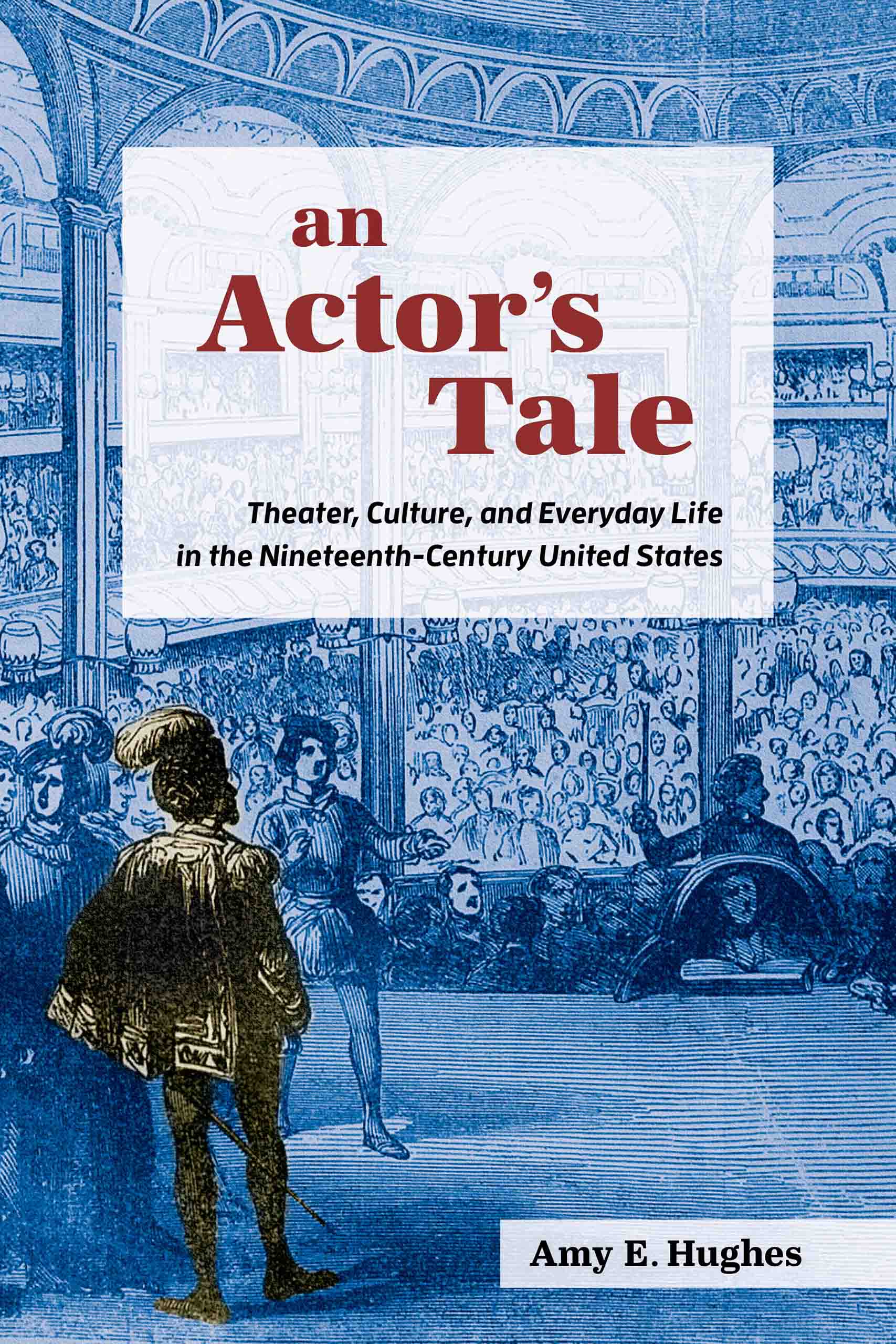
Amy Hughes book An Actor’s Tale
Hughes is a theatre historian whose research focuses on theatre and performance in the United States during the nineteenth century. An Actor’s Tale has garnered positive reviews, with Robin Bernstein of Harvard University describing it as “lively, innovative, spectacularly well-researched”; Kim Marra of the University of Iowa praising it as “extraordinarily prismatic and provocative”; and Heather S. Nathans of Tufts University applauding it as a “marvelously readable new microhistory.” Charlotte M. Canning of the University of Texas at Austin concluded, “the book is sure to appeal to a broad range of readers and be accessible to anyone interested in the experiences of an ordinary person who happened to make their living as an actor.”
The University of Michigan Press offers this description of An Actor’s Tale:
Harry Watkins was no one special. During a career that spanned four decades, this nineteenth-century actor yearned for fame but merely skirted the edges of it. He performed alongside the brightest stars, wrote scores of plays, and toured the United States and England, but he never became a household name. Inspired by this average performer’s life and labor, An Actor’s Tale offers an alternative history of nineteenth-century theater, focusing on the daily rhythms and routines of theatrical life rather than the celebrated people, plays, and exceptional events that tend to dominate histories of US theater and performance. In the process, Hughes asks uncomfortable questions about the existence, predominance, and erasure of White male mediocrity in US culture, both in the past and present. When historians focus only on performers and plays with artistic “merit,” what communities, perspectives, and cultural trends remain invisible? How did men like Watkins advance themselves professionally, despite their mediocrity? Why did men like Watkins embrace and perpetuate myths like the American Dream, the “self-made man,” and meritocracy, and how have these ideals shaped casting, producing, and celebrity worship in today’s US entertainment industry
Ultimately, Hughes reveals how this actor’s tale illuminates the widespread tendency to ignore, deny, and forgive White male mediocrity in US culture, and how a deeper understanding of people like Watkins can transform our understanding of the past – and our understanding of ourselves.
An Actor’s Tale is available in hardcover and paperback, and as an open-access ebook supported by TOME (Toward an Open Monograph Ecosystem) and by U-M’s College of Literature, Science & the Arts and the Office of the Vice President for Research.