Michigan Muse Fall 2026 > View from the Pond
View from the Pond
A Musical Tribute to H. Robert Reynolds
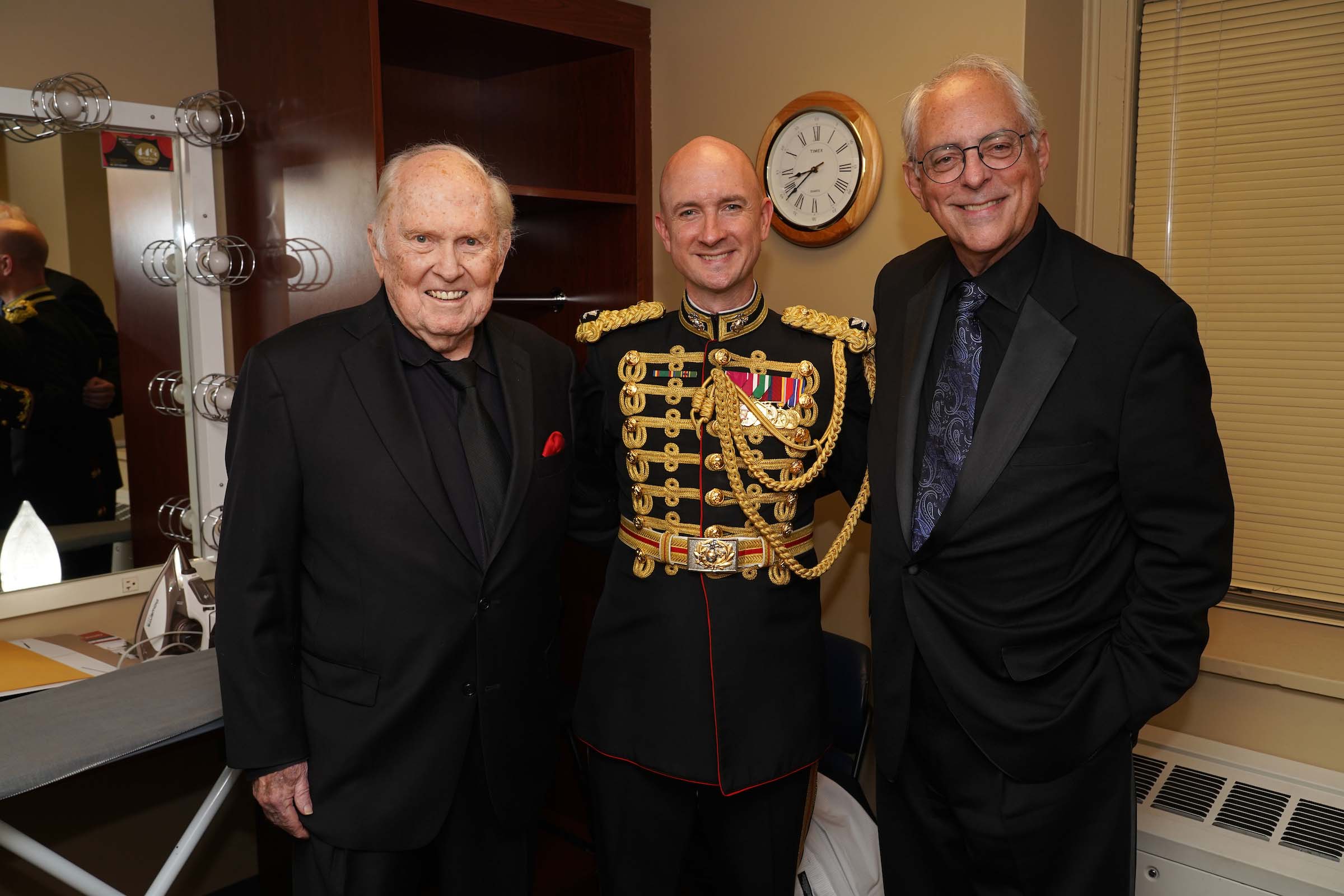
Throughout his life, music – particularly band music – played a monumental role in the life of H. Robert Reynolds (1934–2026). And the legendary conductor and educator in turn had a tremendous impact on the music he loved, and especially on the band program at U-M, where he served as director of bands for more than a quarter-century (1975–2001). So it’s only fitting that the U-M Symphony Band honored Reynolds with the music that he contributed so much to and loved so deeply.
On September 18, the Symphony Band performed “The Road Less Traveled By: A Tribute to H. Robert Reynolds,” a program that included several works that were important to – or exist because of – Reynolds. Professor Jason Fettig, director of bands, chose the title of the program, a line from Robert Frost’s poem “The Road Not Taken,” because Reynolds referenced the poem in the last book he published and because Reynolds, as Fettig stated, “was not your typical band director.” His vision for the U-M band program carried it beyond its marching band origins to more fully embrace symphonic band music. Fettig noted that Reynolds “came to Michigan and changed a lot of the long-standing traditions for the better. He pushed the ball forward with great momentum and great courage at a time when it would have been very easy to just maintain the status quo.”
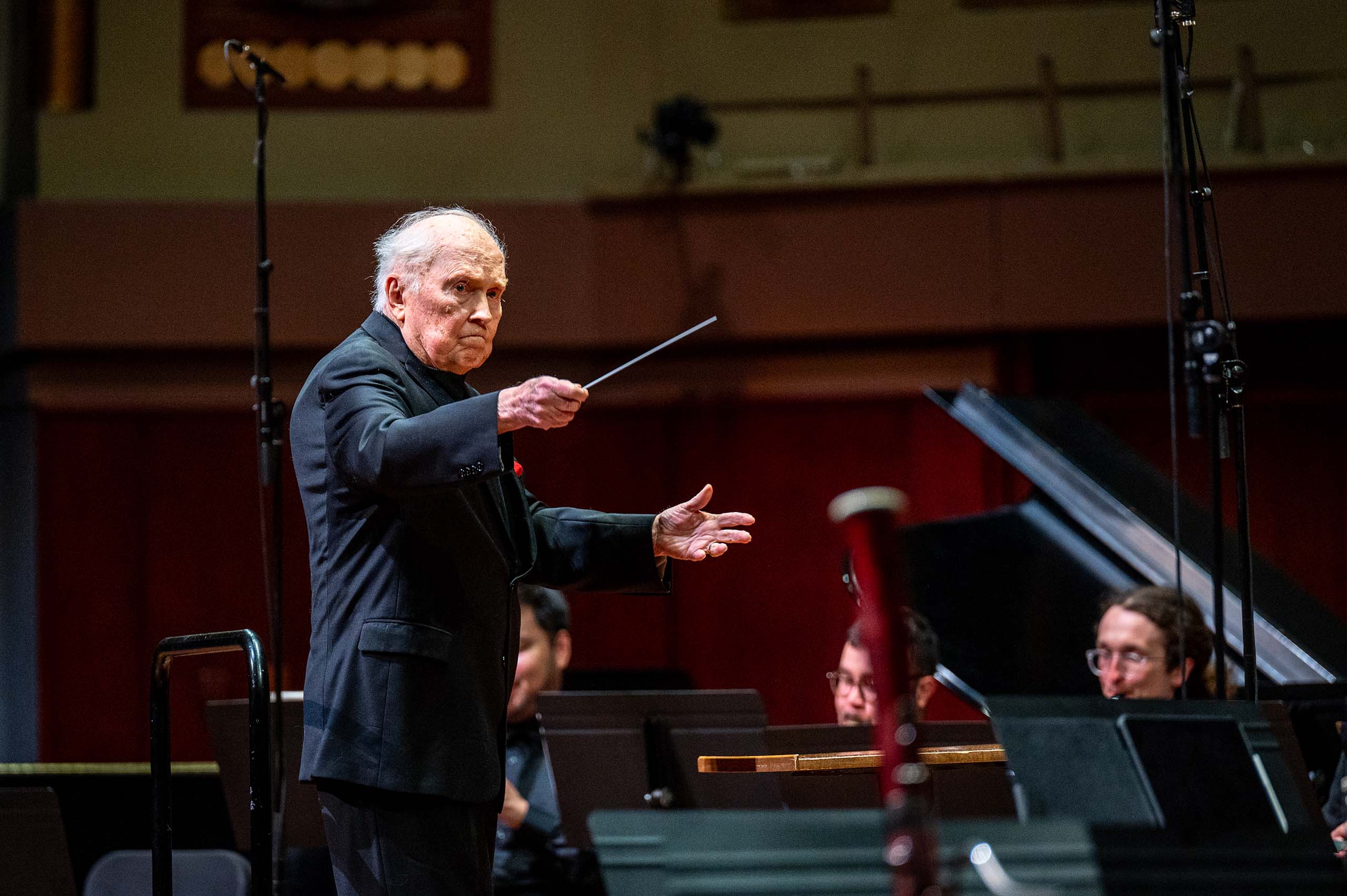
The tribute concert included a mix of classic band repertoire and contemporary works, all of which have a strong connection to Reynolds. The program featured J.S. Bach’s Fervent Is My Longing, transcribed by Lucien Cailliet, one of Reynolds’s favorite Bach chorales. It also included two works by Percy Grainger, Hill Song No. 2 and Lincolnshire Posy, and Gustav Holst’s First Suite in E-flat. The latter two pieces had been performed at Reynolds’s retirement concert in 2001, as were two works from celebrated U-M composition professors: Song for Band by William Bolcom, written specifically for Reynolds’s retirement concert, and Leslie Bassett’s Lullaby for Kirsten, written in 1985 in honor of Reynolds’s youngest daughter.
The tribute concert also featured works that came to be as a direct result of the H. Robert Reynolds Band Commission Fund, which was established by Reynolds from proceeds of the annual Band-O-Rama concert and has contributed substantially to the repertoire of band music. The fund commissioned Elegy by Giovanni Santos, a former student of Reynolds’s during his time teaching at the University of Southern California (USC). Described by Santos as “a musical love letter of appreciation to my mentor,” the work is written for alto saxophone and wind ensemble and received its world premiere at the tribute concert. The saxophone solo was performed by Professor Timothy McAllister, who studied at U-M under Reynolds as both a saxophonist and a conductor. Also on the program was Scott Lindroth’s Spin Cycle, the last commission that Reynolds initiated as director of bands.
In addition to his work as a conductor, Reynolds was an arranger, and the program concluded with one of his most-performed arrangements, O Magnum Mysterium, composed by Morton Lauridsen. O Magnum Mysterium was originally a choral piece, and Reynolds created an arrangement for wind ensemble that Fettig described as “ubiquitous worldwide, one of the most famous choral transcriptions in our entire repertoire.”
Guest conductors at the concert included two of Reynolds’s close colleagues and friends: Craig Kirchhoff, professor emeritus of conducting and director emeritus of university bands at the University of Minnesota, and Carl St. Clair, the longtime music director of the Pacific Symphony and the leader of orchestras at USC’s Thornton School of Music. St. Clair served as assistant director of bands under Reynolds at U-M and in turn hired his mentor to be director of bands at USC after Reynolds retired from U-M in 2001.
Fettig acknowledged the challenge of paying tribute to a figure as influential as Reynolds in a single concert, but, he noted, “I wanted to make sure to represent as much of his musical loves and his musical life as I could.” Fettig described all that he gained from his brief but meaningful friendship with the maestro: “I learned an immeasurable amount about dignity and grace, and about emotional sharing and the value of music. The fact that he was 91 and still loved music just as much as he did when he was a teenager is a testament to who he was, and a testament to the power of what it is that we are so privileged to do.”
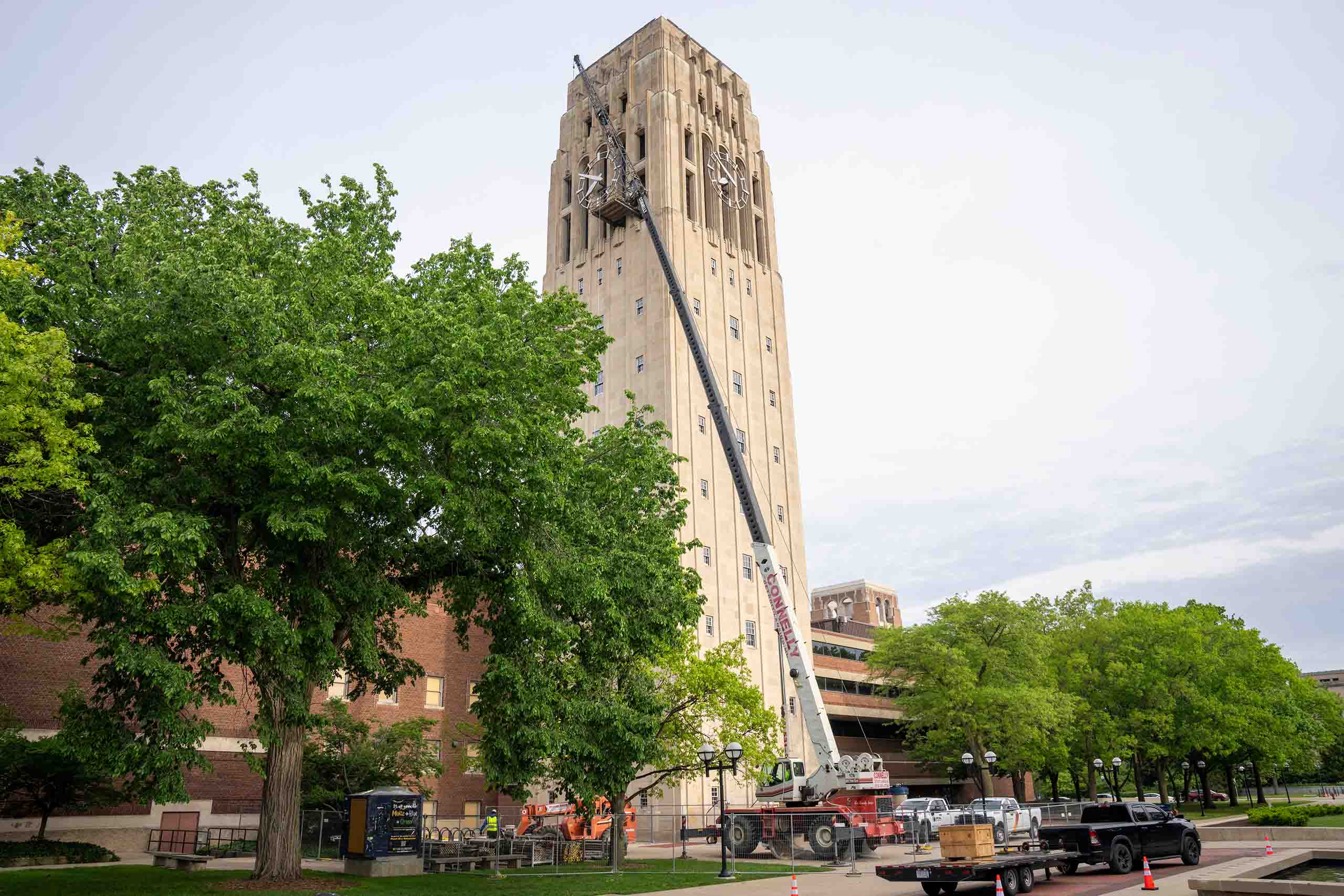
Burton Tower’s 90th Anniversary Celebrated with Renovations
Since its construction in 1936, Burton Memorial Tower has been an iconic structure on the campus of the University of Michigan, standing at nearly 200 feet tall and housing classrooms, faculty offices, and, most notably, the Charles Baird Carillon. As the tower’s 90th anniversary is being celebrated, the carillon has undergone some much-needed renovations.
The carillon, donated by alumnus and former athletic director Charles Baird, is the fourth largest in North America. Cast in Loughborough, England, by renowned bellfoundry John Taylor & Co., the 53 bells of the carillon weigh a total of 43 tons. The largest bell, affectionately nicknamed “Big Baird,” hangs in the southwest side of the belfry and weighs a staggering 12 tons. The lightest bell is tuned four-and-a-half octaves higher than Big Baird and weighs a mere 15 pounds.
In addition to the Westminster Quarters, played automatically by a large, music box–like mechanism at 15-minute intervals throughout the day, a varied carillon repertoire has been performed on the Baird Carillon since 1936 by faculty, students, and guest artists. The carillon’s wooden mechanical-action keyboard comprises a row of baton-like keys that control the clappers inside each bell and a pedalboard that enables movement of the clappers of the larger, heavier bass bells with the feet. The carillonist presses a key with their hand or a pedal with their foot to initiate the mechanism that swings the clapper against the wall of the bell it controls. The resulting strike against the sound bow activates the distinctive multiple overtones of the carillon bell. As the carillonist performs a piece with full-body dexterity, the overtones surrounding each bell’s main pitch overlap and blend, resonant and solemn even when the piece is lively.
One song that was not played on the Baird Carillon for many years is Richard Giszczak’s 1998 arrangement of “The Victors.” During a 2011 restoration of the carillon, the clappers were replaced with what Tiffany Ng, associate professor of music and university carillonist, described as “experimental prototypes of such extreme heaviness that they impeded playability [and] led to broken keys and performance injuries.” The weight of the 2011 clappers meant that “The Victors” and several other works in the carillon repertoire simply could not be played comfortably or safely.
In May 2026, a renovation project began with the removal of 26 of the 30 clappers. In August, removing the remaining – and heaviest – four clappers, including one weighing nearly 1,000 pounds, required a 50-ton rough-terrain crane to bring the music makers safely to the ground.
Ohio-based bell founders and carillon builders Meeks, Watson & Co. oversaw the removal of the existing clappers and created new ones. By the end of August, all of the clappers had been replaced. Many of the new clappers were offset closer to the bell wall to make them easier for the carillonist to control.
The renovations are scheduled to be completed during the fall semester, when once again “The Victors” will ring out across Central Campus from atop the Burton Memorial Tower.
Did You Know: Select carillon concerts are now livestreamed from the Baird Carillon, thanks to a grant from the U-M Arts Initiative to make carillon performances more accessible. Check SMTD’s events calendar for more info!
SMTD Launches the Student Success Office
Community, connection, and free food: these are the mainstays of the new Student Success Office at SMTD. Launched in April 2025, Student Success seeks to nurture the whole student, going beyond traditional measures of achievement to encompass “student well-being, belonging, opportunity, and access to resources,” as outlined in its mission statement.
The Student Success team consists of Caitlin Taylor, program manager, and Shandell Bruu, program coordinator. The genesis of Student Success aligned with a university-wide push, as Taylor noted, “to open up what success looks like” and ensure that students have a clear understanding of the many resources and opportunities available to them.
Student Success works closely with SMTD students to strengthen a sense of community and foster connections – familiar territory for Taylor and Bruu, both of whom previously worked for the Office of Diversity, Equity & Inclusion; Taylor also formerly served as program manager for the EXCEL Lab, SMTD’s home base for entrepreneurship, leadership, and career services.
In its first year, Student Success has launched new initiatives, assumed the oversight of existing ones, and helped to amplify the work being done in other areas of SMTD and across the university.
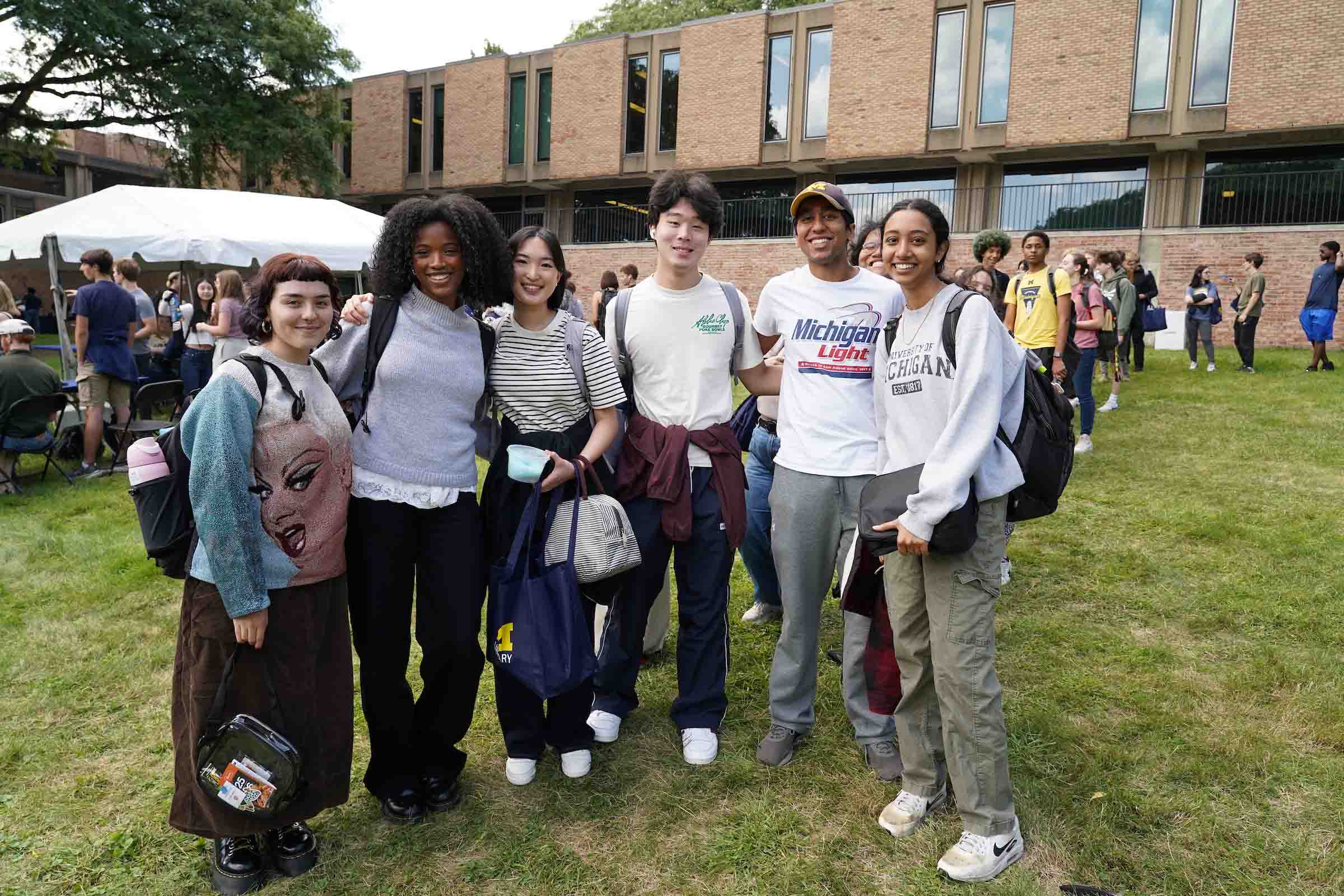
One of its flagship programs is the annual Welcome Back Carnival, held at the beginning of the fall semester. This festive event introduces new and returning students to resources at SMTD and U-M and features crafts, swag, and delicious foods. The Student Success team understands the universal truth that free food is a powerful enticement for students, but it’s just the beginning of what’s offered. “Yes, people come and get a hot dog, and they’re very excited about that,” Taylor noted, “but hopefully they also go to some of the tables and get to talk with people from advising within SMTD, or people from the Trotter Multicultural Center, or folks from different units who are just trying to get information out to our students.”
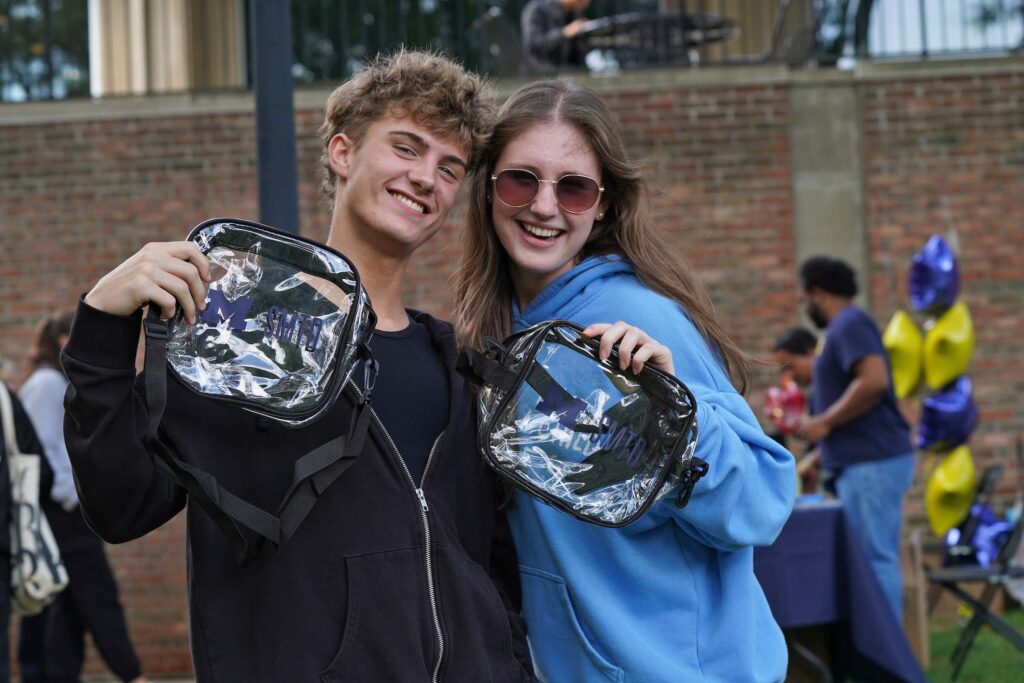
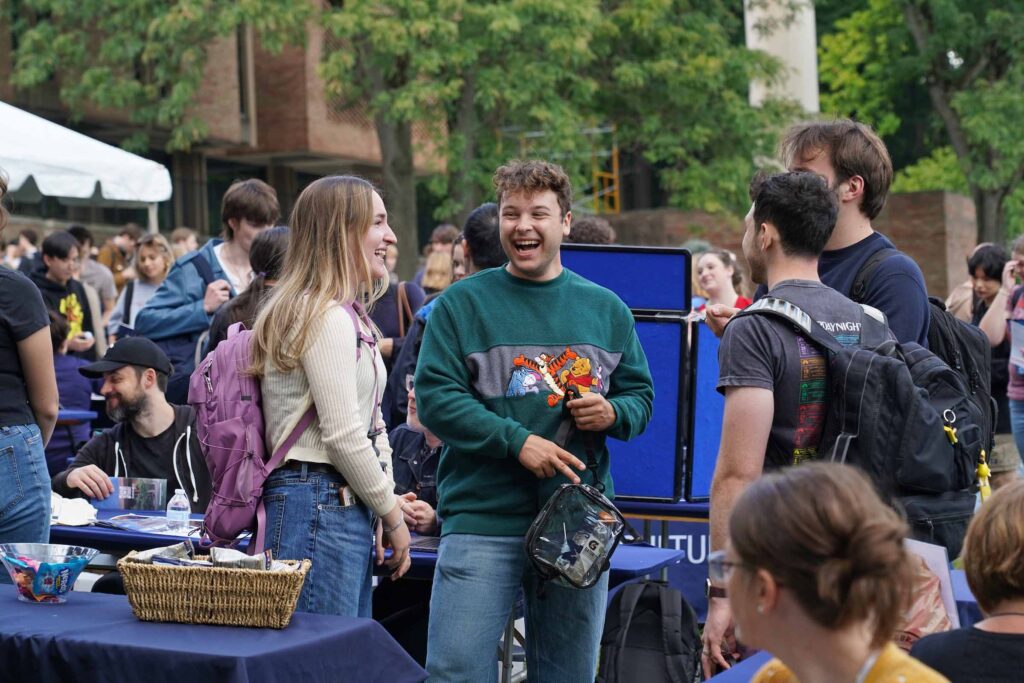
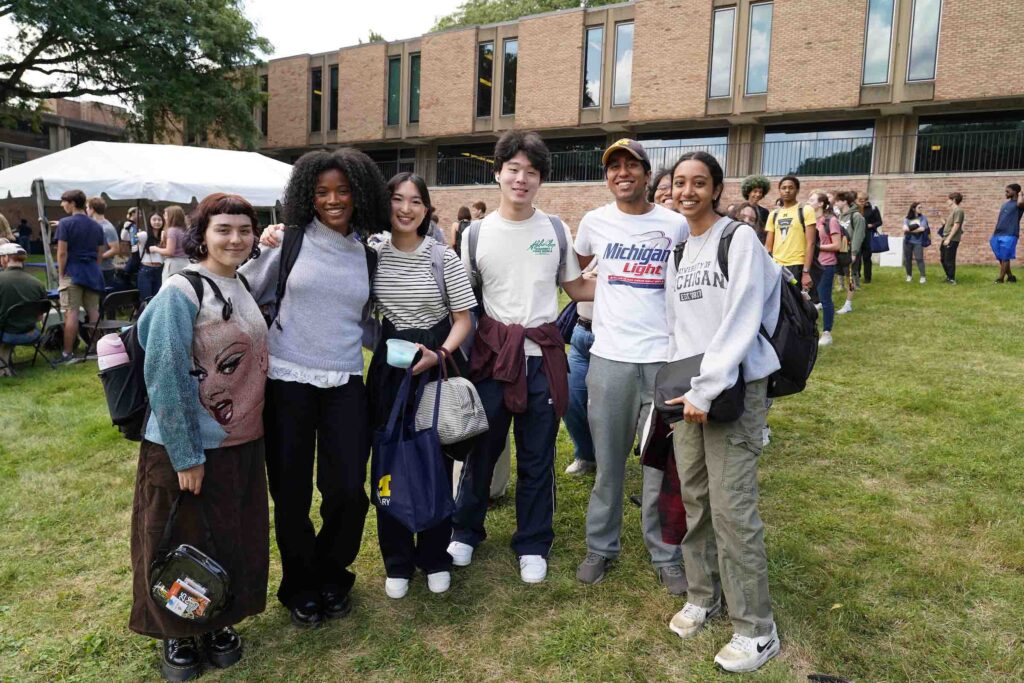
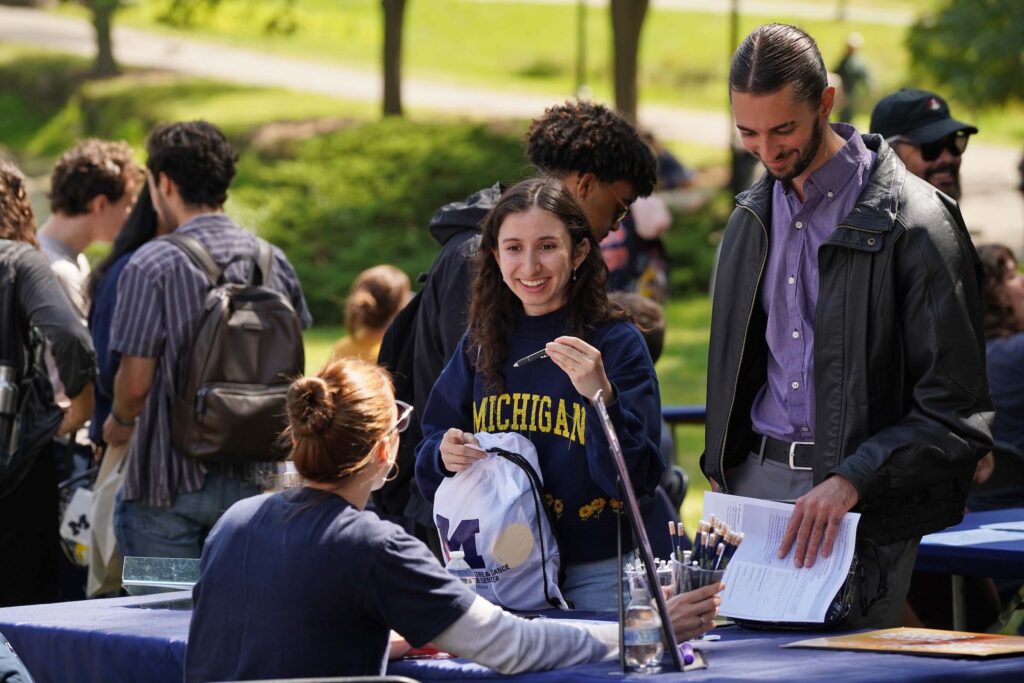
New and returning students gathered at the Welcome Back Carnival, hosted by the Student Success Office, in September 2025. Photos: Peter Smith
A new initiative launched last year, known as dual degree mixers, began at the request of a student pursuing dual degrees and looking to connect with others on a similar path. The mixers offer students opportunities to socialize, share a meal, and swap tips on managing their course load. Student Success has also taken on the management of SMTD’s First Gen Initiative, which offers community-building and a network of support for students, staff, and faculty who are the first in their family to attend a four-year university.
The Student Success team will also oversee the SMTD student government, a representative body that is in the process of re-forming after a hiatus of several years. Taylor will serve as the student government’s advisor, and both Taylor and Bruu will help behind the scenes by reserving rooms, facilitating the group’s operations, and of course, ordering food for its meetings.
Aiding students in their quest for success takes many forms, and one that the team is particularly proud of is the SMTD Performance Shoe Closet, where students can obtain free dress shoes for performances, recitals, or events. When meeting with students to assess their individual needs, Taylor and Bruu have used those opportunities to direct students not only to SMTD resources like the Performance Shoe Closet, but also to U-M resources like the University Career Center’s Clothes Closet, which provides business attire for students to wear for job interviews, and the Maize & Blue Cupboard, a free resource to alleviate food insecurity.
Whether it’s creating community, fostering connections, or raising awareness about resources, the Student Success team is devoted to helping students in myriad ways. As Bruu stated, “It’s just us being able to connect with our students, to let them know we care and we’re here to support them any way that we can.”
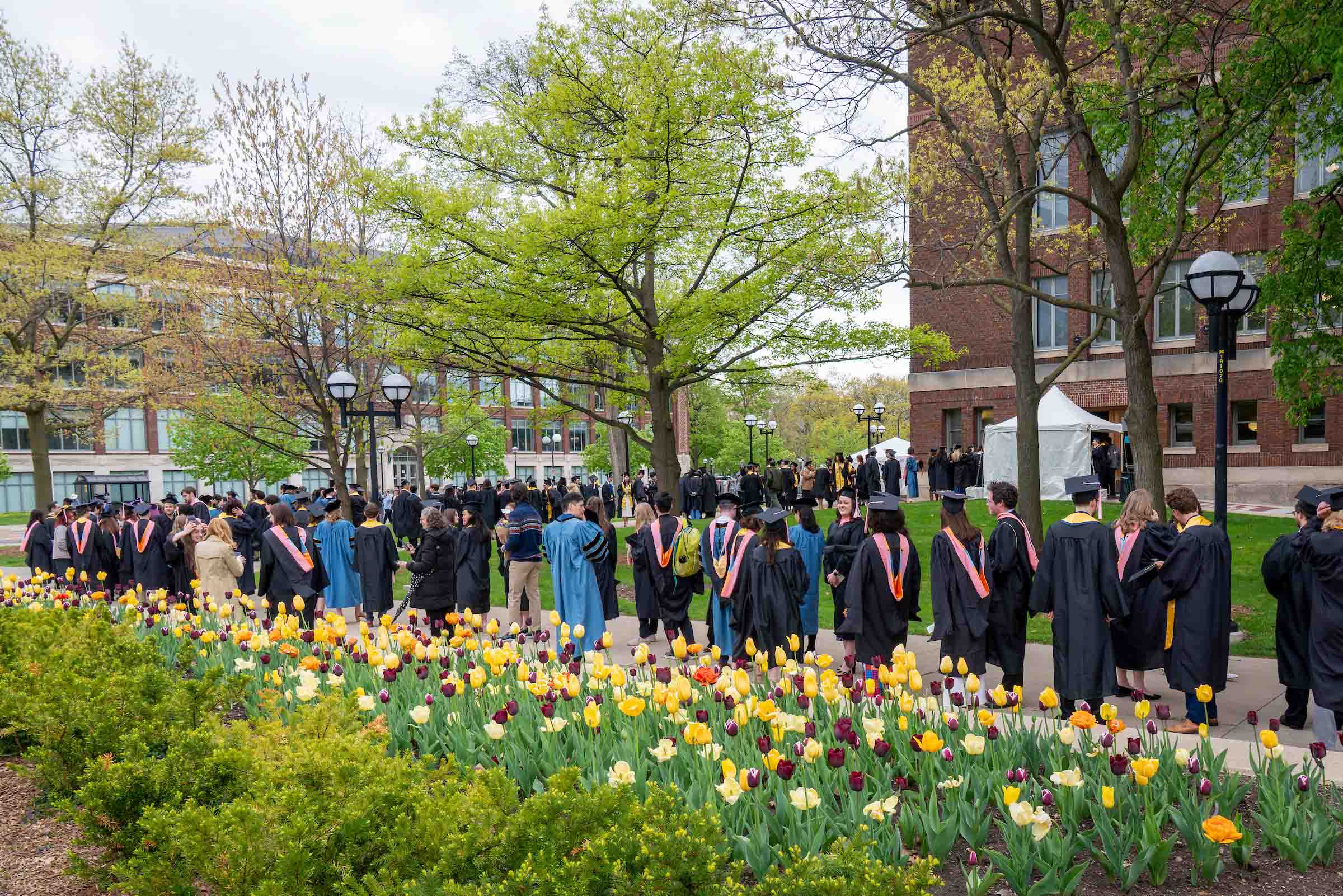
Spring 2026 Commencement Launches a New Class of SMTD Graduates
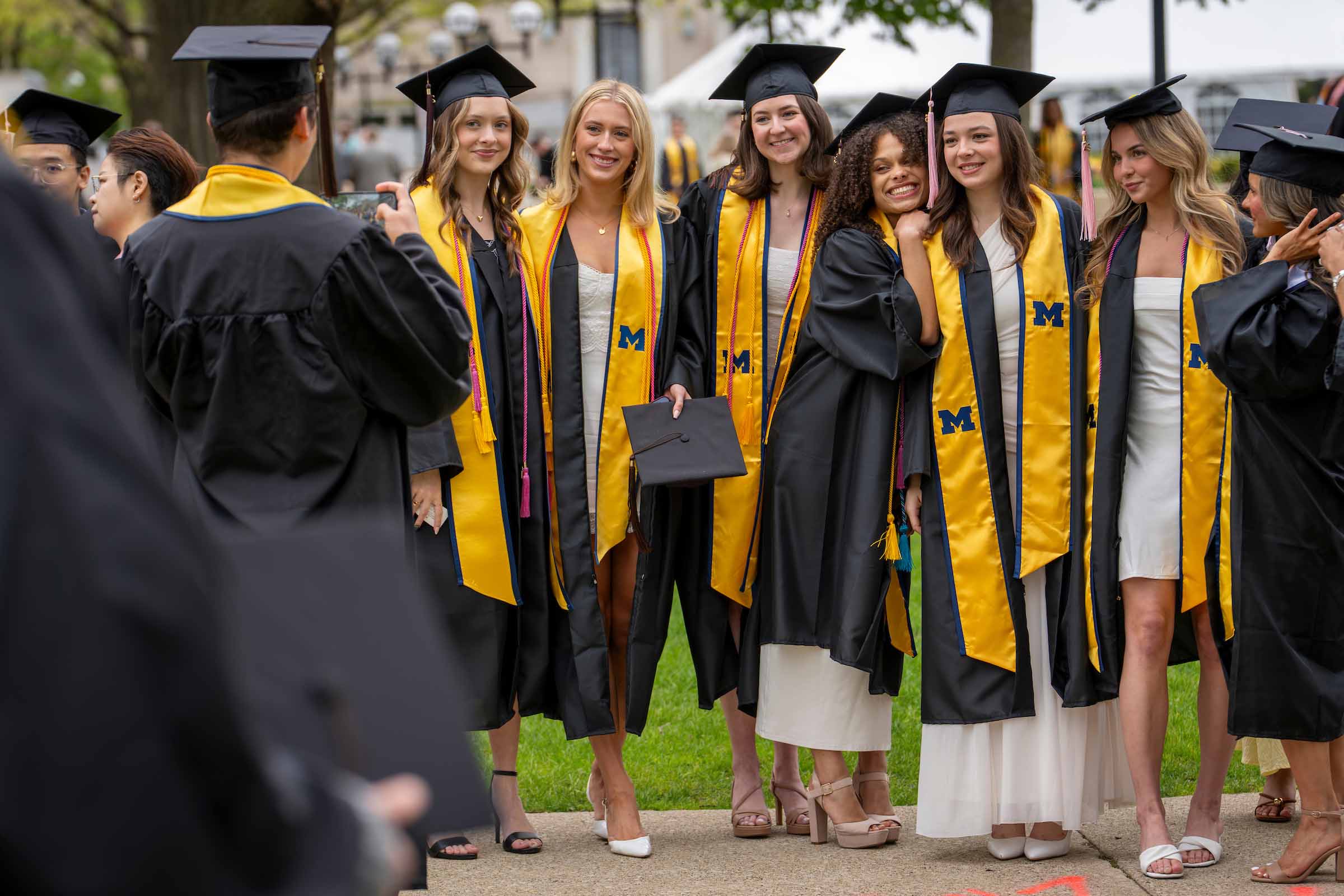
For School of Music, Theatre & Dance students, commencement marks both an ending and a beginning, celebrating years of learning, training, performing, and building friendships that will last a lifetime.
On Friday, May 1, the SMTD Spring Commencement ceremony honored the achievements of all graduating students and featured performances by the 2026 commencement award winners:
- Lleyton Allen (BFA, musical theatre): Earl V. Moore Award, Musical Theatre
- Angela Bonello (MM, voice): Earl V. Moore Award, Music
- Kiana “KC” Cook (MFA, dance): Willis Patterson Award
- Anda Jiang (BM, violin): Stanley Medal
- Mary-Kate Mahaney (BFA, theatre & drama: acting): Earl V. Moore Award, Theatre & Drama
- John Solari (MM, chamber music; DMA, piano): Earl V. Moore Award, Music
- Kaitlyn Wilson (BFA, dance): Earl V. Moore Award, Dance
Grammy-nominated composer Carlos Simon (DMA ’17) served as guest speaker. With acclaimed works ranging from concert music for large and small ensembles to film scores, Simon composes music that reflects influences of jazz, gospel, and neo-romanticism. Named composer-in-residence for the John F. Kennedy Center for the Performing Arts in 2021, he was also recently announced as composer-in-residence for the Concertgebouw in Amsterdam, and he holds the position of Composer Chair of the Boston Symphony Orchestra, the first in the institution’s 143-year history.
In his speech, Simon acknowledged that graduating is exciting and also a bit scary. He noted, though, that students have more support than they may realize. “Some of you may feel like you’re late and you have to make up for lost time,” he said. “Or even with this degree you may still feel you have so much more work to do, and you’re worried that you’re not ready to be in the real world. But guess what? You’ve got some tailwinds behind you. You’ve got some ancestors pushing you, you’ve got family encouraging you, you’ve got some friends saying, You got this!”
Student speaker Kristabel Kenta-Bibi (BFA, musical theatre) acknowledged the hard work, discipline, and talent that brought her and her fellow students to graduation day. She shared that such an achievement also relied on a bit of magic and “the belief in something like a fairytale. Not the glass slipper kind, but the idea that life can be outstanding, and that we, as artists, can be the heroes of our own stories.”
She asked her classmates to consider, in their future work, how they want their audiences to feel: “Do you want to inspire wonder? To spark joy? To challenge, to disrupt, to heal, to educate? Think about the moments that made you fall in love with art in the first place. That is the power we carry: not just to entertain, but to remind people of their own humanity. And that, my fellow graduates…that is the closest thing to magic we have.”