
Michigan Muse Spring 2026 > Passing the Baton: Music Ed Graduates Help the Next Generation of Students Achieve Their Potential
Passing the Baton: Music Ed Graduates Help the Next Generation of Students Achieve Their Potential
By Claudia Capos
Growing up in the small town of Rowley, Iowa, Lauren Troutman (BM ’26, saxophone performance, music education) remembers that her early love of music and playing the saxophone was sparked by her mother, who had majored in saxophone performance at a state university.
Troutman’s elementary and high school band directors broadened her horizons and inspired her to become a music educator. “They had a significant impact on my development as a musician and a person, and I wanted to be just like them when I grew up,” Troutman said. “I was further motivated in high school when I started taking on leadership opportunities in the band and teaching private lessons to beginning students.”
After considering several universities that offered undergraduate K-12 music education programs, Troutman chose the University of Michigan School of Music, Theatre & Dance. “I was attracted to Michigan, which enabled me to pursue my love for teaching and performing,” she said. “I feel the best teachers are those who are experts at their craft, so it’s been amazing to work with incredible faculty in both disciplines.”
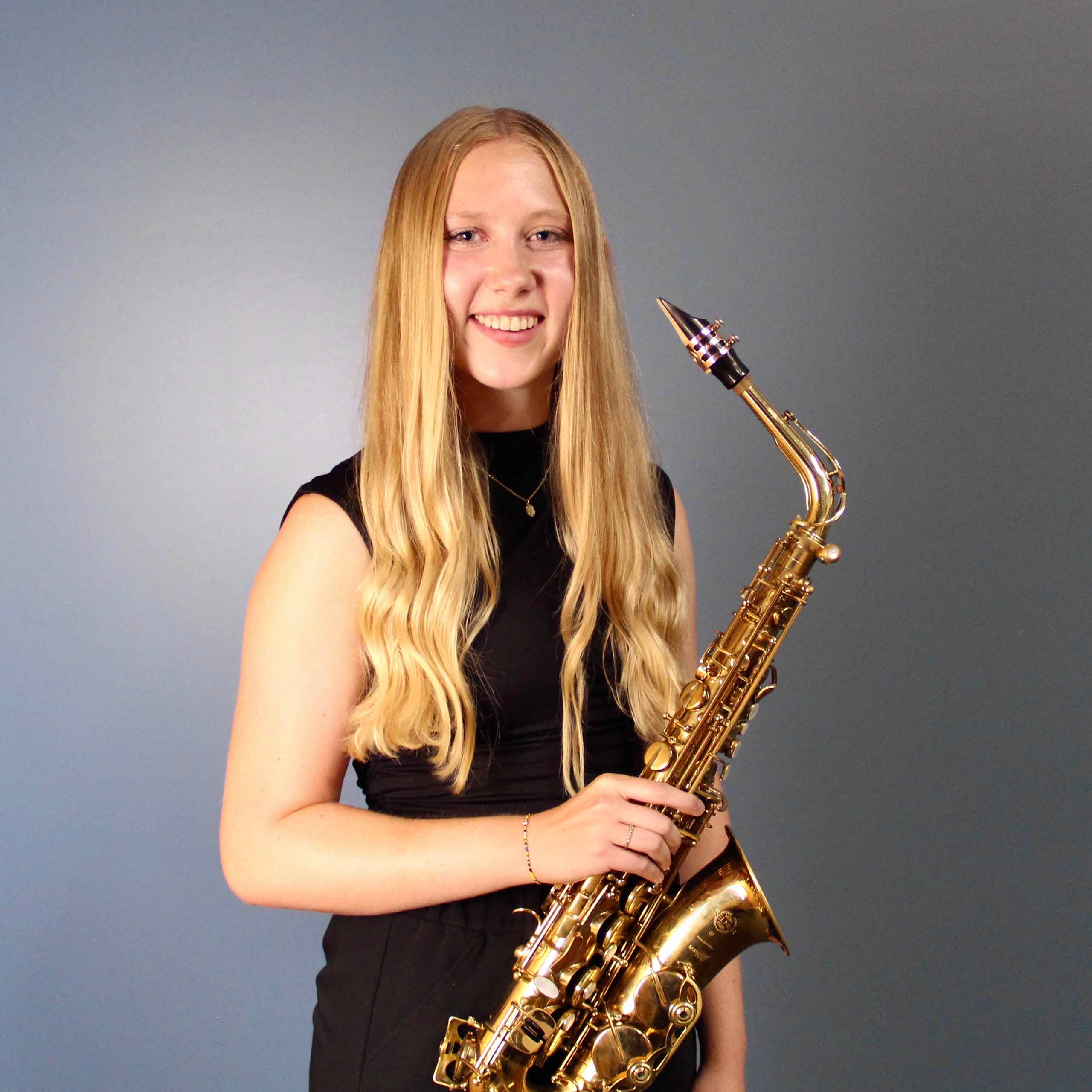
Lauren Troutman
One of her classmates, Ryan Lofland (BM ’26, tuba performance, music education), came from quite a different background. No one in his family was a musician or a teacher. “It was quite a wildcard to my family when I decided I wanted to be in the band,” recalled Lofland, who is from Woodstock, Georgia. “I have always loved school, so when I was deciding what to study in college, I thought, why not major in something that combines school, music, and teaching.”
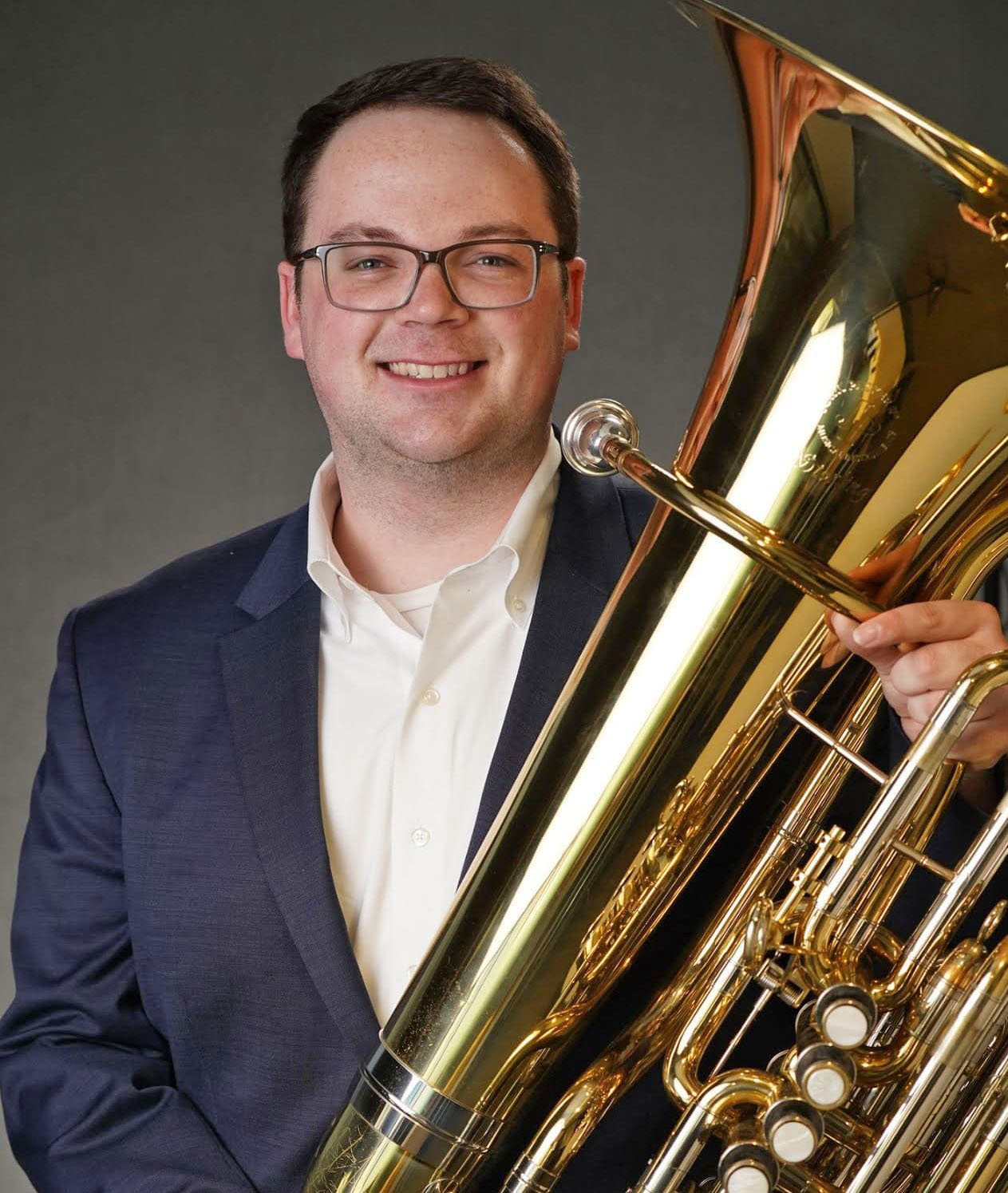
Ryan Lofland
SMTD’s dual degree in music education and performance filled the bill by combining extensive courses and fieldwork for aspiring music teachers with a conservatory-style environment for young performing artists. “I wanted to have strong skills as both a future music educator and a performer, so I knew SMTD was the program I wanted to be in,” Lofland said.
This year, Troutman and Lofland will join the ranks of thousands of U-M graduates who, over the past six decades, have earned their undergraduate and/or graduate degrees from SMTD’s Department of Music Education, one of the nation’s premier programs in music education.
“At SMTD, we are preparing our graduates to help the next generation of children achieve their musical potential,” said Michael Hopkins, professor of music and chair of music education. “It is important work, because music is so central to who we are as human beings.”
Building Blocks of Music Education
To be accepted into the music education bachelor’s degree program, prospective students, drawn from across the country and around the world, must play a musical instrument or sing. Once admitted, they acquire the building blocks of music education through a four-year, step-by-step process spanning their freshman through senior years.
“Music education is a complicated degree, so we try to work closely with our students to guide them through the program,” Hopkins explained. First-year students and sophomores take a variety of introductory music education courses. Those who have selected the instrumental track for their bachelor’s degree are taught the techniques for learning to play instruments from the various families, including strings, woodwinds, brass, and percussion. Classmates who have opted for the vocal track take courses in diction and music technology along with piano lessons and instruction on playing string instruments.
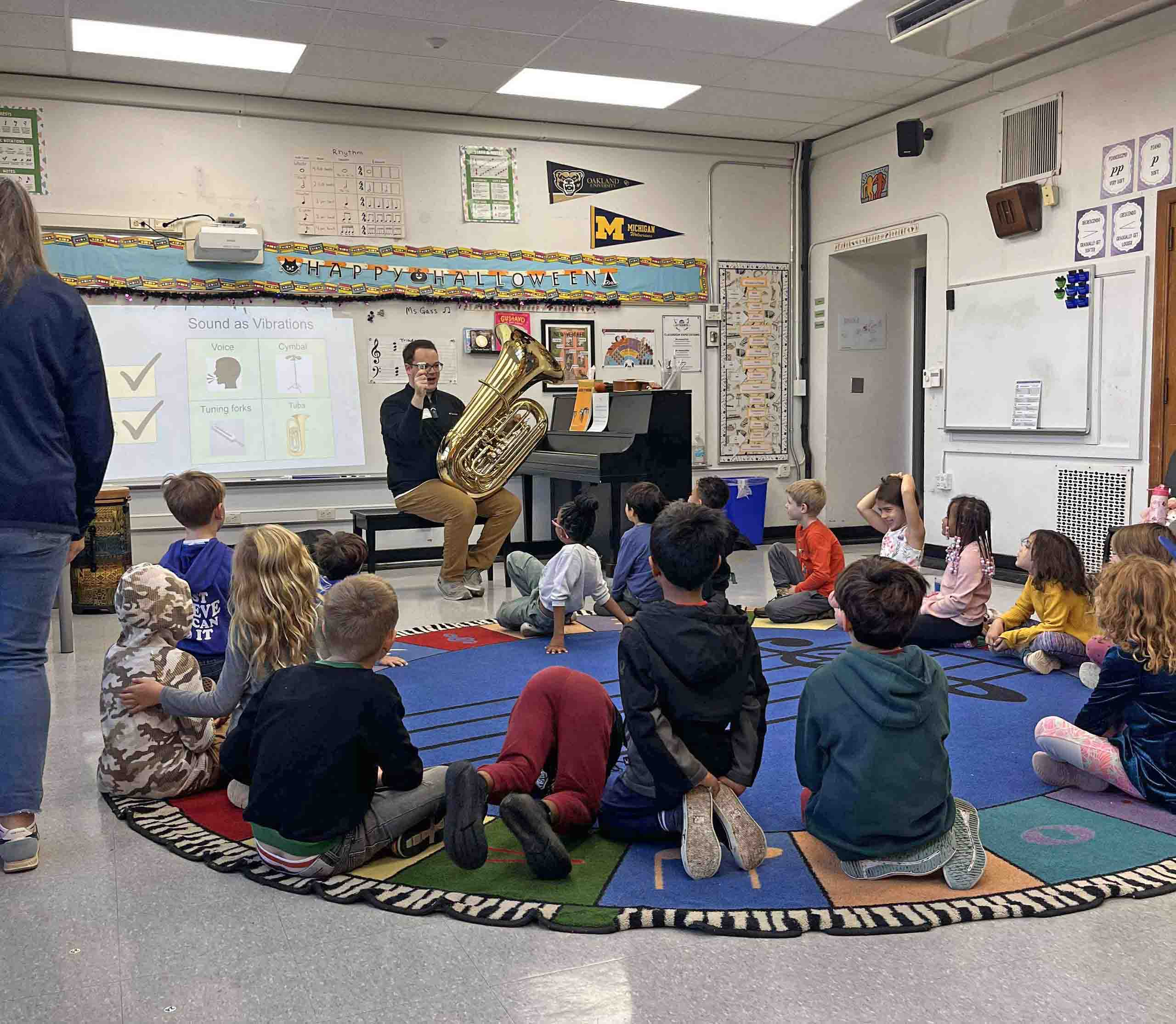
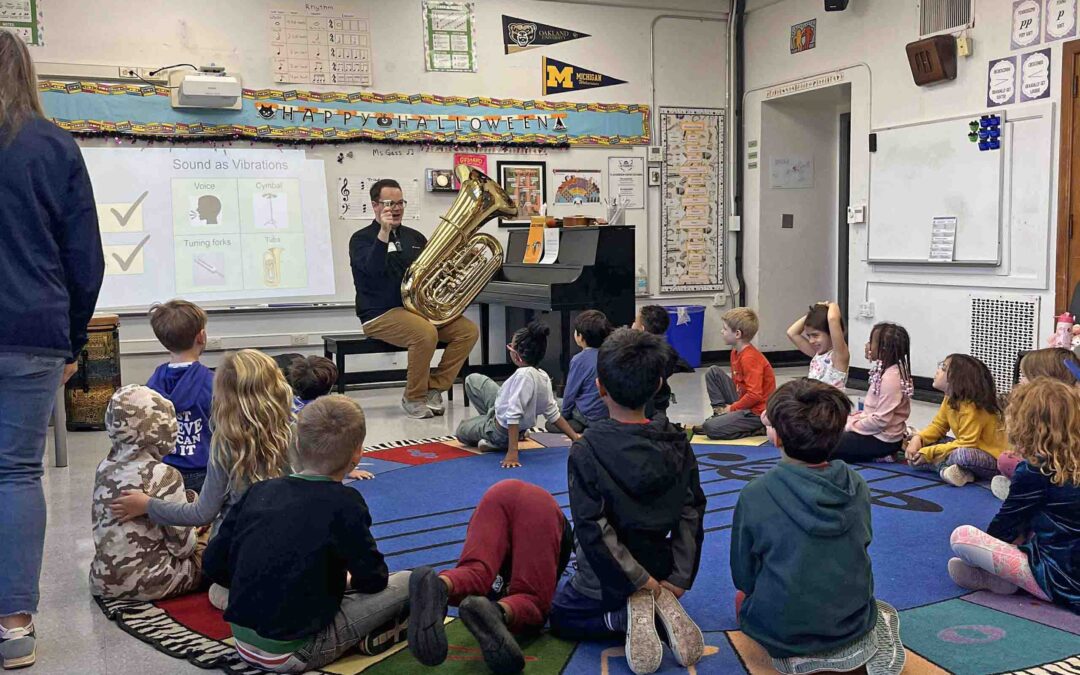
Ryan Lofland working with students at Ann Arbor STEAM at Northside, a K-8 school
All students are required to log 60 hours of work experience with children at school music programs, summer camps, and other venues during their first two years. At the end of their sophomore year, students must be admitted to the Teacher Certification Program at the U-M School of Education, which administers recommendations for licensure to the Michigan Department of Education.
Juniors and seniors take professional-track courses to develop conducting skills, learn to select appropriate music, write lesson plans, and acquire classroom management strategies. Each week, they fan out to area K-12 schools to gain fieldwork experience in classrooms under the guidance of music teachers and mentors.
In their senior year, students take the Michigan Test for Teacher Certification. They must pass both a music test and a professional knowledge and skills test to get a recommendation for licensure. (At the University of Michigan’s Ann Arbor campus, teaching certification is offered in instrumental and vocal music, but not in dance, theatre, or art.)
The bachelor’s degree program culminates in a full semester of student teaching at an elementary or high school. “Fieldwork has been most helpful in preparing me for a future career in music education,” Troutman said. “I had the opportunity to work with real students in grades K-12 and practice the skills I learned in class.” Lofland agreed that fieldwork courses, which offered him teaching opportunities at elementary, middle, and high schools, bolstered his professional and soft skills as a teacher.
Hopkins reported that SMTD has a 100 percent job placement track record for its graduates who seek teaching positions in K-12 schools. “Anyone who graduates with a music education degree from the University of Michigan is well-prepared to be successful in their first year of teaching in a public-school setting,” he said.
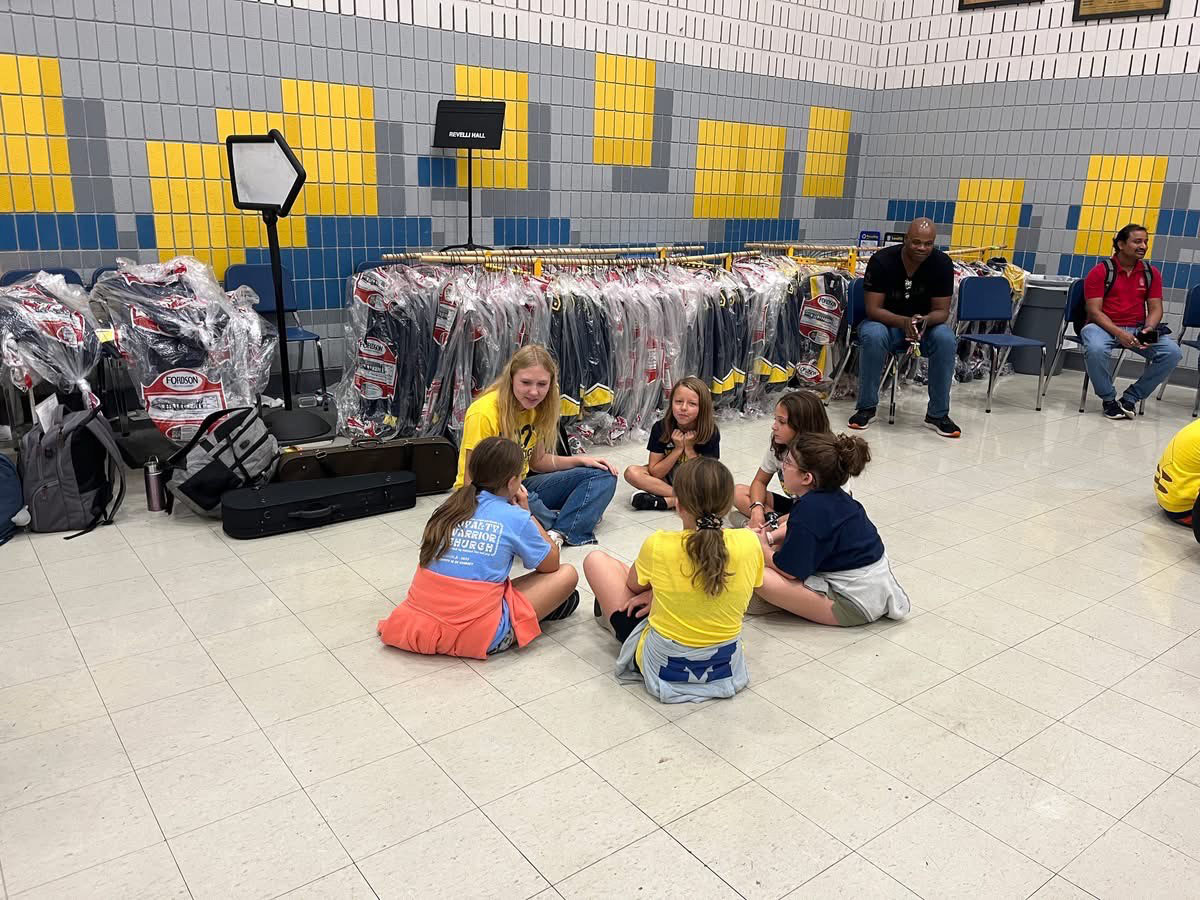
As part of her fieldwork for a music ed course, Lauren Troutman worked with a group of students visiting Revelli Hall for a day of learning.
Rigorous and Multi-faceted Training
Historically, the Department of Music Education has set a high bar for its faculty, students, and graduates. “While our students are pursuing high-quality performance training on their instruments or voice, we are simultaneously providing them with rigorous preparation to acquire the knowledge, skills, and insight to be successful teachers in a school setting,” Hopkins said.
Michael Hopkins teaching a string class at SMTD, October 2025. Photo: Chris Boyes
The music education program’s reputation for quality is burnished by its internationally recognized music education faculty, who bring their expertise to teaching and research. In addition, graduate students with prior years of K-12 teaching experience help supervise student teaching and observation in the field while sharing their perspectives in the classroom.
The University of Michigan’s renowned performance environment also plays into the music education program. “One of the important components of becoming an effective music educator is being an outstanding musician,” Hopkins noted. “Our students have incredible performance opportunities at U-M and receive world-class instruction from their studio teachers. That makes a huge difference in the quality of our program.”
Paying It Forward
Joel Schut (BM ’09, violin performance, music education) has made great strides in his music education career over the past 17 years. He is director of orchestras and associate professor of music at Grand Valley State University in Allendale, Michigan, where he works with future teachers and performers in both ensemble and classroom teaching settings. He also serves as music director of the Grand Rapids Youth Symphony.
Schut’s multifaceted work as a conductor, educator, and researcher has taken him around the United States and across the globe, where he has collaborated with professional artists, commissioned orchestral works, and mentored young teachers and performers from countries including Afghanistan, China, Mexico, and Myanmar. He has received numerous accolades for his achievements and contributions to music education.
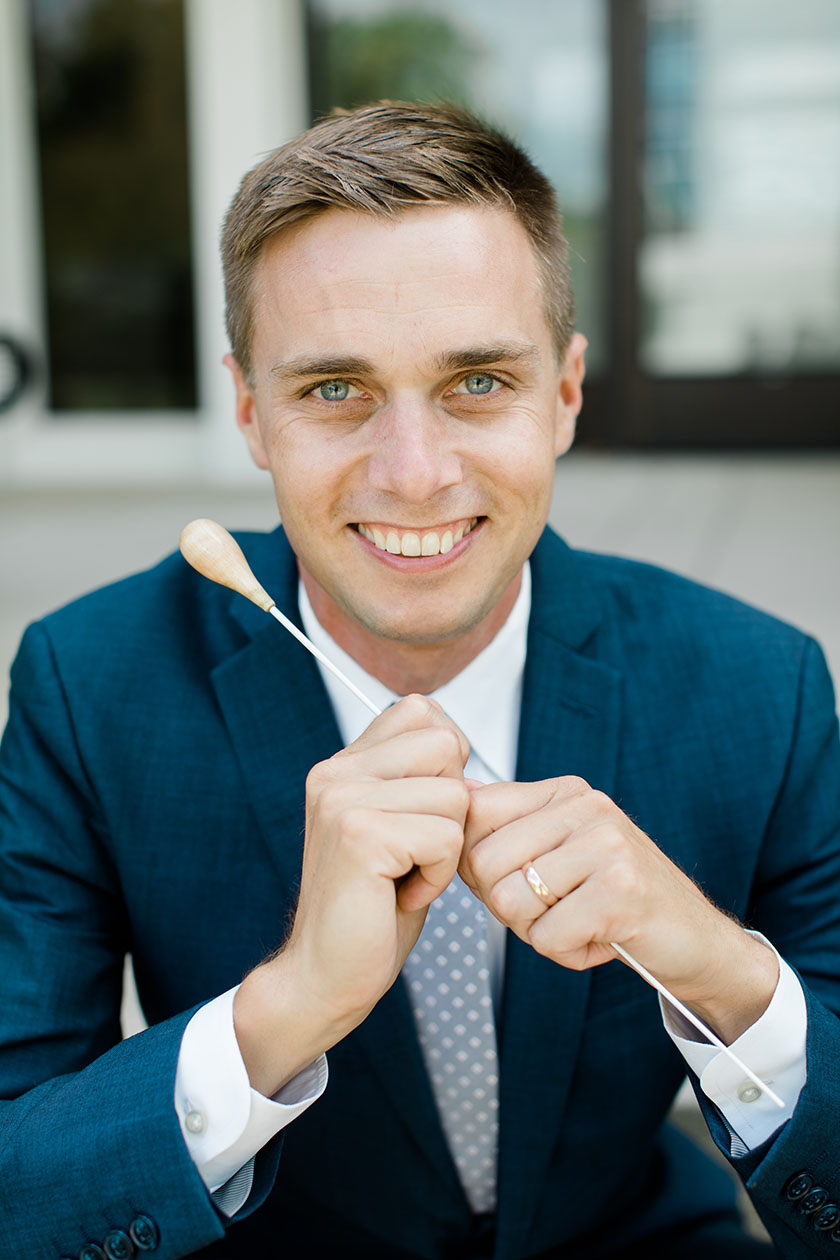
Joel Schut
“You go to SMTD to be a leader, to be an innovator,” Schut observed. “It is a lifelong commitment with an expectation to pay it forward. SMTD provides the tools, experiences, and community to flourish. What we do, where we go, and how we innovate is how we express our deepest thank you.”
SMTD’s stellar music education faculty left a lasting impression on Schut. “Bob Culver, professor of music education, provided incredible insights into teaching delivery skills, strategies for motivating students while raising the bar of excellence, and a system for building excellent string technique,” Schut recalled. “I hear him on my shoulder every day I teach. The music education faculty challenged me to notice the impact of research on practice and to lean into important questions within a community of scholarship.”
The U-M alumni network supported Schut and his classmates by observing, assisting, and mentoring students in their classrooms. “SMTD taught me how to seek out mentors and collaborate, which has helped me continue to grow both professionally and personally,” he said. “I am constantly inspired by my SMTD colleagues who continue to lead and innovate in performance and pedagogy.”
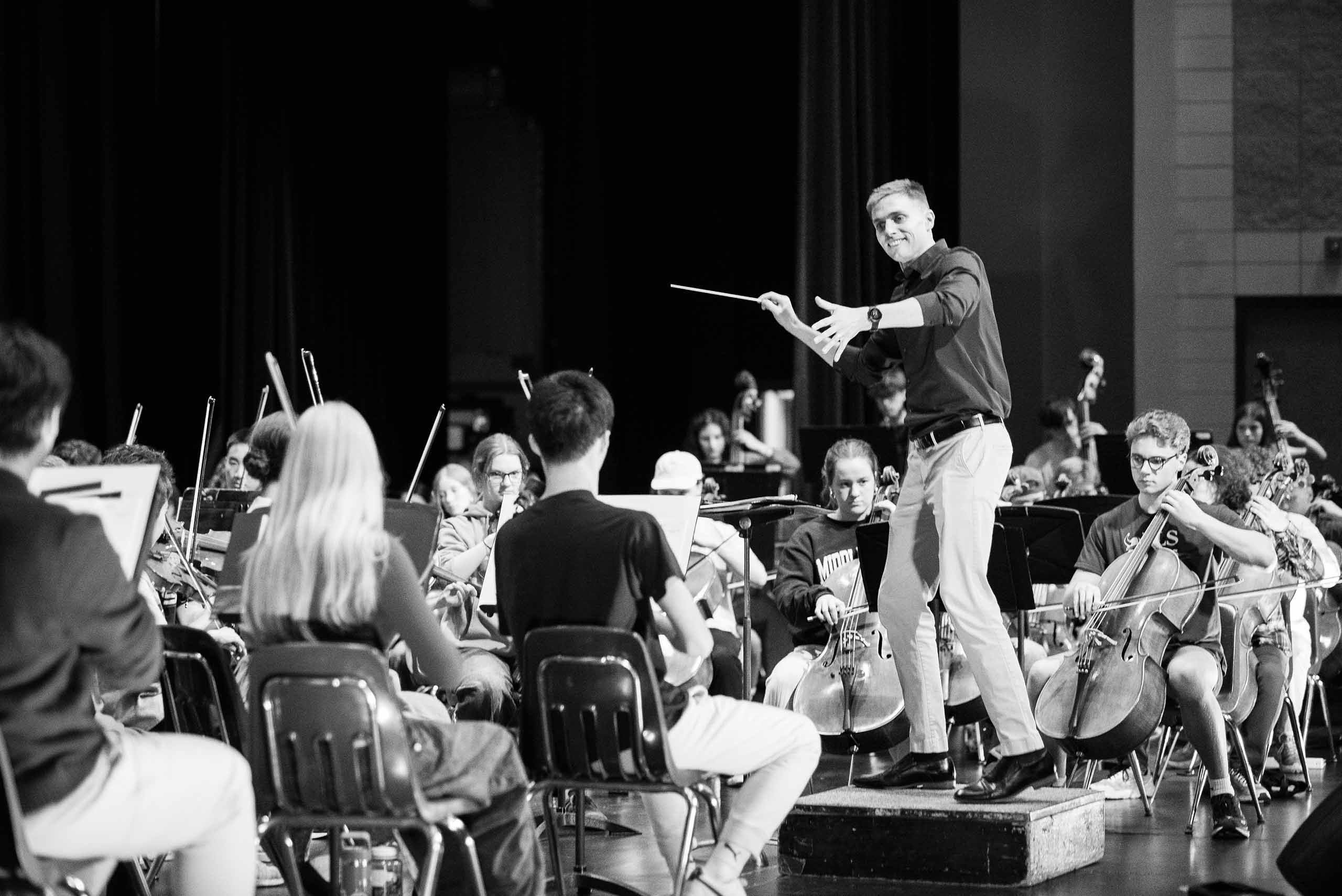
Joel Schut conducting students at Grand Valley State University, where he is the director of orchestras and an associate professor
Center for Thought Leaders
Bob Phillips (BM ’76, MM ’79, music education) has blazed a trail in music education for over half a century as an author, composer, pedagogue, teacher-trainer, conductor, and innovator.
He was elected “Teacher of the Year” nine times by various associations, inducted into the U-M School of Music Hall of Fame in 2013, and selected (jointly with his wife Pam) to receive the Distinguished Service Award from the American String Teachers Association (ASTA) for outstanding contributions to string education.
During his 27 years in Saline, Michigan, Phillips built a string program that became a national model of excellence in classical and eclectic styles of music. He founded Saline Fiddlers Philharmonic, which, under his direction, gained international prominence and performed at the White House multiple times.
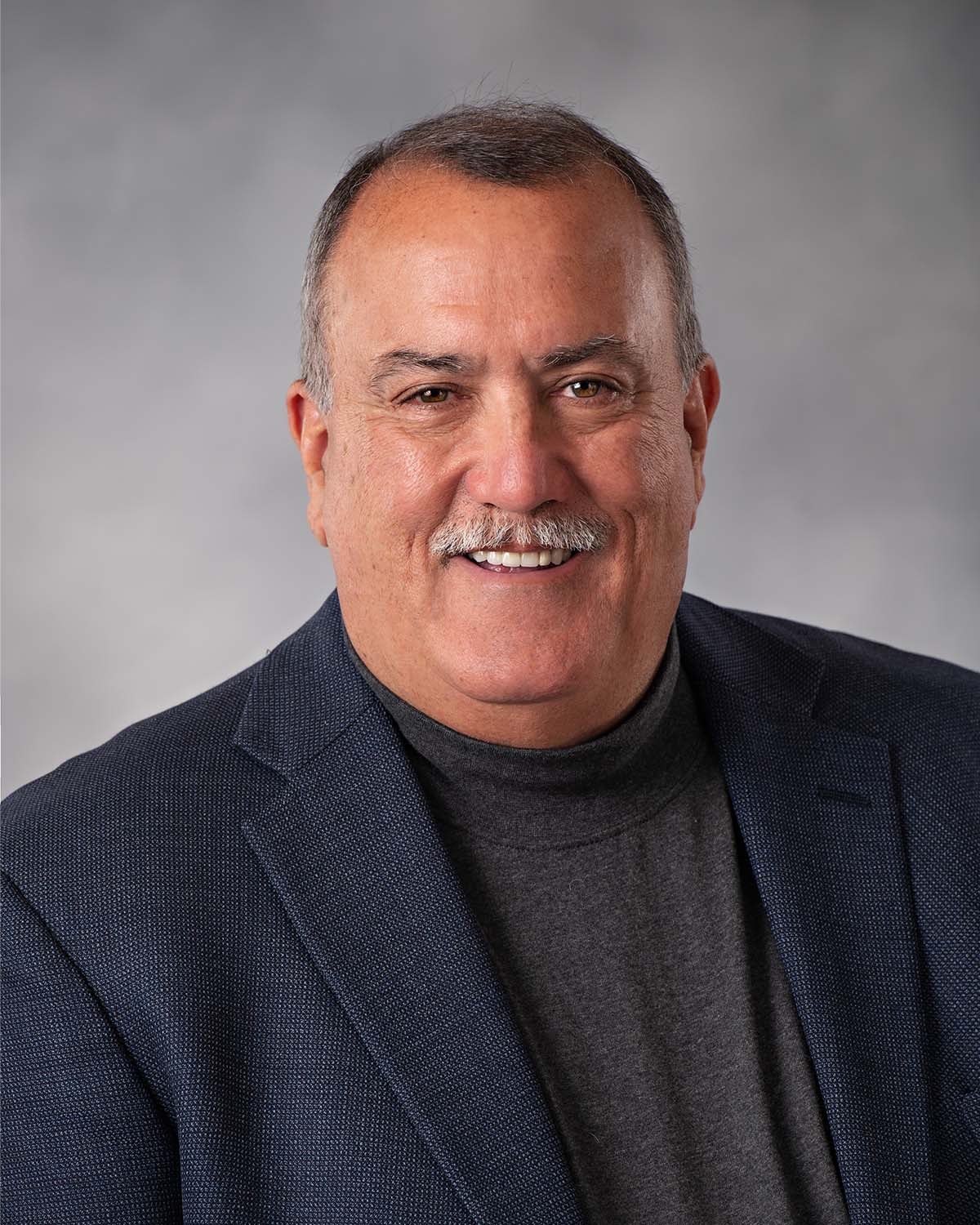
Bob Phillips
“My career as a music educator has been a powerful avenue for helping students build meaningful connections with one another and within the broader community,” Phillips remarked. “Through music, students developed the ability to give voice to emotions, thoughts, and feelings that once felt difficult to express. They experienced this growth by learning, performing, creating, and listening while working with others in a collaborative environment.”
Since retiring from his position in Saline, Phillips has written more than 25 book series, published more than 200 works for orchestras and bands, and created instructional DVDs, called “String Clinics to Go,” that have been used by thousands of teachers.
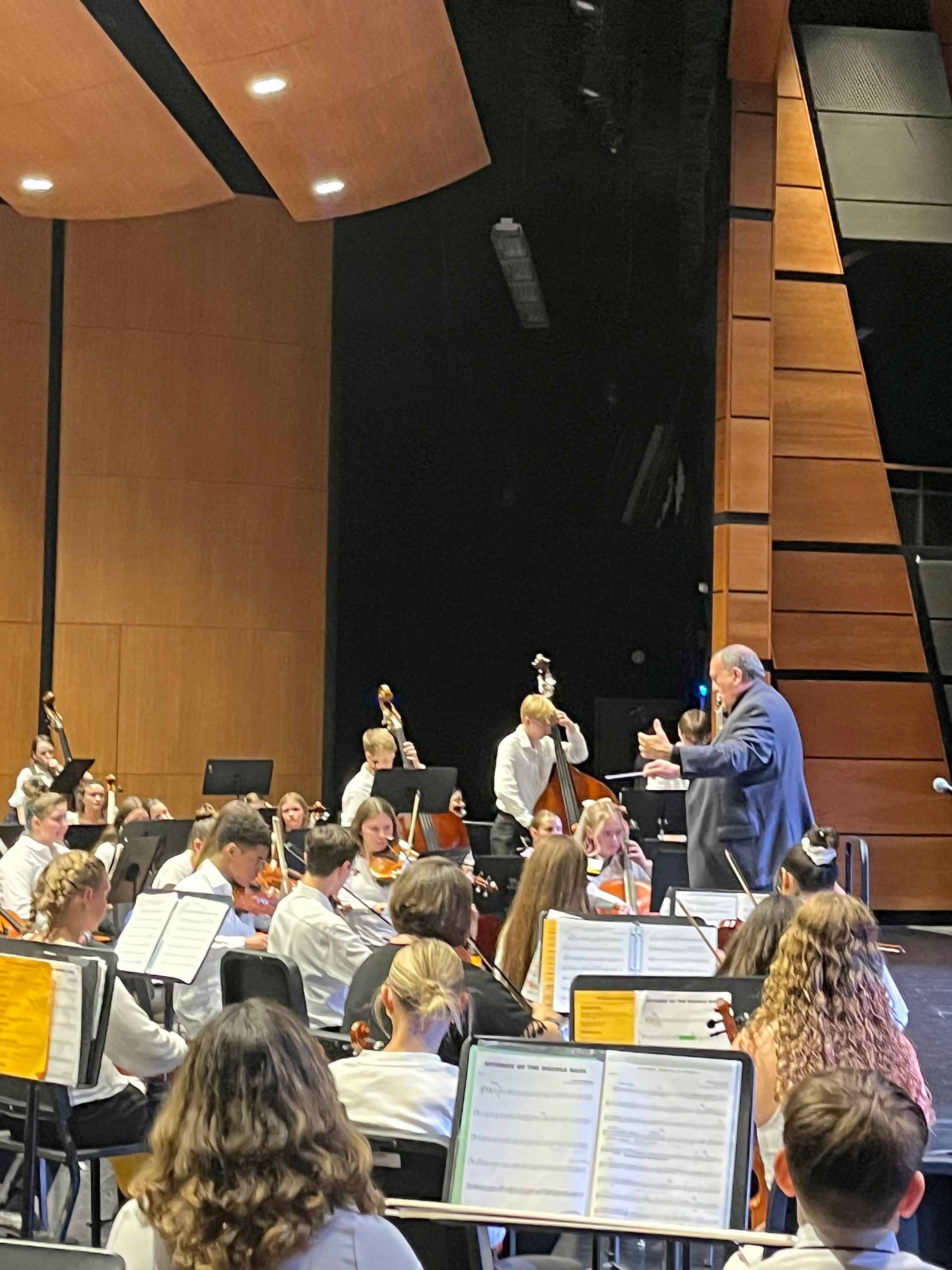
Bob Phillips conducting the Hudsonville (MI) 8th Grade Chamber Orchestra, December 2025
Phillips stays in contact with many of his former students, who often describe music as the most meaningful and impactful part of their school years. They have taught him that the lasting impact of their musical experience is not defined by technical achievement or the complexity of the repertoire they performed. “Music classes are inherently participatory, and their true value lies in the experience itself and the positive influence it has on students and the school community,” Phillips observed. “I saw students become more confident, compassionate, and thoughtful through their orchestral experience.”
Phillips said his SMTD music education degrees have resonated throughout his entire professional life as a teacher and performer. “I am so thankful to have attended one of the most nationally significant music education programs,” he remarked. “U-M has always been a center for thought leaders in music education and studio teaching. That is the Michigan difference: brilliant and inspirational faculty who challenged me to be the best version of myself possible. To become one of the leaders and best.”