
Michigan Muse Fall 2025 > Retirements
Retirements
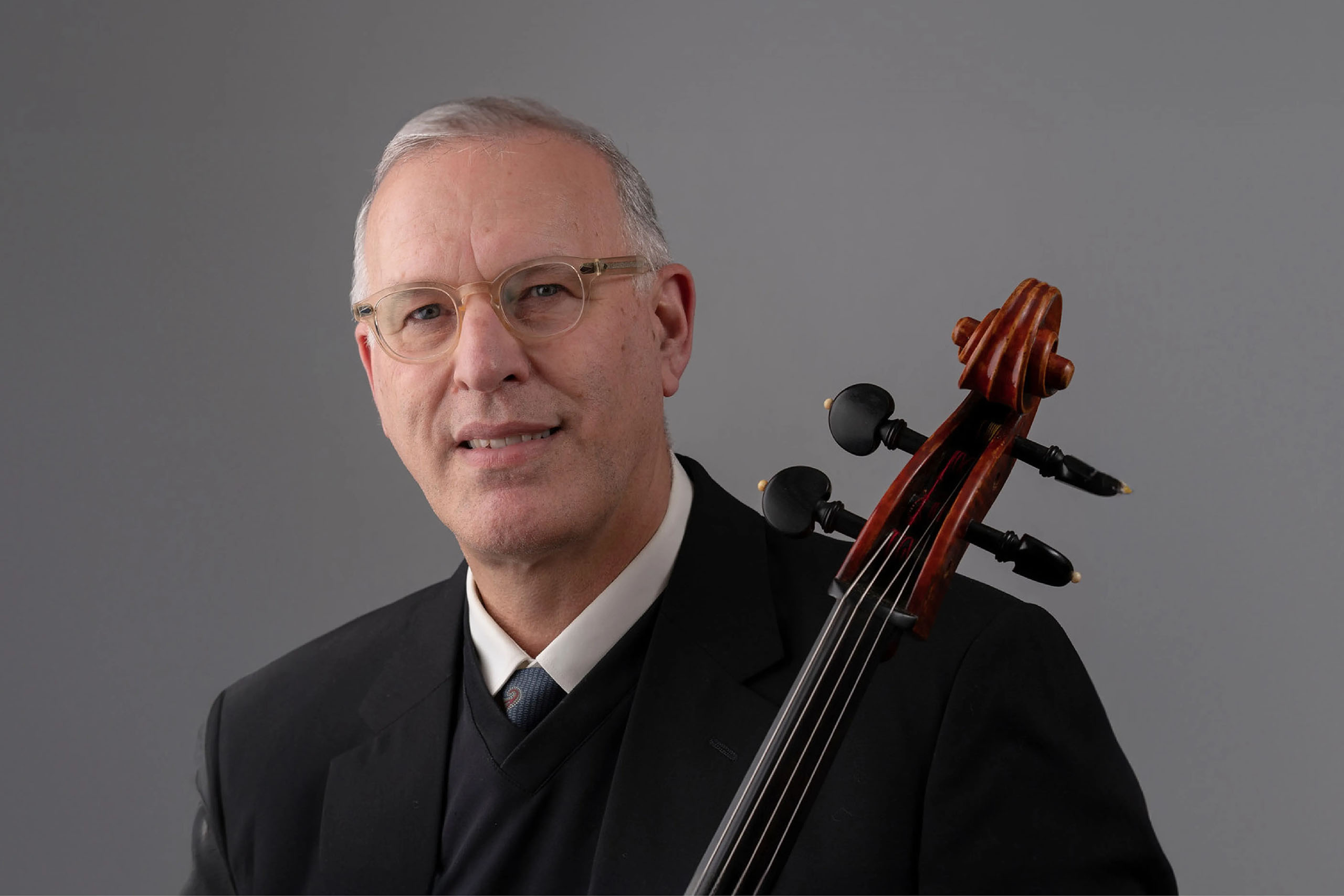
Richard Aaron
Richard L. Aaron
Richard L. Aaron, professor of cello at SMTD since 2006, retired in December 2024. Aaron also taught at the Juilliard School, the Cleveland Institute of Music, and New England Conservatory.
Aaron has given master classes in countries all over the world, as well as at many of the leading music schools in North America, including Rice University, Oberlin Conservatory of Music, Eastman School of Music, Mannes School of Music, the Hartt School, and the Royal Conservatory of Music in Toronto. Since 2003, he has been on the faculty of the Aspen Music Festival and has taught at many other summer music institutes in the United States, Canada, and Europe. Aaron is a frequent competition judge, having recently served at the Beijing International Music Festival & Academy competitions, the ISANGYUN Competition (Korea), the Gaspar Cassado International Violoncello Competition (Japan), the Cello Biënnale Amsterdam National Cello Competition, the Schadt String Competition (Allentown, Pennsylvania), and the Stulberg International String Competition (Kalamazoo, Michigan).
Many of Aaron’s students have won prestigious prizes at competitions around the world; have occupied principal positions in major orchestras, including Chicago, St. Louis, Seattle, Portland, and the Metropolitan Opera; and have been part of award-winning ensembles such as the Biava Quartet, the Fry Street Quartet, the American String Quartet, the Linden String Quartet, the Escher String Quartet, and the Aeolus Quartet.
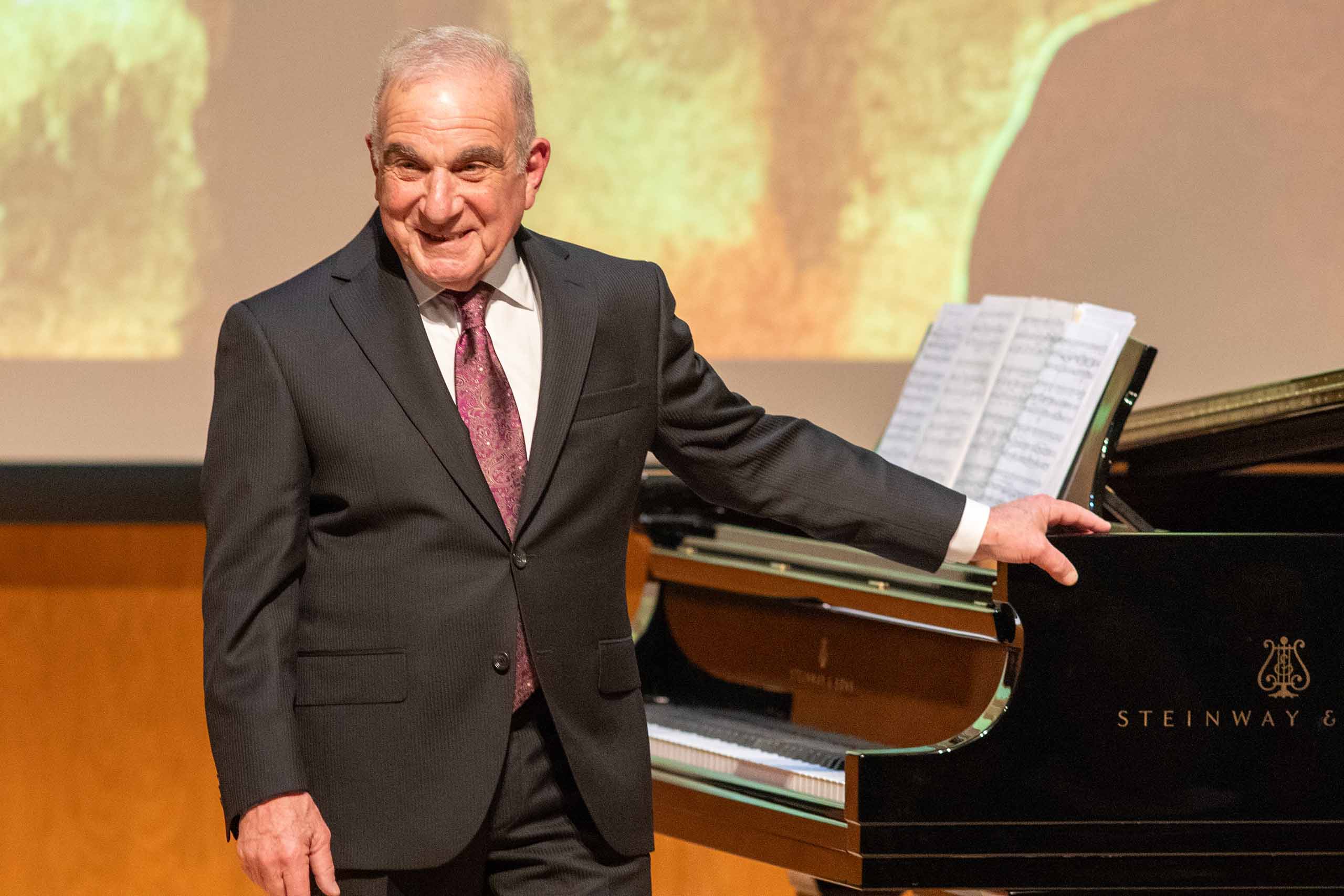
Martin Katz. Photo: Elisa Schulz
Martin Katz
After more than four decades at SMTD, Martin Katz retired in July 2025. He served as the head of collaborative piano and was honored with multiple named professorships: G. Koldofsky Distinguished University Professor Emeritus, Earl V. Moore Collegiate Professor Emeritus in Music, and Artur Schnabel Collegiate Professor Emeritus in Piano.
Katz named his Distinguished University Professorship for Gwendolyn Koldofsky, a pioneer teacher of piano accompaniment he studied with at the University of Southern California (USC). While still a student at USC, Katz accompanied the master classes and lessons of such luminaries as Lotte Lehmann, Jascha Heifetz, Pierre Bernac, and Gregor Piatigorsky.
Katz’s career has taken him to five continents, where he has collaborated with many of the world’s most celebrated singers in recital and recording. Marilyn Horne, Frederica von Stade, Kathleen Battle, David Daniels, Karita Mattila, and José Carreras are among his regular partners, and he has recorded for RCA, CBS, BMG, EMI, and Decca labels. Katz appeared in dozens of performances presented by UMS in Ann Arbor from the 1970s onward.
Katz is also active as a conductor and editor. He has led opera productions for San Francisco’s Merola Opera Program, the BBC, and NHK (Japan’s public broadcasting organization). He conducted more than 20 operas at SMTD over the course of more than 30 years. His editions of baroque and bel canto operas have been performed in Houston, Ottawa, and at the Metropolitan Opera.
Katz has been a regular guest teacher at Helsinki’s Sibelius Academy, SongFest, Chicago College of Performing Arts, the Canadian Operatic Arts Academy, and the New National Theatre, Tokyo. His book, The Complete Collaborator: The Pianist as Partner, was published by Oxford University Press in 2009.
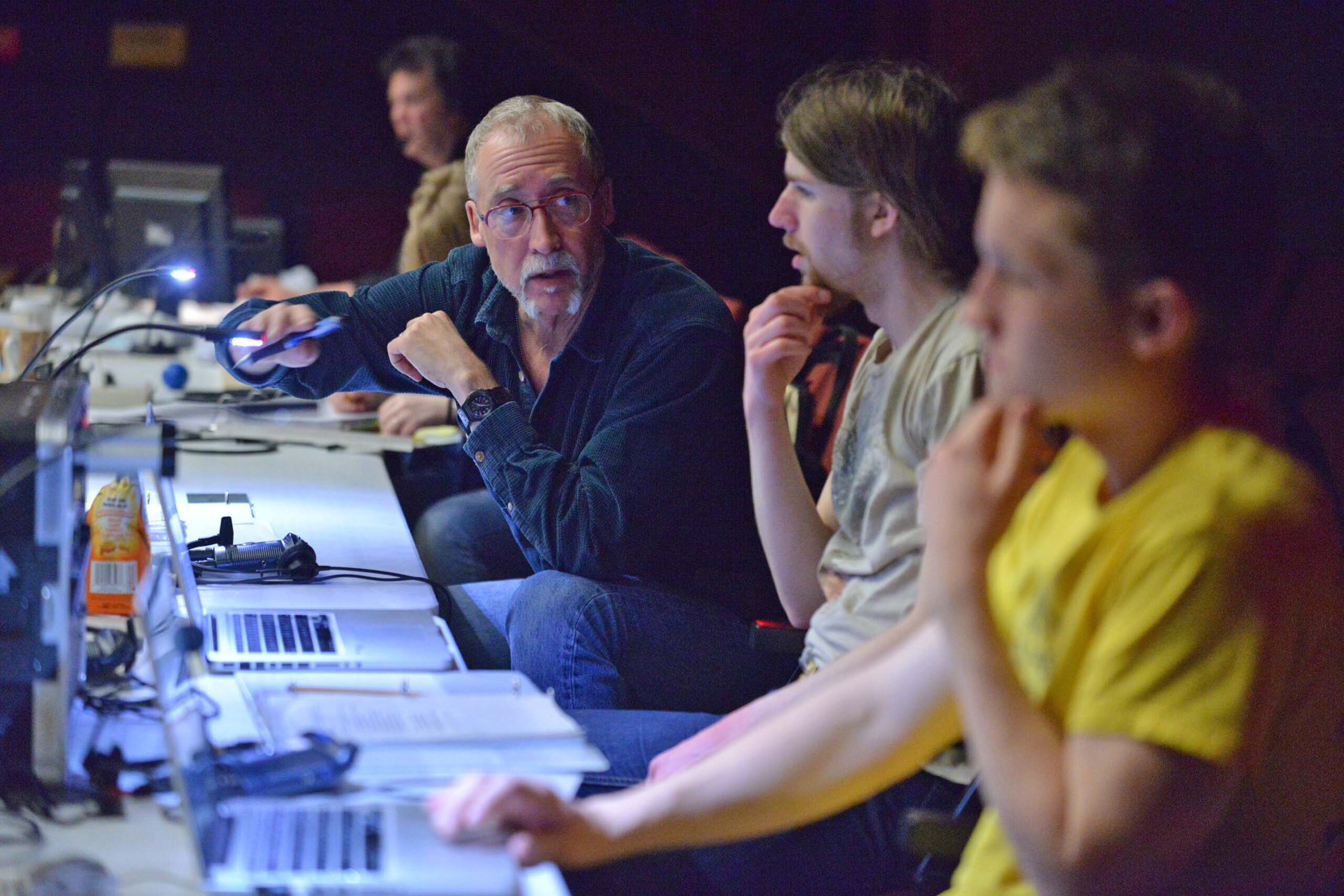
Henry Reynolds. Photo: Peter Smith
Henry Reynolds
Henry Reynolds, sound designer, assistant professor of theatre, and information systems administrator, has retired after 40 years at SMTD. Throughout that period, Reynolds served as the sound designer for approximately 200 plays (and a few operas) at SMTD, creating the sound environment of a production, ambient sounds intended to set a tone before a performance, or underscoring during the performance to emphasize a mood or emotion. He also created sound effects, such as crashes, train whistles, storms, and battle noises.
Reynolds wore many hats at SMTD. For several years after joining the staff of University Productions in 1985, he handled both theatrical lighting and sound. At the time, sound design for theatrical productions was very simple, involving a reel-to-reel recorder that would provide music during intermission or occasional sounds during the play. As sound technology advanced in complexity using new electronic media, Reynolds’s role with UProd became more focused on sound design/engineering.
Reynolds also served as an assistant professor of theatre, teaching introductory sound design classes and practicums for theatre students and a class on theatrical sound design for students in the Department of Performing Arts Technology. Reynolds served as a mentor for students wishing to expand their sound design skills, helping them take on escalating responsibilities until they were prepared to serve as sound designers on fully staged productions.
Reynolds’s role at SMTD also involved a significant information technology component, especially in terms of IT for theatre. Back in the days of dial-up modems, Reynolds saw the urgent need for UProd to begin using emerging desktop computing. He helped UProd establish an early computer network, connecting the Power Center with the Michigan League (and later with the Walgreen Drama Center) to enable file sharing. From that point on, Reynolds spent a substantial portion of his work days supporting faculty and staff colleagues with technical issues large and small. He developed a specialized theatrical database that allows designers to scan photos and descriptions of the thousands of costumes and props in stock. He helped to develop a management information system for theatre that has helped UProd to balance its budget for 40 years. Jeffrey Kuras, executive director of UProd, noted, “It is no exaggeration to say that Henry has been responsible for the theatrical infrastructure that has enabled UProd to create professional-scale productions in a college setting.”