
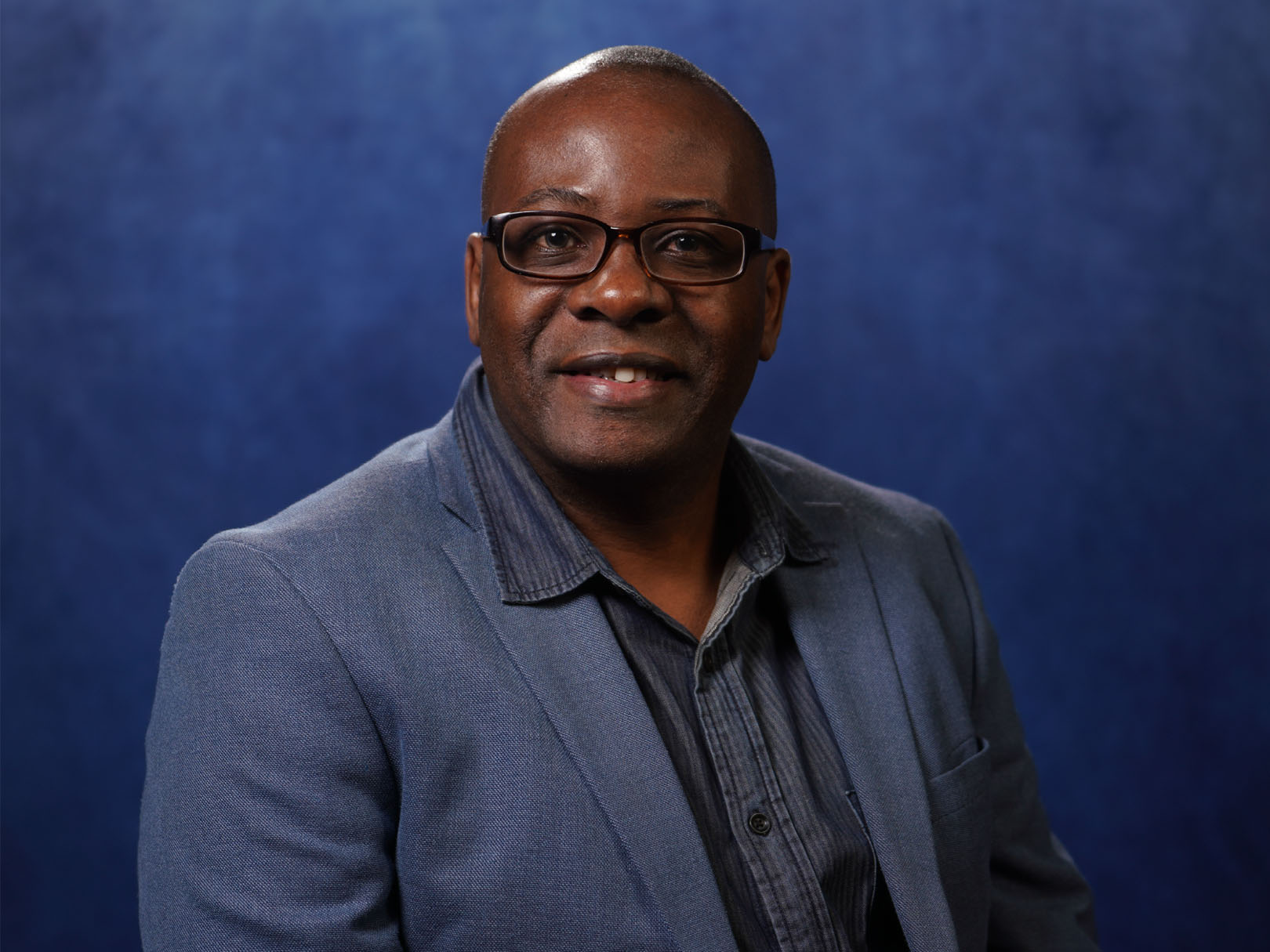
Charles Lwanga, assistant professor of music (ethnomusicology) has published a new research article in African Music: Journal of the International Library of African Music. Titled “Sonic Contours of Modernity in Buganda, Uganda,” the article demonstrates how the emergence of radio and TV talk shows as well as choral music ensembles in Ugandan schools have since the early 1990s provided forums of civil participation, where an episteme of modernity is constructed. Based on the Ghanaian Africanist philosopher Kwame Gyekye’s (1997a) precaution against abandoning the Africanist ethos in the epistemological construction of post-colonial African modernity, Lwanga argues that, in Buganda, Uganda’s largest ethnic kingdom, sonic contours of modernity were not merely shaped by advanced technologies and science, but rather by the interactive “movement of ideas, practices, institutions,” local or traditional, transnational, and global.
The abstract states:
In 1993, President Yoweri Museveni restored traditional kingship in Uganda following the abrogation of the 1962 independence constitution by Prime Minister Milton Obote in 1966. This development was in response to the return of relative but precarious peace after several military regimes, including that of General Tito Lutwa, which was overthrown in 1986 ushering in Museveni’s presidency. The restoration of traditional institutions in Uganda coincided with the liberalization of the media in the early 1990s, giving rise to the proliferation of private radio and TV stations, as well as recording studios. In 1996, an elite group of men and women started Central Broadcasting Services (CBS) – a radio station owned by the Buganda Kingdom – to create a mediated forum of participation through talk shows. In addition, CBS started featuring, among others, Sir Paul Ssaaka’s educative choral songs about the kingdom, thus reinforcing the content presented on talk shows such as Mambo Bado (Things Are Still) in the cultivation of what became a modern and audible Buganda. Drawing on ethnographic fieldwork in Kampala, Uganda’s capital, this article discusses the emergence of radio talk shows and the airing of choral songs as forums of constructing an African modernity in Buganda. I analyze the musical structure of the choral song, “Omulembe Omutebi” (The Reign of Mutebi II), by Saaka, in order to demonstrate how traditional and foreign idioms and ideas are interactively employed to create a modern sonic entity that does not fully subscribe to either musical territory. I argue that choral music, radio, and TV created new forums of participation where an episteme of a sonic modernity in Buganda was cultivated.
Lwanga’s article “Sonic Contours of Modernity in Buganda, Uganda” can be accessed through the University of Michigan’s library system or the DOI: https://doi.org/10.21504/amj.v13i1.2759