
Bach Organ Works
Welcome
Welcome to the Bach Organ Works Site
This website offers free downloads of the complete extant organ works of Johann Sebastian Bach, recorded by Dr. James Kibbie on original baroque organs in Germany.
- Click Search to find a specific work, collection or venue. Pages for individual works include the venue and registrations.
- Click Familiar Masterworks to begin with a selection of audience favorites.
- Click Download in Groups to download multiple audio files.
- Click Organs for stop lists and photos of the organs used.
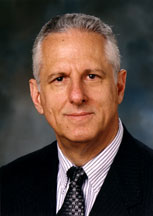
J. Barry Sloat
(1940-2005)
This project is sponsored by the University of Michigan School of Music, Theatre & Dance with generous support from Dr. Barbara Furin Sloat in honor of J. Barry Sloat. Additional support has been provided by the Office of Vice-President for Research, the University of Michigan.
On-site recording:
Christian Cerny, Leipzig, Germany
Editing and mastering:
David Lau, Brookwood Studio, Plymouth, Michigan, USA
Project Overview
Exactly which works should be recorded? More than 250 years after Bach’s death, it is by no means certain exactly what he composed. The selection of works for this series draws on the Bach Werke Verzeichnis, Kleine Ausgabe (Breitkopf & Härtel, 1998), supplemented by other recent scholarship, including the work of Profs. Christoph Wolff, George Stauffer and Peter Williams, and the research of the Johann-Sebastian-Bach-Institut Göttingen. Bach’s organ transcriptions of works by other composers have been included. Dr. Kibbie has also recorded those works which survive only as fragments, leaving these works incomplete as they exist in the manuscript sources.
For the “dubious” works which may or may not be by Bach, Dr. Kibbie has chosen which to record, including especially those long associated with the Bach canon, such as the Pedal-Exercitium and the Kleines harmonisches Labyrinth. On the other hand, some works long identified with Bach are now widely regarded as spurious, and so have not been included (for example, the Eight “Little” Preludes and Fugues).
Bach composed for organs ranging from the 17th-century North German instruments he admired in his youth to the mid-18th-century organs he himself helped design during his Leipzig years. For these recordings, Dr. Kibbie has selected seven historically significant instruments matched to the varying stylistic requirements of the Bach repertoire.
David Lau of Brookwood Studio, Plymouth, Michigan, directed the recording, editing and mastering of this series. Christian Cerny of Leipzig, Germany, served as on-site recording technician throughout the series. The website was produced by the Internet Publication Task Force and Block M Records of the University of Michigan School of Music, Theatre & Dance.
Special thanks are due to Helmut Schick and Dr. Felix Friedrich for their help in planning the recording venues, to Dr. Karl Schrock for advising on textual corrections and for editing the realizations of Bach’s figured-bass chorales, to Greg Laman for website production, to Dr. Jonah Johnson for translations, and to Joseph Balistreri for assistance with translations, the Dresden recordings and many other details.
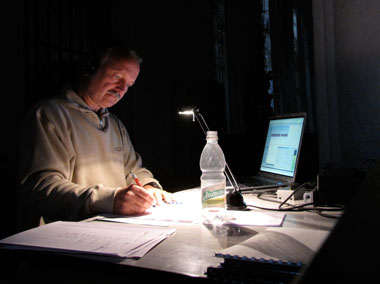
Recording technician Christian Cerny on-site at St. Wilhadi, Stade
The Works
Use Search to find a specific work, collection or venue from the Bach Organ Works project, or view the list of all works. Pages for individual works include the venue and registrations.
Familiar Masterworks
View our collection of Familiar Masterworks for a selection of some of the best-known Bach organ works:
- Toccata and Fugue in D Minor, BWV 565
- Passacaglia in C Minor, BWV 582
- “Gigue” Fugue in G Major, BWV 577
- Fantasia and Fugue in G Minor, BWV 542
- Schmücke dich, o liebe Seele, BWV 654
- Wachet auf, ruft uns die Stimme, BWV 645
- In dir ist Freude, BWV 615
- Canonic Variations on Vom Himmel hoch, da komm ich her, BWV 769a
Download in Groups
Complete works organized into groups for download. The links below are to .zip archives. After downloading, uncompress the file(s) and import the folder of audio files into iTunes or a similar application.
- full uncompressed audio (large files, high-speed access recommended)
- Complete archive, split into 4 files for easier download
- Complete archive (9.6Gb)
- 256kbps AAC encoded versions
- Complete archive (2.5Gb, folder of all below)
- Individual Categories
- Trio Sonatas (154Mb)
- Preludes and Fugues (277Mb)
- Fantasias and Fugues, Toccatas and Fugues (144Mb)
- Other Free Works (230 Mb)
- Concerti (101Mb)
- Orgelbüchlein (134Mb)
- Schübler Chorales (31Mb)
- Leipzig Chorales (150Mb)
- Clavierübung III (183Mb)
- Individual Chorale Preludes (346Mb)
- Chorale Variations (140Mb)
- Neumeister Chorales (136Mb)
- Rudorff Chorales (20Mb)

This work by James Kibbie, The Complete Organ Works of J.S. Bach is licensed under a
Creative Commons Attribution-NonCommercial-NoDerivs 3.0 Unported License
The Organs
Kathedrale - Dresden, Germany
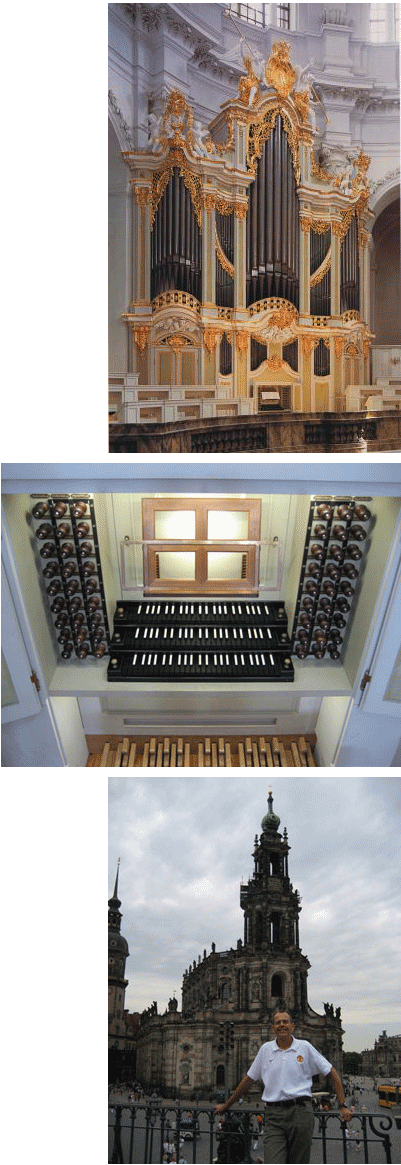
Kathedrale – Dresden, Germany
Gottfried Silbermann, Zacharias Hildebrandt and others, 1755
I. Brustwerk (C, D-d’’’):
Gedackt. 8F.
Principal. 4F.
Rohrflöt. 4F.
Nassat. 3F.
Octava. 2F.
Qvinta. 1 1/2F.
Sufflöt. 1F.
Sesqvialtera. [4/5’, 1 3/5’ from c’]
Mixtur. [1’, III]
Chalumeaux. [8’, from g]
II. Hauptwerk (C, D-d’’’):
Principal. 16F.
Bordun. 16F.
Principal. 8F.
Violdigamba. 8F.
Rohrflöt. 8F.
Octava. 4F.
Spitzflöt. 4F.
Qvinta. 3F.
Octava. 2F.
Tertia. [1 3/5’]
Cornett. [V, from c’]
Mixtur. [2’, IV]
Zimbeln. [1 1/2’, III]
Fagott. 16F.
Trompet. 8F.
III. Oberwerk (C, D-d’’’):
Qvintadehn. 16F.
Principal. 8F.
Gedackt. 8F.
Qvintadehn. 8F.
Undamaris. 8F. [from g]
Octava. 4F.
Rohrflöt. 4F.
Nassat. 3F.
Octava. 2F.
Tertia. [1 3/5’]
Flaschflöt. 1F.
Echo. [Cornet V, from c’]
Mixtur. [IV]
Vox humana. [8’]
Pedal (C, D-d’, originally C, D-c’):
Untersatz. 32F.
Princ[ipal].Bass. 16F.
Octavbass. 8F.
Octavbass. 4F.
Ped[al].Mixtur [3’, VI]
Posaun[en]bass. 16F.
Tromp[eten].Bass. 8F.
Clar[in].Bass. 4F.
Tremulant [HW]
Schwebung [OW Tremulant]
Bassventil [HW/Ped]
BW/HW shove coupler
OW/HW shove coupler
Klingel
Pitch: Kammerton (a’ = approx. 415 Hz)
Georgenkirche - Rötha, Germany
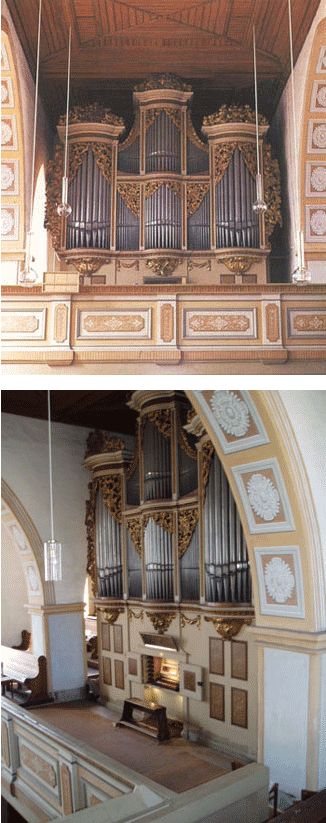 Georgenkirche – Rötha, Germany
Gottfried Silbermann, 1721
I. Hauptwerk (C, D-c’’’):
BORDUN. 16.Fuß.
PRINCIPAL 8. Fuß.
Rohr.Flöte. 8. Fuß.
OCTAVA. 4. Fuß.
Spitz.Flöte. 4. Fuß.
QUINTA. 3. Fuß.
OCTAVA. 2. Fuß.
CORNET. [III, from c’]
MIXTUR. [III]
Cymbeln. [II]
II. Oberwerk (C, D-c’’’):
Gedackt. 8. Fuß.
QUINTADENA. 8. Fuß.
PRINCIPAL. 4. Fuß.
Rohr.Flöte. 4. Fuß.
Nasat. 3. Fuß.
OCTAVA.2. Fuß.
TERTIA. [1 3/5’]
QUINTA. 1 1/2. Fuß.
SIFFLET. 1. Fuß.
MIXTUR. [III]
Pedal (C, D-c’):
PRINCIPAL:Bass. 16. Fuß.
Posaune. 16. Fuß.
Trommete. 8. Fuß.
OW/HW shove coupler
PEDAL-COPPEL [HW/Ped,, added 1796]
TREMULANT
Pitch: Chorton (a’ = approx. 465 Hz)
Marienkirche - Rötha, Germany
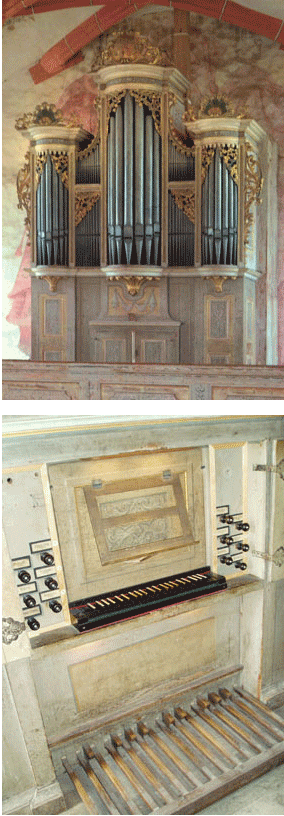 Marienkirche – Rötha, Germany
Gottfried Silbermann, 1722
Manual (C, D-c’’’):
PRINCIPAL. 8.Fuß.
Gedackt. 8.Fuß.
OCTAVA. 4.Fuß.
Rohr Flöte. 4.Fuß.
NASSAT. 3.Fuß.
OCTAVA. 2.Fuß.
TERTIA. [1 3/5’]
QUINTA. 1 1/2.Fuß.
SUFFLET. 1.Fuß.
Cymbeln. [II]
Pedal (C, D-c’):
SUBBASS [16’]
PEDAL-COPPEL (added 1833-34)
Pitch: Chorton (a’ = approx. 465 Hz)
St. Walpurgis - Großengottern, Germany
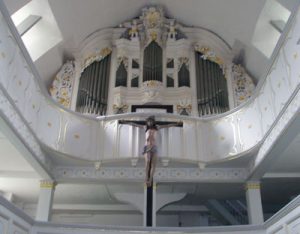
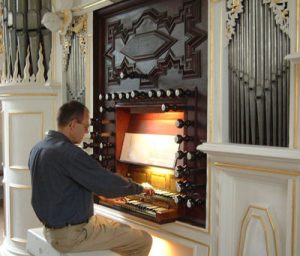 St. Walpurgis – Großengottern, Germany
Tobias Heinrich Gottfried Trost, 1717
I. Man[ual] (C, D-c’’’):
Quintatön 16 Fuß.
Principal 8 Fuß.
Violdigambe 8 Fuß.
Bordun. 8 Fuß.
Octave. 4 Fuß.
Gemshorn 4 Fuß.
Quinta. 3 Fuß.
Nassat 3 Fuß.
Octave 2 Fuß.
Sesquialter 1 3/5 Fuß.
Mixtur 2 Fuß 4 Chörig.
Trompete 8 Fuß.
II. Posit[iv] (C, D-c’’’):
Lieblichgedackt 8 Fuß.
Principal 4 Fuß.
Flötuse 4 Fuß. [II]
Quinte 2 2/3 Fuß.
Octave 2 Fuß.
Mixtur 1 Fuß 3 Chörig.
Ped[al] (C, D-c’):
Subbaß 16 Fuß.
Violonbaß 16 Fuß.
*Quintatönbaß 16 Fuß.
Octavenbaß 8 Fuß.
*Bordunbaß 8 Fuß.
*Octavenbaß 4 Fuß.
Posaunenbaß 16 Fuß.
*Trompetenbaß 8 Fuß.
*Ableit[ung] (Manual to Pedal transmission)
Man: Koppel. (Pos/Man)
Pedal Koppel. (Man/Ped)
Pedalkoppel 2 (Pos/Ped)
Glocken-Accord C. (Zimbelstern in C)
Glocken-Accord G. (Zimbelstern in G)
Tremulant.
Sperr-Ventil
Calcantenwecker.
Pitch: Chorton
Ss. Cosmae et Damiani - Stade, Germany
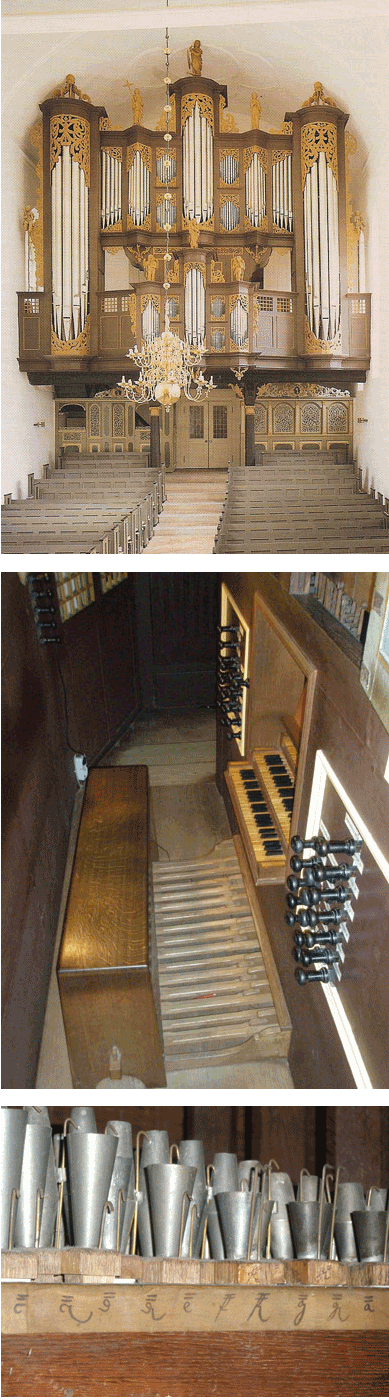 Ss. Cosmae et Damiani – Stade, Germany
Behrendt Huß and Arp Schnitger, 1675
I. Rückpositiv (C,D,E,F,G,A-c’’’):
Prinzipal 8’
Quintadena 8’
Rohrflöt 8’
Octav 4’
Waldflöt 2’
Sieflöt 1 1/2’
Sesquialter [II]
Scharff [V]
Dulcian 16’
Trechter Regal 8’
II. Oberwerk (C,D,E,F,G,A-c’’’):
Prinzipal 16’
Quintadena 16’
Octav 8’
Gedackt 8’
Octav 4’
Rohrflöt 4’
Nassat 3’
Octav 2’
Mixtur [VI]
Cimbel [III]
Trommett 16’
Trommet 8’
III. Brustwerk (C,D,E,F,G,A-c’’’):
Gedackt 8’
Querflöt 8’ [from c’]
Flöt 4’
Octav 2’
Tertia [1 3/5’]
Nassat Quint 1 1/2’
Sedetz 1’
Scharff [III]
Krumphorn 8’
Schalmey 4’
Pedal (C,D,E-d’):
Prinzipal 16’
Sub=Bass 16’
Octav 8’
Octav 4’
Nachthorn 1’
Mixtur [V-VI]
Posaun 16’
Dulcian 16’
Trommet 8’
Cornet 2’
BW/OW
Tremulant
Glockenspiel [late 18th-c.]
Pitch: approximately one whole step above modern pitch
St. Wilhadi - Stade, Germany
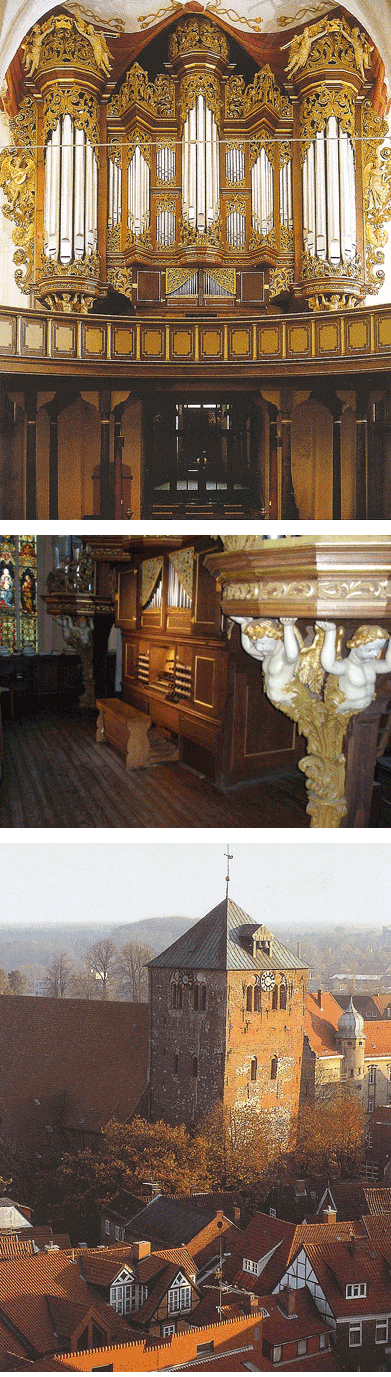
St. Wilhadi organ
St. Wilhadi – Stade, Germany
Erasmus Bielfeldt, 1736
I. Positiv [Hinterwerk] (C,D-c’’’):
Octave 8 Fuß
Rohrflöte 8 Fuß
Quintadena 8 Fuß
Octave 4 Fuß
Quinta 3 Fuß
Octave 2 Fuß
Sesquialtera [II]
Scharff [III-IV]
Fagott 16 Fuß
Vox humana 8 Fuß
II. Hauptwerk (C,D-c’’’)
Principal 16 Fuß
Quintatön 16 Fuß
Octave 8 Fuß
Viol da Gamba 8 Fuß
Gedact 8 Fuß
Octave 4 Fuß
Nashat 3 Fuß
Octave 2 Fuß
Mixtur [IV-VI]
Cimbel [III]
Trompete 16 Fuß
Trompete 8 Fuß
III. Brustwerk (C,D-c’’’):
Flute douce 8 Fuß
Octave 4 Fuß
Flute douce 4 Fuß
Superoctave 2 Fuß
Quinta 1 1/2 Fuß
Scharff [III-IV]
Dulcian 8 Fuß
Schalmey 4 Fuß
Pedal (C,D-d’):
Principal 16 Fuß
Subbaß 16 Fuß
Octave 8 Fuß
Octave 4 Fuß
Rauschquinte [II]
Mixtur [IV-V]
Posaune 16 Fuß
Trompete 8 Fuß
Trompete 4 Fuß
Cornett 2 Fuß
BW/HW
Tremulant
Cymbelstern
Sperrventil Brustwerk
Sperrventil Positiv
Pitch: approximately 3/4 step above modern pitch
Stadtkirche - Waltershausen, Germany
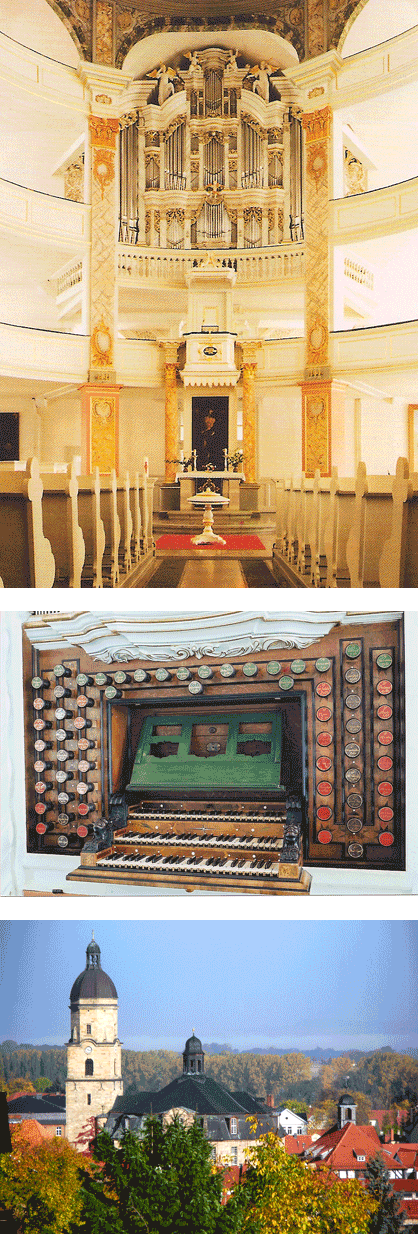 Stadtkirche “Zur Gotteshilfe” – Waltershausen, Germany
Tobias Heinrich Gottfried Trost, 1724-1730
I. Brustwerk (C-c’’’):
Gedackt 8 Fuß
Nachthorn 8 Fuß
Principal 4 Fuß
Flöte douce 4 Fuß
Nachthorn 4 Fuß
Gemshorn 4 Fuß
Spitz-Qvinta 3 Fuß
Nassad Qvinta 3 Fuß
Octava 2 Fuß
Sesqvialtera 2 fach 1 3/5 Fuß
[+3’ from c]
Mixtura 4 fach 2 Fuß
Hautbous 8 Fuß
II. Hauptwerk (C-c’’’):
Portun-Untersatz 16 Fuß
Groß Qvintadena 16 Fuß
Principal 8 Fuß
Gemshorn 8 Fuß
Viol d’Gambe 8 Fuß
Portun 8 Fuß
Qvintadena 8 Fuß
Unda maris 8 Fuß
Octava 4 Fuß
Salicional 4 Fuß
Röhr-Flöta 4 Fuß
Celinder-Qvinta 3 Fuß
Super-Octava 2 Fuß
Sesqvialtera 3 Fuß-1 3/5 Fuß
Mixtura 8 fach 2 Fuß
Fagott 16 Fuß
Trompetta 8 Fuß
III. Oberwerk (C-c’’’):
Flöte Dupla 8 Fuß
Vagarr 8 Fuß
Flöte travers 8 Fuß [overblown to 4’]
liebl. Principal 4 Fuß
Spitz-Flöte 4 Fuß
Gedackt Qvinta 3 Fuß
Wald-Flöte 2 Fuß
Hohl-Flöte 8 Fuß
Vox humana 8 Fuß [sounds only
when Hohl-Flöte also drawn]
Zum O. Clavier Geigen-Principal
4 Fuß [separate ventil windchest]
Pedal (C-d’):
Groß Principal 16 Fuß
Sub-Bass 16 Fuß
Violon-Bass 16 Fuß
*Qvintadenen-B. 16 Fuß
Octaven-Bass 8 Fuß
*Viol d’Gamben-B. 8 Fuß
*Portun-Bass 8 Fuß
Celinder-Qvinta 6 Fuß
*Super Octava 4 Fuß
*Röhr-Flöten-Bass 4 Fuß
*Mixtur-Bass 6 fach
Posaunen Bass 32 Fuß
Posaunen-Bass 16 Fuß
Trompetten-Bass 8 Fuß
*Hauptwerk to Pedal transmission
(C-c#’)
OW/HW
BW/HW
Wind-Coppel [HW/Ped, C-c#’]
Brust-Coppel [BW/Ped, C-d’]
Cymbel-Stern in C
Cymbel-Stern in G
Tremulant zum ganzen Werck
Tremulant z. Vox humana
Sperr-Ventile [non-functioning]
Calcant
Pitch: Chorton