

This past summer, June 6–June 22, a jazz quintet comprising students Annie Hayes (BFA ’25, jazz & contemplative studies), Anna Thielke (BMA ’25, multidisciplinary studies), and Ethan Moleski (MM ’26, improvisation), and Professors Dennis Wilson and Daniel Pinilla, traveled to Colombia for a tour organized by the Colombo Americano. The tour included visits to five cities – Armenia, Manizales, Pereira, Medellín, and Rionegro – and featured more than 15 workshops and seven concerts, including a sold-out performance at the brand-new El Tesoro auditorium in Medellín.
For nearly fifteen years, the binational centers in Medellín and Manizales have coordinated academic and cultural exchanges with US universities renowned for their strong jazz studies programs. This initiative has created a unique opportunity for both the visiting American institutions and the local jazz communities in Colombia to engage deeply with one another through music.
This year, Pinilla and the other U-M representatives were honored as the official guest artists and educators. They led what was previously known as the Colombo Americano Jazz Camp, now presented as the University of Michigan Jazz Quintet Tour, under the slogan “The Colombo Americano Is Jazz.”
Through a wide range of workshops and master classes, the quintet worked closely with a diverse group of students and jazz enthusiasts – from young children to college students and professional musicians – offering group instruction, individual lessons, and collaborative performance opportunities.
“This tour was a truly life-changing experience for the members of the quintet, as well as for the participants who attended the various activities throughout Colombia,” Pinilla said. “The SMTD students expressed deep gratitude for the opportunity to participate in the tour and spoke enthusiastically about the profound impact that the Colombian people and culture had on them. They were especially inspired by the young musicians they engaged with, whose energy and talent left a lasting impression. All of this was enriched by the chance to enjoy Colombia’s vibrant cuisine, adding a flavorful dimension to an already unforgettable journey.”
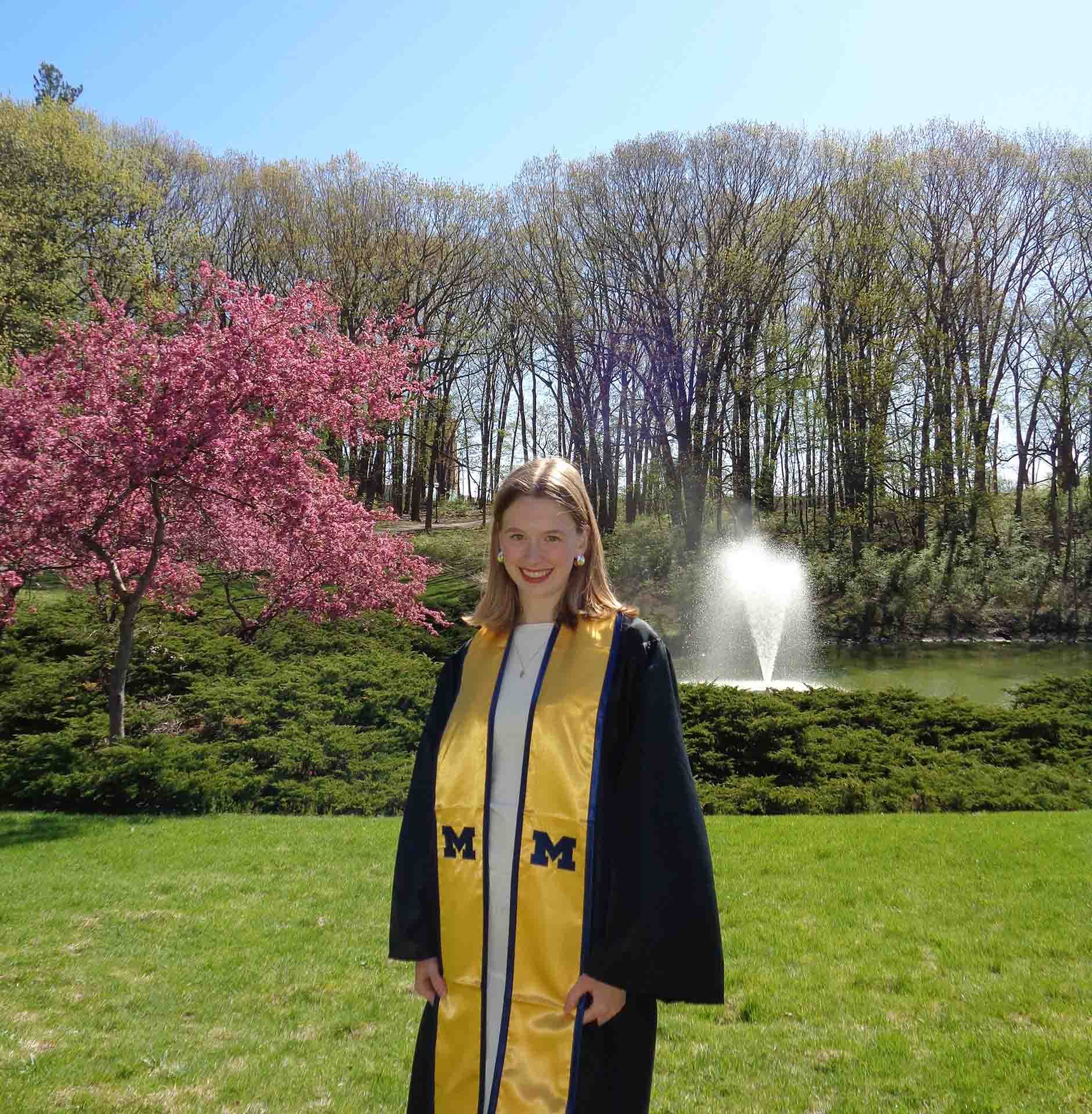
Reflection by bassist Anna Thielke (BMA ’25, multidisciplinary studies)
If you’ve seen the movie Encanto, you might have an idea of the natural landscape of Colombia – lush green hills, towering palm trees, and ornate flowers that we would never see in Michigan. But after spending two weeks in five cities there, I have to say that Colombia is even more incredible than the movie makes it seem. On our first full day, in the city of Armenia, we visited the town of Salento and the Cocora valley. There, we enjoyed views of the countryside dotted with fincas, which are rural estates. After walking to the top of a hill, we stopped at a stand selling fresh guanabana juice, which we learned is a Colombian delicacy; it tastes like a mix of pineapple and strawberry, with a creamy consistency. We ended our excursion with a countryside lunch of rice and beans, plantains, chorizo, chicharrones, avocado, and an arepa – a typical and delicious Colombian midday meal.
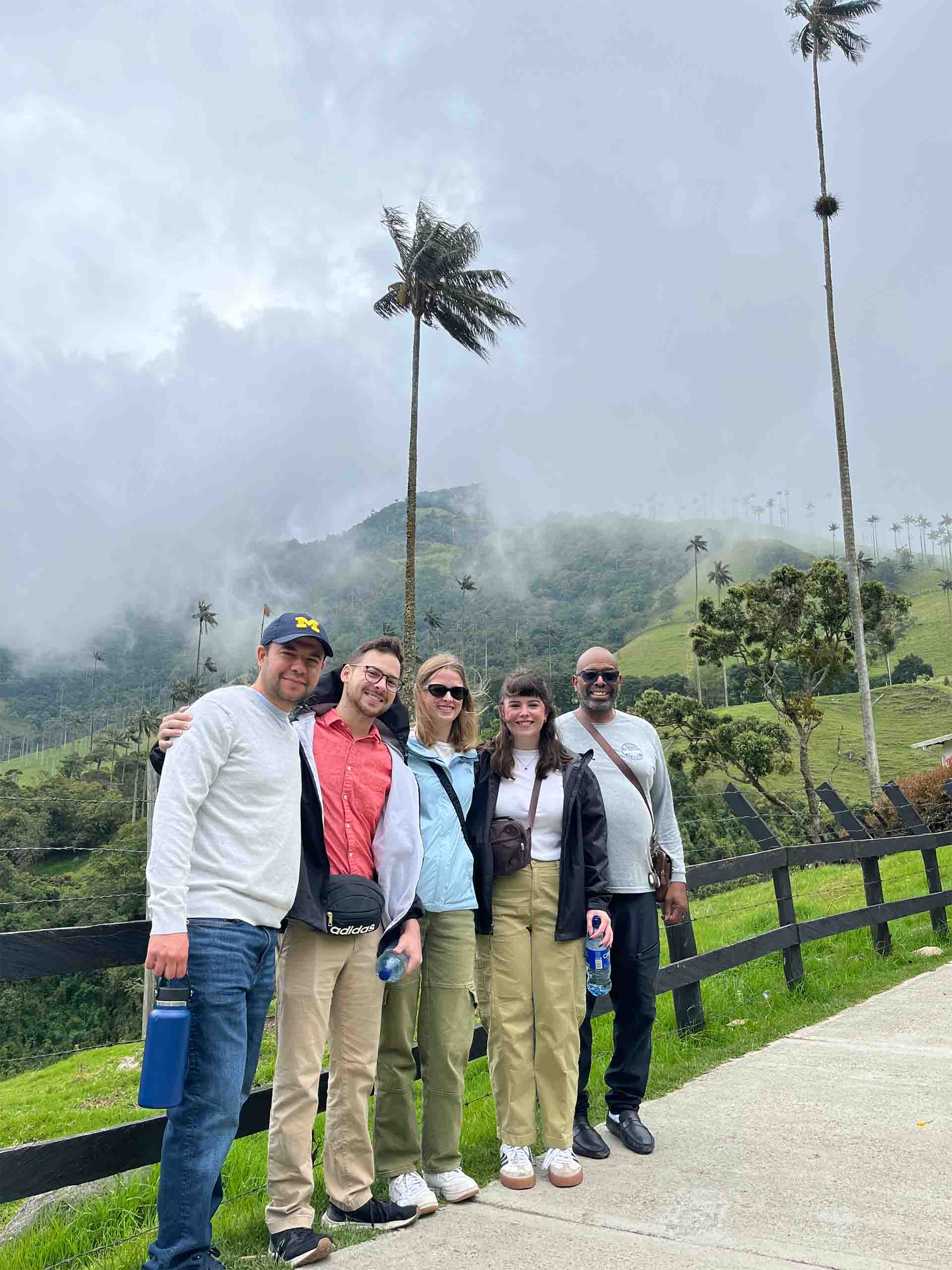
Daniel Pinilla (left), Ethan Moleski, Anna Thielke, Annie Hayes, and Dennis Wilson visiting Salento
For the rest of the trip, which included the cities of Manizales, Pereira, Medellín, and Rionegro, we focused on working with students, which was just as rewarding as witnessing the natural beauty. Each day, we went to a different school or community center and led workshops for the local musicians. The ages of the students ranged from very young elementary through older adults. Their experience levels varied greatly as well, so it was a good challenge for us to find activities that kept everyone engaged. At most of the workshops our group would start out by playing a couple of tunes, and then answering questions from the students about what we played. We typically ended the session by playing together with the students or teaching them an easy jazz standard called “C Jam Blues.”
Interacting with the Colombian students was easily my favorite part of the trip. They were remarkably kind and enthusiastic about playing music and learning about jazz. I learned a ton from them about traditional Colombian music styles, particularly one called cumbia. At times, communicating with the students was difficult, as many did not speak English and I had only learned a few words and phrases in Spanish, but we always figured out what we meant with the help of the true universal language – music.
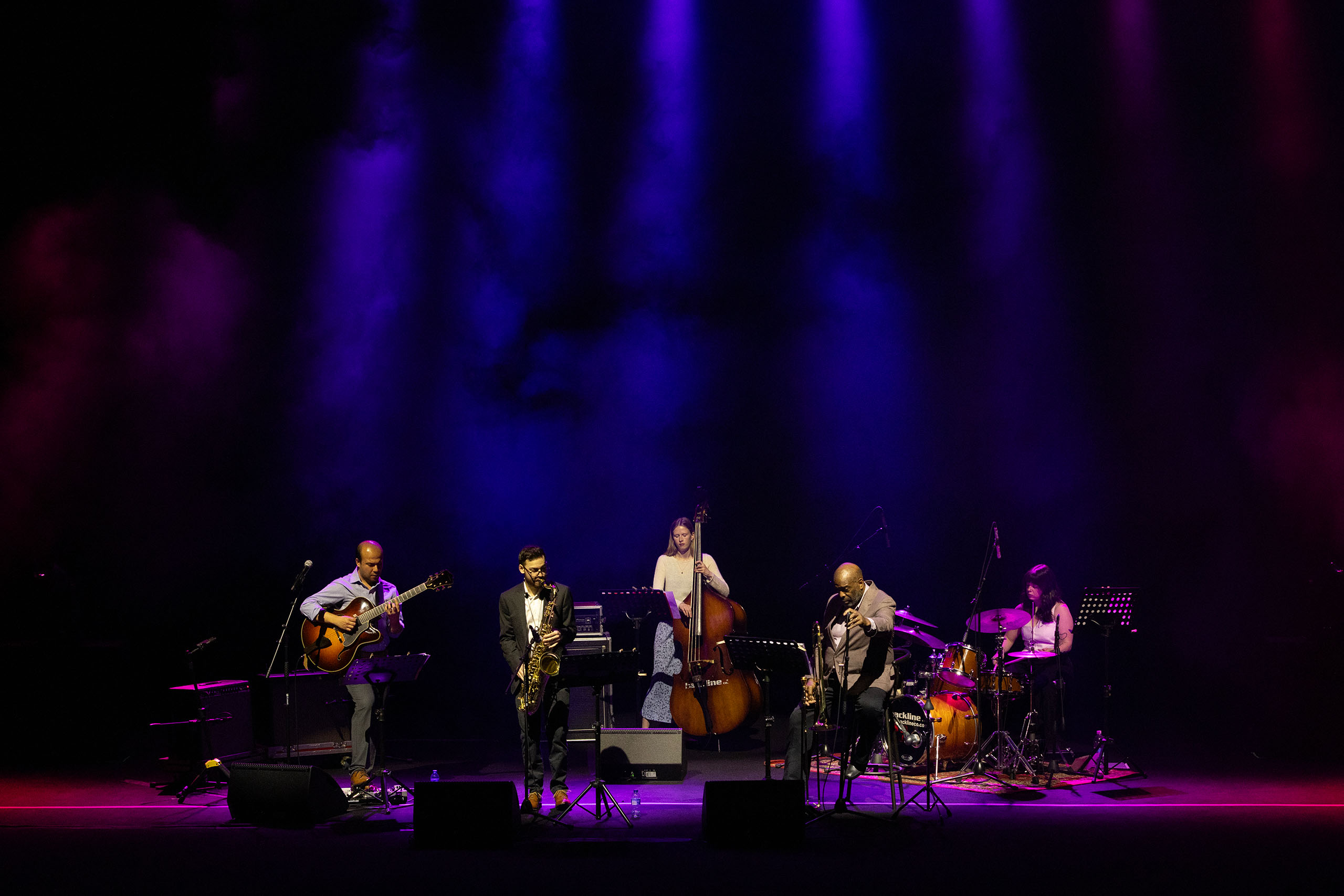
The quintet performing in Medellín: Daniel Pinilla (left), Ethan Moleski, Anna Thielke, Dennis Wilson, and Annie Hayes.
Most evenings, we played concerts for the public, comprising music that we had rehearsed before the trip. Not only was it a great experience to play in many different venues, but I also loved sharing the stage with the other musicians in the group: Annie Hayes, Ethan Moleski, and Professors Wilson and Pinilla. No two concerts were the same, and we enjoyed trying out new ideas. After so many days of travel, all of us felt a bit sleep-deprived, but the enthusiastic audiences at sold-out shows kept us inspired. We also got to attend some incredible performances by local musicians. One duo that we saw featured a world renowned saxophonist from Bogotá named Antonio Arnedo and pianist Sam Farley. Their playing was amazing and we had the chance to have dinner with them and ask them questions after the show. We also loved a group led by a woman named Anamaria Oramas who played flute as well as many indigenous Colombian instruments.
This trip to Colombia was a truly unforgettable experience, and I feel really grateful to have had the chance to see this unique country, to learn about their culture, and to connect with Colombian people through our shared love of music.