
Michigan Muse Fall 2025 > Dropping Knowledge: Guiding PhD Students to Vital Opportunities
Dropping Knowledge: Guiding PhD Students to Vital Opportunities
By Judy Galens
It’s widely understood that an undergraduate education at the School of Music, Theatre & Dance involves extensive support from faculty. For undergrads, professors serve as more than instructors: they are mentors and coaches, helping students along on the path through college and toward professional careers.
Students entering graduate programs at SMTD, especially those pursuing research-oriented PhDs, frequently begin with professional experience under their belts. Some have spent several years working before coming back to school for advanced degrees; in the Department of Music Education, for example, PhD applicants are required to have spent at least four years teaching full-time in elementary or secondary schools. Even with their additional work and life experience, incoming PhD students are entering a brand-new world, learning about the life of a scholar, and faculty support in that endeavor is critical. Faculty in these scholarly departments – including the Departments of Music Education, Music Theory, and Musicology – go well beyond teaching courses and advising on dissertations. They are dedicated to helping students seek out opportunities and acquire experiences that will enable them to complete their degrees and launch fruitful careers. And that dedication often continues long after students have graduated.
The traditional path for students in these departments’ PhD programs is to teach at the academic level, but regardless of their chosen career, faculty guide them toward vital experiences that will build their résumés and help them succeed.
Presenting at Conferences
One important endeavor for PhD students is to present at conferences held by professional organizations in their fields. With music education PhD students, discussions about submitting proposals for conference presentations begin before they even arrive in Ann Arbor. “We literally start right away,” said Colleen Conway, professor of music education. “My May meeting with incoming students is a calendar meeting, taking a look at the types of things that might be available.” Students begin by submitting proposals for conferences at the state level, working their way up to presenting at national conferences – with faculty guidance all along the way.
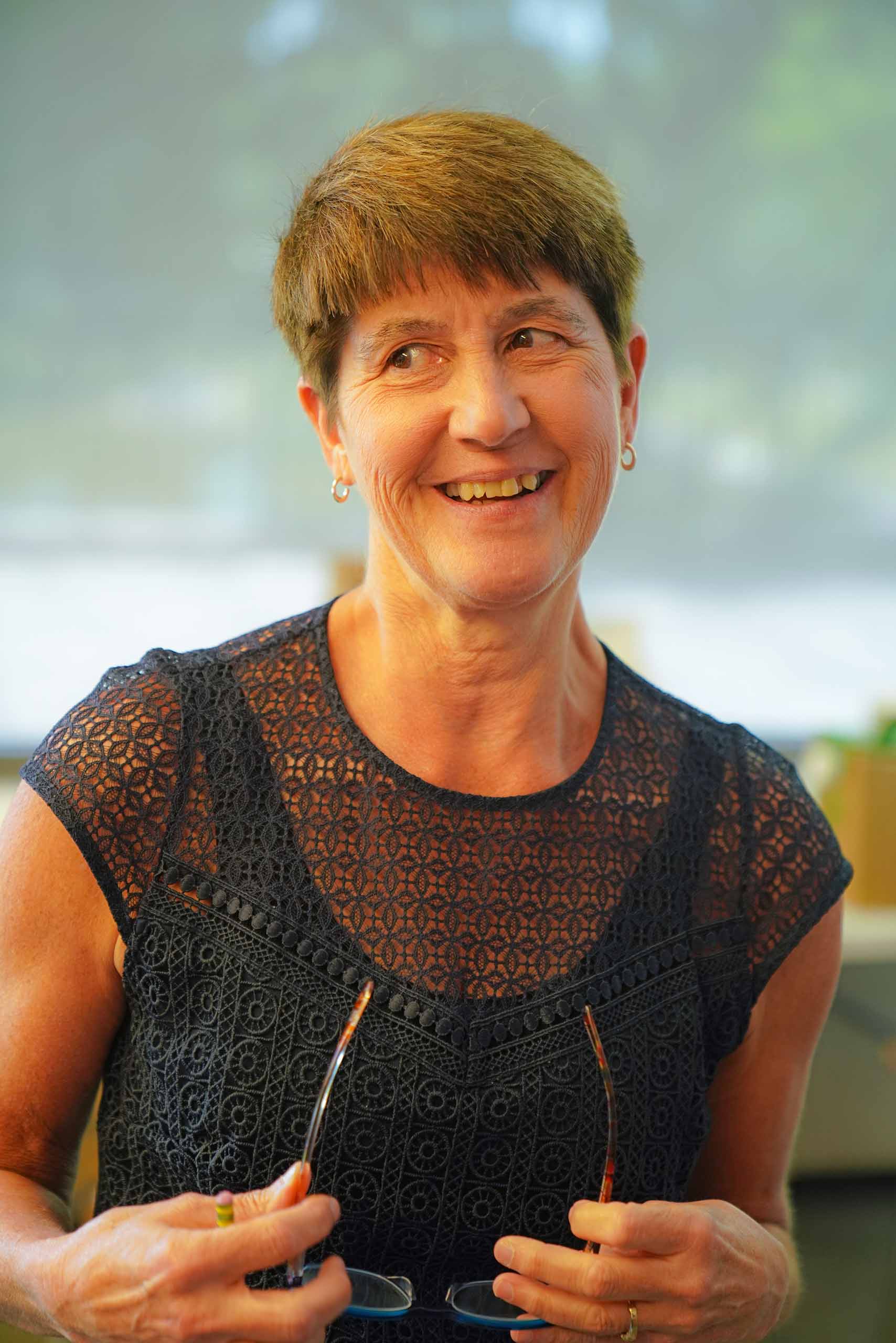
Colleen Conway.
Photo: Chris Boyes
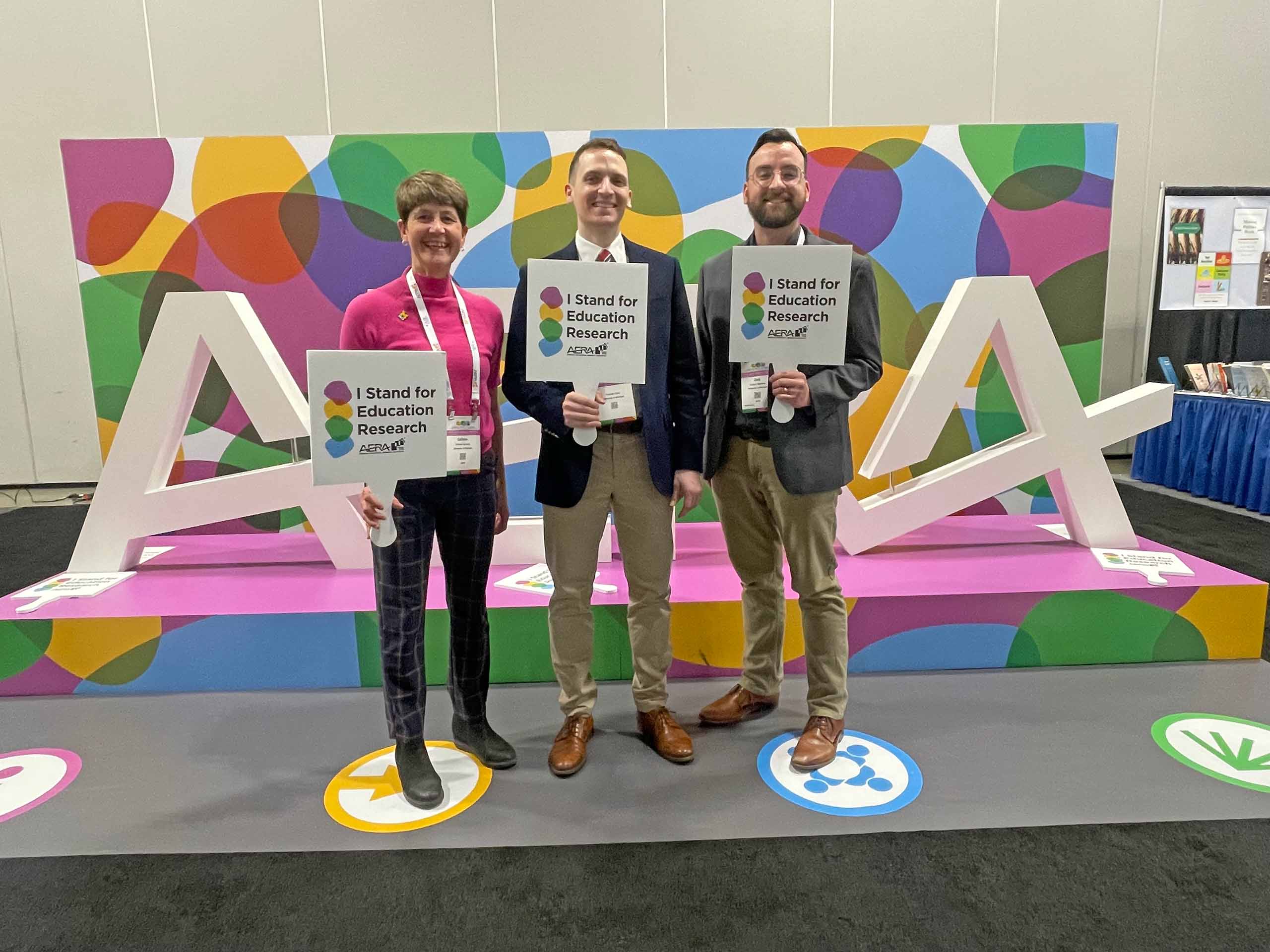
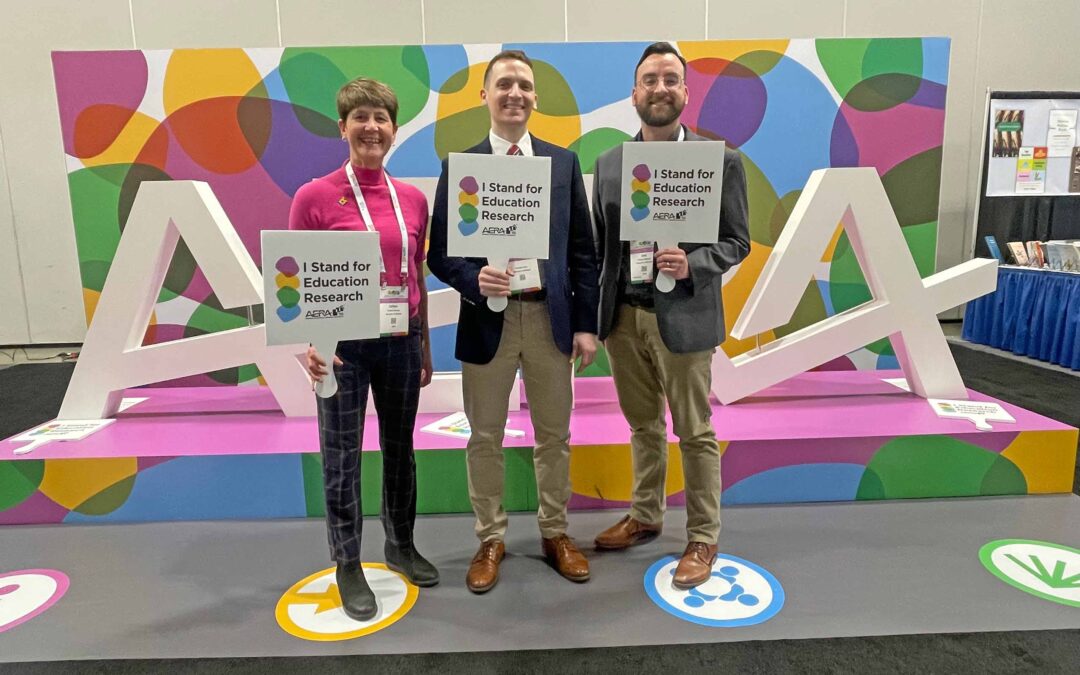
Colleen Conway (left) with PhD students Thomas Flynn and Zachary Nenaber at the American Educational Research Association annual meeting, April 2025
Once their proposals are accepted, students have opportunities to practice in front of others in their department. Mark Clague, musicology professor and executive director of the U-M Arts Initiative, described such practice sessions: “We help them polish their presentation and their delivery style, and we give them some tough questions to prepare them for the Q&A that inevitably follows a conference presentation on the national stage.” National conference presentations can be daunting, and prepping with home-team supporters helps them achieve success in high-profile settings. “Students really love that experience,” Clague said of presenting at major conferences. “It gives them the sense that they’re a professional musicologist already. It’s exciting to support them in finding their voice and claiming their expertise in a national forum.” In addition to solo presentations, students also have occasional opportunities to co-present at conferences with faculty members.
Importantly, the departments also provide funds to help students with conference expenses, supplementing funding from other U-M sources. Jared R. Rawlings (PhD ’15, music education), who was recently appointed director of the University of Maryland School of Music, shared the importance of such financial support when he was a student: “People might think that’s really minimal, but it’s not. It made a difference for us in building our CVs and creating a professional network.”
Navigating Journal Publishing
Having their research published in academic journals is a significant rite of passage for aspiring academics. In addition to working on their own research articles, one way to get immersed in the journal process is to work as an editorial assistant, and in many instances – as with the journal Music & Politics – faculty have hired qualified PhD students for those roles. An open-access, peer-reviewed academic journal, Music & Politics is edited by Marc Hannaford, assistant professor in the Department of Music Theory, and Inderjit Kaur, associate professor in the Department of Musicology. “Working as an editorial assistant for our journal offers students valuable opportunities for developing a whole range of professional skills,” Kaur noted, “from those related to the publishing process, to communication, research, organization, and time management. In addition to gaining insights on writing style and the review and production process, the editorial assistant learns from being directly responsible for organizing submitted materials, managing communications with submitters and the production staff, and compiling a bibliography of recent books on the theme of music and politics for publication.”
In the Department of Music Education, faculty members often engage in collaborative research projects with students, which leads to co-writing journal articles with them. Co-authoring a journal article gives students a crash course in the complex and sometimes mysterious process of getting an article approved. Conway, an experienced scholar with a substantial publishing history, noted a recent experience on a co-authored paper: “We so far have gotten two rejections from two of our major journals after two reviews for each of those journals. So we’ve revised six times, and it’s like, yep, welcome to the profession. If you’re going to publish, this is what it looks like, and you just keep trying and trying.” Conway likes to share with every cohort of students that she has had 10 articles published in the esteemed Journal of Research in Music Education (JRME), an impressive number. But, she notes, she sends every article she’s written to JRME first, and she’s had 110 research articles published, which means 100 rejections from JRME. “You can’t get beat up,” she said. “You just have to let it roll.”
Gaining Hands-On Experience
Students at U-M have extraordinary opportunities to get involved in landmark projects that can define their Michigan experience and shape the trajectory of their careers. One such project is the U-M Gershwin Initiative, a research and publishing partnership between the families of George and Ira Gershwin and U-M that was initiated by Todd Gershwin, a U-M alumnus who is the grandnephew of George and Ira and the son of Marc George Gershwin.
A primary goal of the Gershwin Initiative is to produce the George and Ira Gershwin Critical Edition – a multi-volume series of notated musical scores of works featuring music by George Gershwin and lyrics by Ira Gershwin that will serve as these works’ definitive editions. Students studying performance, musicology, music theory, and composition at U-M have joined the Gershwin Initiative research team as editorial assistants to learn the art of critical editing. Clague, who also serves as editor-in-chief of the Gershwin Critical Edition, described editing for the project as “an old-fashioned kind of archival detective work to produce performance materials that represent – as clearly and accurately as possible – the Gershwin brothers’ original artistic vision.” This research requires careful study of surviving handwritten sources and other historical evidence. Student assistants travel to the Library of Congress to photograph historical source materials and then return to Ann Arbor to help transfer the handwritten notation into contemporary music engraving software. This software is not often taught in university courses, but familiarity with it is extremely useful for musicians and music scholars. “Being able to work with music engraving software is really a fundamental literacy in music studies today,” Clague noted, “and the editorial assistants on the Gershwin edition learn all the tips and tricks to create clear, professional performance materials.”
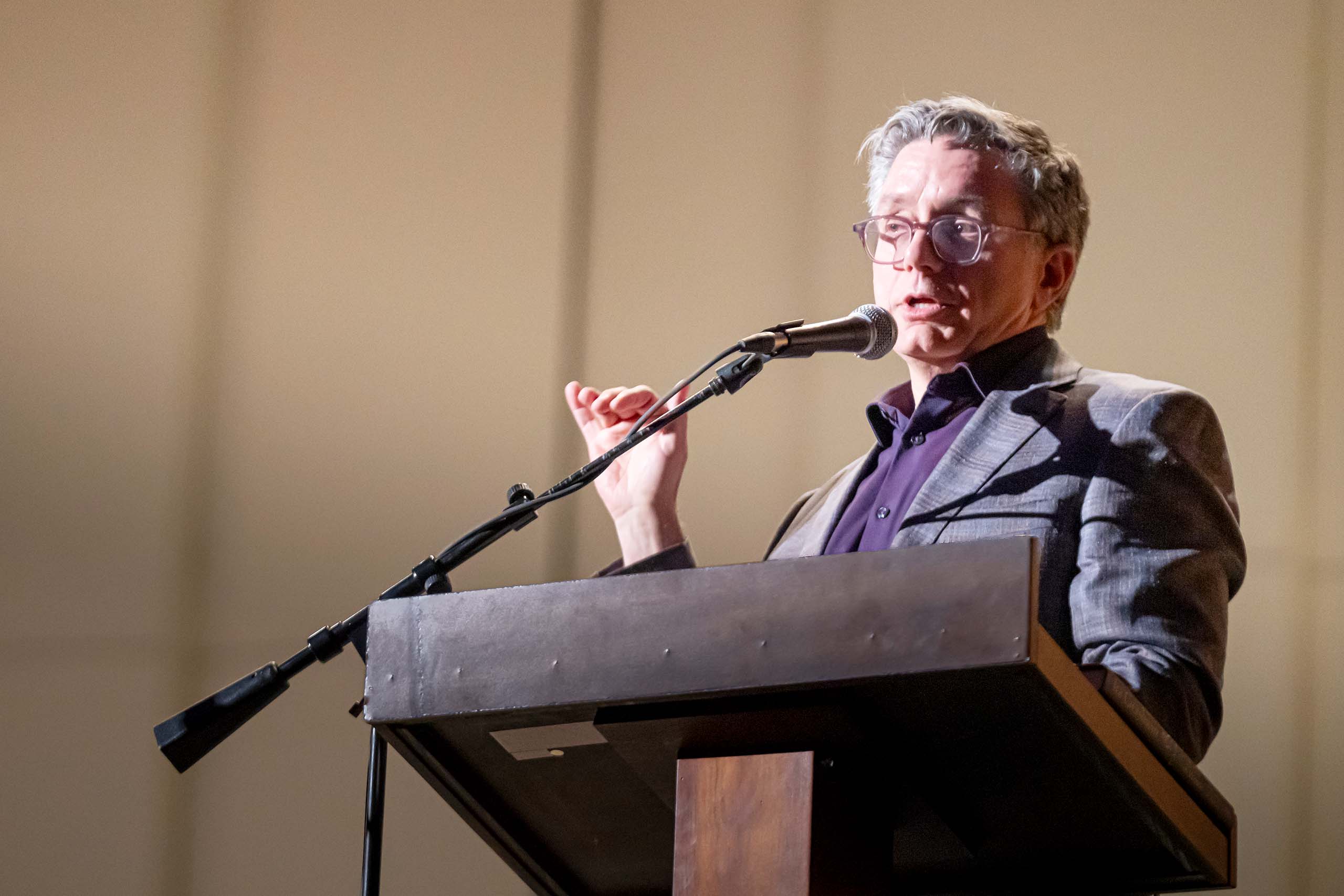
Mark Clague, speaking at the Gershwin Centennial Concert at the Michigan Theater, January 2025. Photo: Kirk Donaldson
Hiring students as editorial and research assistants provides them with important skills to help propel their careers, and many former students who worked on the critical edition have gone on to attain desirable positions. For Kai West (MM ’17, double bass; PhD ’24, musicology), his job as an editorial assistant on the critical edition during his time as a master’s student was a springboard for a series of accomplishments throughout and beyond his time as a PhD student. The assistant role led to another as a mentor and team leader for the Gershwin Initiative’s Undergraduate Education program. West was then invited to assume the role of editor of the critical edition volume on Gershwin’s Cuban Overture after completing his PhD. A research project on the Gershwin opera Porgy and Bess, based on his experience with archival materials through the Gershwin Initiative, led to a presentation at a national conference and later a published article in the prestigious Journal of the American Musicological Society. That article led to invitations to peer edit for the journal and, West said, “has helped me get job interviews and advanced my place in the field. It was my involvement with Gershwin that led to the article’s existence.” In addition to his work on the critical edition, West is a lecturer at SMTD.
Reflecting on the achievements of former critical edition assistants, Clague shared, “We’re really proud when we see students go on from these experiences and discover a whole new set of career possibilities that they may not have discovered otherwise. Working with the Gershwin edition gives people professional experience and skill development that distinguishes them from other graduates. It’s part of that Michigan difference that really makes our training unique.”
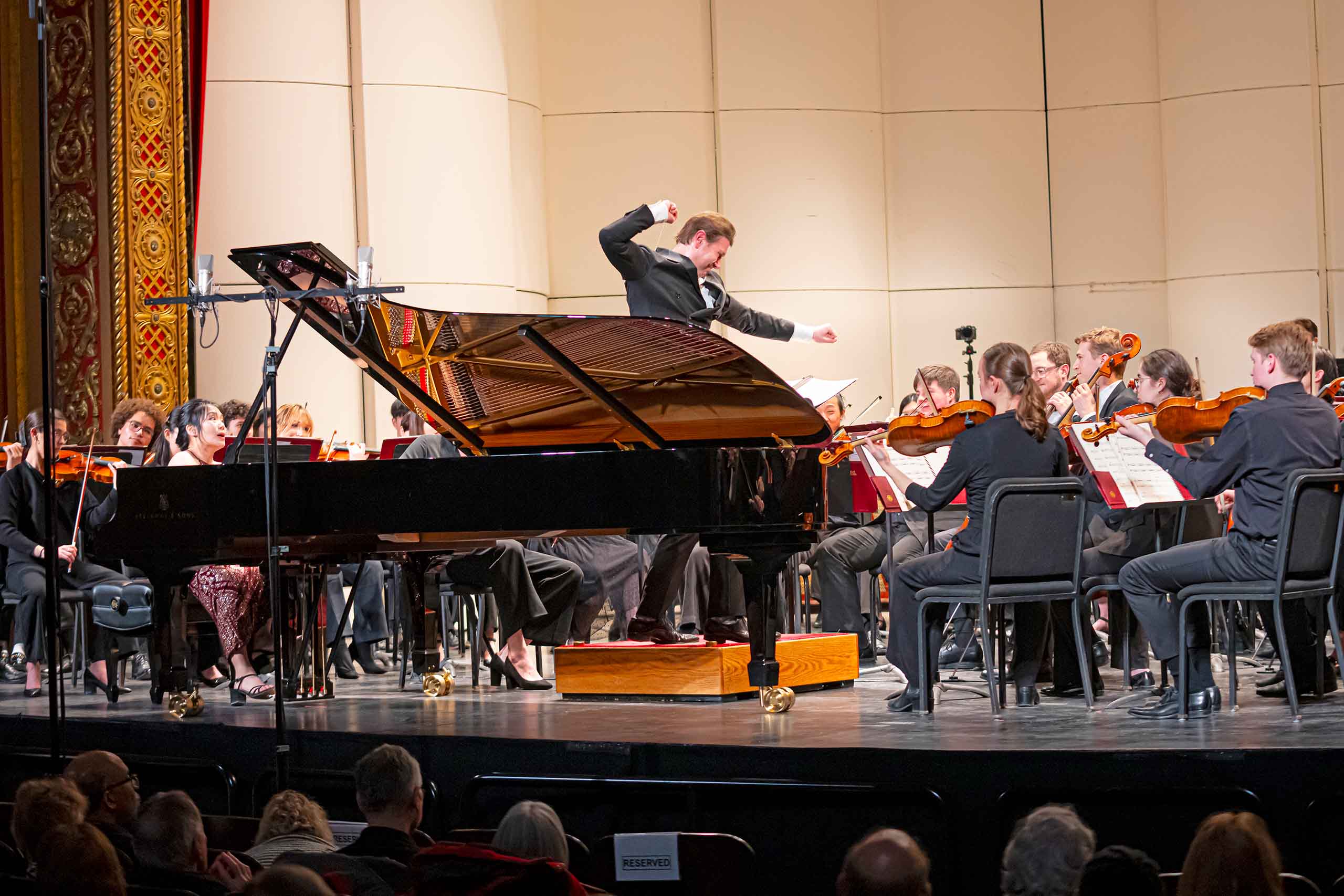
One of the Gershwin Initiative’s goals is to bring the Gershwins’ music to the U-M and Ann Arbor communities. Here, the University Philharmonia Orchestra, conducted by Jayce Ogren, performs during the Gershwin Centennial Concert at the Michigan Theater, January 2025. Photo: Kirk Donaldson
Providing Individualized Attention
Given the small size of the PhD programs at SMTD, the faculty are able to mentor students and help them develop a customized approach to their research and their career preparation. That individual attention enables faculty to give extensive feedback on students’ research articles, nominate students for awards and honors, and review students’ drafts of grant proposals, among other things. Departments hold workshops on preparing résumés and, as noted by Wayne Petty, associate professor in the Department of Music Theory, “we have mock interviews for our students who are entering the job market, particularly those who already have an interview scheduled and want to rehearse their teaching demonstration or their job talk.”
While guiding PhD students in their research is routinely done in PhD programs, alumni describe their appreciation for SMTD faculty going above and beyond what’s expected of them. Recalling his efforts as a student to define his research interests, Rawlings noted the extensive time that Marie McCarthy, professor of music education, spent with him, talking over his interests and then helping to connect him with the right people. Rawlings was interested in studying how youth in music ensembles navigate both the positive aspects of music-making and the negative effects that can emerge in a deeply competitive environment, including bullying. McCarthy asked around among her U-M colleagues to find academics who specialize in related fields and ultimately connected Rawlings with Sarah Stoddard, an associate professor in the School of Nursing and the School of Public Health specializing in adolescent health. Rawlings took nursing and public health courses and worked closely with Stoddard. They co-authored an article published in the Journal of School Health, and Stoddard became part of Rawlings’s dissertation committee. “It was a fabulous outcome to an independent study,” Rawlings said, “where I learned how to do something that would impact how I design my future investigations, guide PhD students, and review colleagues’ work.”
Another mode of faculty support involves cultivating connections between current students and alumni. René Rusch, associate professor and chair of the Department of Music Theory, described receptions held at meetings and conferences of the Society for Music Theory and the American Musicological Society. “Receptions bring together current students, alumni, and other colleagues in the field,” she said, “offering everyone an opportunity to connect socially and build professional networks.”

René Rusch

In 2024, Bryan Parkhurst, an alumnus who recently joined SMTD’s faculty in the Department of Music Theory, started a summer reading group for current graduate students, alumni, and professors. The Ann Arbor Music Theory Reading Group and Colloquy (AAMTRGC, pronounced “Amtrak”) holds weekly meetings with in-person participants in Ann Arbor and metro Detroit and virtual attendees from major music theory programs across the country. “Our informal chats about music theory texts allow our graduate students to begin building intellectual networks by interacting with distinguished faculty and fellow graduate students from other institutions,” Parkhurst noted. “And the relaxed and fairly unstructured meetings are also a great way of welcoming our new graduate students and getting them involved in the intellectual life of the department before their official coursework starts.” Praising the value of the reading group for alumni, Petty said, “It’s been a great opportunity for them to continue to have some scholarly structure to their summer work and stay connected to their former professors and other alumni.”
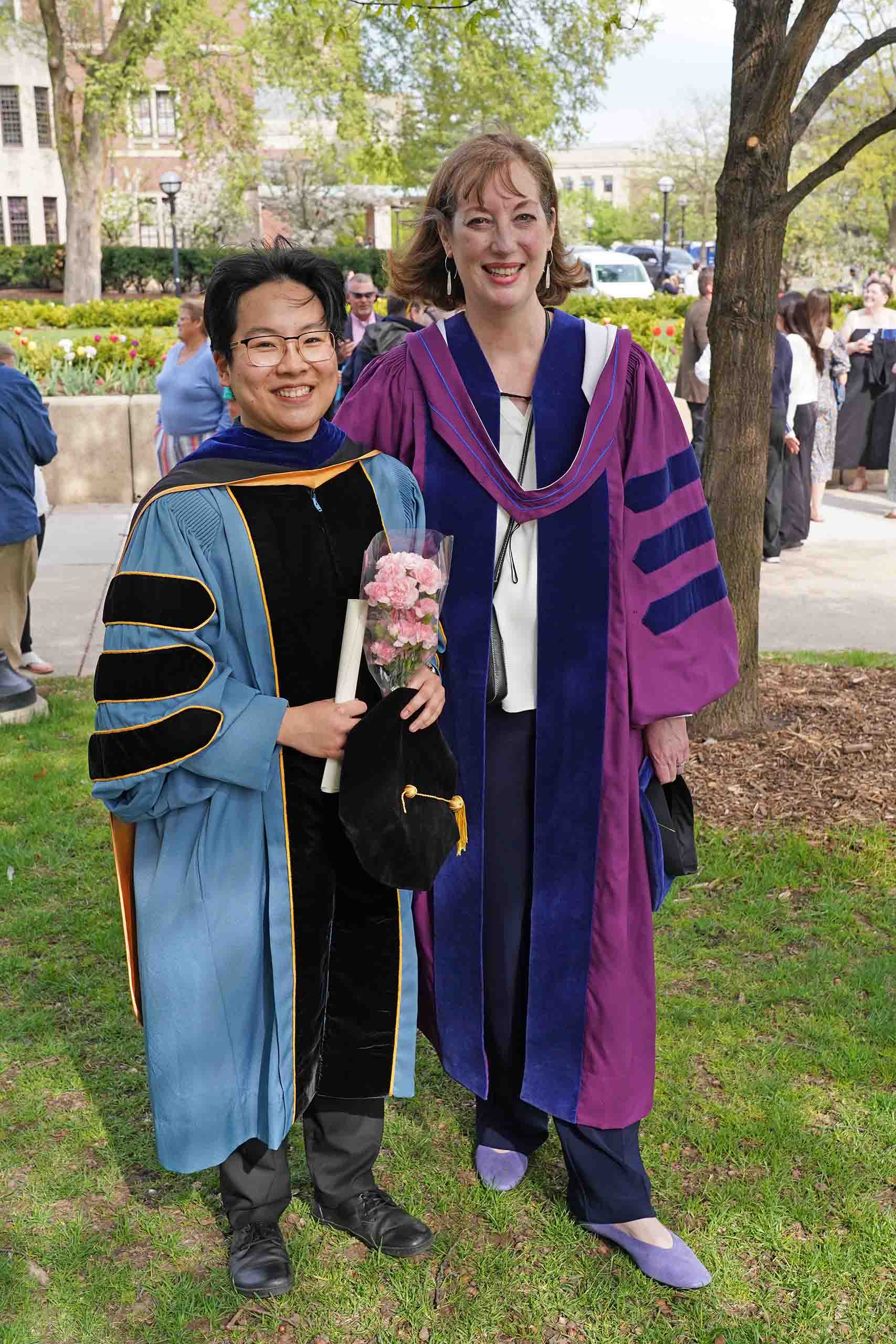
Sylvie Tran (PhD ’25, music theory), left, with her dissertation advisor Karen Fournier, at commencement 2025. Photo: Peter Smith
Offering Support Long after Graduation
In ways large and small, support for SMTD PhD students continues well after they complete their programs. Faculty provide references, advise on job applications and the tenure process, and offer feedback on grant proposals and manuscripts. “Alumni may seek support from faculty for book projects and articles and request both short- and long-term career advice,” Rusch said. “These mentorships can last for years.”
Rawlings shared that, even 10 years after completing his music education PhD, his former professors still attend the sessions he’s presenting at conferences, and he still calls them for advice. “There’s a lot of integrity with the faculty,” he said. “What they say and what they do are the same thing. I couldn’t ask for better mentors.” Looking back at his time at SMTD, Jeffrey Swinkin (MM ’93, piano; PhD ’13, music theory), associate professor and chair of the music theory area at the University of Oklahoma, said, “The theory program at U-M boasts an intellectually diverse faculty who are as supportive as they are rigorous. My time there was so memorable, and it really prepared me for a robust academic career.”
Graduate students can count on the culture of support at SMTD, Conway noted, and in turn, they should always be prepared to extend that support to others. She often tells her students, “You’re coming to Michigan for a reason, right? It’s the best and the brightest. It’s also a lifetime commitment. What goes around comes around. I think we’ve created a culture where we all recognize the need to pay it forward.”