
Michigan Muse Fall 2025 > Summer Dreams: Faculty Revel in Performing, Teaching, and Recruiting at Summer Festivals
Summer Dreams: Faculty Revel in Performing, Teaching, and Recruiting at Summer Festivals
By Marilou Carlin
For performing arts faculty, summer isn’t just a time for relaxing after a rigorous, event-packed academic year. It’s also a time to take advantage of a rich array of opportunities that can be found at performing arts festivals, camps, and intensives around the world.
Summer opportunities range from long-established and well-known festivals to cutting-edge, emerging workshops. Locations are equally varied, with programs of every iteration found throughout the United States and Europe, as far away as Asia, and on the Ann Arbor campus. In fact, more than two dozen SMTD faculty teach at the annual MPulse Institutes for high school students, which take place on campus between June and August and range in length from one to four weeks. The 16 different institutes span SMTD disciplines and offer an exceptional opportunity to meet and teach students who may become Wolverines.
But while MPulse offers faculty the convenience of being on their home turf, many take positions further afield. Whether near or far, these summer gigs often result in reunions with colleagues, alumni, and even current students who have secured highly competitive admission to festival schools or have landed coveted internships. All are drawn to the unique growth and enrichment of the summer festival experience.
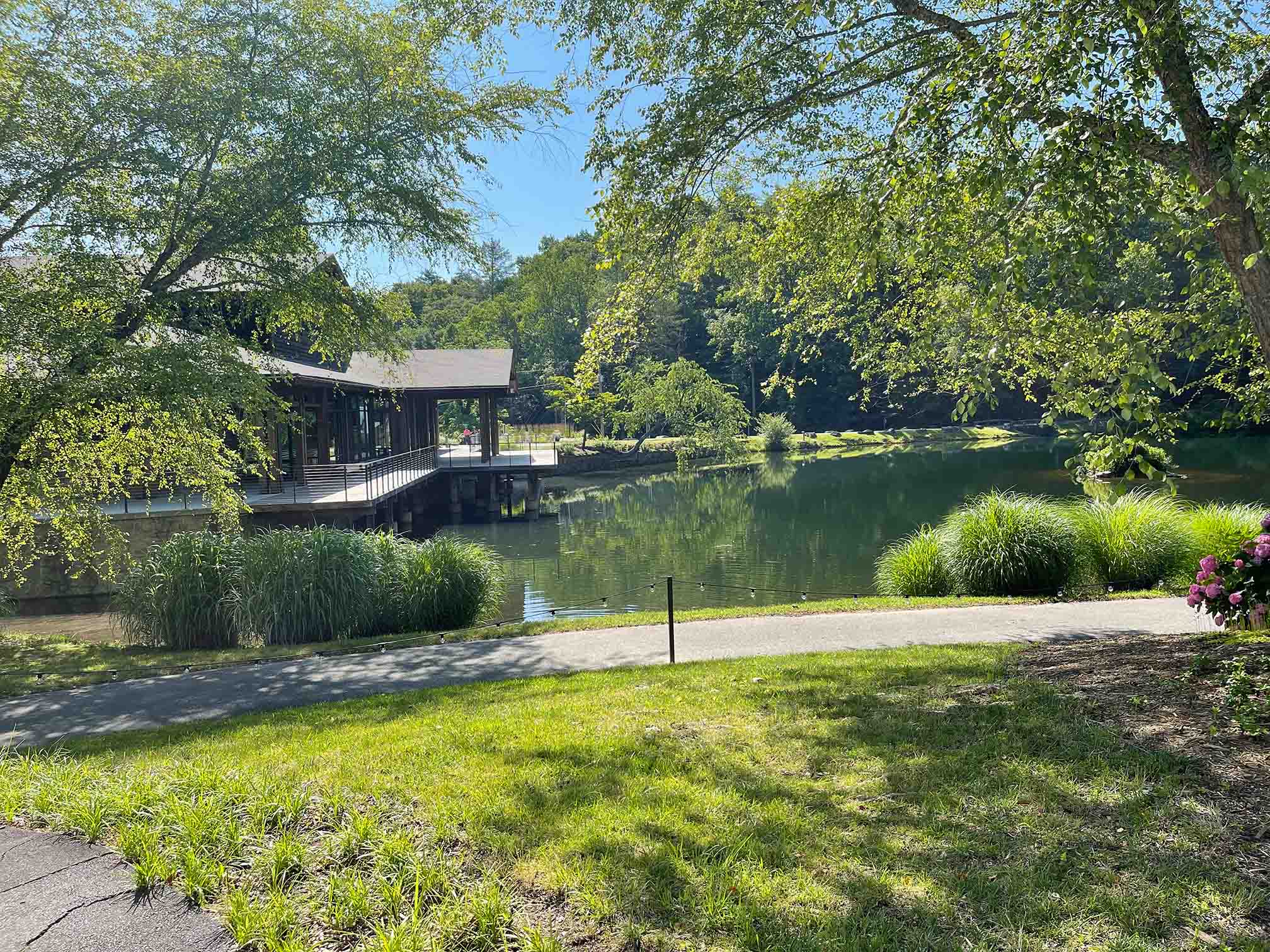
Brevard Music Center, summer 2025
Brevard Music Center Summer Institute & Festival
Set in the Blue Ridge Mountains of North Carolina for seven weeks each summer, the Brevard Summer Institute and Music Festival is one of America’s premier summer training programs for young musicians, and it offers a jam-packed concert schedule. Flute professor Amy Porter attended the institute as a high schooler in 1979 and 1980. The intensely competitive program, then as now, accepts only six high school and six college flutists each summer. So Porter already knew how special it felt to be a part of this exclusive community when she was invited to replace the retiring principal flutist in 2018. There is no audition or application process for becoming Brevard faculty; it is achieved only by invitation. “It was such an honor,” said Porter. “For me, as an alum, it’s just such a special thing. It’s like family, and that’s how they talk about it, too, the Brevard family.”
Porter is one of three SMTD professors who taught and performed at Brevard last summer, along with David Jackson (trombone) and Daniel Gilbert (clarinet). They were all principals in the Brevard Music Center Orchestra, allowing them to spend the bulk of their summer immersed in performance. There were eight full orchestra concerts as well as chamber music performances. “At Brevard, I have the freedom to eat, sleep, and breathe the flute,” said Porter. “I’m blissfully self-absorbed, because when I’m home, there are a lot of people and personalities that can pull you in different directions as a faculty member and as a professor.”
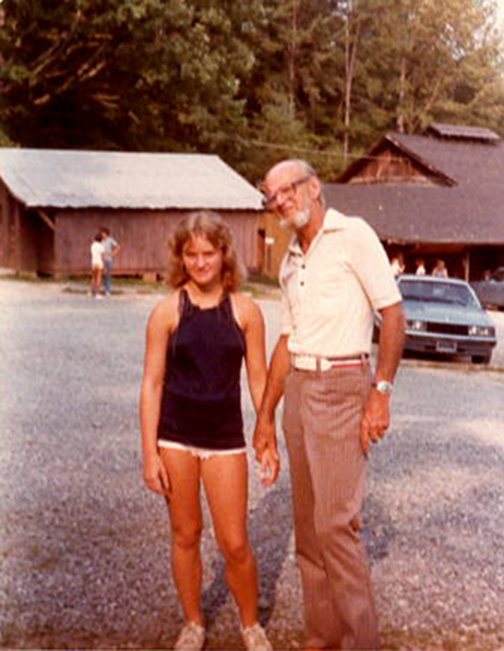
Amy Porter (pictured with her dad in 1979) attended Brevard as a high school student
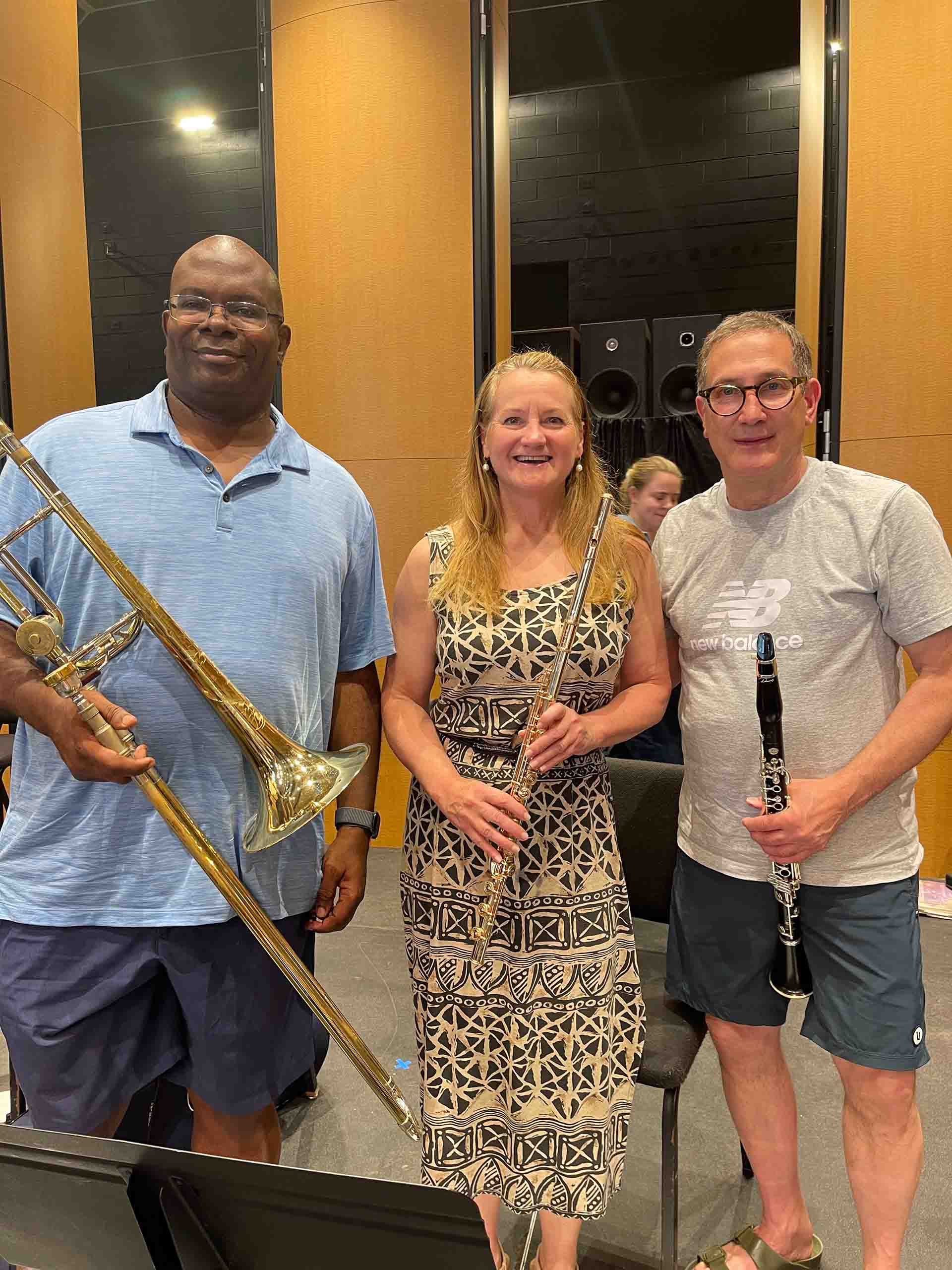
David Jackson (left), Amy Porter, and Daniel Gilbert at Brevard, summer 2025
Gilbert agrees. “In the winter I play, but I’m mostly focused on our 32 to 36 clarinet students. In the summer, it’s the other way around, where I focus a lot more on my playing. I get to pursue my passion.” Gilbert initially came to Brevard as a husband and dad, accompanying his wife, pianist Donna Lee, a longtime Brevard faculty member, and taking care of their son. He took full advantage of the wonderful outdoor activities that abound at Brevard, but steered clear of the music “so nobody ever felt I was trying to horn in,” he said. Still, he was invited to join the faculty in 2019.
David Jackson received his invitation to join Brevard 11 years ago and says that spending so much of the summer performing is invigorating. “For me, it’s a great opportunity to stay on top of the orchestra literature and to work with really great conductors and great colleagues in the orchestra.” Jackson also appreciates the side-by-side teaching with each of his four college trombone students when they, like all of the college instrumentalists, take turns playing with the faculty orchestra throughout the season. “This method of teaching is very effective when paired with regular studio teaching,” said Jackson. “I find it very rewarding.”
Jackson and Porter also teach a week-long instrument-specific seminar that takes place prior to the regular institute season. Each seminar admits about two dozen high school and college students for an intensive week of learning. Porter has the pleasure of teaching the flute seminar with her former student, Maria Fernandez Castillo (BM ’04, SM ’18, DMA ’20), now an assistant professor at the University of Tennessee.
The faculty all agree that Brevard provides exceptional recruitment opportunities. The students are not only outstanding, but the environment is ideal for getting to know them beyond a single audition. “When students work with us at the festival, we’re seeing them in just about every situation, so we know their personalities, how they play, and how they work with other people,” said Jackson.
Gilbert says that Brevard deserves its place alongside celebrated festivals like Tanglewood, Ravinia, and Aspen as one of America’s most esteemed music festivals. “It provides a very rigorous seven-week orchestral, chamber music, and lesson experience for the students, along with great opportunities to enjoy nature in the Blue Ridge Mountains,” he said. “I’ve been involved in a few other music festivals, and Brevard is right up there at the very top.”
Kristin Chenoweth’s Broadway Bootcamp
Each summer, dreams come true for 65 talented students in grades 8 to 12 when they are admitted to Kristin Chenoweth’s Broadway Bootcamp (KCBBC). Set in Chenoweth’s hometown of Broken Arrow, Oklahoma, over 10 days in July, the camp enables students to study musical theatre with its eponymous founder (a Broadway legend) and a team of seasoned musical theatre professionals.
Among the faculty is Cynthia Kortman Westphal, professor and chair of SMTD’s Department of Musical Theatre, whose esteemed academic career is matched by her experience as a sought-after music director. In this, her fourth year, she was the head music director and had the pleasure of working with faculty artists such as Thom Christopher Warren, Tyler Hanes, Kate Baldwin, Anne Nathan, and SMTD alumna Erin Dilly (BFA ’94).
“It is like a who’s who of Tony winners and Tony nominees for me to learn from,” said Westphal. “We’re all gathering more tips and tricks and skills and other ways to teach. When you see other people teaching in a different way, it illuminates something for you as a teacher. I always feel like the Kristin Chenoweth camp is a professional development camp for me as much as for the students.”
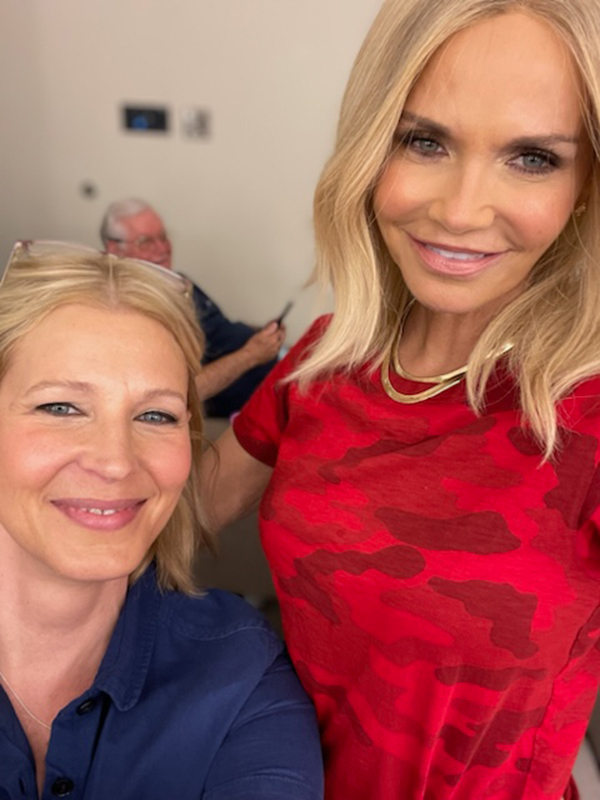
Cynthia Kortman Westphal (left) and Kristin Chenoweth at KCBBC 2024
The students take singing, dancing, and acting lessons as they gear up for a grand finale student-faculty performance and awards event, “The Kristi Awards.” Westphal’s duties include directing all details of the awards performances – choosing the material, organizing the rehearsal process, and helping to choose the performers and faculty directors for each number.
The concert is one of several things that differentiates the KCBBC from SMTD’s MPulse Musical Theatre Workshop, the three-week intensive for rising high school seniors for which Westphal is faculty director. But both programs offer great opportunities to discover potential SMTD students. “I’m always eager to see high school students performing or working or in a class anywhere,” said Westphal.
Two KCBBC students have now matriculated at SMTD’s musical theatre program: Joey Dean (BFA ’29) and Mackenzie Crawford (BFA ’28), who Westphal watched grow over three years at KCBBC. Crawford returned to the camp again in 2025, but this time as an intern.
Westphal says some students she encounters at the camp are reluctant to apply to SMTD, as they doubt their chances of getting in. “The Michigan musical theatre program is so well known, so sometimes it’s less about needing to bring awareness to the program and more about encouraging them to apply even though the odds might feel slim.”
Receiving counsel and guidance from faculty is one of the top benefits for students attending the KCBBC, she added. “It’s more than just studying musical theatre. It’s a great opportunity for them to learn from people who are so active in the industry, and to see that we are all just regular people, including Kristin,” she said. “They’re getting a chance to interact with people who are living the life of an artist, and getting to experience what that’s like. That’s incredibly valuable.”
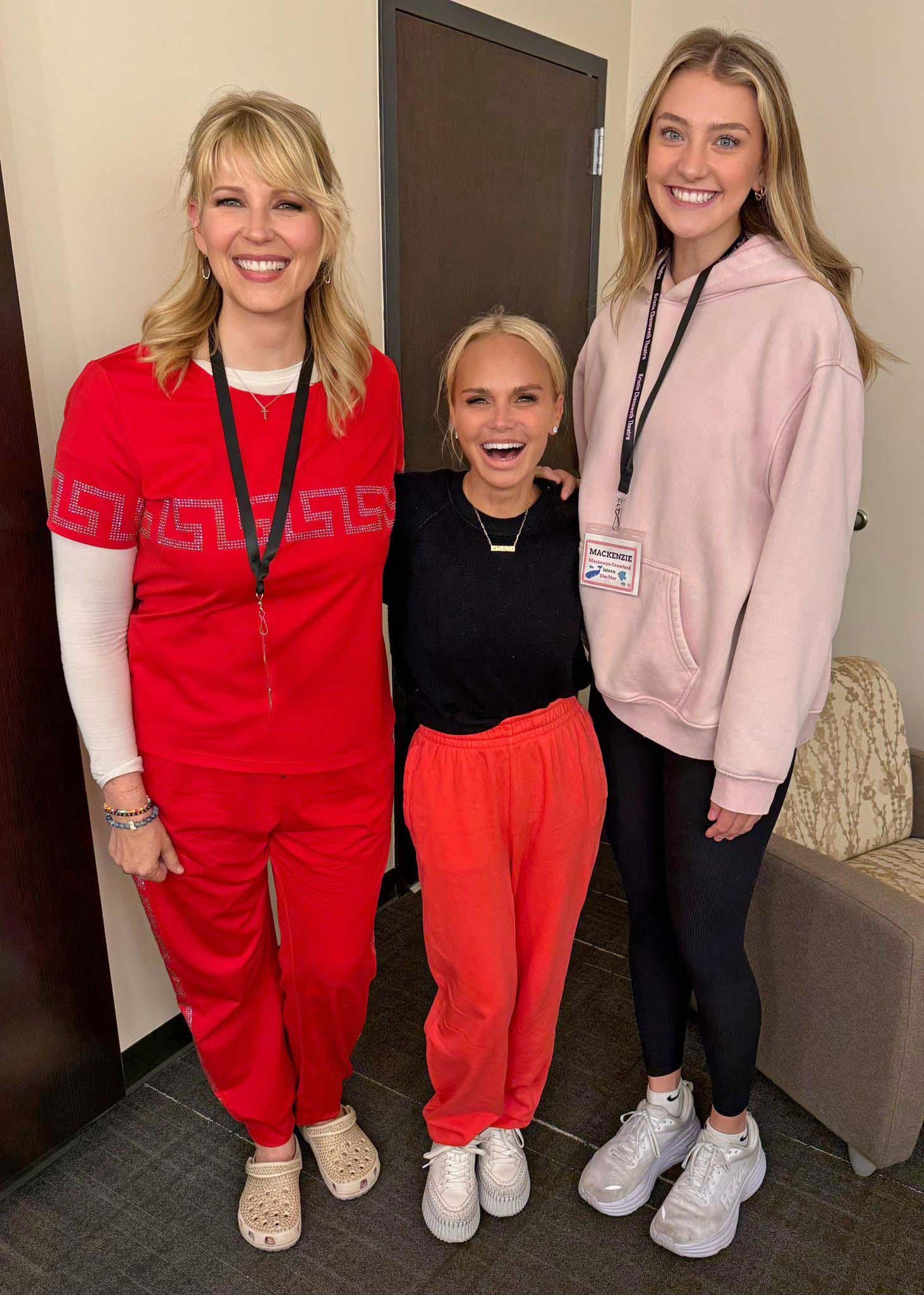
Cynthia Kortman Westphal (left), Kristin Chenoweth, and SMTD student Mackenzie Crawford at KCBBC 2025
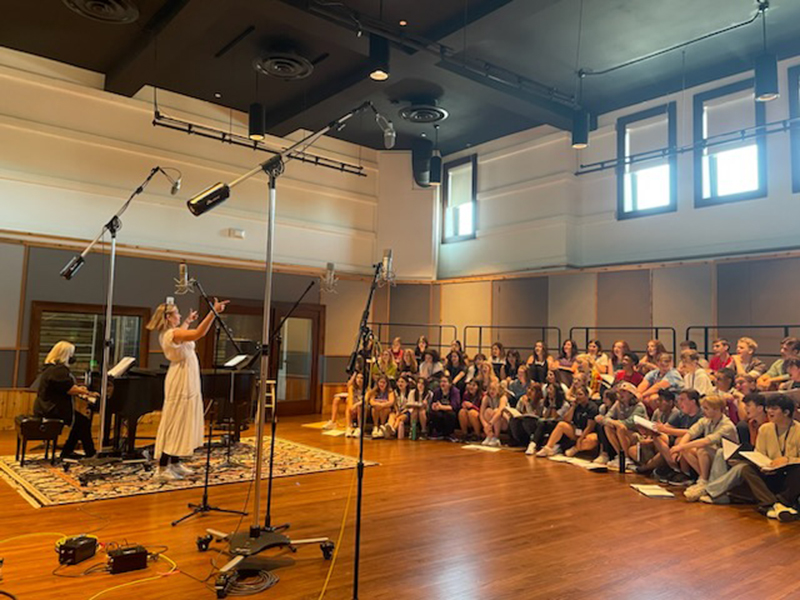
Cynthia Kortman Westphal teaching at KCBBC 2024
Michigan Movement Performance Projects
For aspiring dancers who are seeking multi-week summer training programs akin to what major music festivals offer, the pickings are slim. And if they exist, they’re usually located on America’s two coasts.
“Summer programming is short in time, high in price, and typically, far away from wherever dancers are working or studying during the year,” said Shannon Gillen, associate professor of dance and artistic director of VIM VIGOR, an internationally renowned dance company that also has a strong pedagogical component. Gillen co-founded VIM VIGOR in New York City with SMTD dance lecturer Jason Cianciulli (MFA ’24, dance), and the company frequently collaborates with students in the Department of Dance at SMTD.
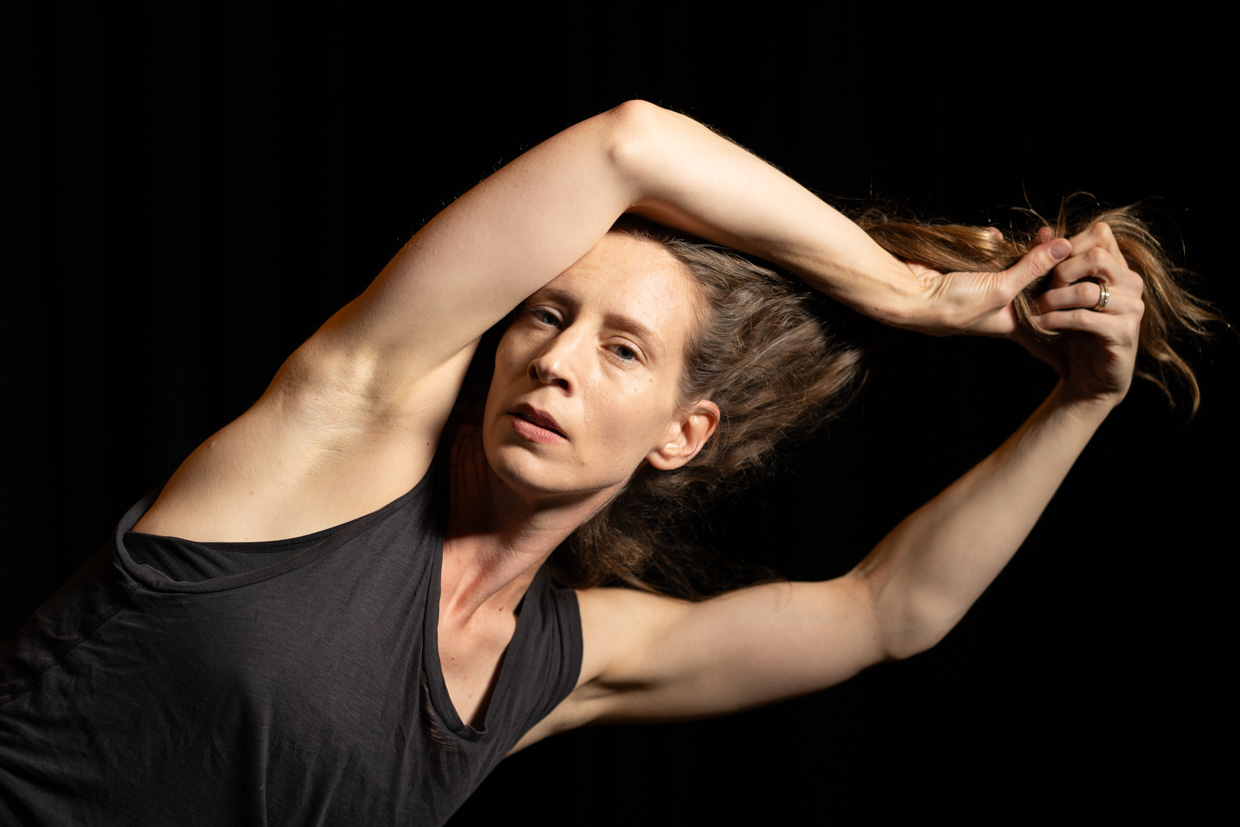
Shannon Gillen
Gillen, who joined the dance faculty in 2020, has been eager to improve access to professional training and experiences for her students during the summer, particularly for those who reside in the middle of the country. So she decided to meet the need and “champion Midwest talent” by creating Michigan Movement Performance Projects (M2P2) at SMTD, utilizing the new state-of-the-art dance facilities on North Campus. About 65 percent of the inaugural year M2P2 enrollees were from U-M.
The seven-week program, for dancers age 18 and over, not only provides intensive training, creation, and performance opportunities but also fosters active mentorship through partnerships with other dance companies and choreographers. The goal is to advance the skills and experience necessary to thrive in the dance field and provide networking opportunities by bringing hiring companies into contact with the students.
Gillen and Cianciulli travel extensively with VIM VIGOR, especially in Europe, where they became familiar with dance apprenticeships, a common way for fledgling dancers to advance their careers. Gillen wanted to provide that kind of experience at M2P2. “We wanted to create an immersive company environment where performing artists have experience working with a company, or several companies, in their works and in company class, and learning what that lifestyle is like,” she said.
Toward that end, Gillen invited the Spain-based dance company Marcat Dance to join VIM VIGOR for the program. Led by choreographer and dancer Mario Bermúdez, Marcat was co-founded by alumna Catherine Coury (BFA ’10), who is also co-artistic director and principal dancer.
Additionally, the founders and choreographers from three other companies each spent a weekend working with students: Banning Bouldin, of Nashville-based New Dialect; Kia S. Smith, of South Chicago Dance Theatre; and Lauren Edson, of LED Boise.
Another key difference to this intensive is that students develop their own choreography. “That’s something that is generally ignored in training over the summer – you learn other people’s technique, but you don’t develop your own choreographic voice,” said Gillen.
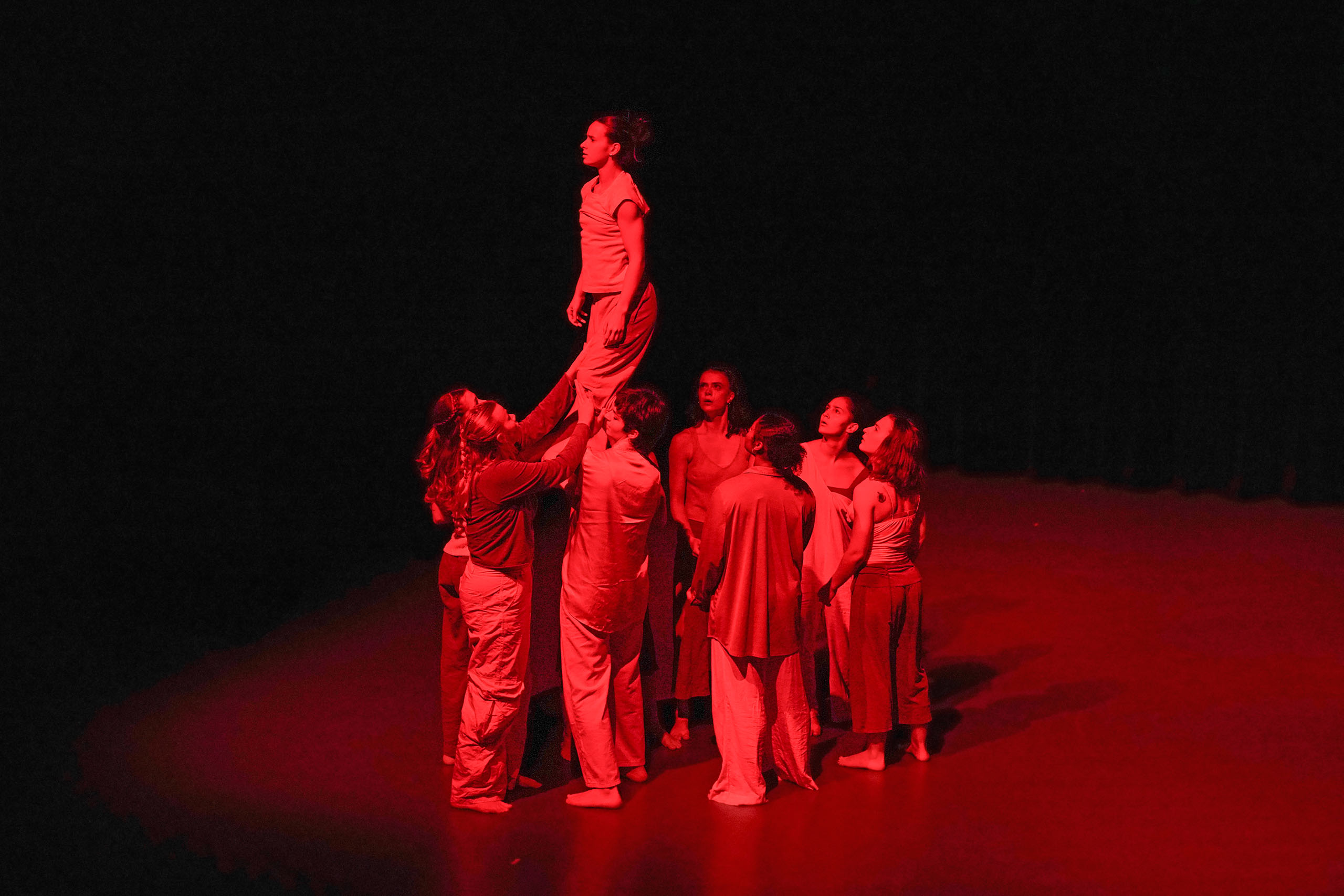
Dancers perform in VIM VIGOR’s work Behold These Happenings during the 2025 season of Michigan Movement Performance Projects. Photo: Chris Boyes
At the conclusion of the program, all of the participants performed in both VIM VIGOR and Marcat works in a free performance open to the public. Their own works were professionally filmed the following week in an immersive mentorship process.
“We’re trying to create a place where you can build community while you’re building skill sets,” said Gillen, “and also helping people have a competitive edge in the marketplace.”
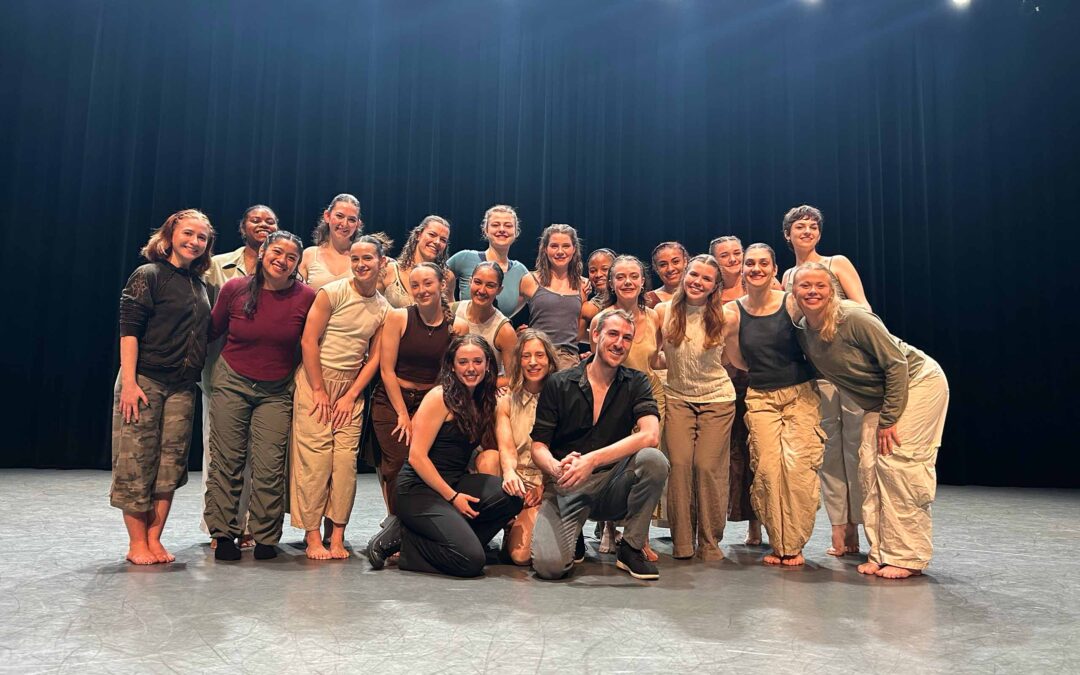
Michigan Movement Performance Projects participants, summer 2025. Front row: Katherine Kiessling (BFA ’25, dance), VIM VIGOR company member; Shannon Gillen, and Jason Cianciulli
Chautauqua Theater Company
For 13 seasons, Jenn Rae Moore, clinical assistant professor of theatre, was the production stage manager (PSM) and a member of the senior leadership team at Chautauqua Theater Company (CTC). The renowned nine-week summer theatre festival, set in beautiful Western New York, provided a glorious summer escape from her home in New York City, as well as the chance to work on theatre at the highest level. She is credited with building the company’s stage management program, and the resulting work with assistants and interns ignited a passion for teaching.
“Chautauqua is where my interest in pedagogy really blossomed,” she said. “Even though it isn’t a school, I was in the role of a mentor. And I have many, many former and current team members who came from Chautauqua.”
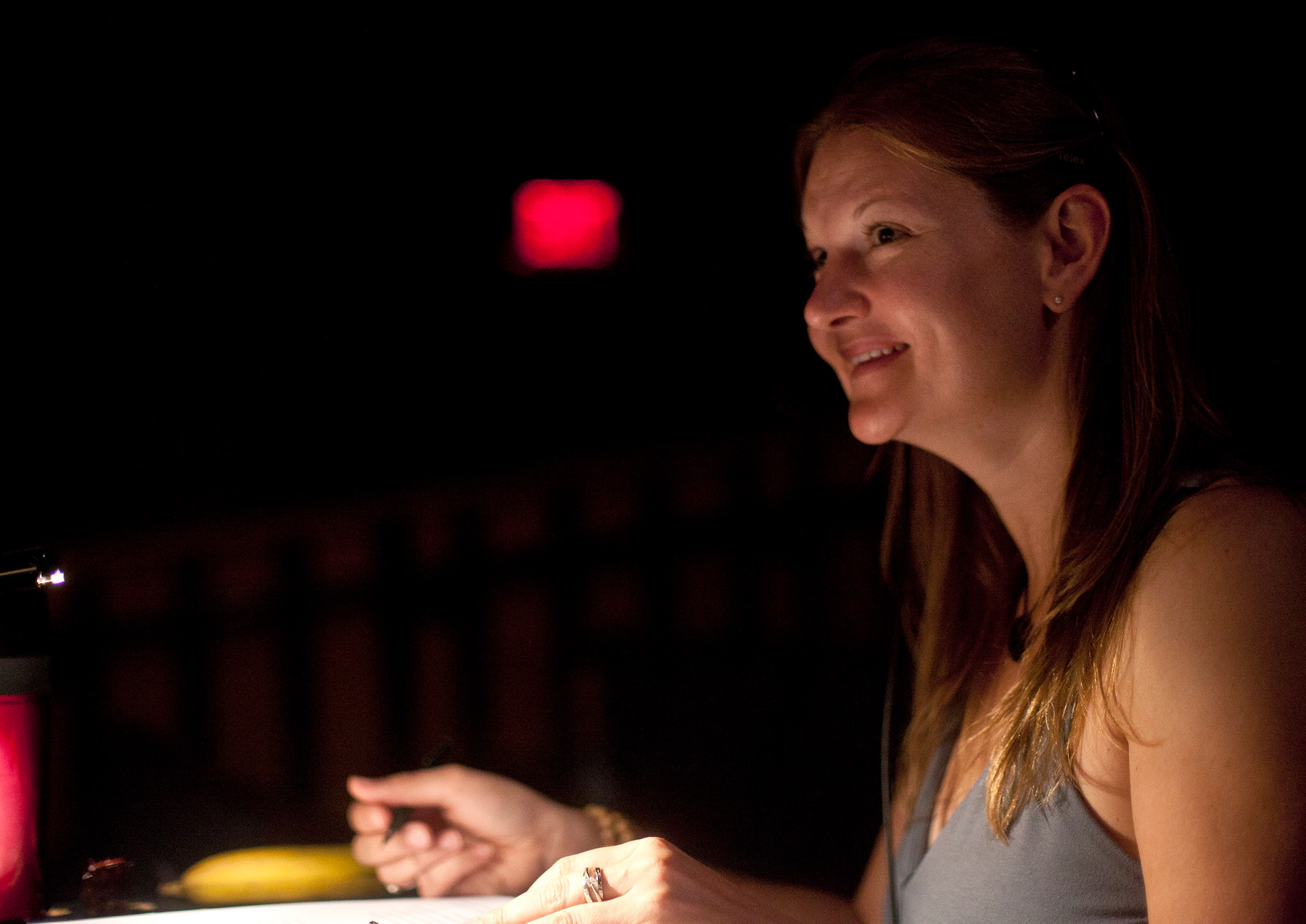
Jenn Rae Moore in the Bratton Theatre at Chautauqua
Throughout her time at CTC, Moore’s PSM career in New York was at full throttle and included work for Tony Award-winning shows and 12 full productions at Lincoln Center Theater. The intensity of the workload persuaded her to step away from CTC in 2017. “Being a production stage manager on Broadway really takes everything you’ve got,” she said. “Eventually I just couldn’t give CTC the attention it deserved. It was time to pass the baton to the next generation.”
But mentoring students and early career stage managers had become an important part of her career. In time, she decided to make it her top priority. “I was just looking for something different, for a way to encourage and nurture the next generation of theatre makers in a more full-time, permanent way.”
That led to her current position at SMTD, which she began last January. But the lure of Chautauqua remained. She continued going each year to visit, but this past summer she returned to be the PSM on two of the plays being developed in CTC’s New Play Workshops.
“I love developing new work,” said Moore. “It’s how I built my career Off Broadway. Development is where it all begins. It really gives the playwright an opportunity to see their work at the next level, and then be able to work on it. It is one of my favorite things about Chautauqua.”
Moore had informed her SMTD students of employment opportunities at CTC and was delighted when Kay Stanton-Sharpless (BFA ’26, design & production), landed a job as a production assistant for the full nine weeks. “There’s lots of learning to be had there, because theatre is learning, and especially stage management,” said Moore. “You really learn stage management by doing it.”
Moore says that the inherent constraints that often come with summer theatre – such as a shorter timeline and smaller budget – can actually be helpful to young stage managers as it provides an opportunity to learn how to navigate those situations. “I know that I will continue to nurture students there, and perhaps also spark interest in the other direction,” she said, acknowledging the recruitment potential of being at CTC. “And I hope I’ll be able to continue to encourage my students to spend their summers at Chautauqua.”

Fourth of July fireworks at Chautauqua, 2024