
About the George and Ira Gershwin Critical Edition
About the Edition
A Unique Partnership
The George and Ira Gershwin Critical Edition is a unique partnership between the Gershwin Initiative at the University of Michigan School of Music, Theatre and Dance and the Gershwin family that brings the works of George and Ira Gershwin to performers, scholars, students, and general audiences worldwide. The Edition creates, publishes, and distributes new scholarly editions of the Gershwins’ works and enables educational opportunities for University of Michigan students and the community to appreciate and proliferate the Gershwins’ artistry.
Marc George Gershwin (nephew of George and Ira Gershwin, majority member of the Marc George Gershwin LLC, and trustee of the Arthur Gershwin Testamentary Trust) writes: “Preserving the legacy and sharing the genius of George and Ira Gershwin is a primary goal of creating critical editions of their works. The University of Michigan, with research and performance disciplines that parallel the Gershwins’ creativity, provides an ideal home for this project. Our partnership enables the art of George and Ira Gershwin to take its place, for generations to come, among the preeminent artistic achievements of the twentieth century, and to spark the imagination of musicians young and old.”
This groundbreaking partnership was initiated by Todd Gershwin, a University of Michigan alumnus, the grandnephew of George and Ira, and the son of Marc George Gershwin. The project is spearheaded by Mark Clague, professor of musicology at the University of Michigan, who serves as editor-in-chief of the edition. The Gershwin Initiative is made possible in part by a major grant from the National Endowment for the Humanities.
The Need for a Critical Edition
Until now, the Gershwins’ works never have received the benefit of scholarly editing, partially due to the abrupt and tragic death of George Gershwin from a brain tumor at age 38. Although many of his works have been readily accessible in print and recordings, a great number of scores and instrumental parts still circulate as hard-to-read photocopies of handwritten notation that contain significant errors and inconsistencies. Even Rhapsody in Blue and Porgy and Bess—by many considered America’s greatest opera—have been performed and recorded using problematic scores and parts that diminished performances with errors and materials that wasted rehearsal time—until now.
This edition is long overdue and rightly places the Gershwins’ work on library shelves and music stands alongside the pantheon of America’s greatest composers, including Stephen Foster and Charles Ives, and among such canonic European masters as Bach, Beethoven, and Brahms.
The Scope of the Edition
The George and Ira Gershwin Critical Edition is the first scholarly edition series of all the extant music and lyrics of George and Ira Gershwin. It provides conductors, musicians, performers, scholars, students, and general audiences profound new insights into the Gershwins’ works, and in many cases offers the first performance materials to accurately reflect the vision of the creators. In addition to the great American opera Porgy and Bess, important works included in the series include Rhapsody in Blue, An American in Paris, Concerto in F, and Cuban Overture, along with over two dozen Broadway and Hollywood musicals. The result of George and Ira’s collaboration resulted in many of the most beloved songs in American music, including “It Ain’t Necessarily So,” “Someone to Watch over Me,” “Embraceable You,” “I Got Rhythm,” “Fascinating Rhythm,” “Oh, Lady Be Good,” “Love is Here to Stay,” “The Man I Love,” “Nice Work if You Can Get It,” “They Can’t Take That Away from Me,” “’S Wonderful,” and many others.
Editorial Methods
The George and Ira Gershwin Critical Edition combines cutting-edge historical research with meticulous editorial accuracy to produce volumes that represent the Gershwins’ work in rigorously definitive publications. These editions differ from previously-available standard performing editions or anthologies because they examine all available source materials and explain all editorial decisions, resulting in versions of the works that best capture the conception of the creators. Each critical edition includes a contextualizing essay appropriate for general readers as well as experts, a thorough elucidation of editorial methods, and explanatory notes that invite users to intimately comprehend the artistry of the Gershwins.
The Gershwins’ works require careful editing because they combine the genres of classical music, jazz, blues, and popular song—artistic traditions with distinctive conventions of musical notation. For example, in an art form such as jazz, based on improvisation, notation is often extrapolated not by the performer but by a transcriber long after the performance. For instance, a recording of a solo by bebop saxophonist Charlie Parker would be recognized by his idiomatic phrasing and musical gestures, but notation of that solo onto a page of score would not have been extrapolated by Parker but by a transcriptionist. Some of George Gershwin’s most well-known works, including the piano part for Rhapsody in Blue, were not originally performed from notation but were improvised or performed from memory and only notated after their premiere. Such music requires expert scholarship to elucidate.
Moreover, George Gershwin frequently composed quickly and created multiple versions of his works for a variety of ensembles and contexts. Before this critical edition, previous publications of his works contained substantial notational errors and even lacked large sections of music. The scholars behind the George and Ira Gershwin Critical Edition seek to determine precisely what notation to include and correct to best represent the creators’ work.

The Gershwin Initiative has been made possible in part by a major grant from the National Endowment for the Humanities: Exploring the human endeavor.
About George and Ira Gershwin
By Mark Clague and Andrew S. Kohler
George Gershwin (1898–1937) is one of the world’s most popular and successful composers of the 20th century in any genre – a status that is both a compliment and a curse. In his too-brief but prolific career, George composed a long list of popular songs, many written for Broadway and for Hollywood films. He worked with the early 20th century’s top lyricists (notably Irving Caesar and Buddy DeSylva), though his most brilliant collaborations were with his brother Ira Gershwin (1896–1983), with whom he enjoyed a unique and prolific partnership that resulted in sixteen book musicals, an opera, six films, and assorted songs. Together they have long been honored as two of the leading contributors to the “Great American Songbook.”
George Gershwin created some of music history’s most cherished melodies, not only in song, but also in works for orchestra, such as the jazz-inspired Rhapsody in Blue (1924), and in what is arguably the most significant American opera, Porgy and Bess (1935), a collaboration between the Gershwins and DuBose and Dorothy Heyward.
Ira Gershwin is celebrated for his genius with words, crafting hundreds of lyrics that are clever, funny, moving – or all of the above. Adept at implementing new lyrical styles, playing with timing, and incorporating unusual word combinations. Of Thee I Sing (1931), one of the Gershwins’ collaborations with book writers George S. Kaufman and Morrie Ryskind, was the first musical whose dialogue and lyrics were published in book form, and the first to receive a Pulitzer Prize for Drama (1932). In addition to his work with George, Ira collaborated with several prominent composers, among them Harold Arlen, Jerome Kern, Kurt Weill, and Aaron Copland.
Ira Gershwin was born as Israel Gershowitz on the Lower East Side of New York City, and George Gershwin was born Jacob Gershwine in Brooklyn, New York. Their Jewish immigrant parents, from St. Petersburg, had joined the American melting pot seeking better opportunity. George took immediately to the piano bought originally for Ira and studied piano with Charles Hambitzer. He later studied composition with Rubin Goldmark and modernist Henry Cowell. George’s skills at the keyboard were admired by African American stride pianists such as Luckey Roberts and James P. Johnson. After George began making a name for himself in the music business, he encouraged Ira to try his hand at writing lyrics. Ira had his first song on Broadway in 1918 when “The Real American Folk Song,” with music by George, was used in Ladies First, launching both his songwriting career and the remarkably successful partnership with his brother. It was not until 1924 that George and Ira had a full show together on Broadway with Lady, Be Good!, starring Fred and Adele Astaire.
Perhaps more than any other American composer, George Gershwin integrated a range of musical genres, most notably blending classical music with jazz, blues and popular music phrasings. Influenced by his on-the-job songwriting and performing experience working in New York City’s Tin Pan Alley as a “song-plugger,” George created musical compositions distinguished by their playful and engaging melodies and seemingly spontaneous inflections. He infused popular song with enriched classical harmonies and imbued symphonic and operatic works with the improvisational energy and rhythmic vitality of jazz. His music reflects the power of the American cultural melting pot: A blend of sonic dialects and styles at the heart of democracy.
Because of his tragic and unexpected death due to an untreatable brain tumor, George Gershwin simply did not live long enough to give proper consideration to his musical legacy. Aaron Copland, by contrast, lived to be 90 years old, and his work has been published in accurate and authoritative editions. Following George’s death, Ira continued – after a three-year hiatus – to write lyrics with many talented composers. The George and Ira Gershwin Critical Edition will at last give the Gershwins’ musical work the editorial attention their artistic stature requires.
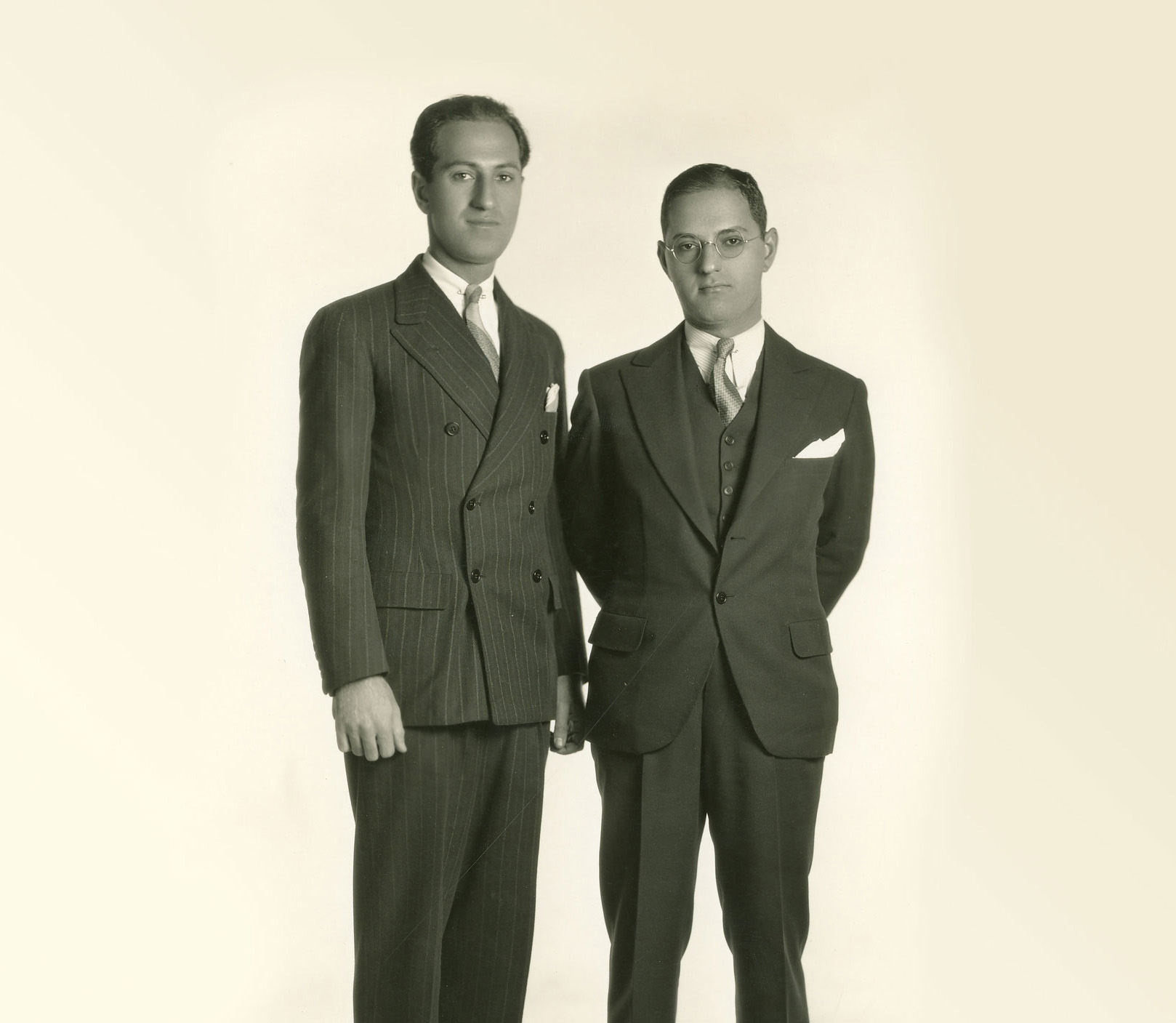
George and Ira Gershwin

Our Volumes
 Purchase and rental information
Publications in Print
I/1A An American in Paris: Final Version (1928) [Mark Clague]
I/1B An American in Paris: Uncut (1928) [Mark Clague]
II/1 Rhapsody in Blue for Piano and Jazz Band (orch. Ferde Grofé, 1924) [Ryan Raul Bañagale]
VIII/1 The Gershwins Abroad (Ira Gershwin’s 1928 Travel Journal) [Michael Owen]
Forthcoming Publications
II/2 Rhapsody in Blue for Piano and Orchestra (orch. Ferde Grofé, pub. 1942) [Jessica Getman]
IV/2 Porgy and Bess (1935, George Gershwin, DuBose and Dorothy Heyward, Ira Gershwin)* [Wayne D. Shirley]
V/1 Of Thee I Sing (1931, book by George S. Kaufman and Morrie Ryskind) [Jacob Kerzner]
Series One - Works for Orchestra
I/1A An American in Paris: Final Version (1928) [Mark Clague]
I/1B An American in Paris: Uncut (1928) [Mark Clague]
I/2 Cuban Overture (1932)*
I/3 Suite from Porgy and Bess (“Catfish Row,” 1935–36)
Series Two - Works for Piano and Band/Orchestra
II/1 Rhapsody in Blue for Piano and Jazz (orch. Ferde Grofé, 1924) [Ryan Raul Bañagale]
II/2 Rhapsody in Blue for Piano and Orchestra (orch. Ferde Grofé, pub. 1942)* [Jessica Getman]
II/3 Concerto in F for Piano and Orchestra (1925)* [Tim Freeze]
II/4 Second Rhapsody for Piano and Orchestra (1931) [James Wierzbicki]*
II/5 “I Got Rhythm” — Variations for Piano and Orchestra (1934)
Series Three - Piano and Chamber Music
III/1 Lullaby for String Quartet (1919/20)* [Susan Neimoyer]
III/2 Works for Solo Piano
III/3 George Gershwin’s Song Book (1932)* [Andrew Hauze]
Series Four - Operas
IV/1 Blue Monday (1922, libretto and lyr. Buddy DeSylva)
IV/2 Porgy and Bess (1935, George Gershwin, DuBose and Dorothy Heyward, Ira Gershwin)* [Wayne D. Shirley]
Series Five - Stage Shows
George and Ira together, book musicals
A Dangerous Maid (1921) (did not play on Broadway)
Primrose (1924), lyrics with Desmond Carter (London West End) [ed. Gershwin Initiative]
Lady, Be Good! (1924)
Tell Me More (1925), lyrics with Buddy DeSylva [ed. Bradley Martin]
Tip-Toes (1925)
Oh, Kay! (1926)
Strike Up the Band, two versions (1927, which did not play on Broadway, and 1930)
Funny Face (1927)
Rosalie (1928), music with Sigmund Romberg and lyrics with P. G. Wodehouse
Treasure Girl (1928)
Show Girl (1929), lyrics with Gus Kahn [ed. Adam Aceto]
Girl Crazy (1930) [ed. Ian Sapiro]
Of Thee I Sing (1931) [ed. Jacob Kerzner]
Pardon My English (1933)
Let ’Em Eat Cake (1933)
George, book musicals
La, La, Lucille (1919), lyrics by Arthur Jackson, Buddy DeSylva, and Irving Caesar [ed. Jacob Kerzner]
Our Nell (1922), music with William Daly Jr., lyrics by Brian Hooker and A.E. Thomas
Sweet Little Devil (1924), lyrics by Buddy De Sylva [ed. Gershwin Initiative]
Song of the Flame (1925), music with Herbert Stothart, lyrics by Otto Harbach and Oscar Hammerstein II * [ed. Gershwin Initiative]
George, revues
Half Past Eight (1918), lyrics by Edward B. Perkins *
Morris Gest’s Midnight Whirl (1919), lyrics by John Henry Mears and Buddy DeSylva
George White’s Scandals of 1920, lyrics by Arthur Jackson
George White’s Scandals of 1921, lyrics by Arthur Jackson
George White’s Scandals of 1922, lyrics by Buddy DeSylva and E. Ray Goetz *
George White’s Scandals of 1923, lyrics by Buddy DeSylva and E. Ray Goetz; music for one song with Jack Green
The Rainbow (1923), lyrics by Clifford Grey
George White’s Scandals of 1924, lyrics by Buddy DeSylva, for one song with Ballard MacDonald
* = one Ira lyric (in La, La, Lucille, song dropped during tryouts)
Ira, book musicals
Two Little Girls in Blue (1921), music by Paul Lannin and Vincent Youmans, some songs with co-lyricists Fred Jackson and Schuyler Greene
Lady in the Dark (1941), music by Kurt Weill, published by the Kurt Weill Edition (Series I, Volume 16) [ed. bruce d. mcclung and Elmar Juchem]
The Firebrand of Florence (1945), published by the Kurt Weill Edition (Series I, Volume 18) [ed. Joel Galand]
Ira, revues
Life Begins at 8:40 (1934), music by Harold Arlen, lyrics with E.Y. Harburg
Ziegfeld Follies of 1936, music by Vernon Duke, one song with co-lyricist Billy Rose
Series Six - Songs
This series will include interpolations into plays, book musicals, or revues; independent songs; and songs cut from shows. In some cases, original orchestrations survive, while others survive only in piano-vocal form.
Series Seven - Film Music
VII/1 Delicious (1931)
VII/2 Shall We Dance (1937)
VII/3 A Damsel in Distress (1937)
VII/4 Cover Girl (1944, comp. Jerome Kern and Henry E. Pether, lyr. Ira Gershwin, E.Y. Harburg, and Fred Leigh)
VII/5 The Barkleys of Broadway (1949, comp. Harry Warren)
VII/6 Give a Girl a Break (1953, comp. Burton Lane)
VII/7 A Star is Born (1954, comp. Harold Arlen)
VII/8 The Country Girl (1954, comp. Harold Arlen)
Series Eight - Textual and Prose Works
Series Nine - Miscellany
About Us
Staff
- Mark Clague, Editor-in-Chief
- Andrew S. Kohler, Alfred and Jane Wolin Managing Editor
- Jacob Kerzner, Associate Editor
- Andrew T. Kuster, Associate Editor
- Arlo Banta, Editorial Assistant
- Oliver Boomer, Editorial Assistant
- Ethan Swanson, Editorial Assistant
- Eric Whitmer, Editorial Assistant
Editorial Board
- Mark Clague, Editor-in-Chief
- Andrew Kohler, Alfred and Jane Wolin Managing Editor
- Ryan Bañagale
- Jessica Getman
- James Kendrick
- Michael Owen
- Loras Schissel
- Karen Schnackenberg
- Wayne Shirley
The Gershwin Initiative Advisory Board
- Marc George Gershwin
- LJ Strunsky
- Adam Gershwin
- Todd Gershwin
- Michael Feinstein
- Walter Frisch
- Thomas Hampson
- Joseph Horowitz
- Laura Jackson
- Andrew Litton
- Howard Pollack
- Logan Skelton
- Alfred Wolin
Previous Advisory Board Members
William Bolcom, Richard Crawfordm, Christopher Kendall, Melody Racine, Michael Strunsky, Michael Tilson Thomas, Jane Wolin, Bruce Zenkel
Affiliated Institutions
The University of Michigan American Music Institute, The University of Michigan School of Music, Theatre & Dance, The University of Michigan, Library of Congress, Detroit Symphony Orchestra, Society for American Music, European American Music, Schott Music Group, Gershwin Enterprises
The Gershwin Initiative University of Michigan Faculty Advisory Board
- Mark Clague, chair
- Christopher Harding
- David Jackson
- Kenneth Kiesler
- Kristin Kuster
- Marie McCarthy
- Carlos Rodriguez
- Daniel Washington
Previous Faculty Advisors
Beth Genne, Robert Grijalva, Patricia Hall, Michael Haithcock, Melody Racine, Brent Wagner, Steven M. Whiting
Previous Team Members
David Belkovski, Marlina Bowring, Timothy Brewer, Matthew Browne (DMA), Sofia Carbonara, Allison Chu (PhD), Ava Chupp, Kristen Clough (PhD), Olivia Davis (DMA), Rachel Fernandes, Matthew Fleischer, Emily Graham, Clara Griffin, Anne Heminger (PhD), Megan Hill (PhD), Sophia Janevic, Lisa Keeney, Lena Leson (PhD), Emma Luty, Caleb Middleton, Jason Paige (DMA), Maria Paterno, Kathryn Pohl, Connor Reinman, Brandon Scott Rumsey (DMA), Ellen Sauer, Christopher Sherwood-Gabrielson (PhD), Carlos Simon (DMA), Sarah Sisk, Frances Sobolak, Sarah Suhadolnik (PhD), Jagienka Timek, Evan Ware (PhD), Alyssa Wells (PhD), Kai West (PhD)
Contact Us
Email: [email protected]
Gershwin Initiative
attn. Andrew S. Kohler
881 N. University Ave.
602 Burton Memorial Tower
University of Michigan
Ann Arbor, MI 49104-1270